
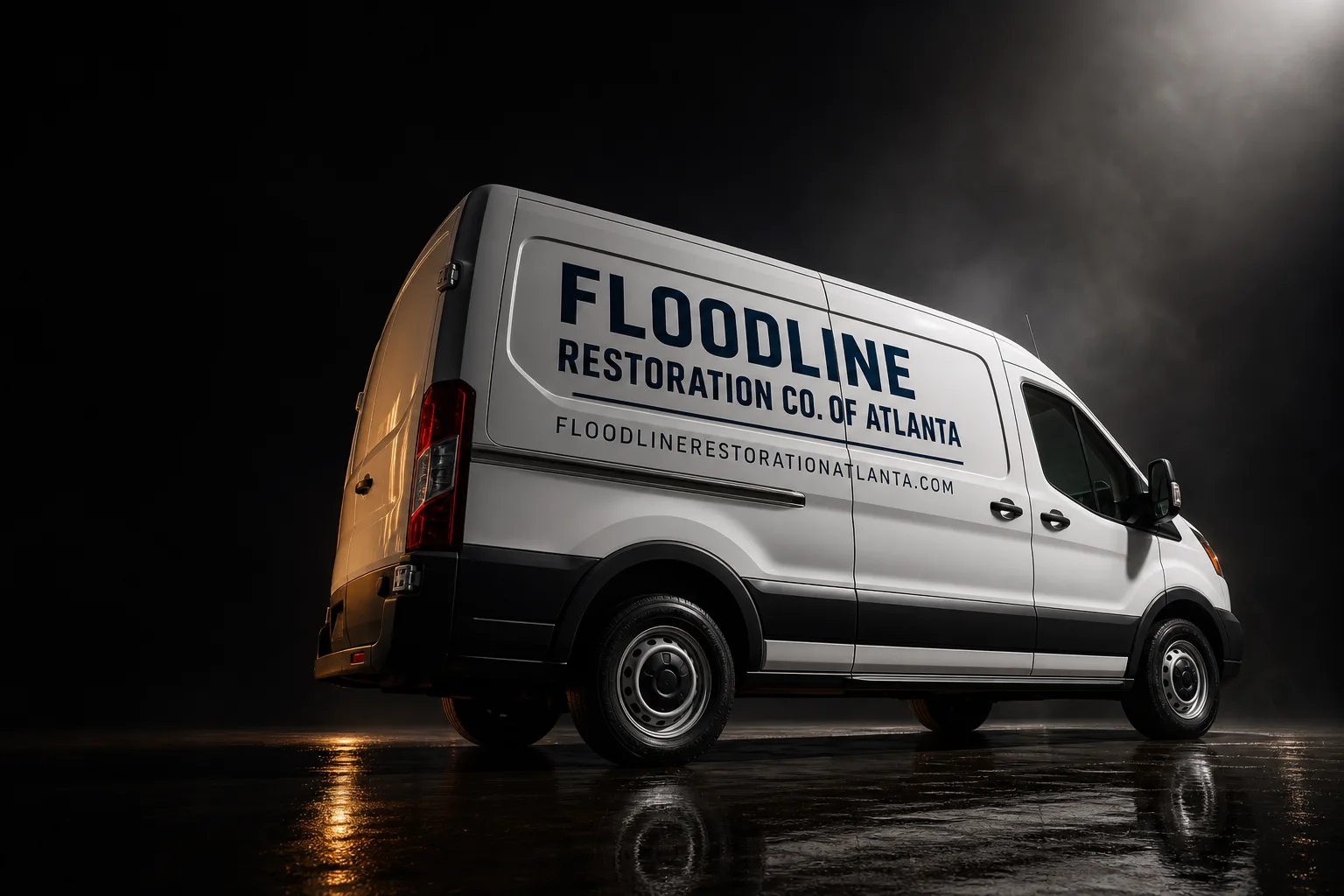
Fast, Reliable Storm & Disaster Restoration Across Norcross
Storm damage in Norcross hits differently than it does in newer suburbs. Most homes here went up between 1975 and 1998, and many still run on original polybutylene supply lines that fail under pressure. When a tree comes through a roof or a freeze splits a pipe, the water doesn’t stop at the obvious spot. It travels. Through the slab, under the drywall, into the crawl space. Our crews know where to look because we’ve worked the 30071, 30092, and 30093 ZIP codes long enough to recognize the patterns. We’re Floodline Restoration Co. of Atlanta, and we answer the phone live, day or night, at (888) 832-2758. If you’re standing in water or staring at a bowed ceiling, call now. We’ll walk you through the first steps and get a certified crew headed your way.
Why Norcross Homeowners Call Floodline Restoration First
We’ve spent over 42 years in metro Atlanta restoration work, and Norcross has taught us more than most cities. This isn’t a market where you can pull a generic playbook off the shelf. The housing stock is dense, much of it builder-grade brick-front and vinyl-sided construction from the late 70s through the 90s. Slab foundations, shallow crawl spaces, narrow side yards. Tight clearances mean our techs work differently here than they would in a sprawling Peachtree Corners subdivision. We stage equipment carefully so we don’t block a shared driveway or an alley-load garage that two townhome neighbors depend on.
Being local matters when the adjuster pushes back. We document everything with thermal imaging and daily moisture readings, which Gwinnett County adjusters now expect before they’ll authorize full scope on a slab leak. Our Storm & Disaster Restoration teams come background-checked and uniformed, trained to IICRC, RIA, and IFA standards. And the work is backed by our 90-Day Done Right Promise, in writing. No arguing, no paperwork battle. If it’s not done right, we make it right.
Our Storm & Disaster Restoration Services in Norcross
Storm Damage Cleanup
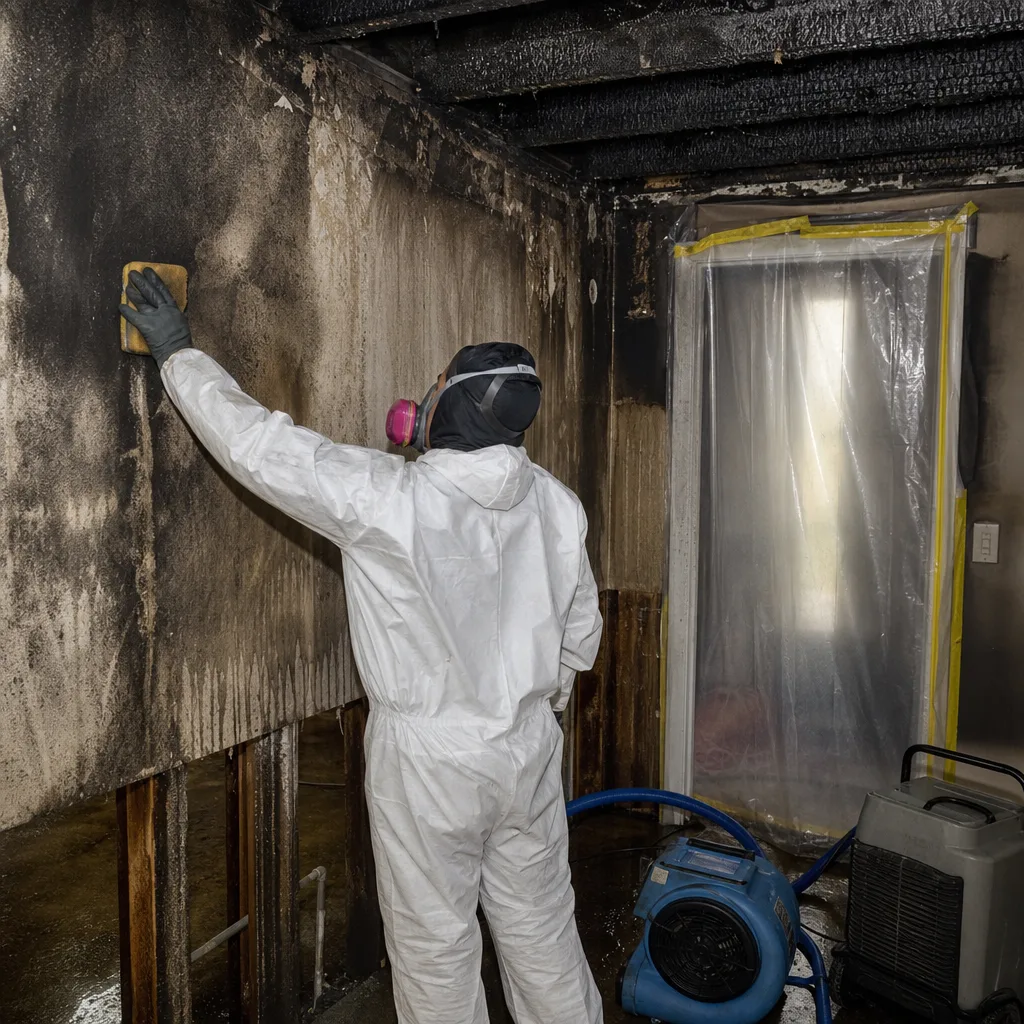
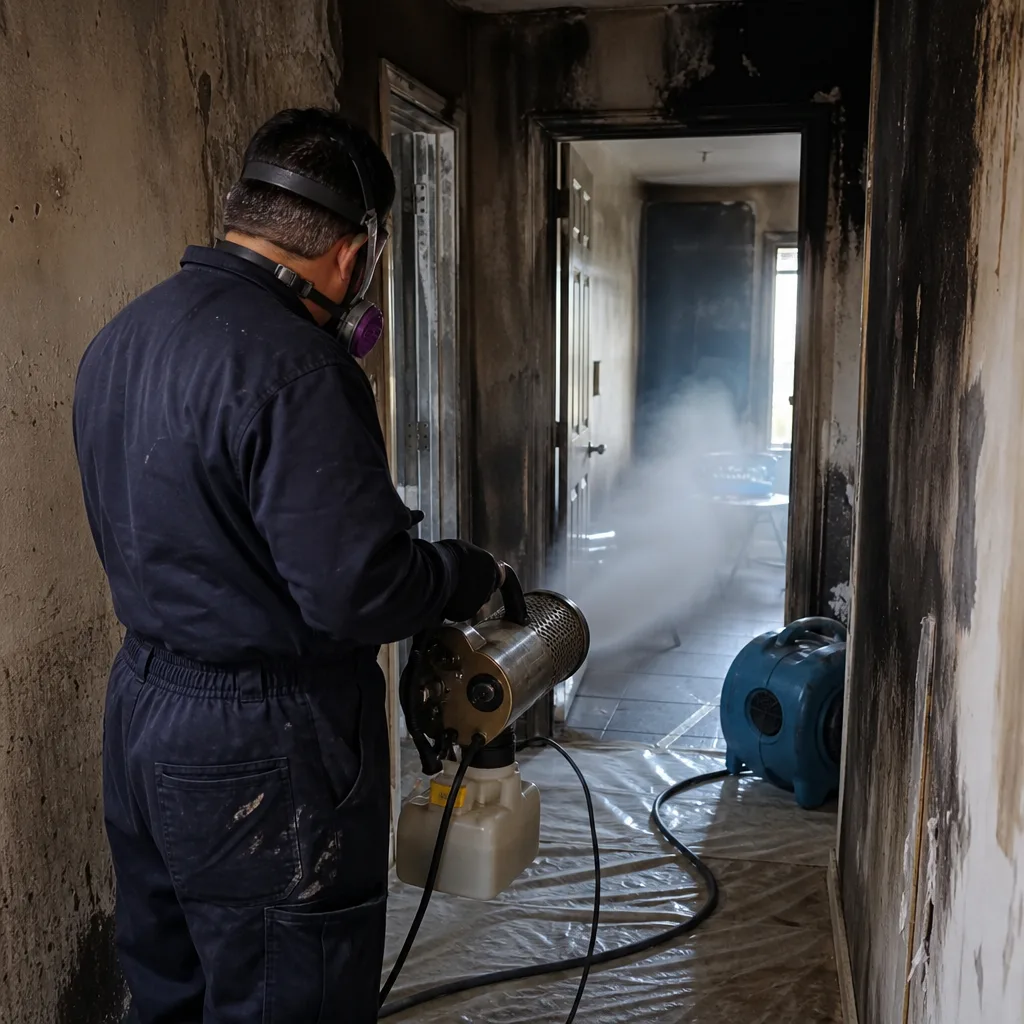
After a heavy thunderstorm or an ice event, the first job is stopping the spread. That means removing wet drywall, saturated insulation, and any standing water before it soaks deeper into the structure. In Norcross slab homes, water doesn’t pool the way it does in homes with basements. It migrates laterally under flooring and behind baseboards. We run thermal imaging on every storm call here because poly-B pipe failures in this area routinely push moisture 20 to 30 feet beyond the visible damage. If you skip that step, you’re setting yourself up for a denied supplemental claim later. We don’t skip it.
Flood Damage Restoration
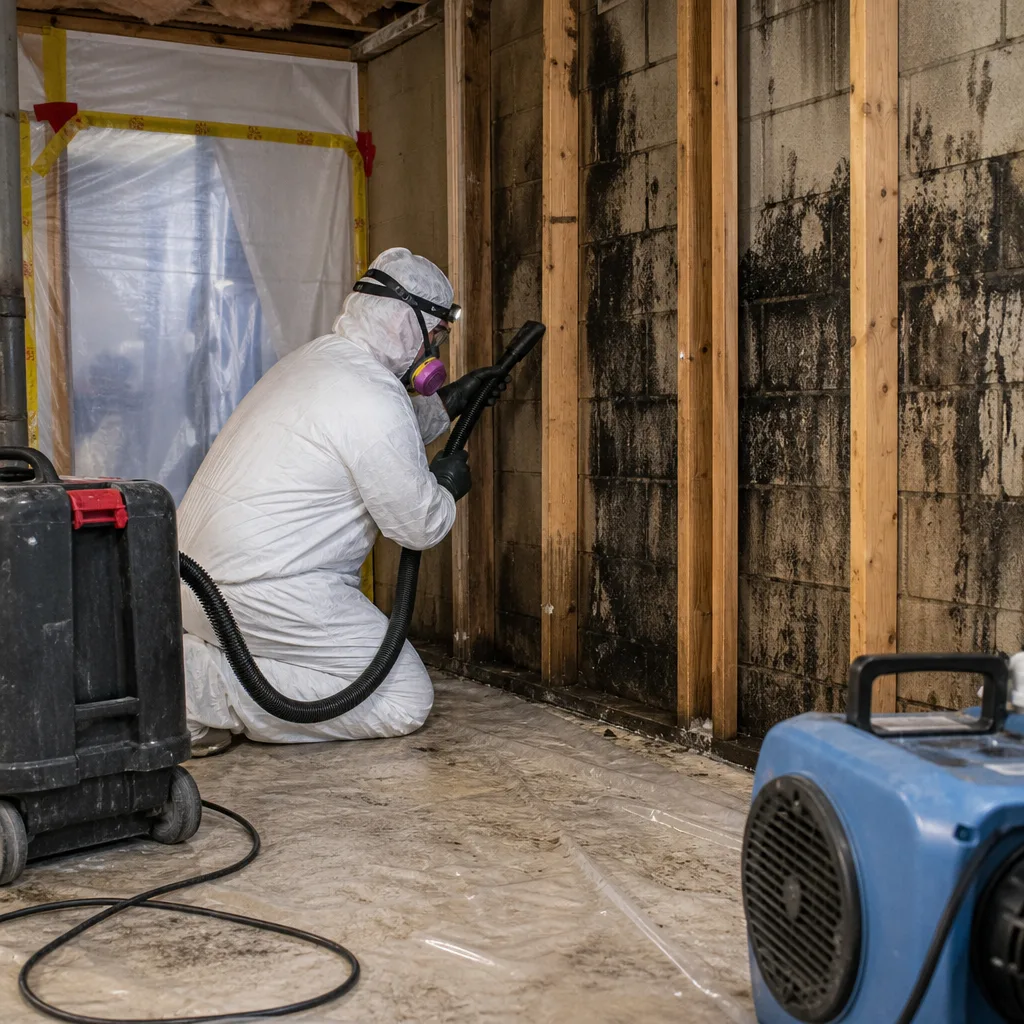
Norcross sits on Georgia Piedmont red clay that swells and shrinks with the seasons. After a flood or a major storm, that clay holds moisture against foundation walls and wicks it into crawl spaces. You might not see a problem for three or four weeks. Then the musty smell starts, and the mold follows. We treat flood restoration here as a two-part job: extract and dry the visible water, then monitor the crawl space and slab until the dry standard is met. The same crew that maps moisture on day one handles the daily readings and hands you the log, and we send the same log to your carrier. You never play messenger.
Emergency Board-Up
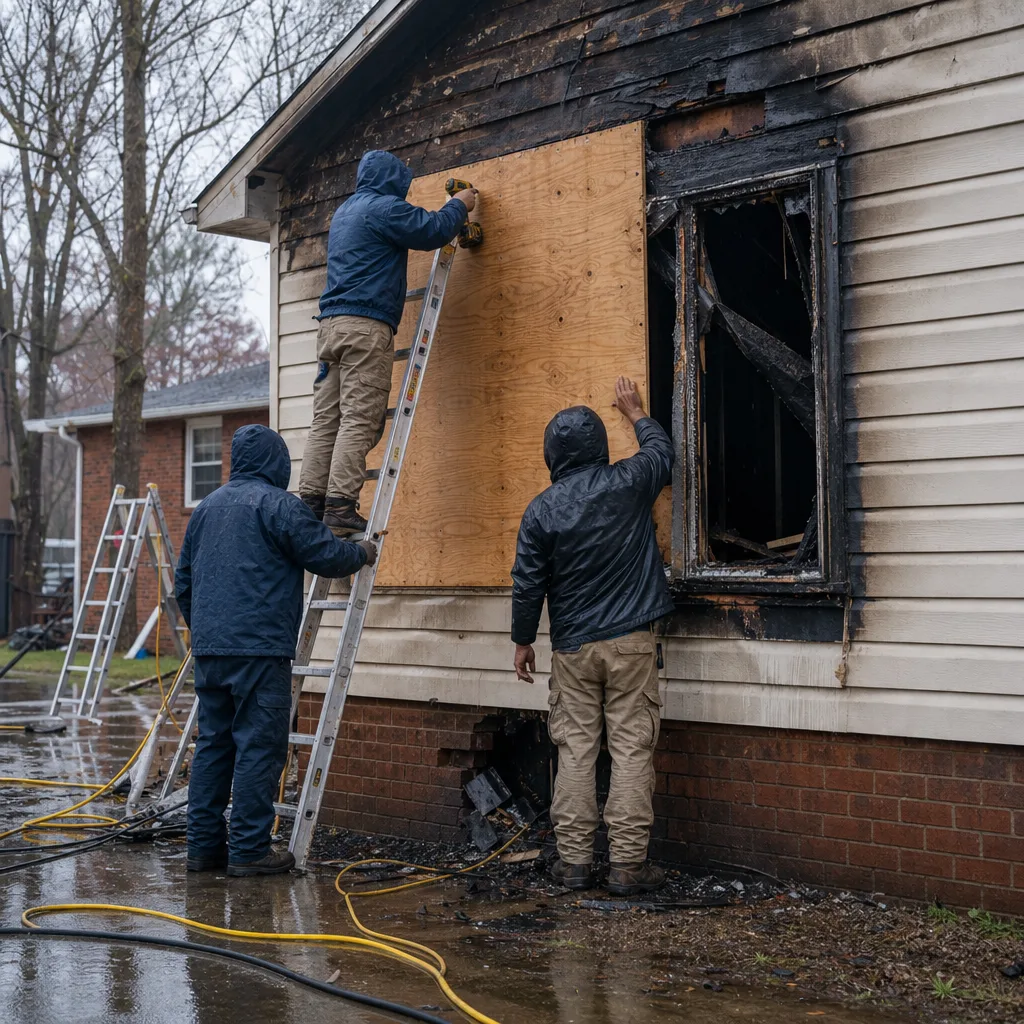
A broken window or a storm-damaged door leaves your home open to rain, animals, and intruders. In Norcross townhome communities with shared walls and alley-load garages, securing the opening correctly also means not blocking your neighbor’s access. We board up fast and tight, using materials that hold until permanent repairs are scheduled. If you’ve got a tree limb through a bedroom window off Beaver Ruin Road, we’ll have a crew there the same day you call. The board-up is part of the mitigation, and it’s documented the same way everything else is: photos, measurements, and a written scope before work starts.
Roof Tarping
Wind and hail tear shingles loose, and the next rainstorm turns a small roof breach into a ceiling collapse. Tarping buys you time, but it has to be done right. A badly secured tarp flaps in the wind, lets water in around the edges, and tears off in the next gust. We tarp to hold, not just to cover. On Norcross homes with lower slopes and tight access from the side yard, our crews use roof anchors and proper ladder placement that respects the property line. We’ll tell you exactly what the tarp can and can’t do, and we won’t sell you a temporary fix as a permanent one.
What happens when you call
- 1
A real person answersNo phone trees - you reach a local pro.
- 2
You get an upfront price rangeHonest numbers before anyone is dispatched.
- 3
A background-checked tech heads outLicensed & insured, dispatched right away.
- 4
You approve before work beginsNothing starts until you say go.
Trusted Brands We Service in Norcross
Most of the calls we get in Norcross involve homes built in the 80s and 90s, and the plumbing and framing from that era needs a specific touch. We stock common parts and materials for those builds locally, so we’re not waiting on a distributor in another county when you need a repair. The equipment we run is professional-grade: Dri-Eaz dehumidifiers, XPOWER air movers, Phoenix extractors, and Injectidry drying mats for tight spaces like an alley-load utility closet where a floor unit won’t fit. The brand on the wall isn’t the issue. The water behind the wall is. We fix the water.
Common Storm & Disaster Restoration Problems We See in Norcross Homes
- Concealed poly-B migration under slab floors. A freeze cracks a line inside a wall, and water runs 25 feet through the subfloor before you ever see a puddle. If the crew doesn’t run thermal imaging, the adjuster denies the supplemental claim and you’re paying for hidden damage out of pocket.
- Piedmont clay wicking water into crawl spaces. After roof or gutter damage, the clay around your foundation stays saturated for weeks. Mold blooms three to four weeks later, long after the storm feels over. Moisture mapping has to include the crawl space from day one.
- Blocked alley-load driveways and shared entrances. In the denser townhome clusters, a careless equipment setup triggers HOA complaints and blocks your neighbor’s car. We stage gear tight to the structure and clear it at the end of every working day.
- Ice-dam and freeze damage on slab homes. Norcross sits slightly higher and inland enough that winter ice storms hit here harder than in Atlanta proper. Exposed supply lines in slab foundations freeze, split, and flood the lower floor. Response speed in those first 24 hours determines how much you salvage.
Pricing for Storm & Disaster Restoration in Norcross, GA
Storm and disaster work is priced by scope, but Norcross has some patterns we can tell you plainly. A basic emergency board-up on a single window or door typically runs $450 to $900, depending on access and the size of the opening. Roof tarping usually lands between $400 and $1,200 for the first tarp and securement. Storm damage cleanup with basic water extraction and three to four days of drying equipment runs $2,500 to $6,000 in the 30071 and 30092 ZIP codes, more when poly-B migration means additional drywall removal and thermal imaging coverage. Full flood restoration involving crawl space encapsulation and mold prevention climbs from there. We give you a written scope before work starts, and we bill your carrier directly when coverage applies. No surprises on the bill, no phone tag between you and the adjuster. Call (888) 832-2758 for an exact quote. Estimates are free.
We Also Serve Cities Near Norcross
Our Storm & Disaster Restoration in Norcross teams also handle calls in Duluth, Lilburn, Lawrenceville, and Peachtree Corners. If you’re a few miles out and the storm just hit, call the same number. Dispatch is coordinated from our Atlanta office, and crews stage locally so we’re not driving across the metro when you need us.
Serving Norcross, GA - Our Local Coverage Area
We’re based in the Norcross area and know this community well. Use the map below to see our service coverage - if you’re nearby, we can almost certainly help.
FAQs - Storm & Disaster Restoration in Norcross
Yes. Polybutylene failures in Norcross slab homes require thermal imaging runs that map the full migration path before any drywall or flooring is opened, because Gwinnett County adjusters have seen enough of these claims to expect that the visible puddle is rarely the whole story. We document the line’s condition, the failure point, and the measured moisture spread in feet, then submit that with our daily drying log. Call (888) 832-2758 and ask for a documented scope before any wall comes down.
We board up the opening and keep the work area inside the townhome’s footprint. That means staging materials against the structure, not across the alley, and coordinating with the HOA when the shared wall is involved. We also run a moisture check on the shared wall itself, because water in one unit frequently migrates through the firebreak into the one next door. Call us the moment you see the opening. We’ll be there when we say.
Yes, and it’s one of the most common storm-related calls we get in the 30071 and 30093 ZIP codes. The red clay under your home holds water after big rains, and if your vapor barrier is torn or your crawl space vents are open, that moisture moves into the floor framing and feeds mold. Storm restoration includes drying the crawl space and replacing the barrier, not just treating the smell. We’ll give you a written scope and a moisture log so you know exactly when it’s dry.
The old craftsman bungalows and wood-frame homes near downtown Norcross have plaster walls, pier-and-beam foundations, and no modern moisture barriers. Water moves through them differently, and drying them takes longer because the framing is old-growth lumber that holds moisture differently than modern joists. We don’t apply the same drying protocol to a 1930s pier-and-beam that we do to a 1985 slab on Beaver Ruin Road. Different house, different plan, same written guarantee.
Yes. Norcross is one of Georgia’s most ethnically diverse cities, and we’ve built our local dispatch and crew communication around that reality. We have bilingual team members on staff, and we’ll make sure the homeowner understands the scope, the drying plan, and what insurance will cover before we start work. Language should never be the reason a homeowner waits longer for help. Call (888) 832-2758 and tell us what you need. A live dispatcher answers, not a recording.
What Makes Norcross Storm Restoration Different
Norcross sits at the center of one of metro Atlanta’s densest concentrations of 1970s to 1990s suburban housing stock, and a meaningful share of it was plumbed with polybutylene pipe. That material degrades under Gwinnett County’s chlorinated municipal water, and it fails without much warning. A winter freeze or a storm that shifts the ground can split a line that’s been cracking for years. When it goes, the water moves fast and far. In a 1985 slab home on the east side of the city, we’ve seen moisture run 28 feet from the failure point before it ever surfaced. That’s the Norcross signature: concealed migration that neighboring Duluth or Peachtree Corners simply don’t see at the same scale.
After a February ice storm, our crew was called to a 1985 builder-grade slab home in the 30071 ZIP off Beaver Ruin Road. A frozen poly-B line had split inside an interior wall. Using thermal imaging and Dri-Eaz extraction, we mapped moisture running 28 feet across the subfloor before it surfaced, documentation the adjuster needed before authorizing full mitigation. Then we set up XPOWER air movers and Injectidry drying mats in the tight alley-load utility closet without blocking the shared driveway. Neighbors came and went, no HOA calls, no complaints. That’s the job done right in a dense Norcross neighborhood.
At the same time, Norcross is one of Georgia’s most diverse cities, with large Hispanic, Korean, and Vietnamese communities across the 30071, 30092, and 30093 ZIP codes. That changes how restoration gets communicated. The homeowner needs to understand exactly what we’re doing, why we’re cutting that section of drywall, and what the insurance documentation says. We’ve staffed for that. Restoration contractors here have to pair expertise in aging poly-B failure documentation with bilingual customer communication, and that pairing is not something you can fake by reading a script. It comes from doing the work in this city year after year.
If you’ve got storm damage in Norcross and you’re not sure what to do next, call (888) 832-2758. We’ll walk you through the first steps, give you a straight answer on cost, and send a crew that knows your neighborhood. Done right and backed in writing.
Written by Curt Bowman, Owner at Floodline Restoration Co. of Atlanta.