
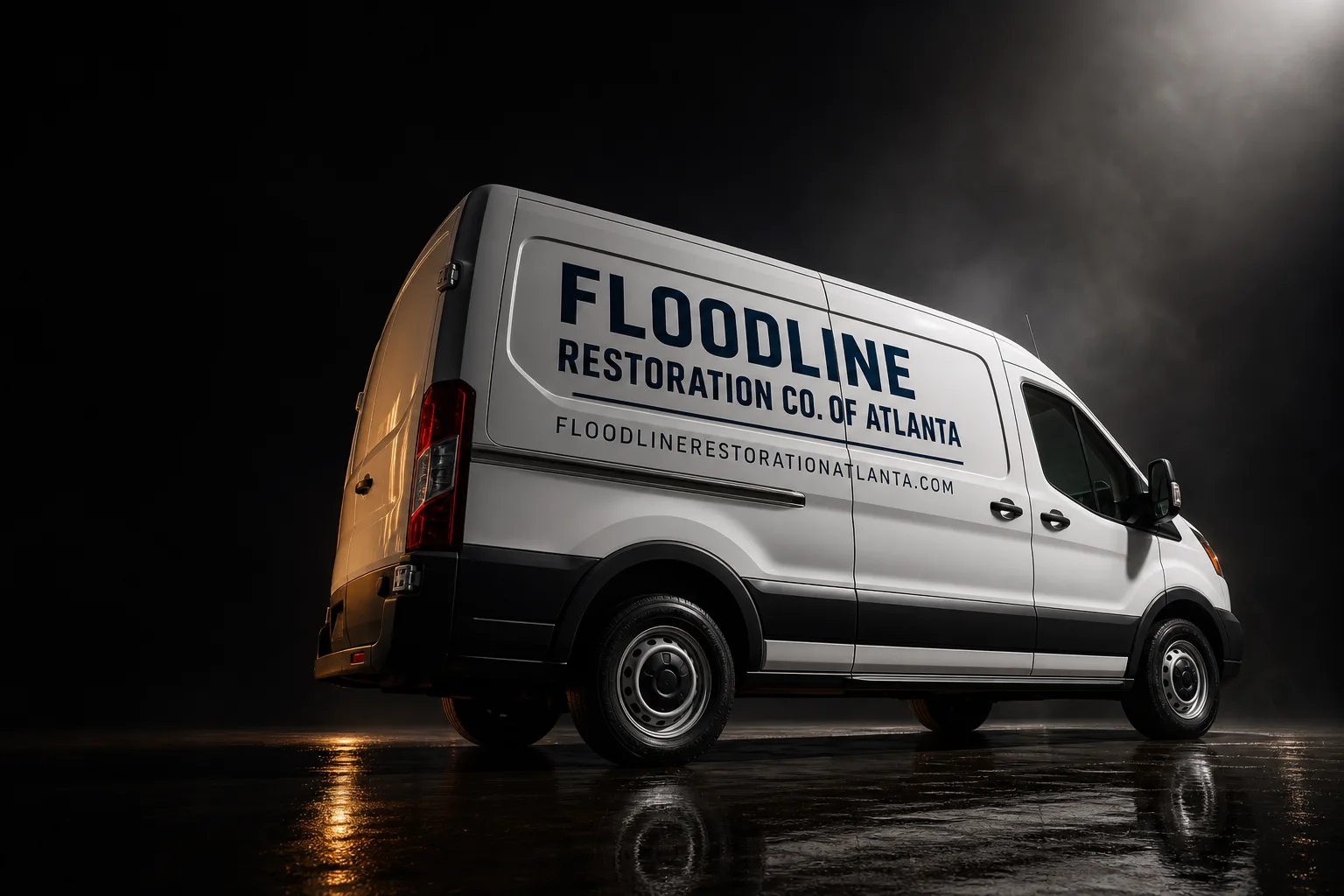
Fast, Reliable Storm & Disaster Restoration Across Roswell
Storm damage in Roswell moves fast, and so do we. Whether it’s a spring squall that put a limb through your roof decking or a thunderstorm that pushed clay-laden water into your walk-out basement, the first 48 hours determine whether you’re looking at a cleanup or a rebuild. Storm & Disaster Restoration is what our crews do every day, and we answer the phone with a live person around the clock. Call (888) 832-2758 and a certified team from Floodline Restoration Co. reaches your Roswell neighborhood the same visit, with extraction running before we leave.
Why Floodline Restoration Co. of Atlanta Is Roswell’s Preferred Storm & Disaster Restoration Company
We’ve worked enough Roswell homes to know the difference between a plumbing leak and what the red Georgia clay is actually doing to a walk-out basement wall. That local knowledge matters when every hour of delay means more water in your framing. Curt Bowman founded this company in 2010 around a dispatch board, not a sales desk, and the crews serving Roswell are background-checked, uniformed, and trained to IICRC, RIA, and IFA standards. When a storm hits the I-575 corridor, we’re already staged for it.
Roswell homeowners tell us the same thing after every job: the crew showed up when they said they would, worked clean, and didn’t hand the job off. We handle everything from emergency board-up to final trim, which means you’re not managing three contractors and playing messenger with your carrier. We bill insurance directly, document every step with photos and moisture logs, and back the whole job with the 90-Day Done Right Promise in writing. For homeowners in the Canton Street historic district or up in the 30076 subdivisions, that promise is the reason they call us first.
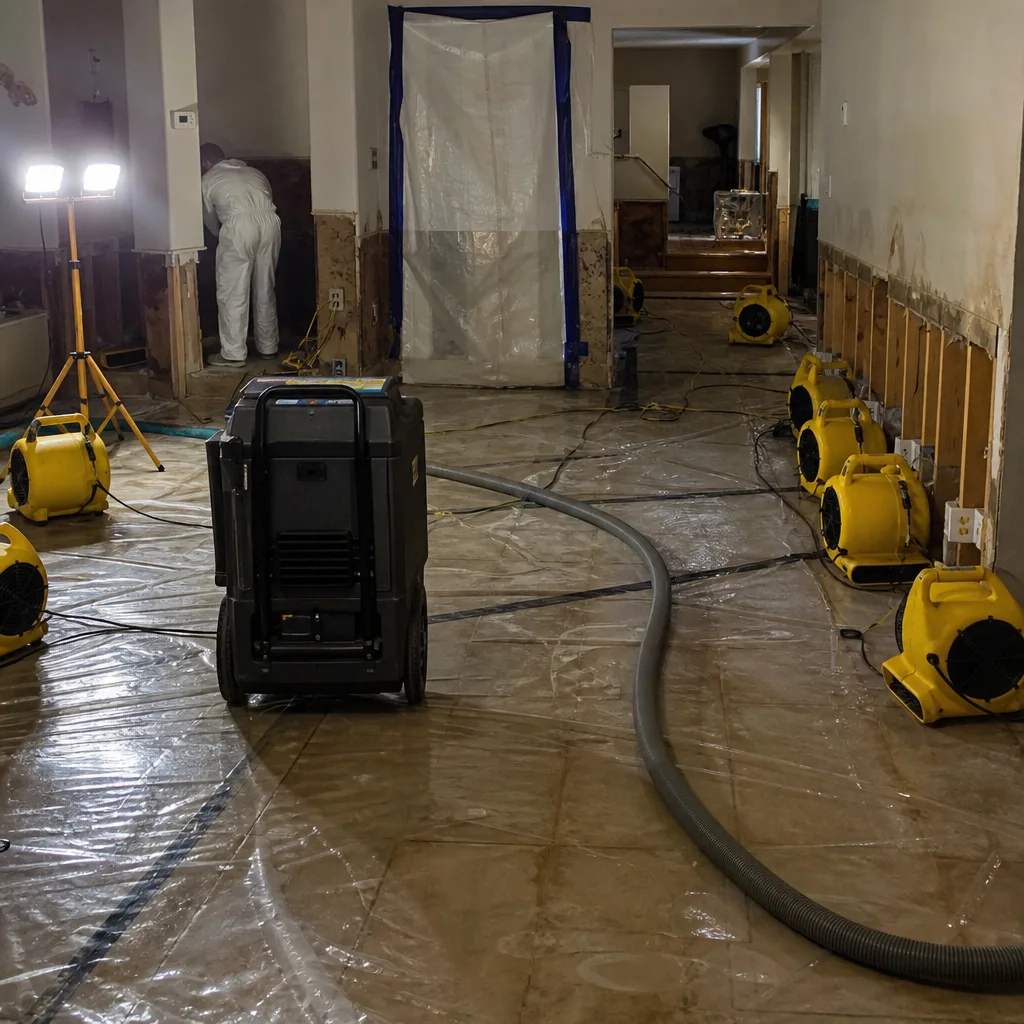
Response time matters. From the moment you reach our live dispatcher, a certified crew is routed to Roswell from our metro Atlanta base. We carry the equipment on the truck: Dri-Eaz dehumidifiers, Phoenix AirMax fans, XPOWER air movers, and Injectidry systems for hard-to-dry cavities. The same crew that reads the moisture map on day one handles daily readings and rebuilds what needs rebuilding. No handoffs. No inherited crews. Done right, and backed in writing.
Our Storm & Disaster Restoration Services in Roswell
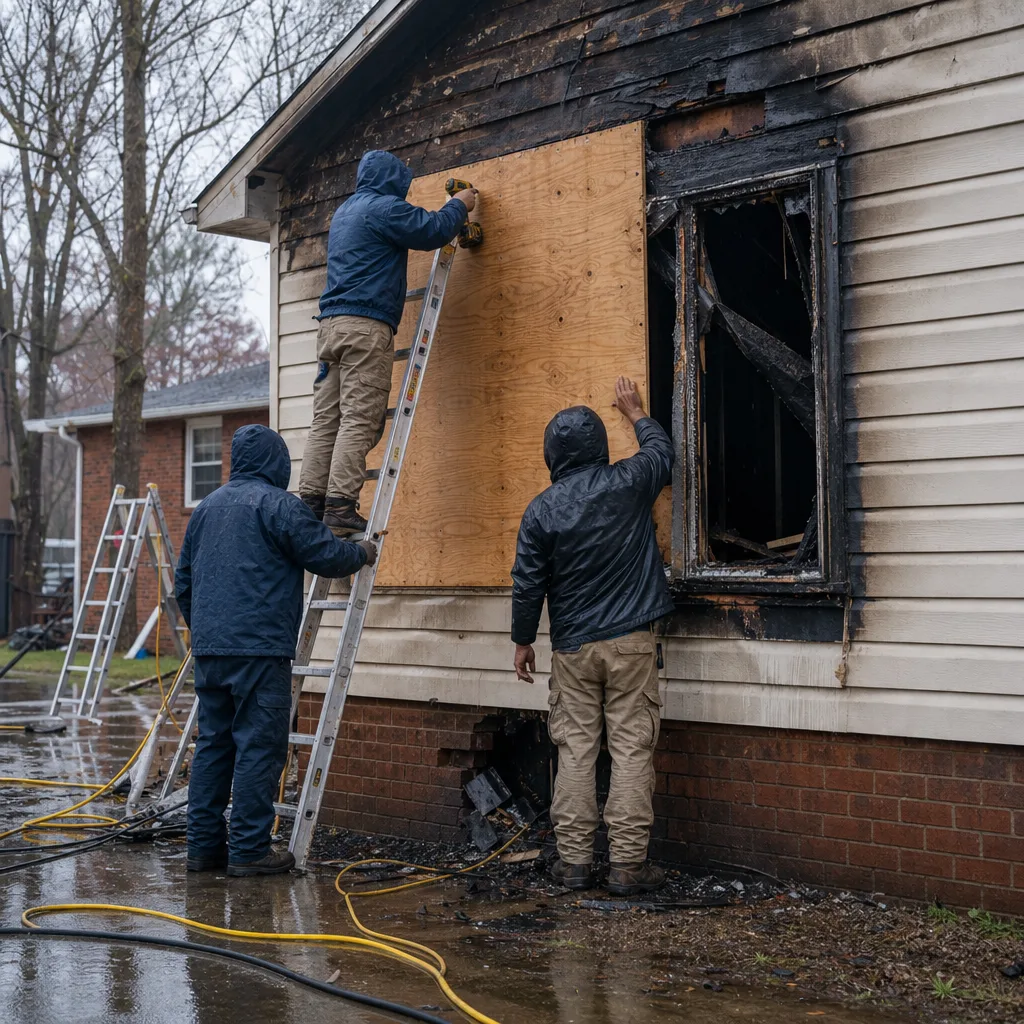
Emergency Board-Up
When wind drives a limb through a Roswell roof or siding, the opening is an invitation for rain, animals, and further structural damage. We board up within hours, not days. On Canton Street, where dentil molding and original fascia are common, our crews take extra care to anchor plywood without splitting historic trim. In the 1980s colonials around Crabapple and East Roswell, we seal the envelope tight so your adjuster sees a protected structure, not a worsening claim.
Roof Tarping
A tarp done right keeps water out until permanent repairs are scheduled. We see a lot of Roswell roofs opened up by mature hardwoods, the kind the city’s tree-canopy ordinance deliberately preserves. The canopy is beautiful until a 40-foot oak drops a limb through your sheathing during a convective storm. Our roof tarping covers the damaged section, seals the edges, and is documented for your carrier. For historic Roswell homes with slate or original shingles, we use non-penetrating anchoring methods that won’t add damage to what the storm already did.
Flood Damage Restoration
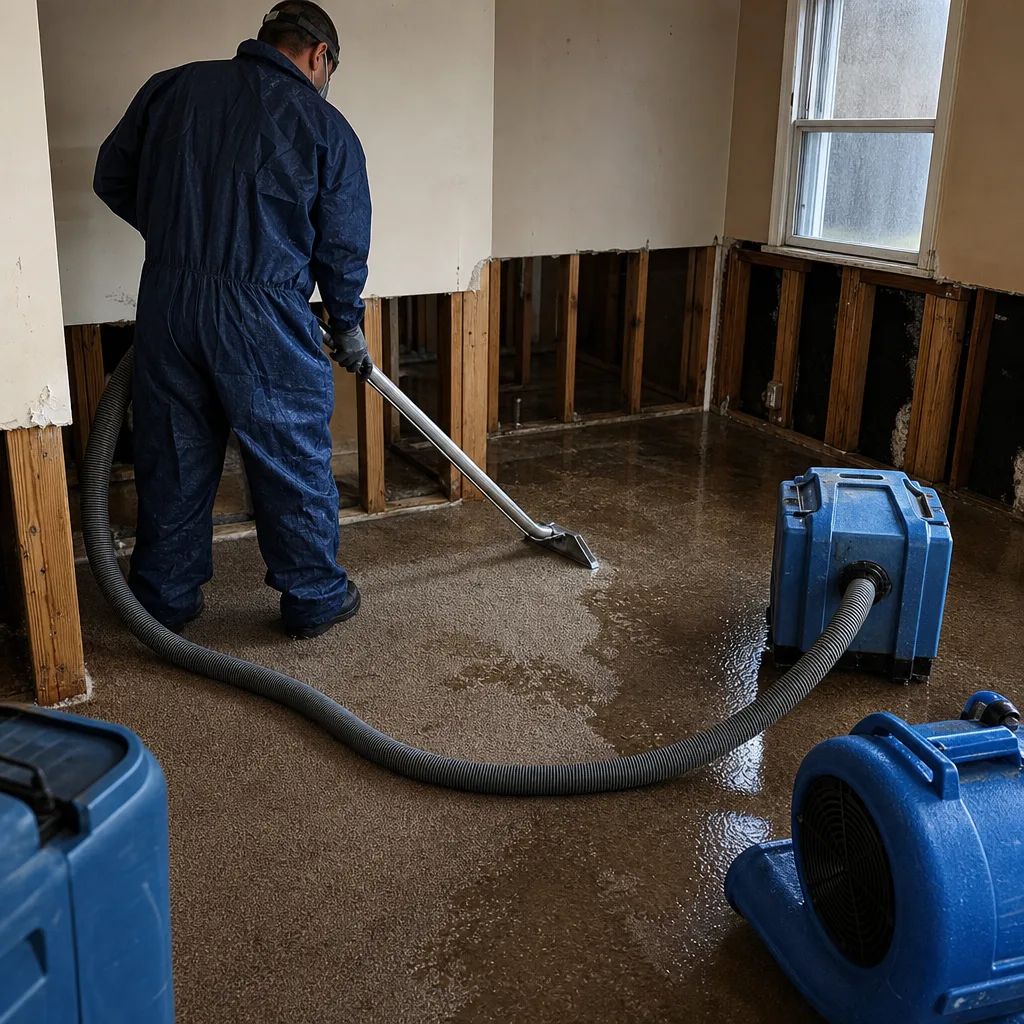
Roswell’s walk-out basements flood in two distinct ways: surface water from the Chattahoochee and its tributaries, and lateral groundwater intrusion from the red clay that slopes toward foundation walls. Most homeowners can tell you which one they have by where the water shows up. The river-corridor neighborhoods near Riverside Road and Azalea Drive sit inside FEMA-mapped flood zones and flood during the intense convective rain events that funnel up the I-575 corridor each spring. But even in the hillside subdivisions well above the floodplain, clay-driven water pushes into basement walls during moderate rain events that never touch the river. That’s the Roswell pattern: you don’t need a 500-year flood to end up with three inches of standing water in a finished basement.
Storm Damage Cleanup
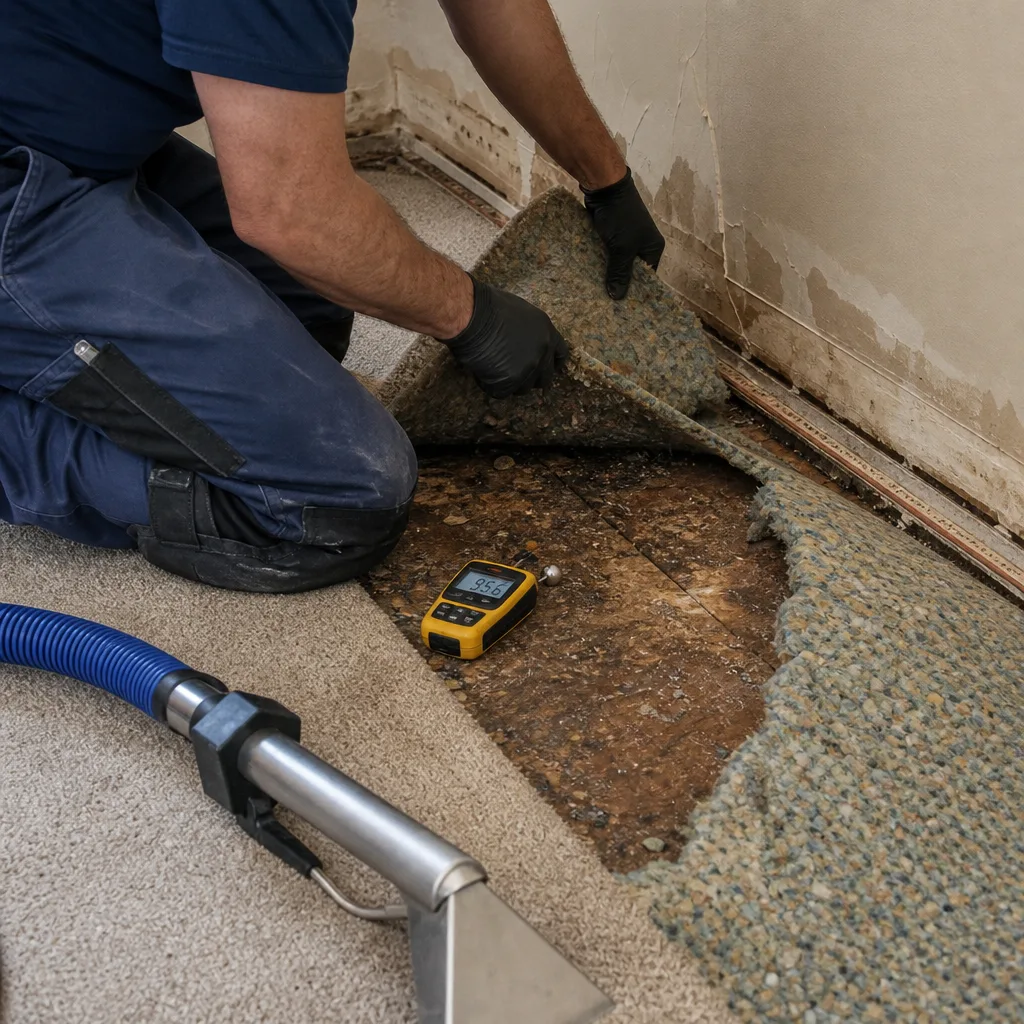
After the storm passes, the debris is the first thing you see and the last thing you want to deal with. We remove downed limbs, damaged drywall, soaked insulation, and ruined contents, then start the drying process immediately. In Roswell, the city’s tree-canopy ordinance shapes how we work: much of the debris is mature hardwood, heavy and dense, and we handle it without damaging the root zones of remaining trees or the landscaping your property is known for. We’ll be there when we say, and the cleanup is thorough enough that reconstruction can start on schedule.
What happens when you call
- 1
A real person answersNo phone trees - you reach a local pro.
- 2
You get an upfront price rangeHonest numbers before anyone is dispatched.
- 3
A background-checked tech heads outLicensed & insured, dispatched right away.
- 4
You approve before work beginsNothing starts until you say go.
Trusted Brands We Service in Roswell
Roswell homes aren’t all the same, and we don’t treat them that way. Our crews run Dri-Eaz, Phoenix, XPOWER, B-Air, and Injectidry equipment sized to the job, whether that’s a 3,000-square-foot basement in a 1990s subdivision or a plaster-walled bungalow off Canton Street. We stock common parts and consumables on the truck, which means less waiting for equipment and faster drying cycles. For Roswell’s older housing stock, the right equipment matched to plaster, balloon framing, and polybutylene pipes is the difference between a clean dry-out and a follow-up mold call 30 days later.
Common Storm & Disaster Restoration Problems We See in Roswell Homes
- Lateral clay groundwater mistaken for a plumbing leak. Roswell’s red Georgia clay sheds water sideways into basement walls even when the river never rises. An inexperienced eye calls it a pipe leak, dries the interior, and hands the homeowner a mold problem that returns within a month. The fix requires exterior drainage remediation first, then interior restoration.
- Delayed board-up on historic Canton Street homes. Balloon framing in pre-1940 structures lets wind-driven rain travel two stories within hours. A small breach at the eave becomes water in the first-floor plaster by morning. Emergency board-up on these homes isn’t optional, it’s the difference between a tarp and a full plaster restoration.
- Original polybutylene supply lines failing during winter ice storms. The 1985-1998 housing stock across 30075, 30076, and 30077 often still has polybutylene pipes in garage-adjacent walls. Roswell ice storms freeze and rupture those lines with a suddenness that surprises homeowners who never had a water problem before. The flooding is fast, and the damage compounds quickly in finished basements.
- Standard drying protocols cracking historic plaster. Class-2 drying on pre-1940 plaster walls causes differential shrinkage. The plaster cracks as it dries, and the homeowner is left needing full replastering on top of storm repair. Older Roswell homes need slower, controlled drying with moisture-mapped daily readings, not a generic dehumidifier blast.
Pricing for Storm & Disaster Restoration in Roswell, GA
No two storm losses are the same, but Roswell homeowners deserve real numbers before they pick a contractor. A straightforward emergency board-up on a single opening typically runs $450-$900 depending on access and the size of the breach. Roof tarping on a standard asphalt-shingle home in a Roswell subdivision runs $350-$800, while slate or historic roofs with dentil molding run higher, often $700-$1,400, because the anchoring has to be non-penetrating and the work is slower. Flood damage restoration in a finished walk-out basement runs $3,500-$12,000, driven by square footage, how far the water climbed, and whether exterior drainage remediation is required. If clay groundwater is the culprit and you skip the French drain, you’ll pay for the interior restoration twice. Call (888) 832-2758 for a free estimate, and remember: standing offers include $50 Off Any Repair Over $250, a $89 Seasonal Tune-Up, and a Senior & Veteran 5% Discount, always.
We Also Serve Cities Near Roswell
Floodline Restoration Co. serves Roswell and the surrounding north Fulton communities. If you’re in Alpharetta, Johns Creek, Milton, or Sandy Springs and took storm damage, the same certified crews and the same 90-Day Done Right Promise apply. Call (888) 832-2758 and a live dispatcher routes a crew to your address.
Serving Roswell, GA - Our Local Coverage Area
We’re based in the Roswell area and know this community well. Use the map below to see our service coverage - if you’re nearby, we can almost certainly help.
FAQs - Storm & Disaster Restoration in Roswell
Roswell’s red clay substrate sheds rainwater laterally into foundation walls, and walk-out basements built into hillsides catch that groundwater even during moderate storms. The water isn’t coming from the river, it’s coming from the slope above your home. Exterior drainage remediation, typically a French drain or curtain drain, is required before interior restoration will hold. Call (888) 832-2758 and we’ll assess the source, not just the symptom.
Yes. We use non-penetrating anchoring methods on historic Roswell roofs, securing tarps to gutters, rakes, or weighted anchors rather than nailing into slate or original trim. Dentil molding and original fascia are treated as protected features. The same care applies to the board-up process, where we anchor plywood without splitting historic wood. For a Canton Street assessment, call (888) 832-2758.
Under Roswell’s Piedmont summer humidity, visible mold colonization in a finished walk-out basement can begin in under 72 hours if mitigation is delayed. The clock starts when the water enters, not when you notice it. That’s why we answer live at 2 a.m. and run extraction the same visit. Every hour matters. Call (888) 832-2758 the moment you see water.
Yes. Roswell’s ordinance preserves mature hardwoods that, during storms, regularly penetrate roofs and siding. That means more storm damage from branches and full limbs, and it also means we work around remaining trees without damaging root zones or protected landscaping. The canopy is part of what makes Roswell Roswell. We restore your home without destroying what’s left of your yard. Call (888) 832-2758 for a free assessment.
Plaster walls in pre-1940 Roswell homes require slow, controlled drying, not the class-2 protocol used on drywall. Rapid drying causes differential shrinkage, which cracks the plaster and forces a full replastering job on top of storm repair. We use Injectidry systems and Dri-Eaz dehumidifiers with daily moisture readings mapped until the dry standard is met. For historic plaster work in Roswell, call (888) 832-2758.
Get Storm & Disaster Restoration Started in Roswell Today
If a storm put water where it shouldn’t be or a tree put a hole in your roof, call (888) 832-2758 now. A live person answers, a certified crew from Floodline Restoration Co. is dispatched to your Roswell address, and we stay until the job is done, from first extraction to finished rebuild, backed by the 90-Day Done Right Promise in writing. The line the water left is where we start, and we stand behind it.
Written by Curt Bowman, Owner at Floodline Restoration Co., serving Roswell since 2010.