
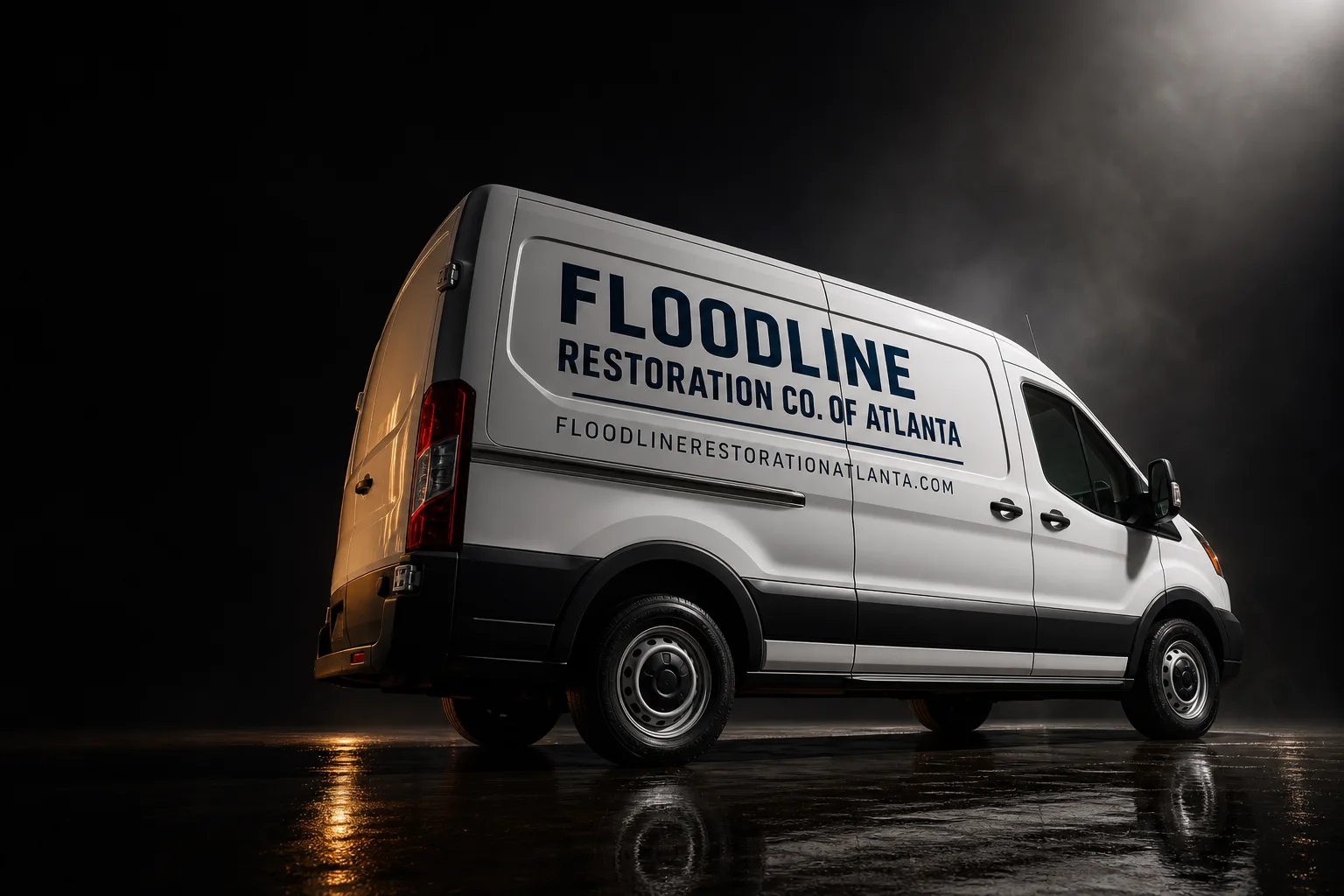
Fast, Reliable Storm & Disaster Restoration Across Sugar Hill
Storm damage in Sugar Hill hits different than it does elsewhere in Gwinnett County. The 1990s and 2000s subdivision homes that fill this city were built fast, with builder-grade OSB sheathing, thin crawl space liners, and HVAC condensate lines run through wall cavities. When wind rips off shingles or a summer thunderstorm dumps three inches of rain in an hour, the water doesn’t just soak what’s visible. It finds its way into crawl spaces over red clay, where it lingers. We answer the phone at (888) 832-2758 around the clock, and a live dispatcher gets a certified crew moving toward Sugar Hill the same visit.
Why Floodline Restoration Co. of Atlanta Is Sugar Hill’s Preferred Storm & Disaster Restoration Company
We’ve spent 15 years working Gwinnett County storm damage, and Sugar Hill calls stick with us because of the housing stock. These are not 1950s ranch homes on solid perimeter footings. These are 20-to-30-year-old tract homes where the builder used what the code allowed, not what the red clay demanded. When a Sugar Hill homeowner calls after a storm, our crews already know what they’re likely to find: crawl space water intrusion, OSB sheathing that’s been quietly absorbing moisture for years, and HVAC condensate routing that complicates the drying equation. That’s why we send IICRC-certified technicians, not just laborers with fans.
Our Storm & Disaster Restoration team carries Dri-Eaz LGR dehumidifiers, Phoenix axial air movers, and XPOWER injection systems on every truck. We don’t bring equipment for a simple dry-out and hope it’s enough. We bring what a 1998 brick-front townhome in a Sugar Hill cul-de-sac actually needs when storm water meets Georgia humidity. Curt Bowman founded Floodline Restoration Co. in 2010 with a dispatch board, not a sales desk, and the company still runs that way. A live person picks up at 2 a.m. when a Sugar Hill homeowner calls to say water is coming through the ceiling.
Our Storm & Disaster Restoration Services in Sugar Hill
Storm Damage Cleanup
Wind-driven rain and hail don’t just damage roofs in Sugar Hill. They push water behind vinyl siding, soak attics through lifted shingles, and saturate insulation that never got a chance to dry. Our crews start by mapping the moisture, not by yanking drywall. We use thermal imaging and moisture meters to find every wet cavity, then document it with photos for your carrier. Storm damage cleanup in Sugar Hill usually runs $1,200 to $4,500 depending on square footage and how far the water traveled before we arrived.
Flood Damage Restoration
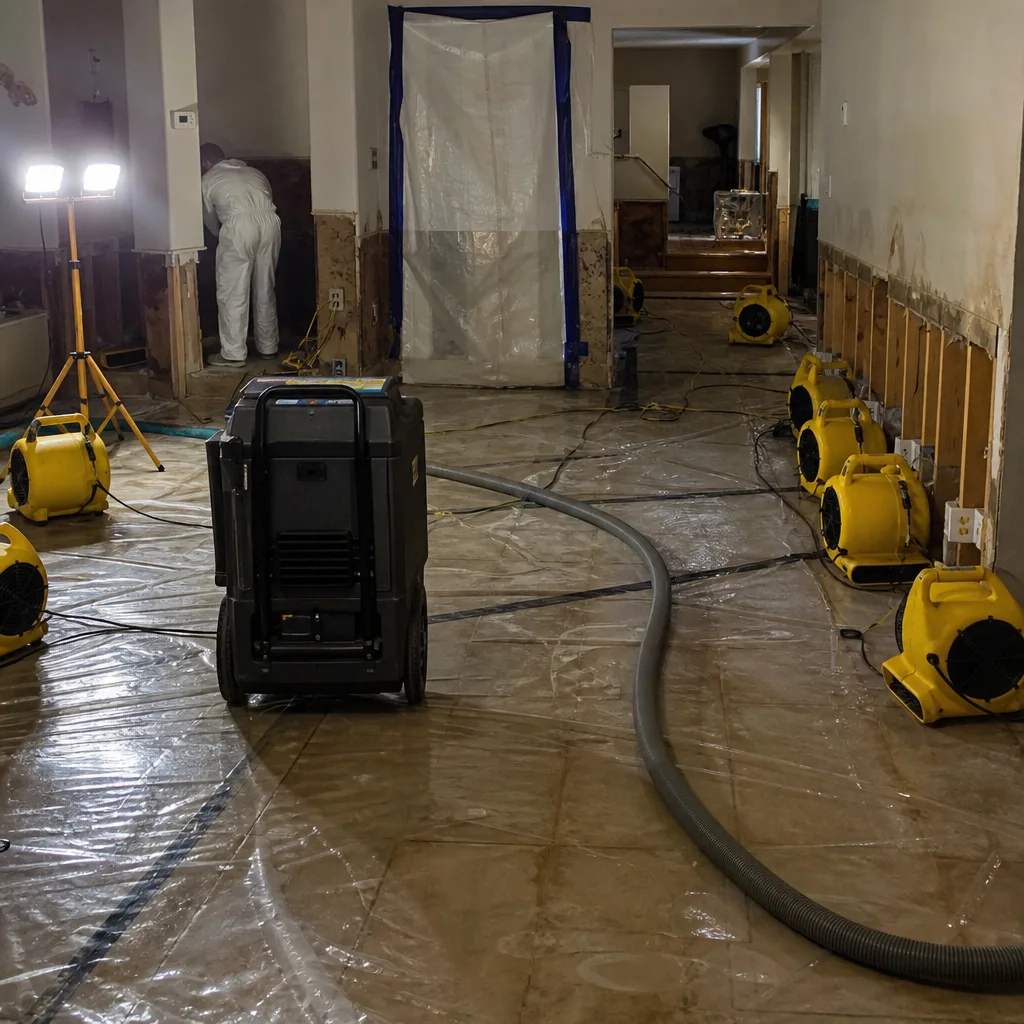
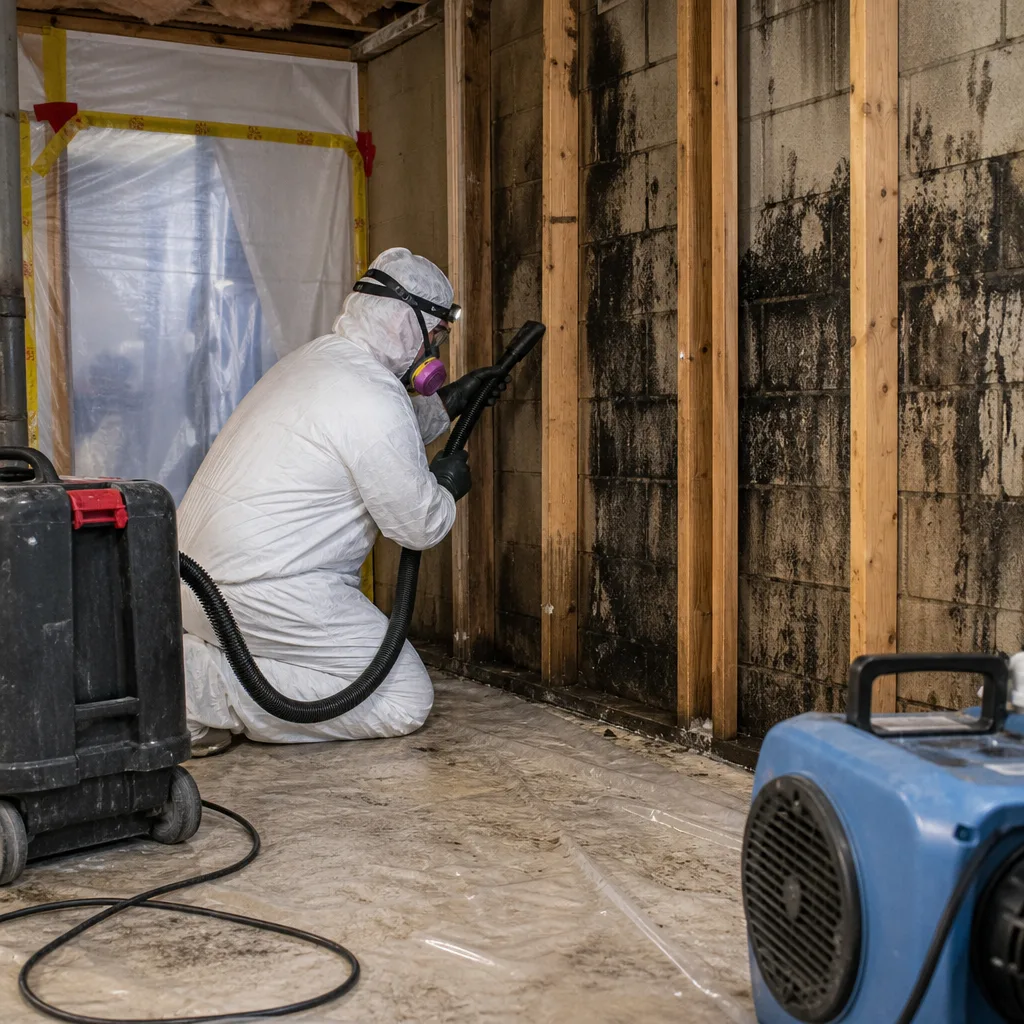
Heavy summer thunderstorms in Sugar Hill’s Piedmont climate dump water faster than the red clay can absorb it. Water sheets across yards, finds foundation vents, and settles into crawl spaces where the thin poly liner failed years ago. Flood damage restoration here starts with extraction, then moves to structural drying with daily moisture readings until we hit the dry standard. On a recent job off Level Creek Road, we pulled water from a crawl space where the clay subsoil had been shedding runoff toward the foundation for days. The subfloor read 92% moisture. We deployed Dri-Eaz LGR dehumidifiers and replaced the failed liner.
Emergency Board-Up
When a tree limb smashes a window or wind tears off a door, Sugar Hill homeowners need the opening sealed before the next storm rolls through. Emergency board-up in Sugar Hill typically costs $350 to $900 per opening, and our crews carry plywood, fasteners, and the tools to secure a home on the first trip. We board up more than windows. Attached townhome garages with alley access need care, because a damaged garage door often means the home’s security is compromised along with its weather envelope. We’ll secure the opening and coordinate with your carrier on the permanent repair.
Roof Tarping
A tarp isn’t a repair. It’s a hold against the next storm while you file a claim and schedule the real work. Roof tarping in Sugar Hill runs $300 to $700 for most single-family homes, more for steep pitches or two-story walkups with tight clearances. We tarp to keep water out for weeks, not days, because we know Georgia’s thunderstorm season doesn’t wait for your adjuster. The tarp gets screwed and battened, not just stapled, so it stays put through wind and rain.
What happens when you call
- 1
A real person answersNo phone trees - you reach a local pro.
- 2
You get an upfront price rangeHonest numbers before anyone is dispatched.
- 3
A background-checked tech heads outLicensed & insured, dispatched right away.
- 4
You approve before work beginsNothing starts until you say go.
Trusted Brands We Service in Sugar Hill
We don’t have “preferred equipment brands” in the sense of marketing copy. We have equipment we’ve tested against Sugar Hill’s specific conditions. Phoenix and Dri-Eaz dehumidifiers handle the humidity load of a 1990s crawl space in July. XPOWER air movers get air moving through tight townhome clearances where bigger units won’t fit. IFA training standards mean our technicians know how to read the moisture map on day one and update it daily until the log shows dry. When Sugar Hill homeowners call, the gear that shows up is the gear the job needs, not whatever was on the truck last week.
Common Storm & Disaster Restoration Problems We See in Sugar Hill Homes
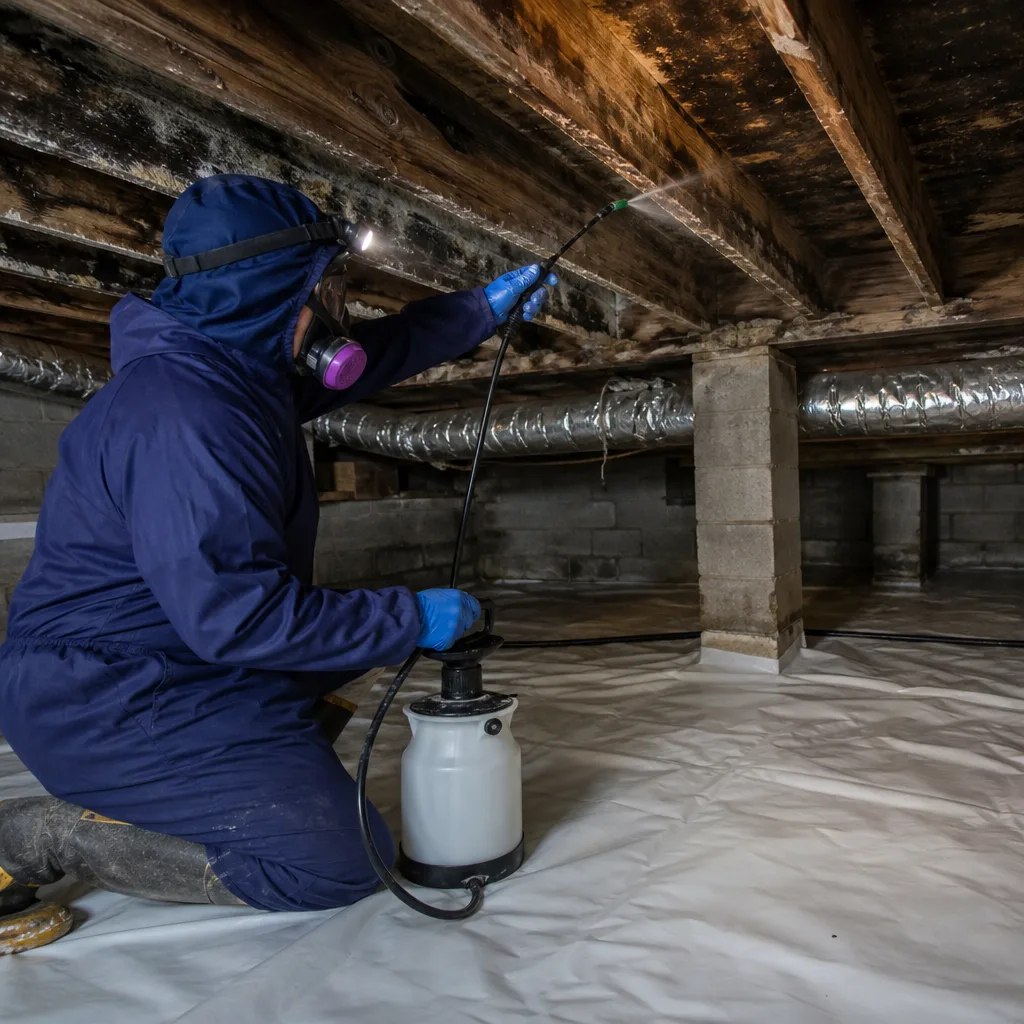
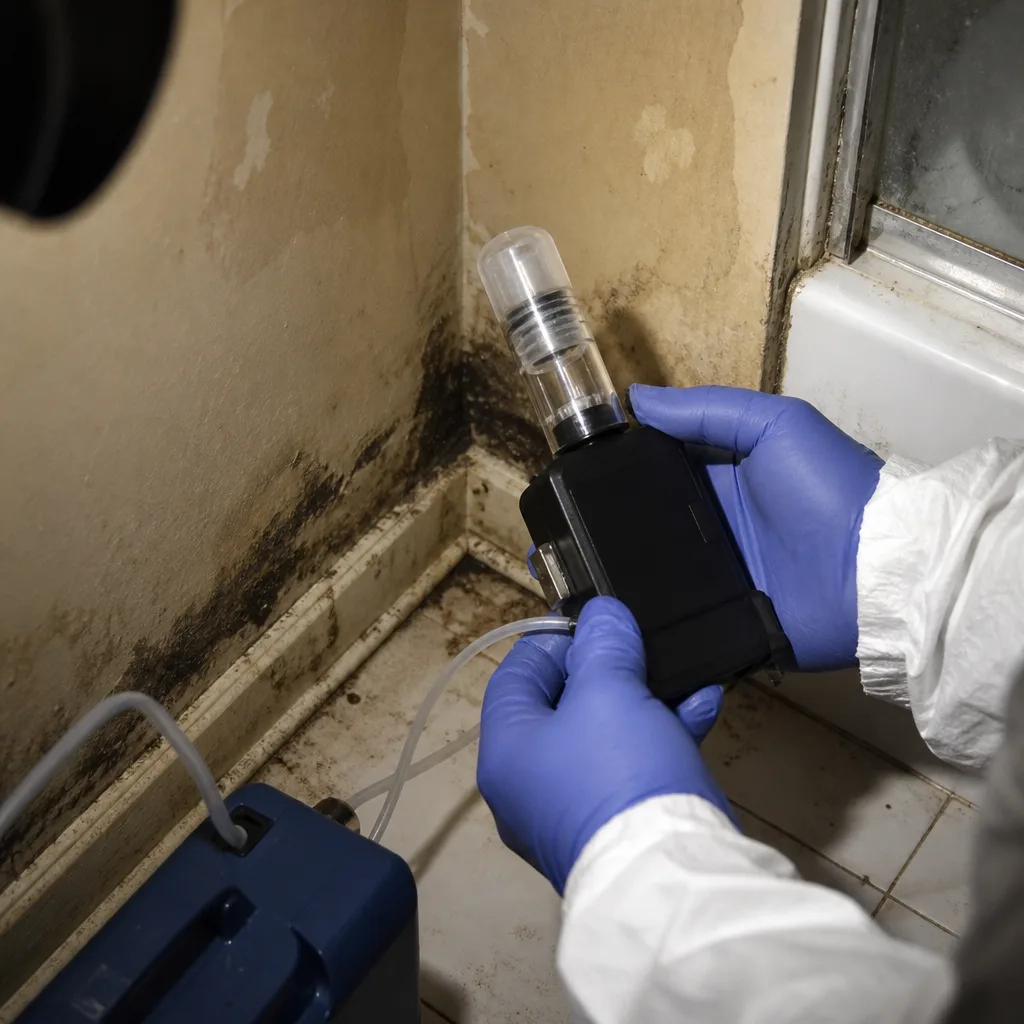
- HVAC condensate lines routed through wall cavities. A partially clogged pan in a 1998 Sugar Hill townhome can weep into OSB sheathing for weeks before any visible stain appears. By the time you see it, the mold has already started. In Sugar Hill’s subtropical humidity, mold colonization begins within 24 to 48 hours of a moisture event.
- Undersized crawl space vapor barriers. Most Sugar Hill homes built between 1990 and 2010 have thin poly liners that tear during construction and degrade over time. When storm water intrudes, the liner does nothing to keep moisture from wicking into floor joists and subfloor.
- OSB sheathing that lost structural integrity years ago. Builder-grade gaps and repeated moisture cycles weaken OSB walls. Drying to 15% moisture content on sheathing that’s already soft means putting new drywall over a compromised wall. We test for structural soundness before we close anything up.
- Slab foundations with perimeter vents still pulling humid air. Many Sugar Hill homes have slab foundations, but the vents that let air circulate also let humid air condense on cold ductwork after a storm. A restoration that ignores the venting equation leaves the home primed for a second mold problem within months.
Pricing for Storm & Disaster Restoration in Sugar Hill, GA
You deserve real numbers, not a vague promise. Storm damage cleanup in Sugar Hill generally runs $1,200 to $4,500. Flood damage restoration on a single room starts around $1,800 and runs up to $8,000 or more for crawl space and structural work. Emergency board-up runs $350 to $900 per opening. Roof tarping is $300 to $700 for most homes. Water extraction alone often falls between $500 and $1,200. What moves the number: square footage, how long the water sat, whether mold remediation is required, and whether OSB sheathing needs replacement. Call (888) 832-2758 and we’ll give you a written scope before any work starts. Estimates are free, and we bill your carrier directly.
We Also Serve Cities Near Sugar Hill
Our crews work throughout the Sugar Hill area, including Storm & Disaster Restoration in Sugar Hill and the surrounding communities of Buford, Suwanee, Flowery Branch, and Duluth. If you’re in a neighboring city and need storm or disaster restoration, the same live dispatcher answers at (888) 832-2758.
Serving Sugar Hill, GA - Our Local Coverage Area
We’re based in the Sugar Hill area and know this community well. Use the map below to see our service coverage - if you’re nearby, we can almost certainly help.
FAQs - Storm & Disaster Restoration in Sugar Hill
Mold can begin colonizing within 24 to 48 hours in Sugar Hill’s subtropical humidity, especially where red clay soil keeps water pooling against foundations instead of absorbing it. If you’ve had storm water intrusion, don’t wait to see visible mold. Call (888) 832-2758 and we’ll assess the crawl space the same day.
Slab foundations don’t have crawl spaces, but Sugar Hill’s dense red clay sheds water toward the foundation rather than soaking it up. Perimeter drains clog, grading settles, and water finds the seam between slab and wall. Poor clay drainage is the single most common cause of lower-level water intrusion in Sugar Hill’s slab homes.
Yes. When we board up an attached townhome garage in Sugar Hill, we work around the security system already in place. We don’t disable or bypass openers. We coordinate the board-up so the garage stays secure and your rolling-code remotes keep working after the permanent repair.
Often yes, especially in Sugar Hill’s 1990s homes where the original poly liner is thin and likely torn. A wall cavity leak introduces moisture, but a failed vapor barrier lets ground moisture keep wicking up into the same floor framing. Replacing the liner is frequently part of a complete restoration. We’ll show you photos and tell you honestly whether replacement is necessary.
We send equipment sized for the space. XPOWER air movers and compact Dri-Eaz dehumidifiers fit through townhome doors and work in narrow hallways where larger units block passage. We’ve done enough Sugar Hill townhome work off Level Creek Road and similar alleys to know that drying requires maneuvering, not just machinery. Extraction starts the same visit we arrive.
Written by Curt Bowman, Owner at Floodline Restoration Co., serving Sugar Hill and the surrounding Gwinnett County area.
When storm water finds your Sugar Hill home, the fastest way to stop the damage is to call (888) 832-2758. A live person answers. A certified crew loads the truck. And the line the water left is where we start.