
Fast, Reliable Storm & Disaster Restoration Across Suwanee
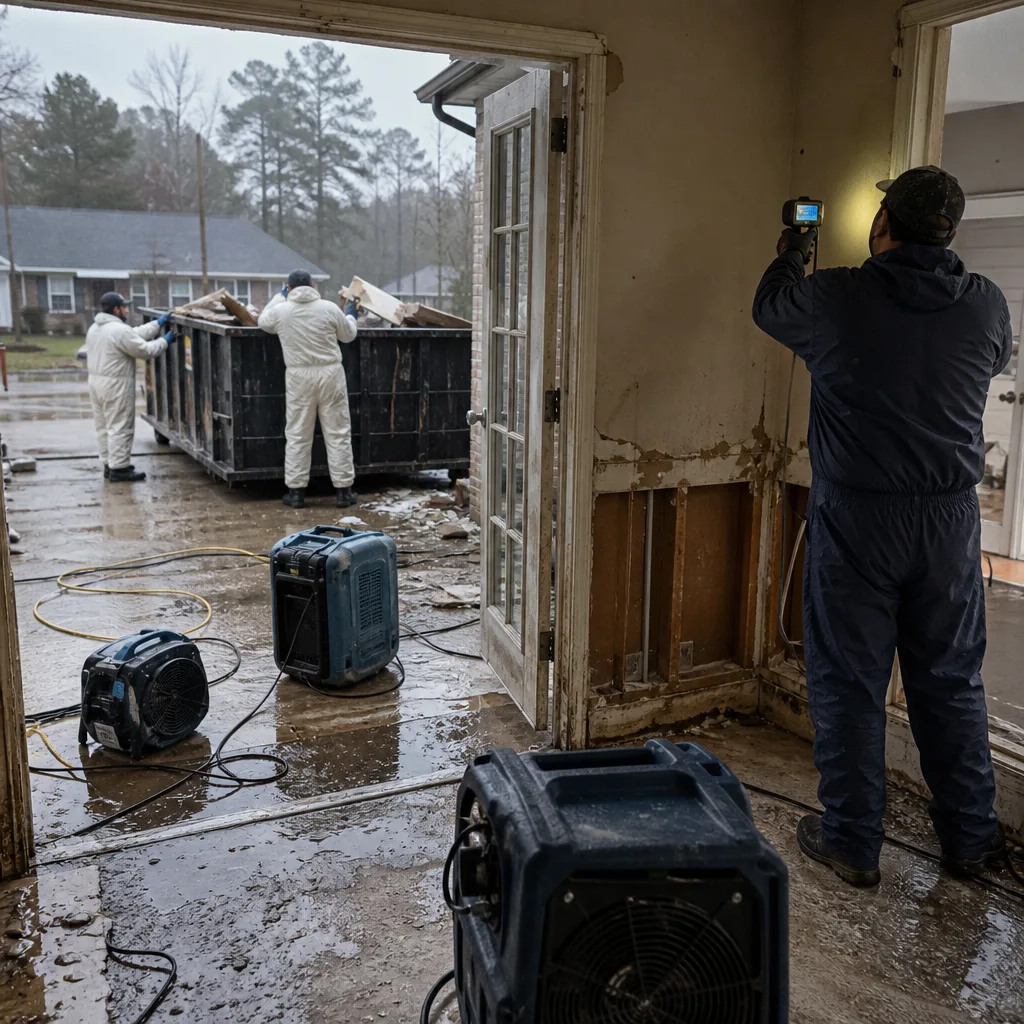
Storm damage in Suwanee rarely announces itself politely. A squall line rolls through at midnight, a tree limb comes down on a valley flashing, and by morning water is traveling behind EIFS cladding into a finished basement that looked dry the night before. We respond to Suwanee homes within hours, not days, because the 55 inches of annual rainfall and year-round Georgia humidity means mold colonization in wet wall cavities starts within 48 to 72 hours. Call (888) 832-2758 and a live dispatcher answers. Not a recording. The crew arrives, extraction starts the same visit, and the moisture map gets read before we touch a single wall.
Why Floodline Restoration Co. of Atlanta Is Suwanee’s Preferred Storm & Disaster Restoration Company
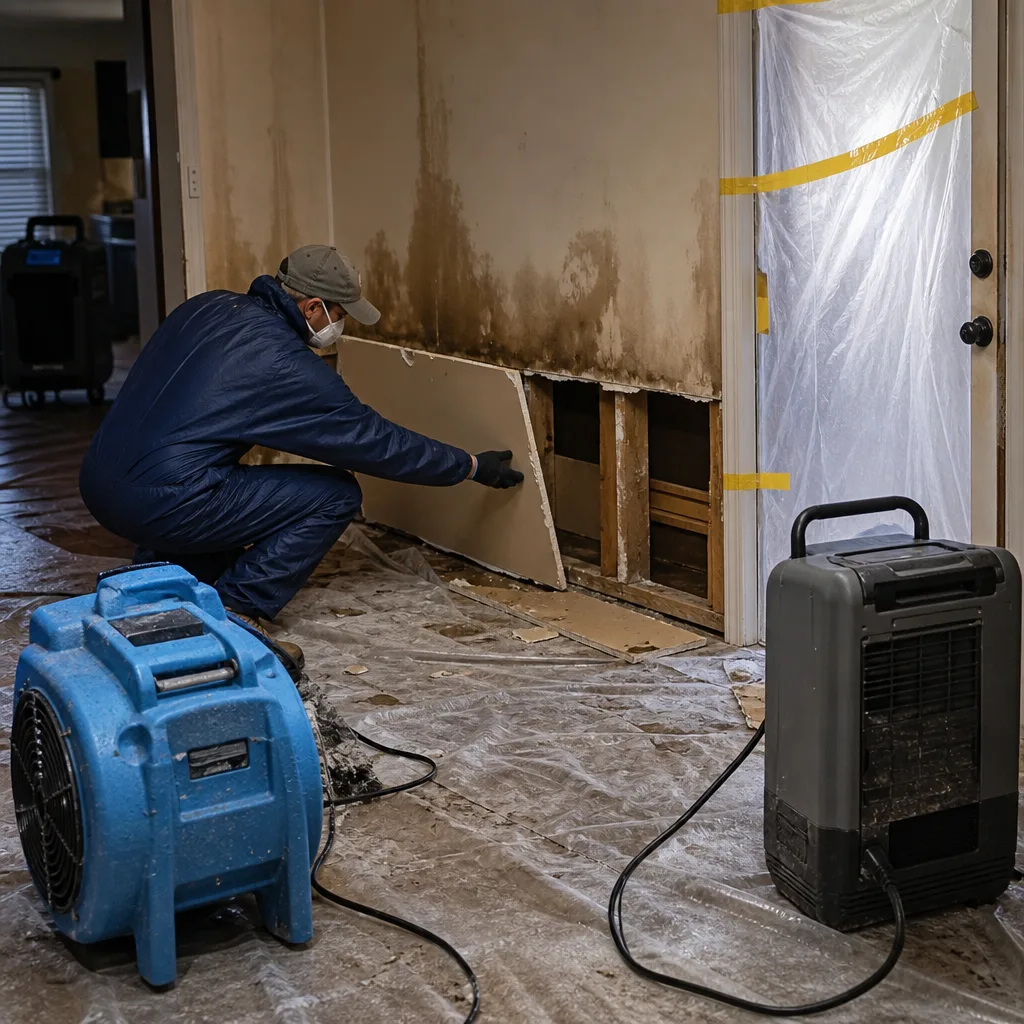
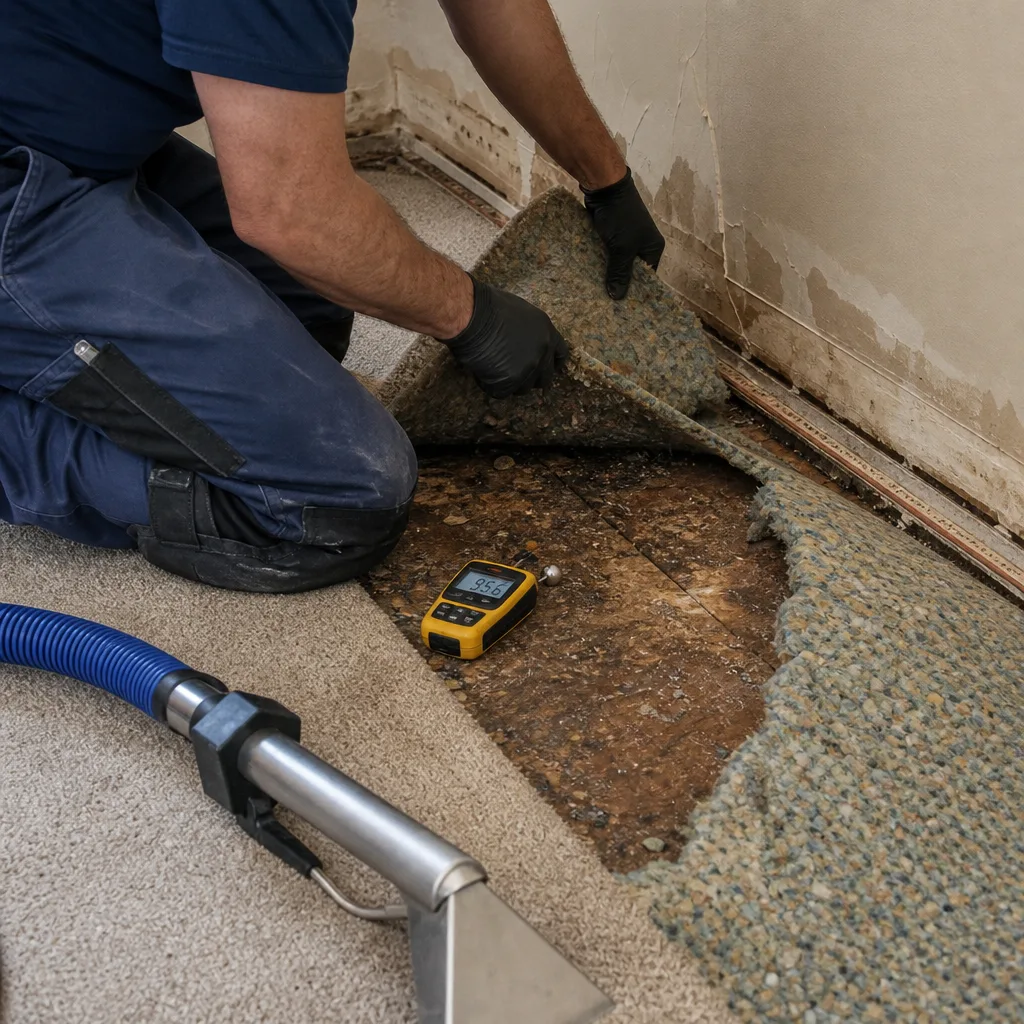
We’ve walked enough Suwanee basements to know what a 1998 build with original waterproofing looks like after a hard storm. The water stain on the baseboard is rarely the whole story. Behind that drywall, OSB sheathing can be saturated for weeks, delaminating quietly while mold colonizes the cavity. Our background-checked, uniformed technicians carry IICRC, RIA, and IFA certifications, but just as important, they know the failure patterns specific to this city’s housing stock. We read the moisture map on day one, log daily readings until the dry standard is met, and hand that log to you and your carrier. No hidden moisture, no repeat callbacks.
Our Storm & Disaster Restoration team has spent over 42 years earning the trust of Georgia homeowners. Since 2010, when Curt Bowman founded Floodline, we’ve answered every call with a live person, every hour of every day. Suwanee homeowners tell us the same thing: they don’t want a sales deck, they want a crew that shows up, does the job right, and stands behind it. That’s why every job carries the 90-Day Done Right Promise in writing. If it’s not done right, we make it right. No arguing, no paperwork battles. That’s the Keystone Standard.
Our Storm & Disaster Restoration Services in Suwanee
Flood Damage Restoration
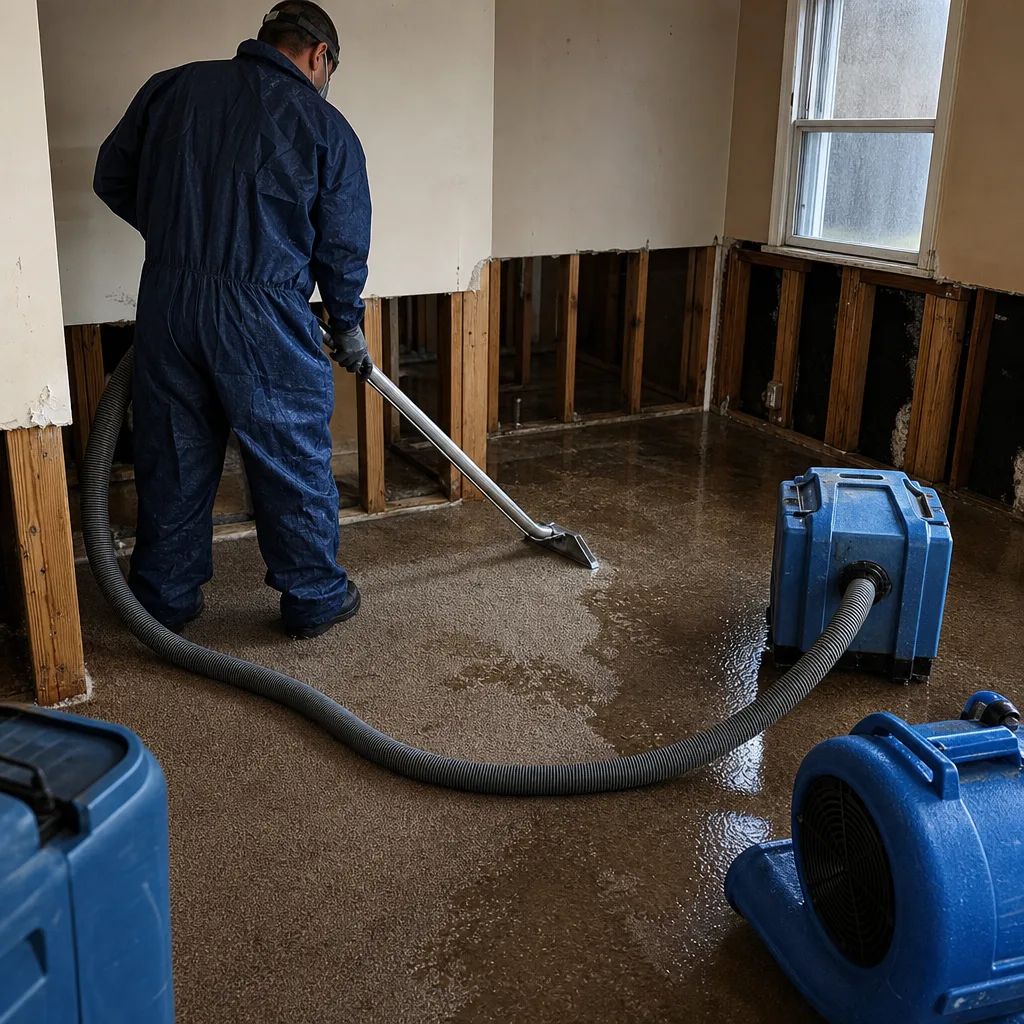
Flood damage in Suwanee usually starts where you can’t see it. Original waterproofing membranes on 25-year-old foundations fail silently, letting groundwater migrate through the block and into finished basement cavities. By the time staining shows on the baseboard, the OSB sheathing behind the wall is already saturated. Our crew starts with extraction using Dri-Eaz and Phoenix equipment, then sets up a drying array mapped to the moisture readings. We don’t stop until the structure hits the dry standard and the moisture log proves it. Most jobs are completed in a single visit, with the same certified crew handling extraction, drying, and any rebuild work.
Storm Damage Cleanup
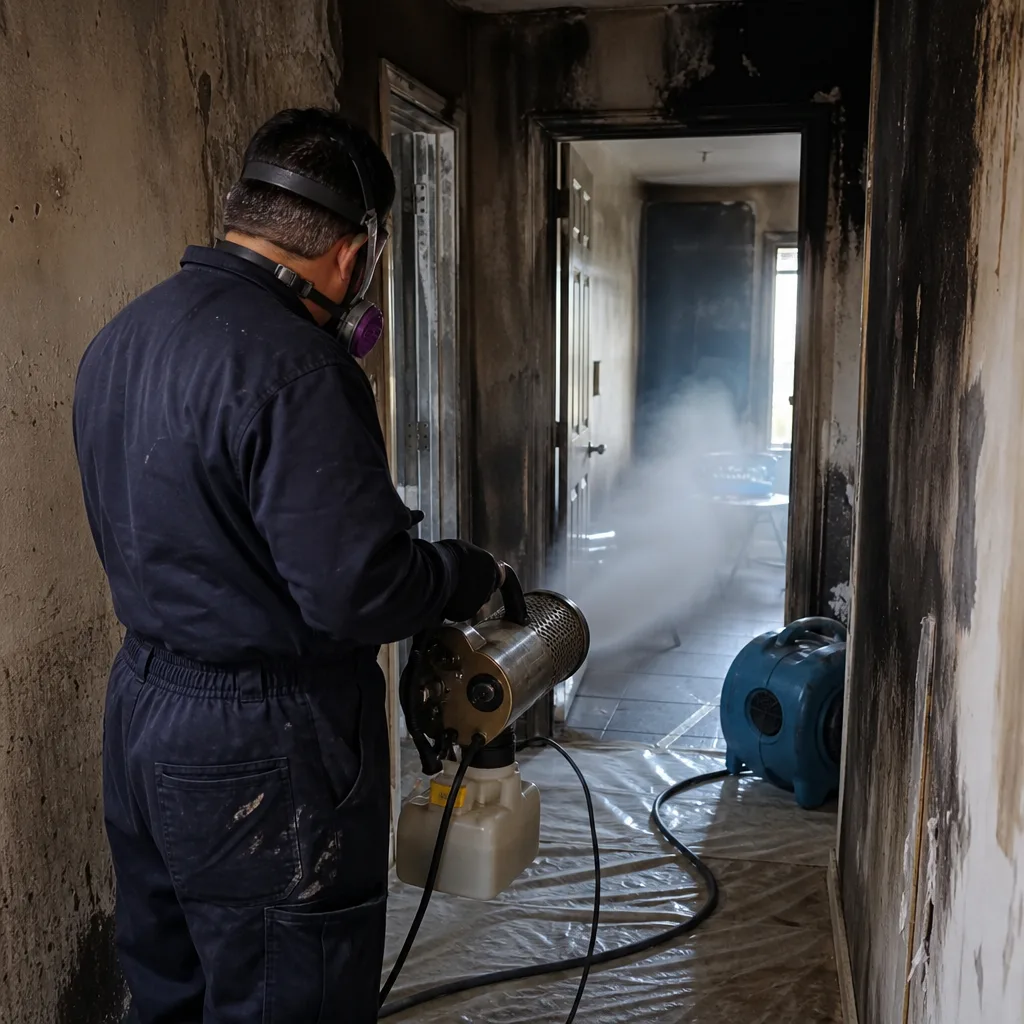
When wind-driven rain breaches a multi-valley roofline in a Suwanee brick-front home, the water doesn’t always pool on the floor. It runs down rafter bays, saturates insulation, and drips into wall cavities. Our storm damage cleanup crews cut out wet drywall, remove soaked insulation, and dry the framing to the dry standard before rebuilding. We document every step with photos for your carrier. Direct insurance billing means you never play messenger between us and the adjuster.
Emergency Board-Up
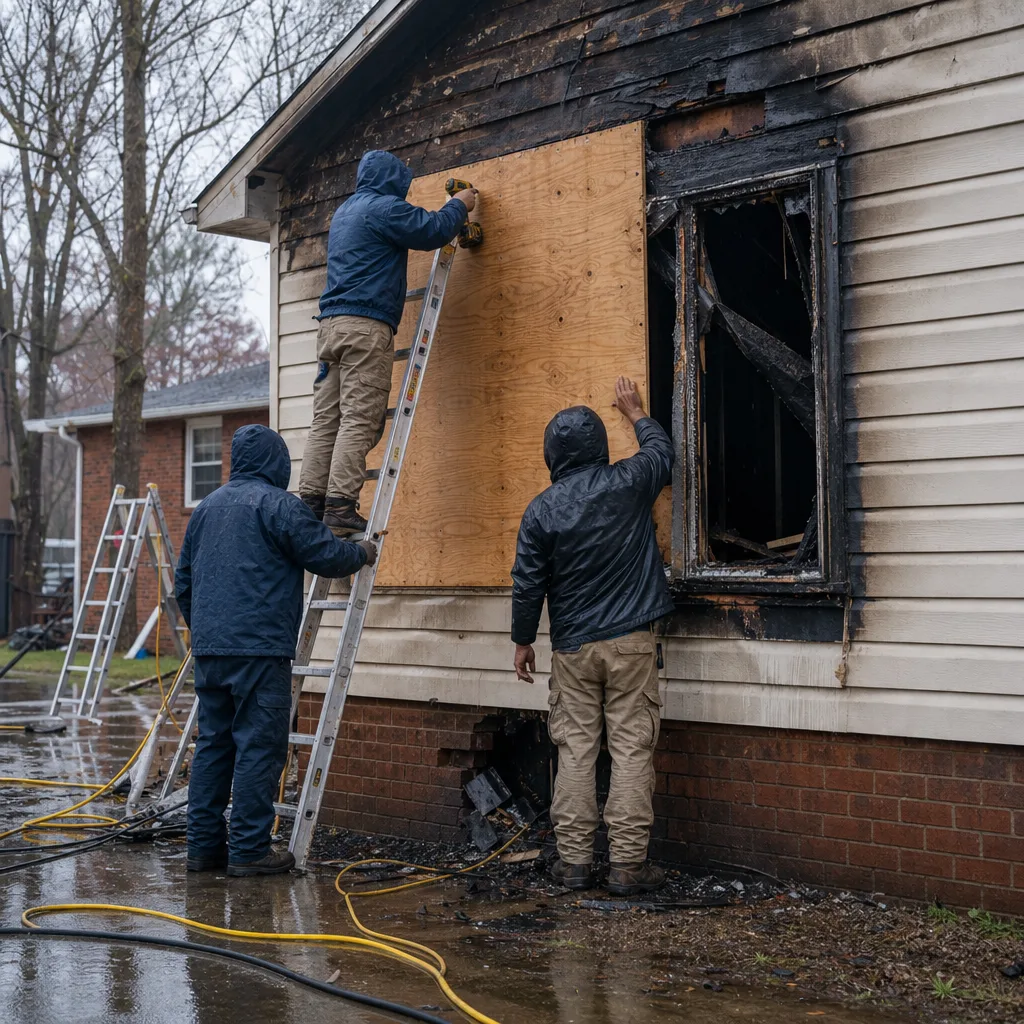
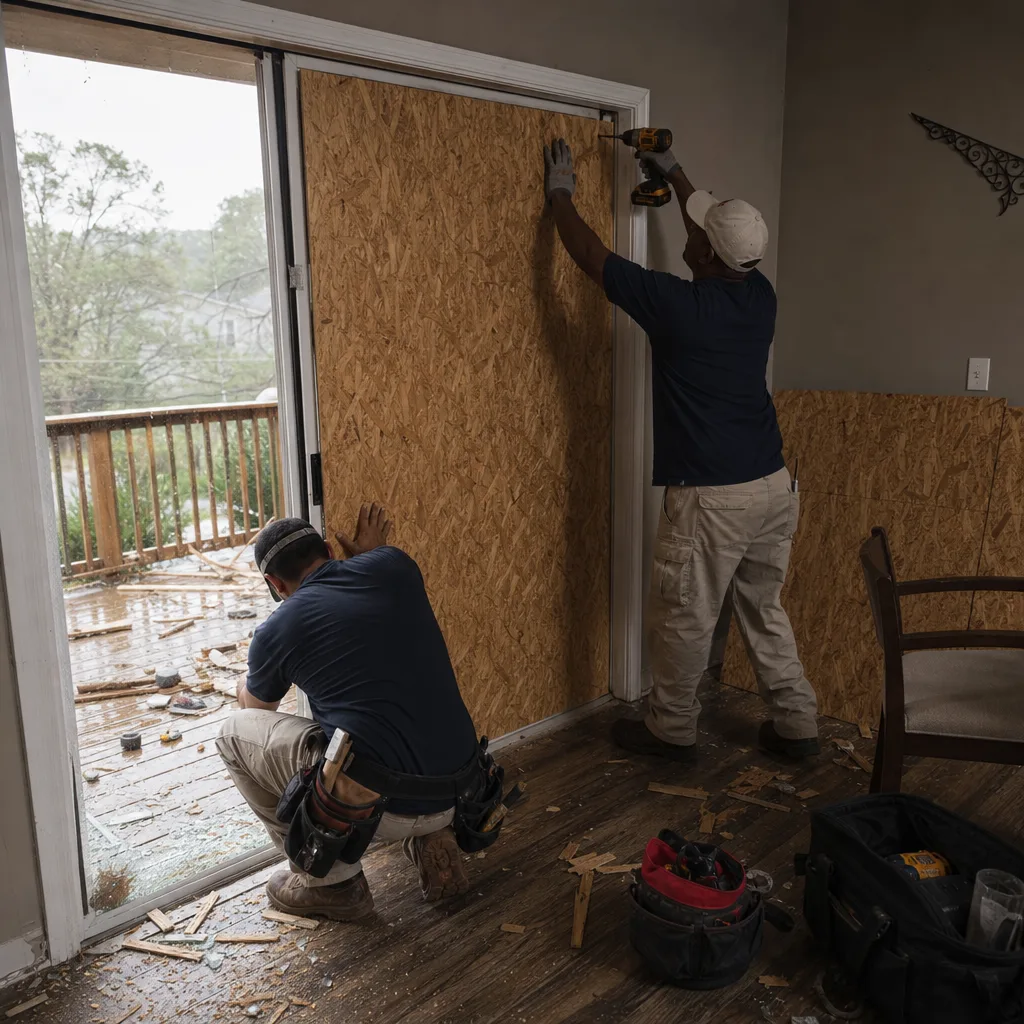
A broken carriage-house door or a shattered custom wood entry leaves your Suwanee home open to weather and intruders. Our emergency board-up crews arrive fast, secure the opening with professional-grade materials, and tarp any exposed roof sections the same visit. We then photograph everything for your claim and schedule the rebuild. The board-up buys time; the documentation protects you.
Roof Tarping
Suwanee’s complex multi-valley rooflines are beautiful, but every valley flashing is a failure point after 20 to 30 years of Georgia thunderstorms. When wind lifts a shingle or tears a valley flashing, water enters fast. Our roof tarping team seals the breach with heavy-duty tarping anchored to hold through the next storm. Then we assess the underlying sheathing for moisture. Often the shingles looked fine from the ground while the OSB underneath was already delaminating.
What happens when you call
- 1
A real person answersNo phone trees - you reach a local pro.
- 2
You get an upfront price rangeHonest numbers before anyone is dispatched.
- 3
A background-checked tech heads outLicensed & insured, dispatched right away.
- 4
You approve before work beginsNothing starts until you say go.
Trusted Brands We Service in Suwanee
We service and restore all major equipment and material brands found in Suwanee homes, including Dri-Eaz and Phoenix drying systems, XPOWER air movers, and the custom components we encounter on premium builds. When we rebuild a carriage-house door or restore smart-home opener integration, we match the existing trim profile, door weight, and wireless protocol. We keep common parts stocked for fast turnaround on Suwanee jobs, so you’re not waiting a week for a hinge or a sensor. The goal is a restoration that looks like the storm never happened.
Common Storm & Disaster Restoration Problems We See in Suwanee Homes
- Concealed water intrusion behind EIFS cladding. Suwanee’s 1990s subdivisions were finished with synthetic stucco that, after 25-plus years, develops micro-cracks at window and corner transitions. Moisture gets behind the cladding and saturates OSB sheathing for months with zero visible interior symptom, until we cut into a wall and find hidden rot and mold.
- Finished basements flooding in the Suwanee Creek watershed. The rolling Piedmont topography funnels runoff directly toward aging foundations. Original waterproofing membranes fail at the 25-year mark, letting water enter wall cavities weeks before any visible staining shows on the finished side.
- Multi-valley roof failures during wind events. Brick-front and EIFS homes built between 1990 and 2008 often have complex rooflines with original valley flashings now past their service life. Wind-driven rain enters at those joints and delaminates engineered wood sheathing quickly, while the shingles above still look intact from the ground.
- Rapid mold colonization in wet building cavities. Suwanee’s year-round humidity means mold growth in saturated wall interiors begins within 48 to 72 hours. Once it starts, the remediation scope expands fast, which is why rapid extraction and drying on day one matters more than almost anything else.
Last spring our crew responded to a Suwanee home in the 30024 ZIP after an overnight squall overwhelmed an aging EIFS corner transition. Within hours we set up a Dri-Eaz LGR 7000XLi and Phoenix air mover in the finished basement, where water had migrated behind the synthetic stucco and saturated the OSB sheathing for months. We removed delaminated wall sections, matched the custom trim profile, and completed structural drying and mold remediation before rebuilding the water-damaged carriage-house door and restoring the smart-home opener’s wireless integration. That’s the full cycle: extraction, drying, and rebuild handled by the same certified crew, with a moisture log in the homeowner’s hands.
Pricing for Storm & Disaster Restoration in Suwanee, GA
A typical storm damage cleanup in Suwanee runs $1,200 to $4,500 depending on the square footage affected and how far water has migrated behind finishes. Flood damage restoration in a finished basement generally lands between $3,000 and $9,000 when you factor in extraction, drying, mold prevention, and rebuild of wet wall sections. Emergency board-up runs $400 to $1,200 depending on opening size and materials. Roof tarping typically costs $350 to $900. The biggest cost driver in Suwanee specifically is concealed moisture: if water sat behind EIFS for weeks before detection, the remediation scope grows. That’s why our free estimate includes a moisture map, not just a visual walkthrough. Call (888) 832-2758 for an exact quote. Estimates are free, and we bill your carrier directly so you’re not fronting costs while waiting on a claim.
We Also Serve Cities Near Suwanee
Floodline Restoration Co. of Atlanta serves Suwanee and the surrounding Gwinnett County communities, including Buford, Sugar Hill, Duluth, and Lawrenceville. Each area has its own housing stock and failure patterns. Suwanee’s EIFS-clad 1990s builds behave differently than Lawrenceville’s older, flatter lots or the newer construction in Johns Creek. Our crews know the difference because they work these streets every week.
Serving Suwanee, GA - Our Local Coverage Area
We’re based in the Suwanee area and know this community well. Use the map below to see our service coverage - if you’re nearby, we can almost certainly help.
FAQs - Storm & Disaster Restoration in Suwanee
The EIFS exteriors installed on many Suwanee subdivisions during the 1990s and early 2000s develop micro-cracks at window and corner transitions after 25-plus years of Georgia sun and storm cycles. Water enters those cracks, runs behind the synthetic stucco, and saturates the OSB sheathing underneath, often for months with no visible interior symptom. By the time a restoration technician cuts into the wall, the sheathing is delaminated and mold has colonized the cavity. If you own a 1990s EIFS home in Suwanee and notice even minor exterior cracking, call (888) 832-2758 for an assessment before the next storm does the real damage.
In Suwanee’s year-round high humidity, mold colonization in wet building cavities routinely begins within 48 to 72 hours of a water intrusion event. Finished basements in the Suwanee Creek watershed are particularly vulnerable because original waterproofing lets water sit behind finished walls where air doesn’t circulate. That means the clock starts the moment water breaches the foundation. Rapid extraction and drying on day one is the difference between a cleanup and a full mold remediation. Our crews bring professional-grade Dri-Eaz and Phoenix equipment and start extraction the same visit.
Suwanee’s residential landscape is almost entirely large-footprint homes built during the city’s 1990s to 2000s growth surge, the vast majority featuring finished basements carved into the rolling Piedmont topography of the Suwanee Creek watershed. Now 20 to 30 years old, these homes are hitting simultaneous end-of-life failures in original waterproofing membranes, OSB sheathing, and roofing systems. That creates layered, multi-system damage scopes that are far less prevalent in the flatter, older housing stock of Lawrenceville or the newer construction in Johns Creek. Our crew knows to check the EIFS even when the basement flood looks like a simple groundwater issue.
Those complex multi-valley rooflines that define Suwanee’s brick-front and EIFS homes concentrate water flow at valley flashing joints, which were installed 20 to 30 years ago and are now past their service life. Wind-driven rain enters at those joints and saturates the engineered wood sheathing underneath, which delaminates quickly. From the ground, the shingles look fine. The damage is happening underneath. Our roof tarping team seals the breach, then we assess the sheathing moisture before recommending repair or replacement.
Call (888) 832-2758 right away. A broken carriage-house door or custom wood entry leaves your home open to further storm damage and intruders, and in Suwanee’s humidity, any water that got in through the opening starts causing secondary damage within a day or two. Our emergency board-up crew arrives fast, secures the opening, tarp any exposed sections, and photographs everything for your insurance claim. Then our rebuild team matches the original trim profile and restores smart-home opener integration so the repair doesn’t look like a patch job. Homeowners who act within hours typically avoid the secondary mold scope entirely.
Written by Curt Bowman, Owner at Floodline Restoration Co., serving Suwanee since 2010.