
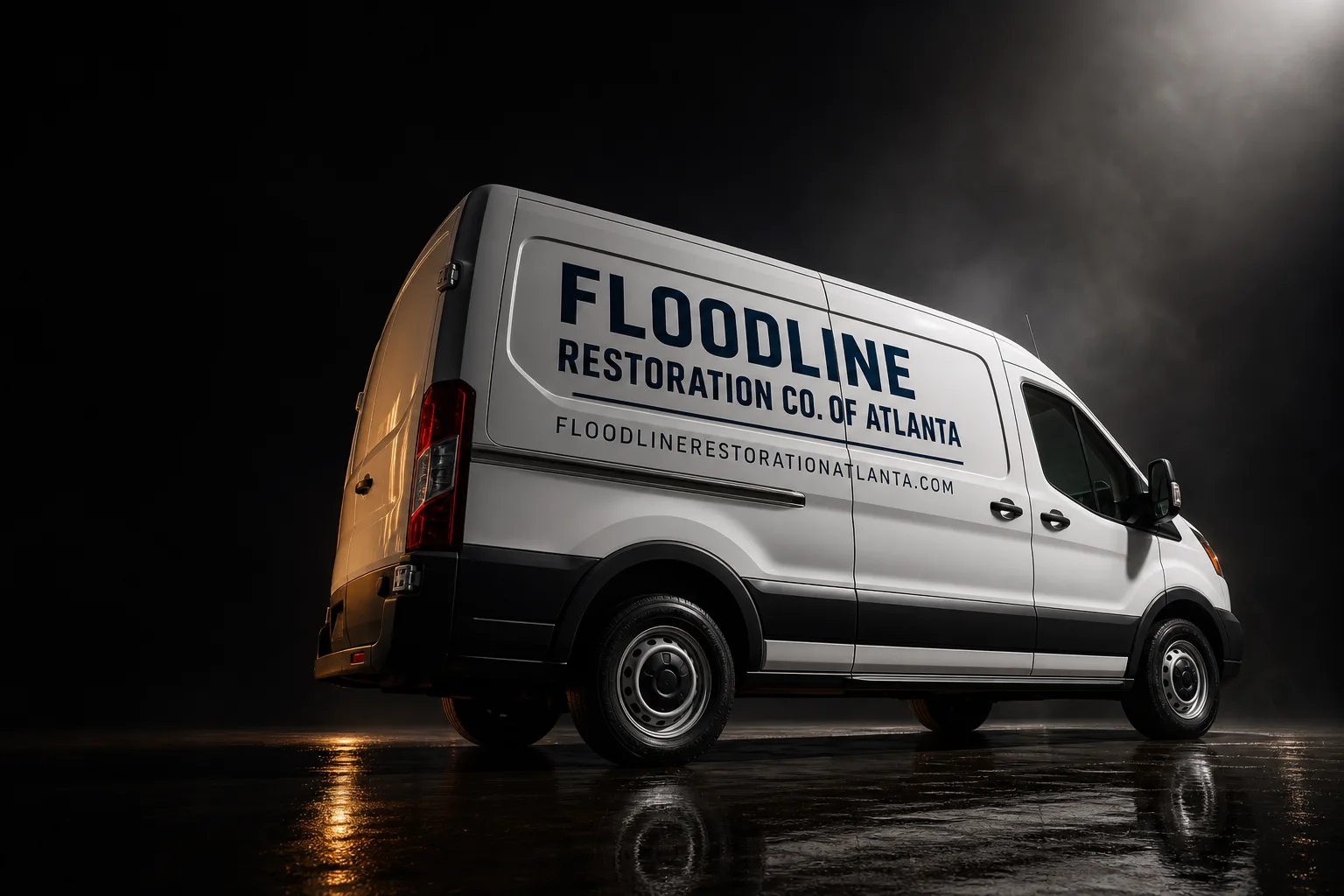
Fast, Reliable Water Damage Restoration Across Acworth
Water damage restoration in Acworth typically costs $1,800-$4,200 for a standard Category 1 clean-water extraction and structural drying job, with most crews able to reach your door within 60-90 minutes. If you’re standing in water from a burst pipe or watching Lake Allatoona creep toward your foundation, you need extraction running today, not tomorrow. Floodline Restoration Co. of Atlanta answers the phone with a live dispatcher 24/7 and keeps certified crews stationed to serve Acworth’s 30101 and 30102 ZIP codes. Call (888) 832-2758 now, and we’ll have water moving out of the house the same visit.
Why Floodline Restoration Co. of Atlanta Is Acworth’s Preferred Water Damage Restoration Company
We’re not new to this. Floodline Restoration Co. was founded in 2010 by Curt Bowman, and since then we’ve built our reputation the way Acworth homeowners expect: show up when you say you will, do the work right, and stand behind it in writing. Our Water Damage Restoration crews are background-checked, uniformed, and trained to IICRC, RIA, and IFA standards, so the technicians in your home are the same certified team that reads the moisture map on day one and hands you the dry log at the end.
Acworth residents call us because we know the difference between a rain-soaked crawl space in a 1992 builder-grade home off Baker Road and a slow saturation event caused by a Corps of Engineers pool raise on Lake Allatoona. That distinction matters when your adjuster asks what happened. We document the causation, photograph everything, and bill your carrier directly so you never play messenger. The 90-Day Done Right Promise, our Keystone Standard, comes in writing with every job: if it’s not done right, we make it right. No arguing, no paperwork battles.
Our response time to most of Acworth, including the subdivisions along Bells Ferry Road and the historic downtown corridor, runs 60-90 minutes for emergency water extraction. When you call at 2 a.m., a live dispatcher picks up. Not a recording. That’s the standard we’ve held for over 42 years of combined team experience serving communities like this one.
Our Water Damage Restoration Services in Acworth
Emergency Water Extraction
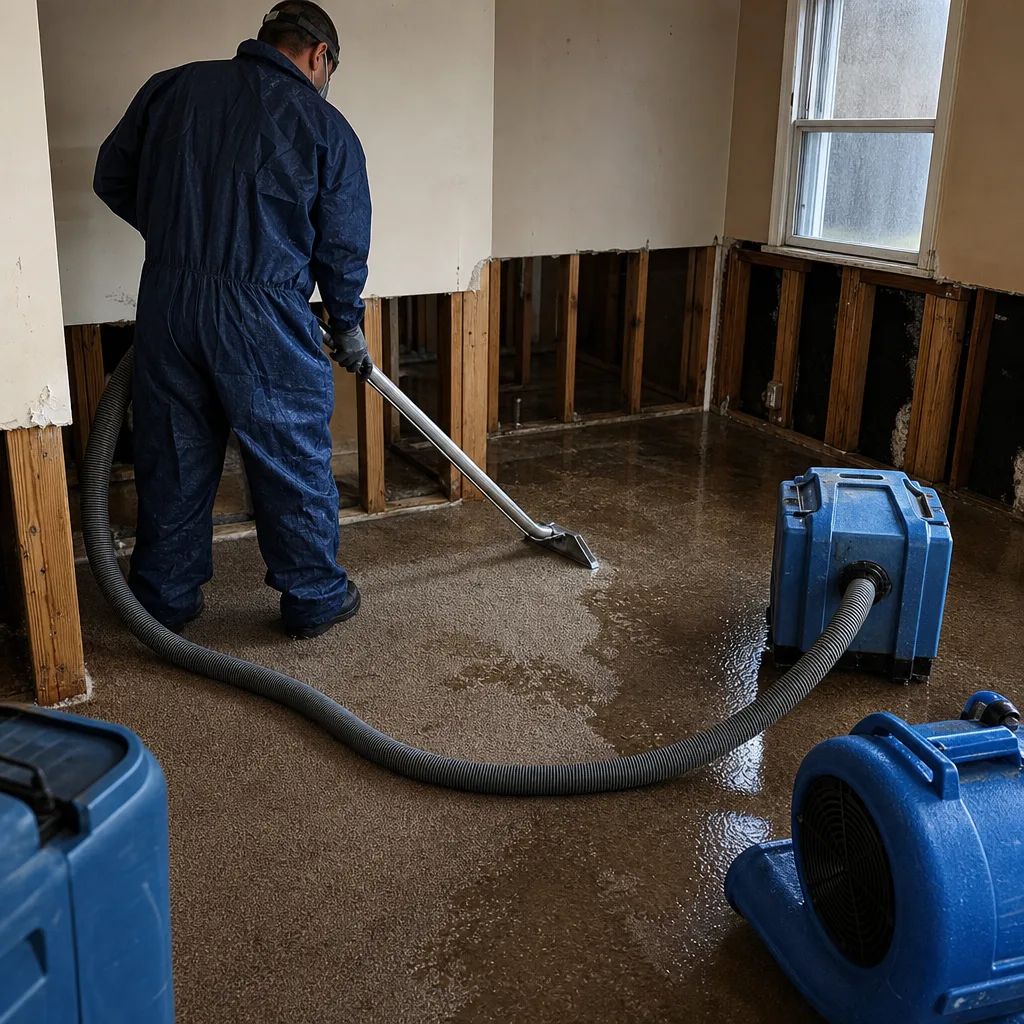
Standing water in an Acworth home doesn’t wait. Every hour it sits, it wicks up drywall, saturates subfloor, and feeds mold behind baseboards. Our crews arrive with truck-mounted Dri-Eaz extraction units and start pulling water immediately. For a 1,200-2,000 square foot single-story home in the 30101 ZIP, full extraction typically takes 2-4 hours from arrival to standing-water-clear.
Structural Drying & Dehumidification
After extraction, the real work begins. We place Phoenix axial airmovers and LGR dehumidifiers in a calculated layout, then log daily moisture readings until the structure hits the dry standard. In Acworth’s 1980s-1990s subdivision homes, original OSB sheathing swells quickly, so we often run Injectidry systems behind baseboards and inside wall cavities to pull hidden moisture before mold takes hold. This is where cheaper outfits cut corners and where the Done Right Promise earns its keep.
Flood Cleanup
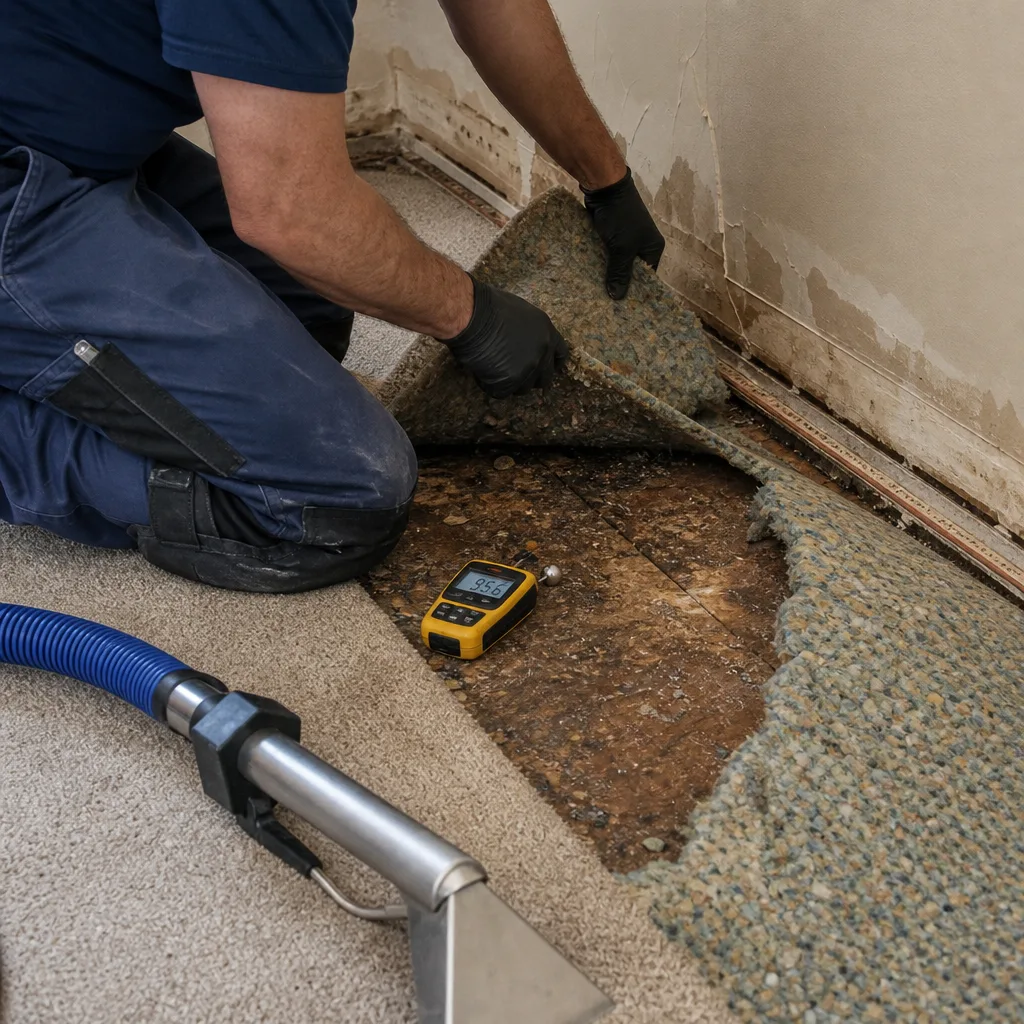
Lake Allatoona flooding is different from rainwater intrusion. When the Corps raises the pool elevation ahead of a heavy-rain forecast, lakeside basements and crawl spaces in Acworth can fill from the rising shoreline, even without a drop of direct rainfall. That causation detail changes how we document the loss for your carrier. We handle contaminated floodwater as Category 3, which means antimicrobial treatment after extraction, not just drying.
Burst Pipe Restoration
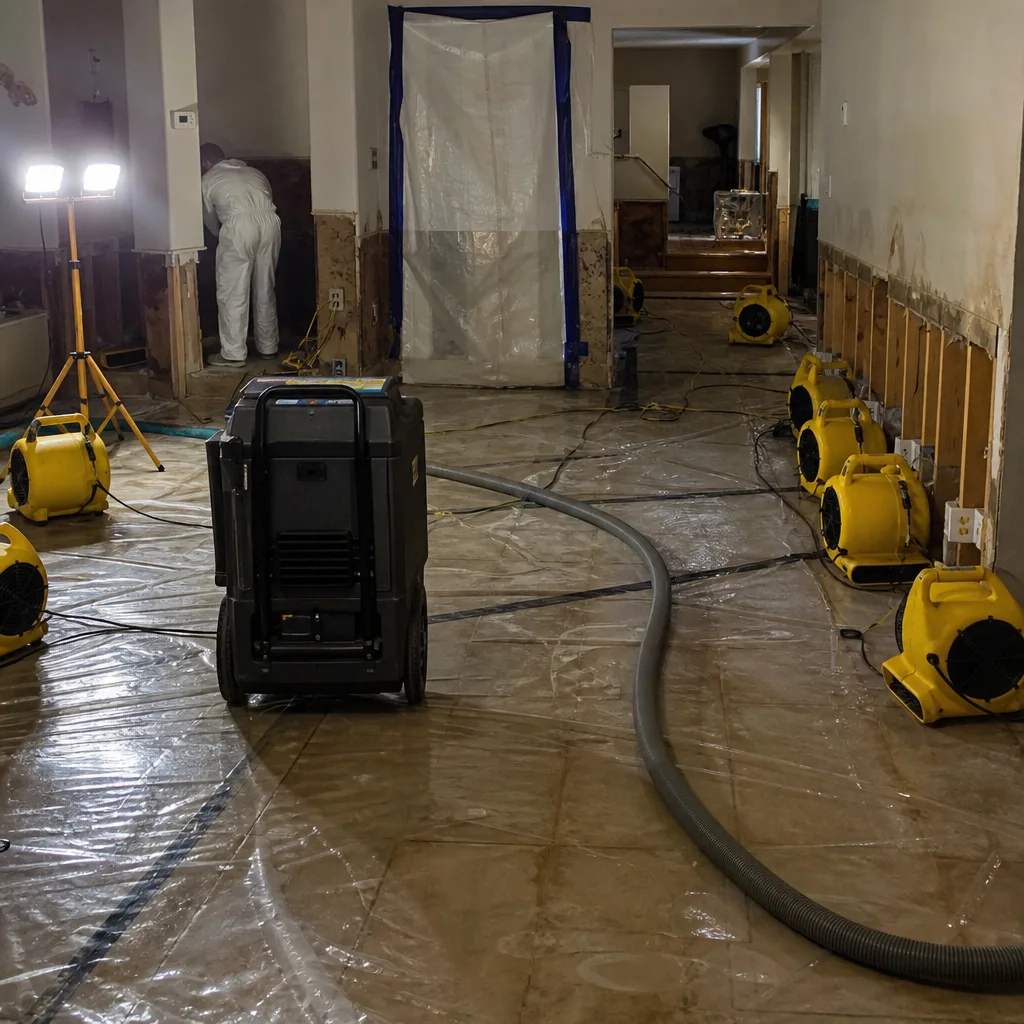
Acworth’s 1980s-1990s housing stock contains a hidden liability: polybutylene supply lines. These gray plastic pipes were common in that era and fail catastrophically, often while homeowners are at work. A single burst line can flood an entire first floor in under an hour. We respond, extract, dry, and rebuild. Most jobs are completed in a single visit using professional-grade equipment from Dri-Eaz, Phoenix, and XPOWER. That means one crew, one point of accountability, and a moisture log you can hand your adjuster without a second thought.
Key takeaways for Acworth homeowners:
What happens when you call
- 1
A real person answersNo phone trees - you reach a local pro.
- 2
You get an upfront price rangeHonest numbers before anyone is dispatched.
- 3
A background-checked tech heads outLicensed & insured, dispatched right away.
- 4
You approve before work beginsNothing starts until you say go.
Trusted Brands We Service in Acworth
We work with the equipment homeowners and insurers trust: Dri-Eaz extraction units, Phoenix airmovers, and B-Air and XPOWER dehumidifiers. Because we’re local to the Acworth market, we keep parts and replacement components stocked for fast turnaround on restoration equipment across 30101 and 30102. That’s not a sales line, it’s just how we run our dispatch board. If your home has a water event on a Saturday night, you don’t want to wait on a parts truck from across the metro.
Common Water Damage Restoration Problems We See in Acworth Homes
- Lake Allatoona pool raises flooding low-lying properties. The Corps of Engineers actively manages the reservoir’s water level, and when they raise the pool ahead of a storm, waterfront homes in Acworth can take on water from a rising shoreline rather than direct rainfall. This slow saturation often goes unnoticed until musty odors or buckling floors appear.
- Sudden polybutylene pipe failures. Homes built between roughly 1985 and 1995 across Acworth’s subdivisions commonly contain gray polybutylene supply lines. These pipes degrade from the inside and fail suddenly, flooding interiors while residents are away. We see this call pattern more in Acworth than in Kennesaw or Woodstock.
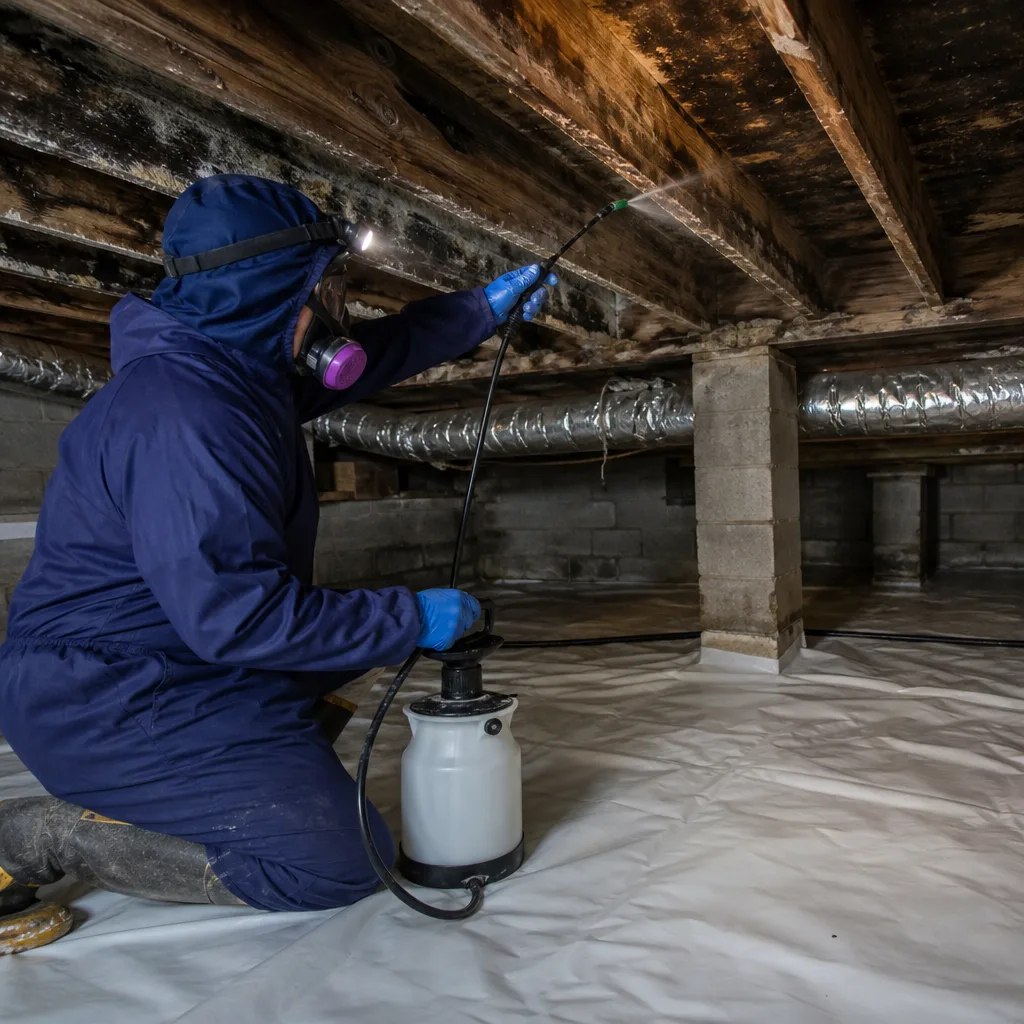
- Red Georgia clay pushing water into crawl spaces. Acworth’s dense clay soil sheds water laterally instead of absorbing it. After even moderate rain, moisture runs toward foundation vents and into crawl spaces, creating persistent dampness that attacks subflooring and framing. This drives mold and rot calls nearly year-round.
- Older craftsman homes near downtown with minimal vapor barriers. The pre-WWII wood-frame homes around Acworth’s historic district were built with balloon-frame construction and little to no vapor barrier. Post-water mold remediation in these homes is slower and more invasive because moisture travels through wall cavities differently than in modern stud walls.
Pricing for Water Damage Restoration in Acworth, GA
Straight numbers, because you deserve them. Emergency water extraction alone in Acworth runs $400-$900 for a standard room or crawl space. Full structural drying with dehumidifiers and airmovers typically lands between $1,500-$3,200 depending on square footage and how long the water sat. Burst pipe restoration including repair, extraction, and drying usually runs $2,500-$5,000. Category 3 flood cleanup from lake water or sewage starts around $3,000 and climbs with contamination level and affected area. We give you a written scope before any work starts, and we bill your insurance carrier directly. Current standing offers for Acworth homeowners: $50 off any repair over $250 and a Senior & Veteran 5% discount, always. Call (888) 832-2758 for a free estimate, and we’ll walk you through the exact numbers for your situation.
We Also Serve Cities Near Acworth
If you’re just outside city limits, we’ve got you covered too. Our Acworth crews regularly serve Kennesaw, Woodstock, Holly Springs, and Marietta, bringing the same certified team and written guarantee. Learn more about how we serve the wider metro on our Water Damage Restoration in Acworth page or call the office directly at (888) 832-2758. Dispatch is coordinated from our Atlanta office, with crews stationed locally for fast Acworth response.
Serving Acworth, GA - Our Local Coverage Area
We’re based in the Acworth area and know this community well. Use the map below to see our service coverage - if you’re nearby, we can almost certainly help.
FAQs - Water Damage Restoration in Acworth
If the water appeared without direct rainfall on your property, or if it rose from the ground up (not from wall leaks), that points to a lake-driven event. The Corps of Engineers posts pool elevation data daily, and a rising shoreline backs water into basements and crawl spaces of low-lying Acworth properties near the lake. Document the date, check the lake elevation history for that day, and tell your restoration contractor. We record causation in our initial assessment, which your adjuster will need. Call (888) 832-2758 and we’ll send a crew to assess and document it properly.
Yes, far more common here than in neighboring towns. Acworth’s dense stock of late-1980s through mid-1990s subdivision homes frequently contains polybutylene supply lines, a gray plastic pipe that deteriorates from the inside and fails without warning. We responded to a Grove Park home off Baker Road in 30101 where a burst polybutylene line flooded the entire first floor while the owners were at work. Full extraction and a four-day structural drying cycle followed. If your home still has these lines, this is a known risk. Call (888) 832-2758 and we’ll assess the damage and document everything for your carrier.
The culprit is Acworth’s dense red Georgia clay. It doesn’t absorb water; it sheds it laterally. After even a moderate rain, moisture runs across the clay and pushes through foundation vents into crawl spaces. If your home sits on a slope or has a builders-grade foundation from the 1980s-1990s era, water pools around the base and wicks upward into subflooring. This is a persistent, near-year-round call type for our drying crews here. We can assess whether you need grading, encapsulation, or structural drying. Call (888) 832-2758 for a site visit.
Move valuables and electronics to higher ground first. Cut power to outlets in the lower level if water is near them. Do not walk through the water if the power is still on. Then call us at (888) 832-2758. A live dispatcher answers 24/7, and we’ll send a crew to start mitigation the same visit. Lake-driven flooding is Category 3 water, meaning it requires antimicrobial treatment after extraction, not just drying. The faster we get equipment running, the less structural damage your home takes.
Yes. The pre-WWII craftsman homes around Acworth’s historic district use balloon-frame construction, which creates continuous wall cavities from basement to attic. Moisture travels vertically through these cavities, spreading far beyond the visible water source. Minimal or absent vapor barriers make drying slower and mold remediation more invasive. We run moisture meters in wall cavities and often place Injectidry systems behind plaster or shiplap walls to pull hidden moisture before mold sets in. Call (888) 832-2758 and we’ll tailor the drying plan to your home’s construction, not a one-size-fits-all template.
Written by Curt Bowman, Owner at Floodline Restoration Co. of Atlanta, serving Acworth and the greater metro area since 2010.