
Fast, Reliable Water Damage Restoration Across Buford
Water damage restoration in Buford typically costs $950-$4,800 depending on the source, square footage affected, and whether structural drying is needed. Most emergency extraction jobs in the 30515, 30518, and 30519 ZIP codes can be underway within 60-90 minutes of your call. Floodline Restoration Co. answers the phone with a live dispatcher 24 hours a day, every day, including holidays. Call (888) 832-2758 now and a background-checked, IICRC-certified crew heads toward Buford immediately.
Our Water Damage Restoration team works the entire Lake Lanier corridor, and we know Buford’s specific failure patterns better than any out-of-town franchise ever could. The line the water left is where we start.
Why Floodline Restoration Co. of Atlanta Is Buford’s Preferred Water Damage Restoration Company
We’re the crew Buford homeowners call when the water is rising and the insurance adjuster hasn’t picked up yet. That’s not an accident. Our techs live in Gwinnett and Hall counties, shop at the Mall of Georgia, and know that Buford Dam Road backs up on summer weekends when Lanier is at full pool. More important, they know what happens behind the walls of Buford’s specific housing stock after a supply line lets go.
We’ve worked the lakefront coves off Buford Dam Road where Corps drawdown cycles leave crawlspaces damp for weeks, not days. We’ve dried out historic craftsman homes near downtown Buford where 30-inch doorways and plaster walls complicate airflow. And we’ve handled hundreds of 1990s-2000s subdivision homes off I-985 where OSB sheathing soaks up water like a sponge. That experience means we arrive already knowing where the moisture is hiding in your specific house type.
Our 90-Day Done Right Promise, the Keystone Standard, backs every job in writing. If it’s not done right, we make it right. No paperwork battles, no arguing. We stand behind it.
Our Water Damage Restoration Services in Buford
Emergency Water Extraction in Buford
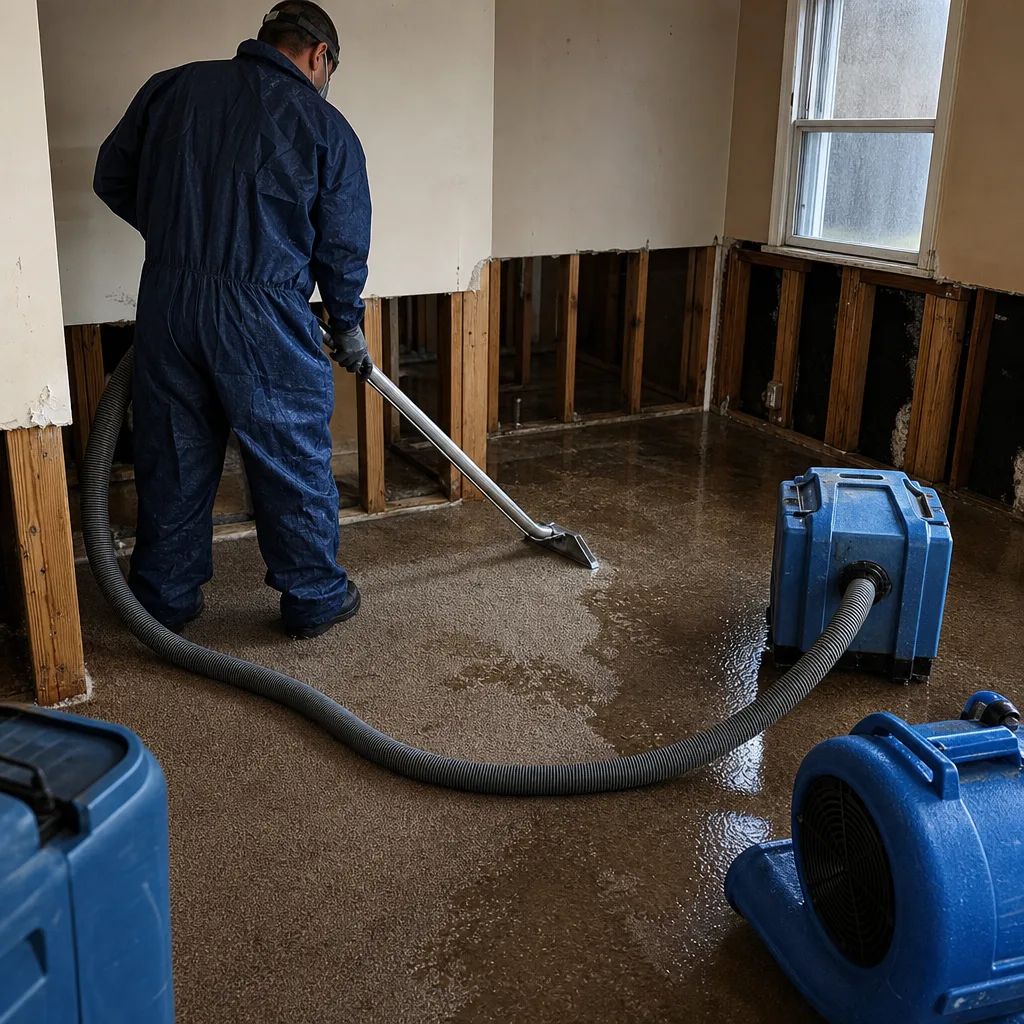
Water removal in Buford’s lakefront 30518 homes usually runs $400-$1,800, though a burst supply line in a two-story subdivision house can push toward $2,500 when multiple rooms are involved. We arrive with truck-mounted extraction units that pull hundreds of gallons in the first hour, not the 40 gallons that consumer shop vacs manage. The goal is getting standing water out before it wicks into baseboards, drywall, and the subfloor beneath your engineered hardwood.
Structural Drying & Dehumidification in Buford
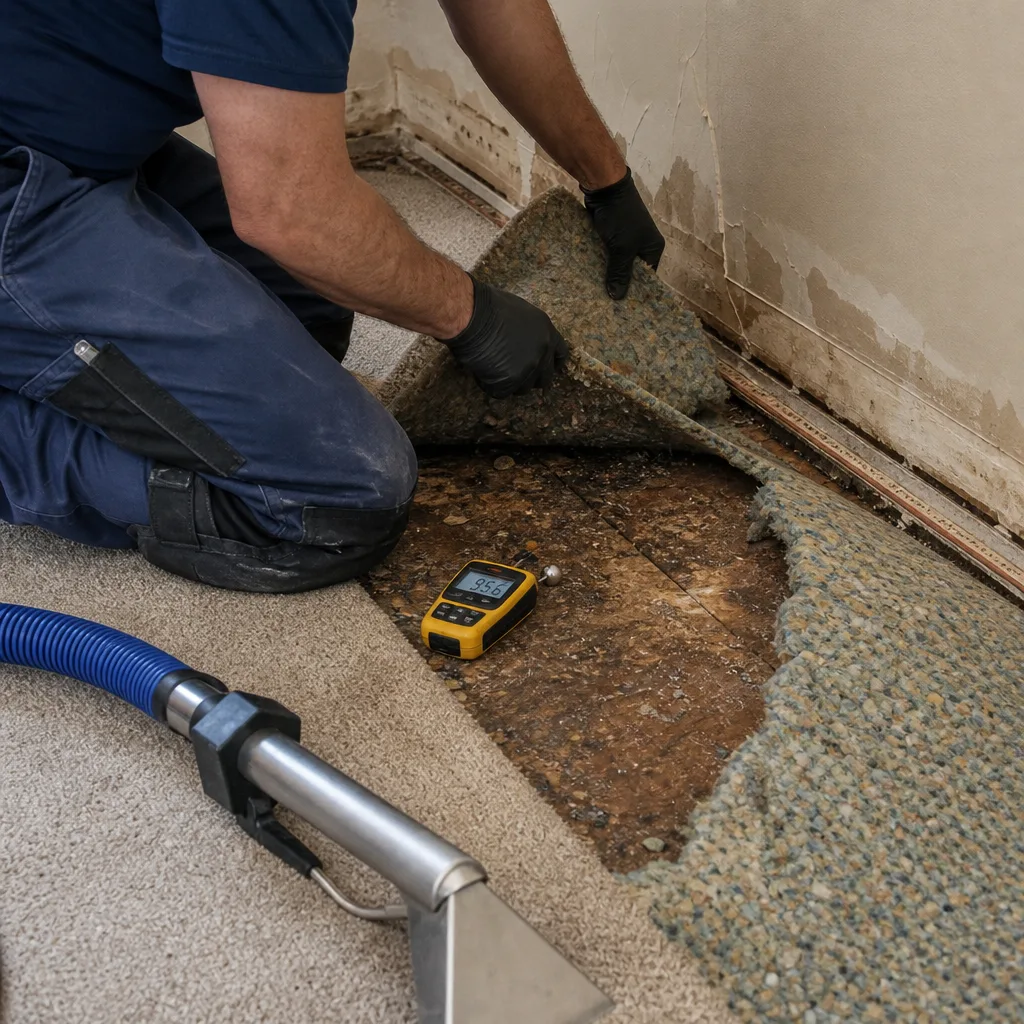
Structural drying in Buford typically costs $300-$900 per affected room when done correctly with professional-grade equipment. We deploy Dri-Eaz LGR dehumidifiers, Phoenix air movers, and B-Air filtration units, then take daily moisture readings until the dry standard is met. That moisture log goes to you and your insurance carrier. In Buford’s OSB-era subdivisions, skipping this step or using undersized residential equipment means the subfloor looks dry on the surface while hidden moisture feeds mold inside the floor cavity.
Basement Water Removal in Buford
Basement water removal in Buford runs $650-$2,200 for typical below-grade flooding. Buford’s red clay soil resists absorption, so heavy thunderstorms send runoff racing toward and under your foundation. Slab edges and crawlspace drainage get overwhelmed within an hour of a major downpour. We handle extraction, sump pump assessment, and the exterior grading conversation that prevents the same water from returning in three weeks.
Burst Pipe Restoration in Buford
Burst pipe restoration in Buford’s older downtown homes costs $850-$2,600 depending on how long the water ran before discovery. The historic craftsman homes off South Hill Street and around Bona Road have original wood framing that survives water intrusion better than newer engineered lumber, but they also hide small leaks in plaster walls until the damage is extensive. We use Injectidry systems to dry inside wall cavities without tearing out plaster that’s been there since 1940.
What happens when you call
- 1
A real person answersNo phone trees - you reach a local pro.
- 2
You get an upfront price rangeHonest numbers before anyone is dispatched.
- 3
A background-checked tech heads outLicensed & insured, dispatched right away.
- 4
You approve before work beginsNothing starts until you say go.
Trusted Brands We Service in Buford
We service and install equipment from every major manufacturer, and for Buford customers we keep common Dri-Eaz and Phoenix filters, Injectidry panels, and B-Air replacement parts stocked locally. That means no waiting on a shipment from a distribution center in another state while your subfloor stays wet. If your garage door opener sustained water damage during a flood, we’ll assess it same-visit and get your rolling-code security back online before we leave. Most jobs are completed in a single visit.
Common Water Damage Restoration Problems We See in Buford Homes
- Drawdown rot in 30518 lakefront crawlspaces: Buford Dam operators drop Lake Lanier several feet every fall, leaving soil and timber that had been submerged for months suddenly exposed to air. The repeated wet-dry cycling accelerates wood decay in boathouse structures and pier-adjacent crawlspaces, and homeowners don’t notice until the late-winter mold bloom hits.
- OSB subfloor delamination in I-985 corridor subdivisions: Buford’s 1990s-2010s housing stock was built with oriented strand board and engineered wood framing that absorbs moisture aggressively. When a supply line breaks under a kitchen island, the OSB swells and delaminates quickly, which means the repair scope and cost run higher than in the solid-lumber homes across the railroad tracks.
- Red clay runoff overwhelming slab edges after thunderstorms: The Georgia Piedmont clay beneath all three Buford ZIP codes doesn’t absorb water like sandy soil. During warm-season thunderstorms, runoff sheets toward your foundation and slips under the slab edge or into the crawlspace. Contractors who only re-dry interiors without addressing exterior grading get repeat callbacks from the same homeowners every spring.
- Tight clearance drying in historic downtown homes: Narrow doorways, alley-load garages, and small rooms in Buford’s early-20th-century homes mean standard drying setups don’t fit. Improper equipment placement creates dead air zones where moisture lingers in wood framing behind kitchen cabinets or beneath built-in shelving, feeding mold for months after the visible water is gone.
Pricing for Water Damage Restoration in Buford, GA
We Also Serve Cities Near Buford
Our crews regularly drive from Suwanee to Sugar Hill, Lawrenceville to Dacula, and everywhere in between. If you’re just outside Buford’s city limits, we’re still your local team. Learn more about our service area or read specific details about Water Damage Restoration in Buford and surrounding Lake Lanier communities.
Serving Buford, GA - Our Local Coverage Area
We’re based in the Buford area and know this community well. Use the map below to see our service coverage - if you’re nearby, we can almost certainly help.
FAQs - Water Damage Restoration in Buford
How does the Army Corps of Engineers’ annual drawdown of Lake Lanier affect my lakefront home’s crawlspace?
The Corps drops Lanier several feet each fall, exposing soil and timber around your foundation to air after months of submersion, which drives a wet-dry cycling pattern that accelerates wood decay and feeds mold in crawlspaces throughout 30518. We inspect for what we call drawdown rot every time we work a lakefront Buford home. Call (888) 832-2758 if your crawlspace smells musty every March.
Why do my hardwood floors cup so quickly after a supply line leak in Buford’s newer subdivisions?
Because the plywood or OSB subfloor beneath your engineered hardwood absorbs water fast, and the high humidity trapped between the subfloor and the finished floor causes the boards to cup within 48-72 hours. Buford’s 1990s-2010s construction uses engineered wood materials that react to moisture much faster than the solid lumber in older homes. Rapid extraction and correctly placed drying equipment are the only way to prevent permanent cupping.
How quickly should I call for water extraction after a thunderstorm floods my Buford basement?
Immediately. Buford’s red clay soil sends runoff toward your foundation within the first hour of heavy rain, and every additional hour the water sits pushes moisture deeper into your slab edges and framing. Same-visit extraction is the difference between a $1,000 drying job and a $5,000 mold remediation plus rebuild.
Will my townhome door frame and garage entry be secure when you set up drying equipment?
Yes. Before we leave, we verify every entry point we touched, including garage door openers and rolling-code remotes, is functioning and secure. We set up drying equipment so all doors lock normally overnight. Your security during the drying process matters as much as the drying itself.
What happens to my boathouse or dock if water levels fluctuate during the restoration?
We schedule lakefront work with Lanier’s seasonal levels in mind, so the drying plan accounts for the Corps’ drawdown and spring refill schedule. For boathouse and pier-adjacent structures, we inspect for existing drawdown rot before we start and include any structural concerns in your written scope. Call (888) 832-2758 for an assessment, and we’ll walk you through exactly what we’re seeing.
Contact Floodline Restoration Co. for Water Damage Restoration in Buford, GA
Call (888) 832-2758 now. A live person answers, not a recording. A certified, background-checked crew reaches Buford quickly and starts extraction the same visit. Most jobs are completed in a single visit with professional-grade Dri-Eaz, Phoenix, and B-Air equipment. You get a written scope before work starts, a moisture log when the dry standard is met, and the 90-Day Done Right Promise in your hands. We’ve served this community with honest, steady workmanship for over a decade. We’ll be there when we say.
Written by Curt Bowman, Owner at Floodline Restoration Co., serving Buford and the Lake Lanier corridor with certified water damage restoration since 2010.