
Water Damage Restoration Cost Guide: What Atlanta Homeowners Pay in 2026
A burst pipe caught in the first two hours costs roughly half what the same pipe costs if discovered the next morning. The repair itself doesn’t change. What changes is whether the drywall and subfloor cross the moisture threshold that turns a drying job into a tear-out-and-rebuild job. If you’d rather not sort through the variables yourself, call (888) 832-2758 and we’ll walk you through it.
Why the Per-Square-Foot Average Is Useless
Walk into any water damage conversation and you’ll hear a number like $3.75 per square foot. That figure gets quoted by national guides, insurance adjusters, and the guy next door. The problem is that it averages together a pinhole leak caught in ten minutes and a water heater that emptied itself into the basement over a long weekend. Those are not the same job. One involves setting up fans for three days. The other involves pulling baseboards, cutting drywall, replacing a subfloor, and repainting. In metro Atlanta, where humidity in July and August keeps materials wet longer than they would stay in Phoenix, elapsed time matters more than any other variable. Cost estimates that skip over how long the water sat are not just vague. They’re misleading.
The single biggest cost driver is the moisture threshold. Porous materials like drywall, particle board, and carpet pad cross that threshold around hour six. Before that point, professional extraction and applied structural drying can usually salvage the material. After it, you’re looking at removal, disposal, and new material. That’s the line where a $900 drying job becomes a $4,300 rebuild.
Cost Matrix: Elapsed Time and Material Type
Here’s the framework we use at Floodline Restoration Co. of Atlanta home when we build estimates. It crosses four elapsed-time bands against the four most common material conditions we see in Atlanta houses.
- 0 to 2 hours, hardwood floors: $850 to $1,600. Extraction, floor mat drying system, and dehumidification. Refinishing usually not needed if the finish is intact. Sawcut and re-lace only if cupping appears weeks later, rare when the water is caught this fast.
- 2 to 6 hours, engineered wood over slab: $1,200 to $2,400. Engineered wood delaminates faster than solid hardwood. Expect plank replacement in the wetted zone plus concrete slab drying. If the slab held water, add moisture testing and a low-grain refrigerant dehumidifier running three to five days.
- 6 to 24 hours, carpet over wood subfloor: $2,800 to $5,600. Carpet pad almost always goes. Subfloor in the affected area gets pulled if the moisture meter reads above 20 percent at the wood. Baseboard removal, drywall cut at the floodline, containment, and three to five days of drying before rebuild. This is the most common scenario we walk into in DeKalb County.
- 24+ hours, concrete slab with finished walls: $5,000 to $11,000. Full lower-wall cut, insulation replacement, trim removal, antimicrobial treatment, and a longer dry-out because the slab acts as a moisture reservoir. In Atlanta’s older neighborhoods with block-and-brick construction, the masonry wicks water up from the sill plate and extends drying time by two or three days.
Those ranges reflect what we quote in Atlanta and the surrounding counties in 2026. They assume a clean-water source. Gray or black water, the stuff from a sewage backup or a dishwasher that sat for days, pushes costs 40 to 60 percent higher because the protocol changes from drying to full contamination removal.
The Line Items Atlanta Insurers Actually Pay
Insurance adjusters in Georgia don’t pay for “water damage restoration” as one lump sum. They pay against a line-item estimate built on the IICRC S500 standard. Homeowners who know the line items can spot a lowball quote or a contractor padding a bill. Here’s what a typical covered claim includes.
- Emergency water extraction: The truck-mounted extraction or portable unit on day one. This is billed by the hour plus mobilization.
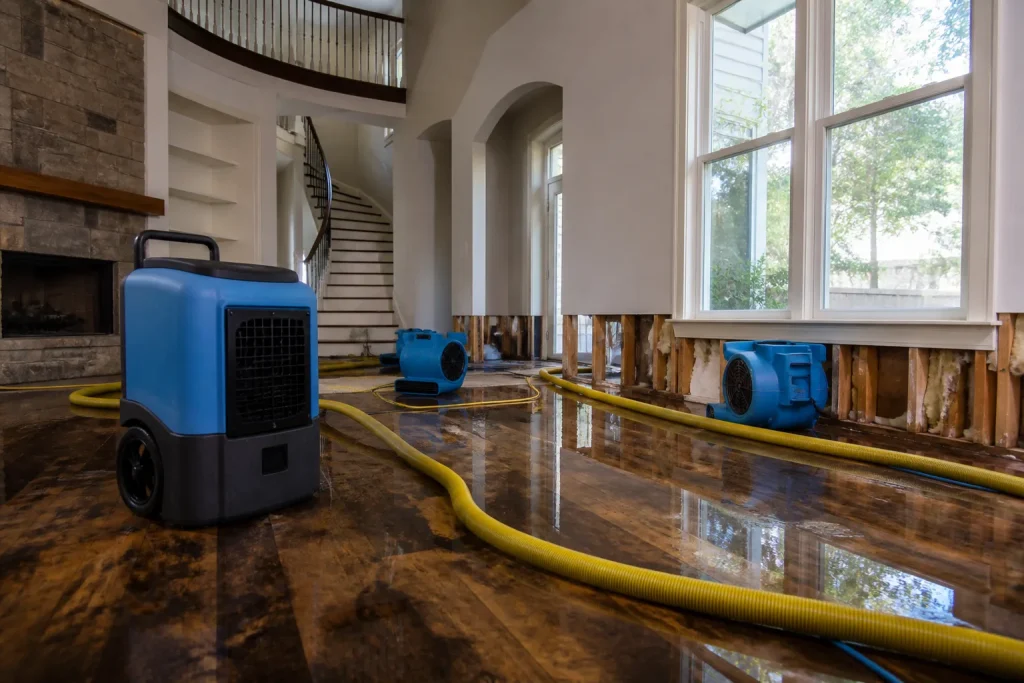
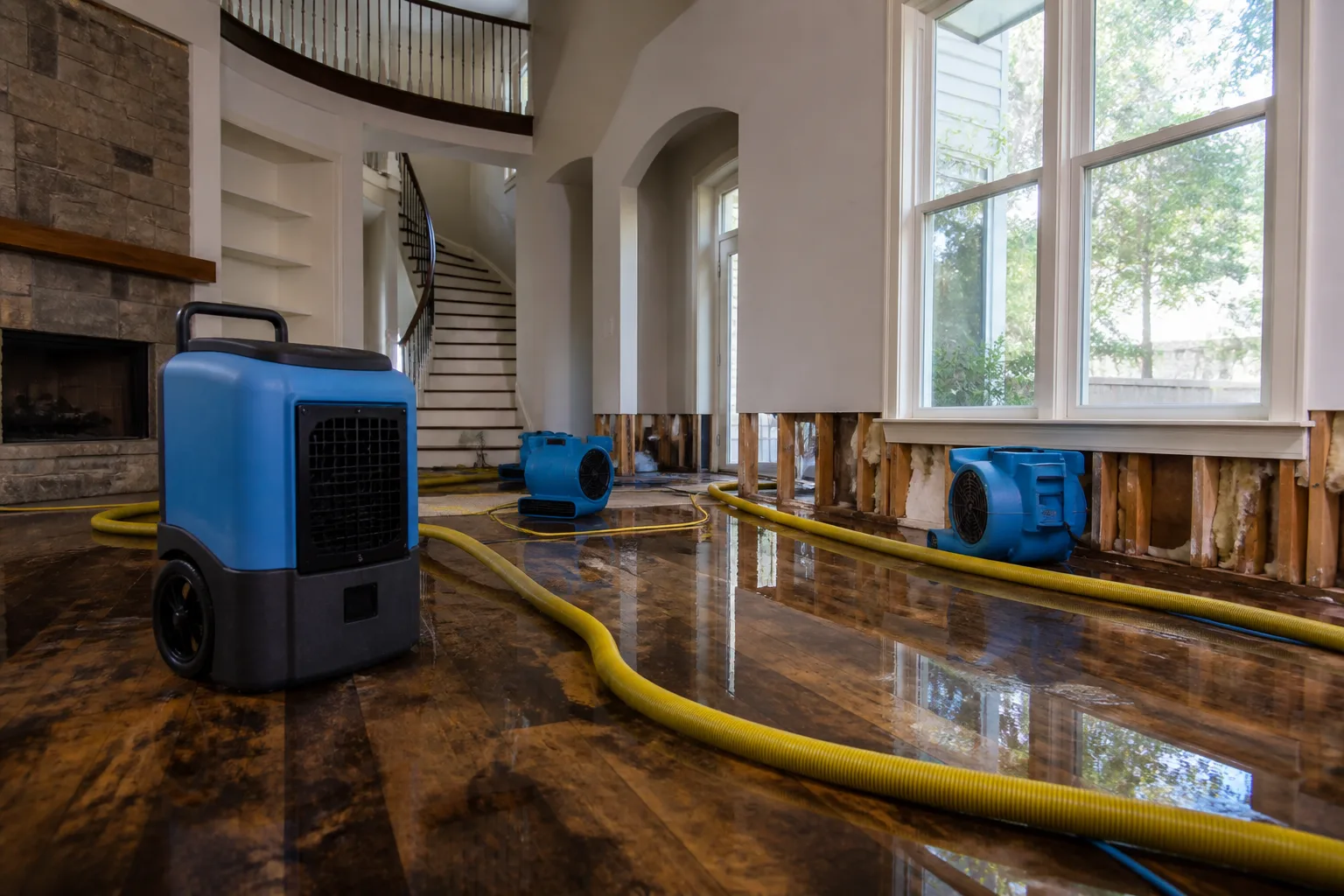
- Applied structural drying: The Dri-Eaz and Phoenix dehumidifiers, XPOWER air movers, and B-Air filtration units running for three to six days, plus daily monitoring with a moisture log.
- Antimicrobial treatment: Applied at the floodline and within wall cavities before rebuild. Required for any Category 2 water.
- Moisture monitoring: Daily or twice-daily readings using penetrating and non-penetrating meters, recorded in a log that goes to both the homeowner and the carrier. This is a recoverable line item, and a contractor who skips it is either cutting corners or plans to bill it later as a surprise.
- Rebuild: Drywall, insulation, trim, paint, and flooring. In a split-scope job, the mitigation company stops here and the rebuild estimate comes from someone else. We’ll get to why that’s a problem.
If you’re reviewing an estimate in Atlanta and one of these line items is missing, ask about it before signing. A missing moisture log is the most common one. It’s evidence the dry standard was actually met. Without it, a homeowner has no way to know the walls are dry behind the baseboard.
The Hidden Cost of a Split-Scope Job
This is the part most online guides never mention. When a mitigation company handles the extraction and drying, then hands the job to a separate reconstruction contractor, someone has to coordinate the handoff. Usually that someone is the homeowner. The mitigation tech says the structure is dry on a Thursday. The rebuild contractor can’t start until the following Wednesday. Then the rebuild crew finds a section that still reads wet, calls the mitigation company back out, and the clock resets. In the Atlanta market, split-scope water damage jobs typically run 9 to 14 days longer than jobs handled by one company from first extraction through rebuild. If the homeowner is out of the house, that’s two more weeks of hotel nights, meals, and boarding the dog. Carrying costs fall on the homeowner, and insurers push back on extended ALE claims when the delay comes from coordination gaps, not necessity.
That’s why we handle the full cycle under one roof. The same crew that read the moisture map on day one handles the daily readings, hands the log to the homeowner and the carrier, and rebuilds what needs rebuilding. There is no mid-job handoff and no inherited crew. The 90-Day Done Right Promise, our Keystone Standard, covers the whole scope. If it’s not done right, we make it right. In writing, no arguing.
What Direct Carrier Billing Means for You in Georgia
Direct billing sounds straightforward and mostly is, but there are three things Georgia homeowners should know. First, assignment of benefits works differently here than in Florida or Texas. In Georgia, the payment still typically flows through the homeowner rather than directly from the carrier to the contractor, even when the contractor bills the carrier directly and handles the adjuster communication. Second, depreciation is real. Your policy likely pays actual cash value up front and releases the depreciated amount only after the rebuild is done. A contractor who knows how to document completion properly gets that holdback released faster. Third, the most common billing gap shows up in the rebuild. The mitigation is covered under one claim activity, the rebuild under another, and whatever was not damaged by water but has to be moved, disconnected, or temporarily removed is often not covered at all. We tell homeowners up front which items fall into that gap so nobody is surprised when the bill arrives.
We’ve handled direct billing with every major carrier in Georgia for years. The homeowner never plays messenger between us and the adjuster. That’s a square deal: no surprises on the bill.
Stonecrest and DeKalb County Conditions That Push Costs Above the Atlanta Average
Some neighborhoods east of Atlanta run consistently higher restoration bills than the citywide figures suggest. Here’s what we see in Water Damage Restoration in Stonecrest that moves the needle.
Older cast-iron drain lines. A large share of Stonecrest homes built before 1985 have cast-iron sanitary lines under the slab. When those lines crack, usually at the bell joints, water seeps up through the foundation over weeks before a homeowner notices the floor is warm or the baseboards are staining. The damage is slab-and-wall, not just one room, and the restoration is bigger than a burst supply line would produce.
Crawl space construction. Many DeKalb County homes sit over vented crawl spaces rather than slabs. Water from a supply line leak runs down into the crawl space and pools against the foundation piers. The restoration requires crawl space drying with Injectidry systems and sometimes full encapsulation, which adds $1,800 to $4,000 to the job.
Red clay soil drainage. Georgia red clay holds water against foundation walls longer than sandy soil does. After heavy rain, hydrostatic pressure pushes moisture through block walls and keeps subfloor readings high for an extra two to four days. We plan for that in Stonecrest, Lithonia, and Conyers, where the clay is thickest, and it extends drying time when compared to a Buckhead job on well-drained fill.
When to Call a Pro
If you caught the leak within an hour and it’s clean water on a tile floor with no wall contact, you can probably handle it with a wet vac and a fan, provided the subfloor is concrete. If water touched drywall, carpet pad, engineered wood, or went into a crawl space, call us. The cutoff is not always obvious from the surface. Drywall can feel dry to the touch and still read 30 percent moisture two feet above the floodline. The line the water left is where we start.
One real example from last month: a homeowner in Norcross called us about a supply line leak in his garage. The water had run under the finished wall into the living room carpet. He’d soaked up what he could see and ran a box fan for two days. By the time our crew got there with a penetrating meter, the bottom 14 inches of drywall in three rooms read above 24 percent. A $700 extraction turned into an $6,800 rebuild, and the insurer actually covered less because the delay looked like failure to mitigate. When in doubt, call first.
If water damage in your part of town involved standing water or sewage, read through our Mold Remediation in Stonecrest page before you start shopping bids. Mold follows water by 48 to 72 hours in an Atlanta summer.
The Bottom Line
The number you pay for water damage restoration in Atlanta in 2026 depends less on square footage than on elapsed time, material type, and whether one contractor handles the whole job or you get handed from a mitigation crew to a rebuild crew. Catch a clean-water leak in the first two hours and you’re likely between $850 and $1,600. Let it sit overnight and you’re in the $2,800 to $5,600 range. Let it sit a full day and you could be writing a check for $5,000 to $11,000. The difference is the moisture threshold that drywall and subfloor cross around hour six.
If you’re in Atlanta and need help, Fire & Smoke Damage Restoration in Stonecrest follows the same line-item discipline we bring to water claims, because carriers in Georgia file both the same way. But for water specifically, Floodline Restoration Co. of Atlanta offers free estimates. Call (888) 832-2758 and a live dispatcher answers. A certified crew can reach the job and have extraction running the same visit, with a moisture log in your hand from day one.
Frequently Asked Questions
Most Atlanta homeowners pay between $850 and $11,000 depending on how long the water sat before extraction began and what materials got wet. The single biggest cost threshold is around six hours, when drywall and subfloor cross from salvageable to requiring tear-out and rebuild. A two-hour catch on hardwood typically runs $850 to $1,600. A 24-hour soak with finished walls runs $5,000 to $11,000. Call (888) 832-2758 for an exact quote. Estimates are free.
It depends on the source. Sudden and accidental discharge from a burst supply line, water heater, or appliance is typically covered. Gradual leaks, seepage through the foundation, and rising groundwater are usually excluded. Georgia policies also apply depreciation, so you may get actual cash value up front and the holdback only after rebuild is complete. We document everything for the adjuster and bill the carrier directly so the claim moves without you playing messenger.
Floodline’s live dispatcher answers 24/7, every day, at 2 a.m. as surely as at 2 p.m. A certified crew reaches the job the same visit and extraction runs before we leave. The faster extraction starts, the more material is salvageable. Call (888) 832-2758.
If water touched drywall, carpet pad, engineered wood, or a crawl space, a surface cleaning will not reach where the moisture has actually migrated. Drywall wicks water upward, carpet pad holds it against the subfloor, and crawl spaces pool it against the piers. A moisture meter answers the question in minutes. We do not oversell the scope. We write it down, show you the meter readings, and agree on the work before it starts. That’s the Keystone Standard.
Written by Curt Bowman, Owner at Floodline Restoration Co. of Atlanta, serving Atlanta since 2010.
Need Damage Restoration Help?
Call Floodline Restoration Co. of Atlanta - licensed & insured, available 24/7 in Atlanta.
(888) 832-2758