
How to Choose the Right Damage Restoration Company in Atlanta
Choosing a damage restoration company in Atlanta comes down to one question most homeowners never think to ask: does the same crew that extracts the water also rebuild the wall? The honest answer separates companies that finish the job from companies that hand you off halfway through. If you’d rather skip the research and talk to someone directly, call Floodline Restoration Co. of Atlanta at (888) 832-2758 and we’ll walk you through it.
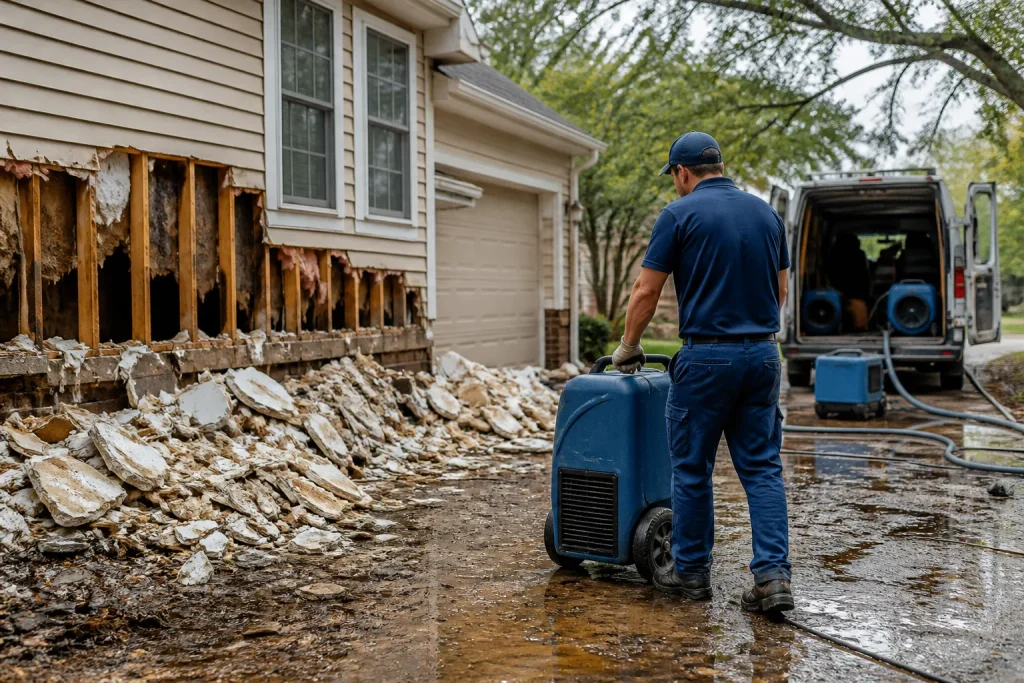
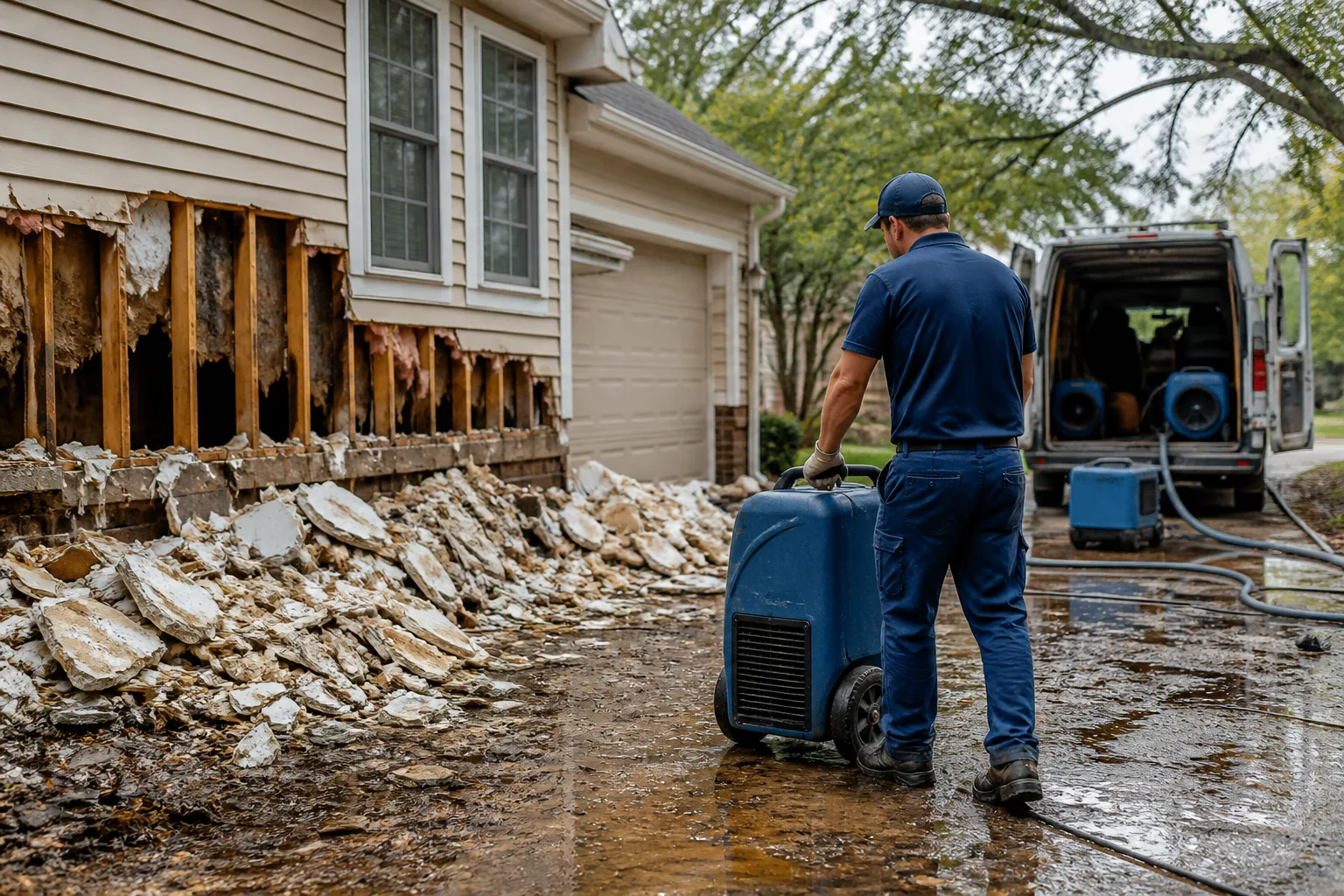
The restoration company that earns five stars for “fast response and friendly crew” is often a mitigation-only operation. That five-star review was written before the homeowner discovered they needed a second contractor, a second contract, and six more weeks to get their floors back. Here’s what actually matters when you’re standing in two inches of water at 6 a.m. and trying to decide who to call.
The One Question That Exposes Everything
Before any crew arrives at your house in Atlanta, ask this exact question: “Does your company handle reconstruction, or do you stop at dry-out and refer me out?”
Most restoration companies in Georgia operate on a split model. They show up, extract water, set up fans, tear out wet drywall, and then hand you a list of “preferred contractors” for the rebuild. What they don’t tell you is that the rebuild contractor has no connection to the crew that just left, no access to the moisture logs, and no incentive to coordinate with your insurance adjuster. You become the project manager, the messenger, and the person who gets blamed when things slip.
Full-cycle companies handle extraction, drying, and reconstruction under one roof. The same crew that reads the moisture map on day one handles daily readings, hands the log to you and your carrier, and rebuilds what needs rebuilding. In our experience across Atlanta neighborhoods from Buckhead to Stonecrest, disputed claims and unsatisfied homeowners almost always trace back to the mid-job handoff, not the quality of any single crew’s work.
Ask the question before you sign anything. If the answer is “we work with a great contractor for that,” you now know exactly what you’re buying.
The Five-Question Vetting Script
When you’re on the phone with a restoration company in Atlanta, write these five questions down and don’t skip any of them. The answers reveal more than any review page will.
1. “Who will be standing in my living room on day ten of this job?”
A trustworthy contractor answers with something specific: the same lead technician, the same project manager, the same crew that started on day one. A vague answer like “our team follows through” or “we assign based on availability” means the company runs on subcontractors. You don’t want to meet three different faces in your own home during a two-week mitigation because the first two were working for different companies.
2. “Will you bill my insurance carrier directly?”
Companies that bill carriers directly do this every week, and they should say yes without hesitation. Companies that want you to pay upfront and “get reimbursed later” are shifting administrative work onto you at the worst possible moment. In Georgia, direct billing is standard practice among established restoration firms. If a contractor dances around this question, keep moving.
3. “What does your written guarantee actually cover?”
Most restoration warranties are marketing language dressed up as promises. Ask what happens if mold reappears in the same wall cavity six months after remediation, or if the replaced drywall cracks along the seam line. A real guarantee states a duration, specifies the conditions it covers, and names the party responsible for fixing it. If the answer is “we stand behind our work” with no document behind it, treat that as no guarantee at all.
4. “Can I see your moisture log from a job like mine?”
Professional-grade drying isn’t a guess. Companies using Dri-Eaz, Phoenix, or XPOWER equipment should be keeping daily moisture readings until the dry standard is met. If a company can’t explain what a moisture log is, or tells you they “just let the fans run a few days,” they’re not doing restoration. They’re doing guesswork with rented equipment.
5. “Are your technicians background-checked?”
You’re letting strangers into your home for days at a time, often while you’re at work. Background checks should be automatic, not optional. Uniformed technicians with IICRC or RIA certification cost more to employ, which is why cheaper companies skip them. The money you save on the bid, you spend on worry.
Understanding the Insurance Carrier Referral List
When you file a water damage claim in Atlanta, your insurance company will likely send you a list of “preferred contractors.” Here’s what that list actually is: a group of restoration companies that have agreed, in writing, to work within the carrier’s pricing schedule and reporting requirements.
You are not obligated to use anyone on that list in Georgia. State law protects your right to choose your own restoration contractor, and your carrier cannot deny your claim or reduce your payout because you selected someone outside their network. What the list offers is speed, basic accountability, and a contractor who already knows how your carrier wants paperwork filed. What it doesn’t offer is any guarantee about who actually shows up at your door or what the long-term result looks like.
The smart way to use the list is as a starting point for questions, not a final answer. Run any referral through the five-question script above. If a preferred contractor fails question one or three, thank them for their time and call someone else. You’re the one living in the house after the crew leaves, not the adjuster.
The Three Documents You Need Before Any Crew Leaves
Most restoration disputes in Atlanta don’t happen during the emergency. They happen weeks later, over what was promised, what was documented, and who’s responsible for the shortcomings. Three documents, in your hand before the crew wraps up, prevent almost all of it.
1. The moisture log. Every professional drying job produces a daily log showing moisture readings from affected materials over time. Without this document, you have no way to verify that your walls were actually dry when the fans came out. Mold grows in the wood you can’t see, and the log is your record that the dry standard was met. If a company leaves without handing you this log, ask yourself what they’re not telling you.
2. The written scope of work. This should list every surface touched, every material removed, every item replaced, and the agreed price for each line. Before work starts, not after. A company that won’t put the scope in writing is setting up an “adjustment” conversation later. You want no surprises on the bill, and that starts with a scope you read and sign while the water is still being extracted.
3. The signed guarantee. Not a brochure, not a website claim. A piece of paper with a duration, specific covered outcomes, and the name of the company responsible for making it right. Floodline Restoration Co. of Atlanta puts the 90-Day Done Right Promise in writing, with no argument and no paperwork battle. If a company’s guarantee isn’t written down, treat it as expired before it started.
Red Flags That Cost Atlanta Homeowners Real Money
Beyond the questions above, certain signals should make you pause before letting any restoration company into your home. We’ve seen it happen repeatedly across Atlanta, and the pattern never changes.
- The quote arrives before the inspection. No legitimate restoration company prices a job without seeing the damage first. A price quoted over the phone is a hook, not an estimate.
- The “contractor” asks you to sign a blank authorization. Some companies pressure homeowners into signing an open-ended work order “so we can get started fast.” You’re signing away control of the budget.
- The company has no physical address in Georgia. A post office box is not an office. After a major storm, out-of-state crews flood into Atlanta and vanish when problems surface. Check that the company actually exists here.
- The technician can’t explain the drying plan. If you ask why a particular room needs a particular piece of equipment and the answer is a shrug, you’re not working with a certified professional.
- Time-and-materials billing with no cap. In restoration, reasonable companies estimate a range. Companies that bill open-ended “time and materials” are incentivized to move slowly.
One more thing: we pulled a water heater out of a garage in Kirkwood last month where the homeowner had called a franchise outfit first. They’d extracted on day one, set one fan, and quoted her another two weeks before she’d see a rebuild crew. The water had been sitting in the wall cavity for nine days when we got involved. She’d paid for “fast response” and gotten a delay disguised as thoroughness. Ask the question about full-cycle work before the crew arrives, not after.
When to Call a Professional
Some jobs in Atlanta genuinely need a trained crew with commercial equipment. If water has been sitting more than 24 to 48 hours, if the damage extends into walls or subfloor, if you smell anything musty that wasn’t there before, or if the damage involves sewage backup, stop calling around and start calling a professional. Standing water in a crawlspace looks manageable until it isn’t. Mold doesn’t announce itself with a sign; it grows where you can’t see it until the smell gives it away. A free estimate costs nothing. Waiting to make the call costs real money when the damage compounds. Call (888) 832-2758 and a live dispatcher will pick up, day or night, every day of the year.
If you’re researching specific services in the Atlanta area, we cover Water Damage Restoration in Stonecrest, Mold Remediation in Stonecrest, and Fire & Smoke Damage Restoration in Stonecrest with the same certified crews from first extraction to finished rebuild.
The Bottom Line
Choosing a restoration company in Atlanta isn’t about star ratings or how fast the phone got answered. It’s about asking the right questions before you sign: who’s doing the work, is the guarantee written down, and does the same company finish what another company started? The cheapest bid usually costs the most in the long run, and the fastest response means nothing if the crew leaves you with a half-dried house and a referral list.
Floodline Restoration Co. of Atlanta handles the whole job from first extraction to finished rebuild, with background-checked technicians, professional-grade equipment like Phoenix and Injectidry, and a written 90-Day Done Right Promise on every job. If you’re in Atlanta and need help, we offer free estimates - call (888) 832-2758 and talk to a real person.
Frequently Asked Questions
Ask for their Georgia business license and insurance certificate directly. A licensed restoration contractor in Atlanta should provide both without hesitation and will name their insurer on request. We’re committed to transparency: Floodline Restoration Co. of Atlanta is licensed, insured, and bonded, and our technicians are certified to IICRC, RIA, and IFA standards. Any company that deflects the question is telling you everything you need to know. Call (888) 832-2758 and ask away - we expect it.
Most standard Georgia homeowners policies cover sudden water damage, fire, and storm damage, though mold remediation coverage varies by policy. The fastest way to find out is to call your carrier and ask about the specific cause of your damage. Floodline Restoration Co. of Atlanta bills insurance carriers directly and provides photo documentation with every job, so you don’t play messenger between us and your adjuster. If you want a free estimate while you sort out your coverage, call (888) 832-2758.
A full-cycle restoration company with live dispatch can have a certified crew at your door the same day you call. Floodline Restoration Co. of Atlanta answers the phone with a live person 24 hours a day, 7 days a week - not a recording, not an answering service. Extraction starts the same visit in most cases. The longer water sits, the more it costs to fix, so call (888) 832-2758 the moment you notice the problem.
If water has been sitting more than 24 hours, or if it has penetrated walls, flooring, or subfloor, professional drying equipment is the only way to prevent mold growth you can’t see yet. What looks dry on the surface can be saturated underneath. The decision is cheaper to make with a professional assessment than with a mold problem six weeks later. We offer free estimates across Atlanta - call (888) 832-2758 and we’ll tell you straight whether you need full remediation or a simpler fix.
Written by Curt Bowman, Owner at Floodline Restoration Co. of Atlanta, serving Atlanta since 2010.
Need Damage Restoration Help?
Call Floodline Restoration Co. of Atlanta - licensed & insured, available 24/7 in Atlanta.
(888) 832-2758