

Fast, Reliable Mold Remediation Across Acworth
Mold remediation in Acworth typically costs between $1,800 and $6,500 depending on how far the contamination has spread, and most jobs can be started within 24 to 48 hours of your call. We’ve been handling mold problems in Acworth’s 30101 and 30102 ZIP codes long enough to know what Lake Allatoona’s water management does to crawl spaces, and what 1980s polybutylene plumbing does behind the walls of subdivision homes off Bells Ferry Road and Baker Road. If you’re seeing black spots on drywall, smelling musty air near your crawl space, or have had water intrusion near the lake, call (888) 832-2758 and a live dispatcher will get a crew scheduled. We don’t route you to a call center, and we don’t hand your job off to a subcontractor after the first visit.
Key Takeaways:
- Most Acworth mold remediation jobs run $1,800 to $6,500, with crawl space work and hidden plumbing leaks on the higher end
- Lake Allatoona’s Corps of Engineers pool adjustments can drive water into low-lying homes even without rainfall
- Acworth’s 1980s and 1990s subdivision homes frequently contain polybutylene supply lines that leak slowly and feed hidden mold
- We document everything with moisture logs and daily readings, which helps when the adjuster needs to see causation, not just damage
- Every job includes the 90-Day Done Right Promise in writing
Why Floodline Restoration Co. of Atlanta Is Acworth’s Preferred Mold Remediation Company
Floodline Restoration Co. has spent 42 years building a reputation in this trade, and the crew that shows up in Acworth is the same crew that answers the phone at two in the morning. We’re not a sales organization with a dispatch board. Curt Bowman founded this company in 2010 with live phone dispatch as the spine of the operation, and that hasn’t changed. Homeowners in Acworth call us because they want a real person on the line, a background-checked uniformed technician in their home, and a written guarantee they can hold someone to. They get all three.
Mold jobs in Acworth fail for predictable reasons. A remediation crew sets up containment, runs negative air pressure for a few days, and walks away without solving the moisture source that fed the mold in the first place. Six months later the mold is back, and the homeowner is paying twice. We approach it differently. Our technicians are certified to IICRC, RIA, and IFA standards, and they’re trained to read the moisture map before they pull the first piece of damaged drywall. That map tells us where the water came from, where it traveled, and what has to change so it doesn’t come back. We treat the source, not just the symptom.
Acworth homeowners also need a contractor who understands insurance documentation. When Lake Allatoona’s Corps of Engineers raises pool elevation ahead of a storm, water can push into lake-adjacent homes from below, not from the sky. An adjuster who writes “rainwater intrusion” on the paperwork may deny the claim because there was no rain that week. We capture pool-elevation data, log it in the drying records, and hand the carrier a causation narrative that holds up. That’s the difference between a covered claim and a denied one, and it’s why Acworth residents call us first.
Our Mold Remediation Services in Acworth
Mold Inspection & Testing
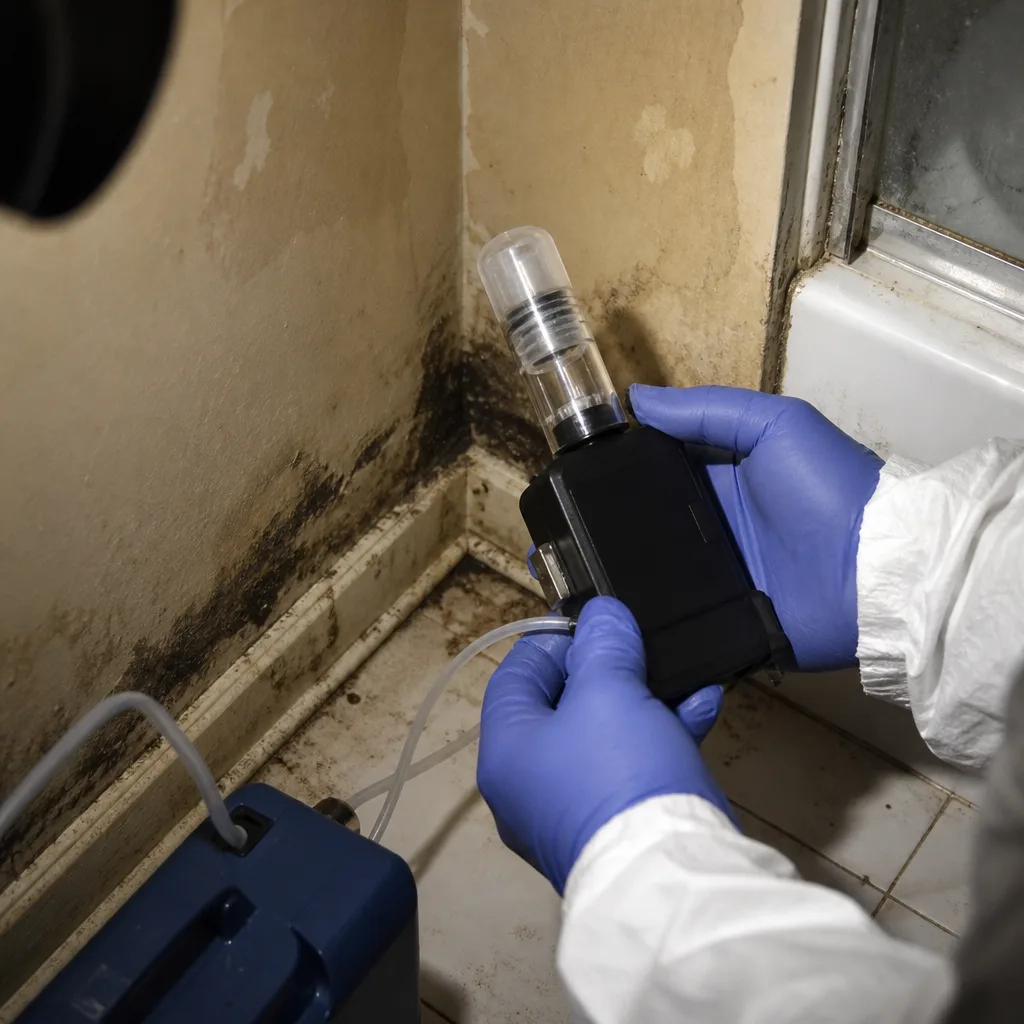
Before we remove anything, we inspect. A mold inspection in Acworth runs $300 to $600 and includes a visual assessment of the crawl space, attic, and living areas, plus moisture readings and air or surface sampling when conditions warrant it. We pay close attention to the 25-to-40-year-old subdivision stock along Cobb Parkway and near the historic downtown corridor, because builder-grade OSB sheathing from that era holds moisture well after the surface looks dry. The inspection report tells you what’s mold, what’s staining, what the moisture source is, and what remediation will actually require.
Mold Removal
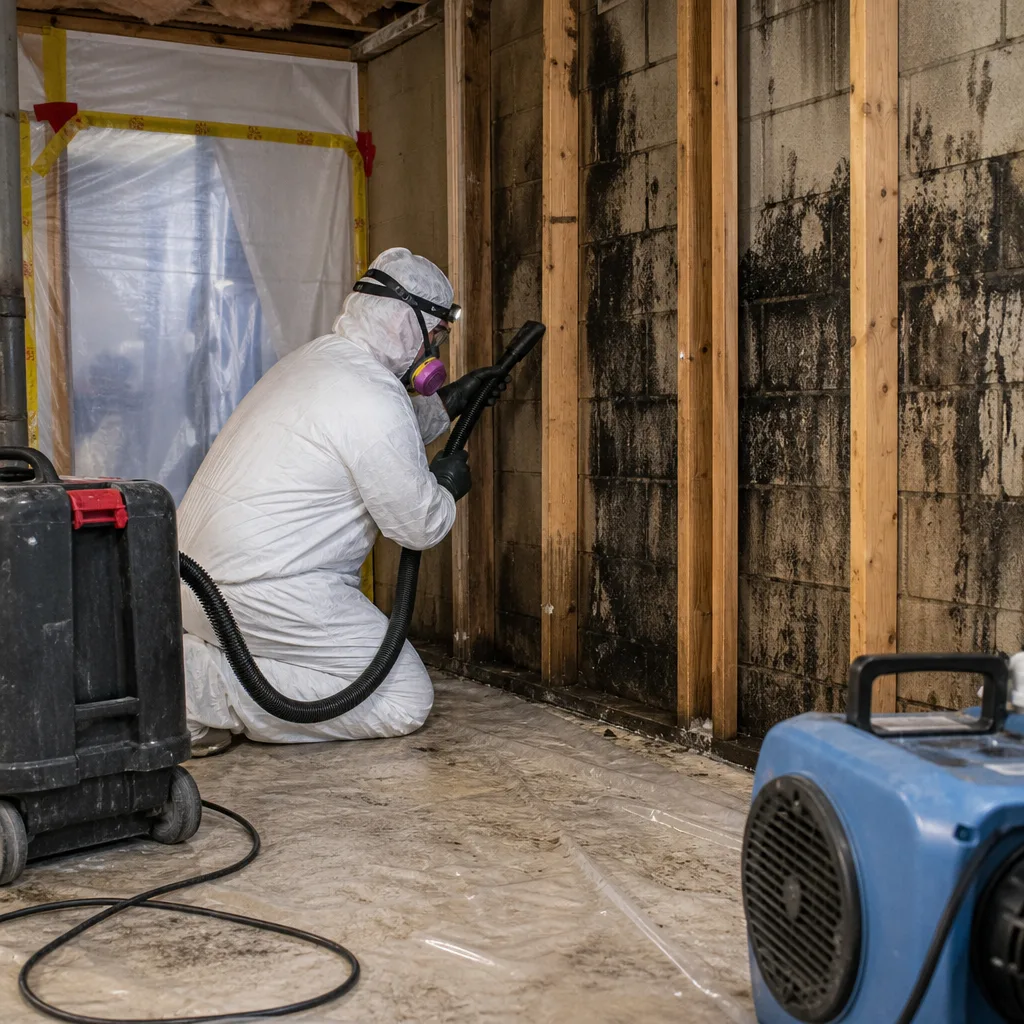
Mold removal in Acworth typically runs $1,500 to $4,000 for contained areas like a single bathroom, closet, or crawl space section. We set up containment barriers, run HEPA-filtered negative air machines, remove contaminated drywall and insulation, and treat affected framing with an EPA-registered antimicrobial. In Acworth’s post-WWII wood-frame homes near downtown, where balloon-frame construction and minimal vapor barriers let moisture travel vertically through wall cavities, we often find mold has climbed farther than the visible staining suggests. We follow the moisture, not just the stain.
Black Mold Remediation
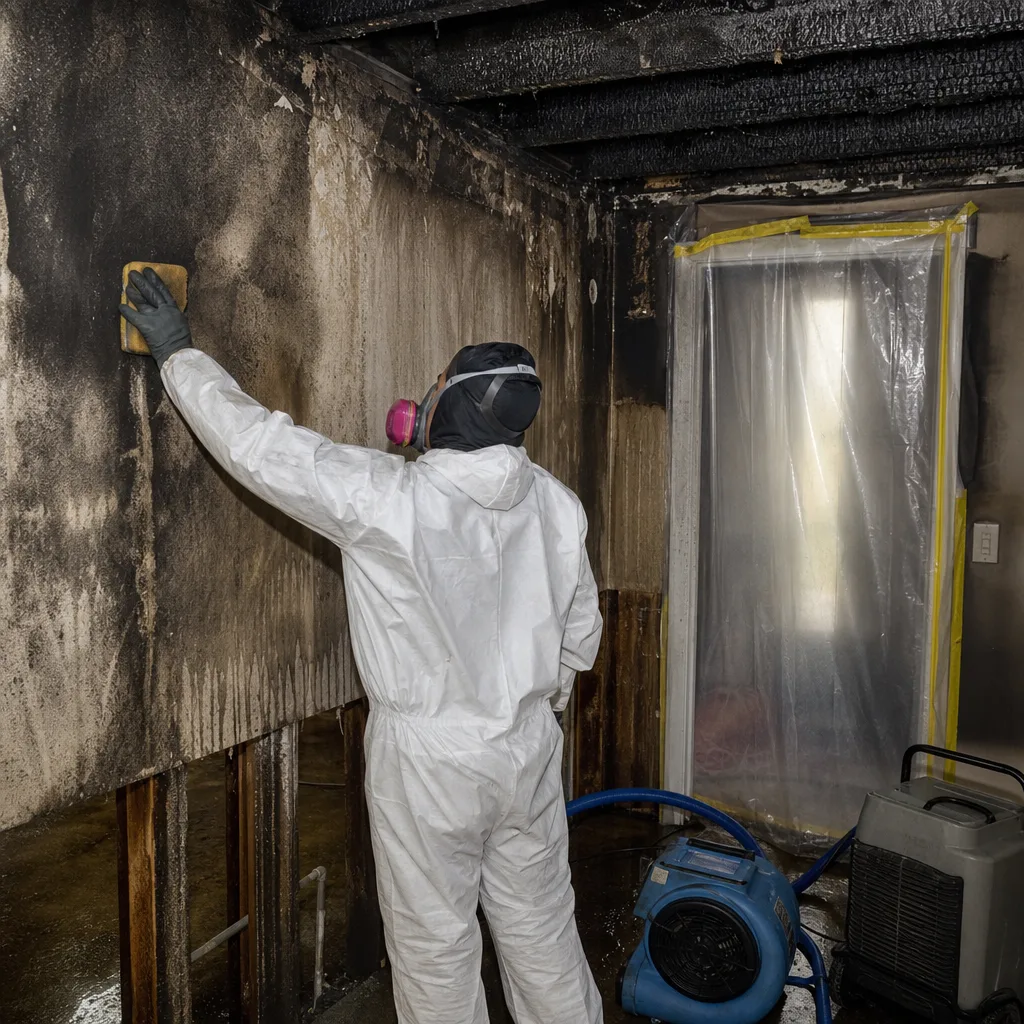
Black mold, or Stachybotrys, gets the most attention, and for good reason. Black mold remediation in Acworth runs $2,500 to $6,500 depending on how much of the wall cavity, subfloor, or crawl space is involved. What most homeowners don’t know is that black mold needs consistent moisture to thrive, which means finding it usually points to a hidden water problem: a slow polybutylene leak inside a 1980s-era wall, a failing pipe boot on the roof, or condensation fed by Acworth’s dense red Georgia clay. We remediate the mold and diagnose the source in the same visit, because removing the mold without stopping the water is just scheduling a second job.
Air Quality Restoration
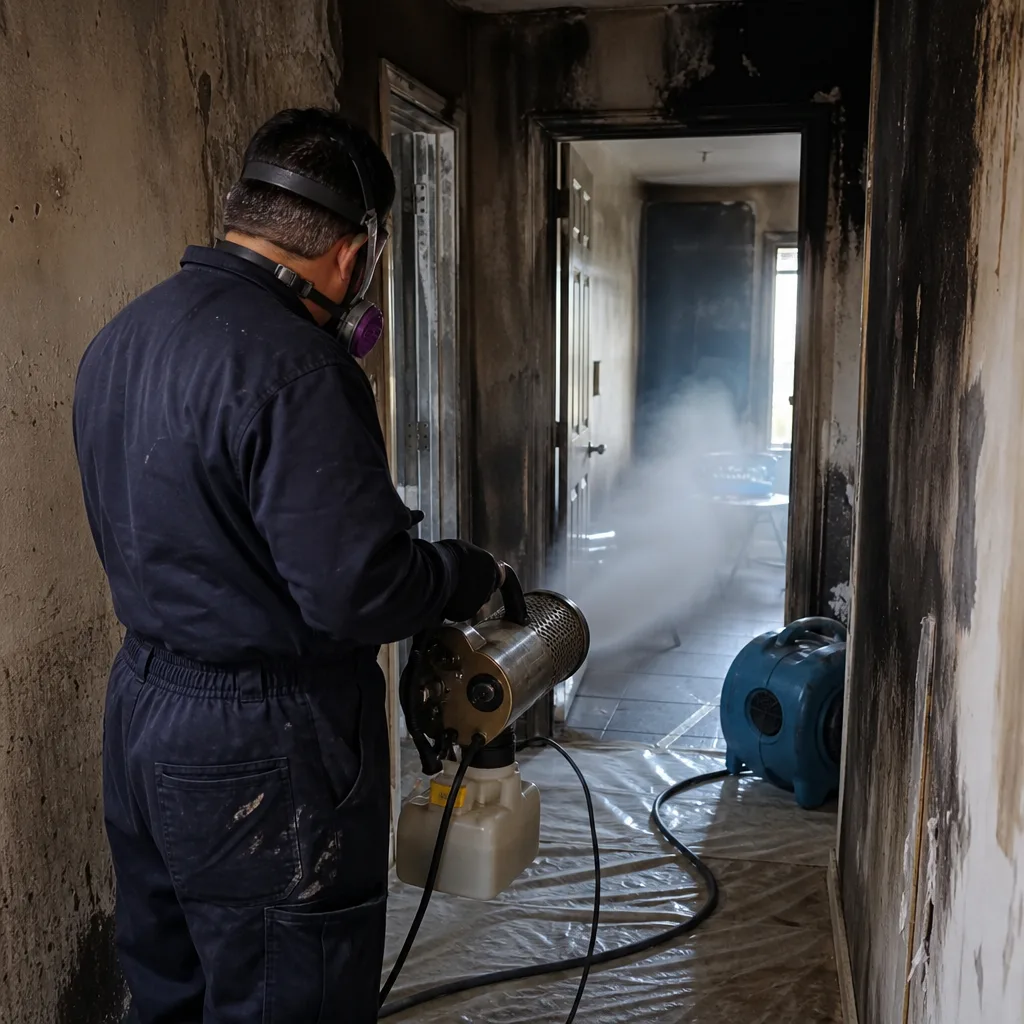
After remediation is done, the air in your home still matters. Air quality restoration in Acworth runs $500 to $1,500 and includes HEPA air scrubbing, ventilation review, and humidity verification. Acworth’s summer humidity sits high enough that a remediated crawl space can still harbor airborne spores if the relative humidity isn’t controlled. We verify with moisture meters and hygrometers, not guesswork, and we don’t sign off until the numbers match the dry standard.
What happens when you call
- 1
A real person answersNo phone trees - you reach a local pro.
- 2
You get an upfront price rangeHonest numbers before anyone is dispatched.
- 3
A background-checked tech heads outLicensed & insured, dispatched right away.
- 4
You approve before work beginsNothing starts until you say go.
Trusted Brands We Service in Acworth
Our crews run Dri-Eaz, Phoenix, and XPOWER equipment on mold jobs throughout Acworth, and we stock the common replacement parts locally so we’re not waiting on a shipment from a distributor when your crawl space needs a dehumidifier swapped in. That equipment matters. A cheap box fan and a hardware store dehumidifier won’t move enough air or pull enough moisture to hit the dry standard in an Acworth crawl space fed by the water table. We use professional-grade gear because the reading on the moisture log is what the guarantee stands on, and we don’t sign a certificate of completion unless the log says done.
Common Mold Remediation Problems We See in Acworth Homes
- Lake-driven crawl space intrusion. When the Corps of Engineers adjusts Lake Allatoona’s pool elevation, low-lying homes along the shoreline and in neighborhoods like Lakeshore off Cherokee Street can see water rise into the crawl space without any rainfall. That water saturates floor joists and feeds mold within days if it’s not dried fast.
- Polybutylene pipe micro-leaks. Acworth’s 1980s and 1990s subdivision stock frequently contains polybutylene supply lines. These pipes fail slowly, leaking behind drywall and under slabs while the visible surface stays dry. We’ve seen remediated rooms re-contaminate within months because the pipe was never addressed.
- Builder-grade OSB that holds moisture. Homes built during the Atlanta-metro boom of the mid-1980s through early 2000s used OSB sheathing that wicks and holds water far longer than plywood. After a roof leak or plumbing event, that sheathing looks dry on the surface but stays wet at 18 to 25 percent moisture content, enough to keep mold alive behind the drywall.
- Crawl spaces with no vapor barrier. Older craftsman homes near historic downtown Acworth often have dirt-floor crawl spaces with no vapor barrier at all. Georgia’s red clay sheds water laterally, pushing moisture toward the foundation line with even moderate rain. That moisture rises into the floor structure and feeds mold year-round.
Pricing for Mold Remediation in Acworth, GA
Here’s what Acworth homeowners can expect to pay for common mold work:
- Mold inspection and testing: $300-$600
- Contained mold removal (single room or small crawl space section): $1,500-$4,000
- Black mold remediation (multiple rooms or large crawl space): $2,500-$6,500
- Crawl space treatment with vapor barrier and dehumidification: $1,800-$5,000
- Air quality restoration after remediation: $500-$1,500
What moves the price is how far the contamination has spread, whether the crawl space or attic is involved, and what the moisture source turns out to be. A polybutylene repipe adds cost, but leaving the pipe in place guarantees the mold returns. We don’t hide that in the estimate. We give you a written scope before work starts, with the moisture source called out and the remediation plan itemized. Estimates are free, and we bill carriers directly when a claim is involved. Call (888) 832-2758 and we’ll walk you through the numbers for your specific house.
We Also Serve Cities Near Acworth
Our Mold Remediation in Acworth crews regularly work in Kennesaw, Woodstock, Holly Springs, and Marietta as well. The same live dispatch, the same certified technicians, and the same 90-Day Done Right Promise apply no matter where the job is. If you’re in one of those cities and have a mold problem, the phone number is the same: (888) 832-2758.
Crawl Space Treatment, Moisture & Humidity Control in Acworth
Crawl space treatment is the most common mold remediation job we handle in Acworth, and it’s the one most people don’t know they need. Acworth’s dense red Georgia clay doesn’t absorb water. It sheds it laterally, pushing moisture toward foundation walls and into the crawl space with nearly every rain event. In the Lakeshore subdivision off Cherokee Street near Lake Allatoona, our crew remediated a crawl space where the Corps of Engineers had raised the pool elevation ahead of a heavy-rain forecast. Water pushed up through the clay and saturated the floor joists. We removed fungus-damaged OSB sheathing, treated the affected framing with an EPA-registered antimicrobial, and installed a vapor barrier and sump pump to prevent recurrence. The drying log documented the Corps’ pool schedule, the moisture readings, and the equipment run times, and that log went directly to the homeowner’s insurer.
Moisture and humidity control in Acworth is different from what a quick dehumidifier rental accomplishes. We use injection drying systems like Injectidry when wall cavities need targeted drying, and B-Air and Dri-Eaz units for whole-space air movement and moisture removal. The goal isn’t to get the surface dry. It’s to get the entire assembly into the dry standard range and then keep it there with a dehumidifier sized for the space and vented properly. In Acworth’s 25-to-40-year-old subdivision homes, that frequently means correcting foundation vents that were never adequate to begin with, or sealing the crawl space entirely when the home’s construction allows it.
One thing Acworth homeowners should understand: relying on negative air pressure alone in an older craftman crawl space with minimal vapor barriers doesn’t control humidity. It captures airborne spores, but the moisture in the soil and the wood keeps feeding the problem. The mold comes back within months. We see this constantly in homes near downtown where the crawl space was never properly conditioned. The fix is a combination of source removal, antimicrobial treatment, vapor barrier installation, and active dehumidification, not just air scrubbing.
Serving Acworth, GA - Our Local Coverage Area
We’re based in the Acworth area and know this community well. Use the map below to see our service coverage - if you’re nearby, we can almost certainly help.
FAQs - Mold Remediation in Acworth
The Corps manages Lake Allatoona’s pool elevation for flood control, hydropower, and downstream water supply, and those adjustments can raise or lower the water table under lake-adjacent homes by several feet in a matter of days. When the pool rises, water pressure increases and groundwater can push into low-lying crawl spaces through the soil, not through any opening. That groundwater saturates floor joists, subfloor sheathing, and insulation, and mold begins colonizing within 48 to 72 hours. Homeowners near Lake Allatoona need to check their crawl space after any pool-elevation increase, even when no rain fell. Call (888) 832-2758 if you find standing water or damp joists, and we’ll assess the damage while it’s still early enough to dry rather than remediate.
Yes. Polybutylene supply lines were installed in many Acworth homes built from the mid-1980s through the 1990s, and these pipes are prone to slow, hidden leaks as they age and degrade from chlorine exposure. The failure is rarely dramatic at first; it’s a trickle behind a wall or under a slab that raises moisture levels over months. By the time mold shows up on the drywall, the leak has often been active for a long time. We inspect for polybutylene during every mold remediation job in Acworth, and if we find evidence of a leak, we document it and explain what a proper repair involves. Remediating mold while leaving a failing polybutylene pipe in place is wasting your money.
Because Acworth’s water table and soil composition make crawl space drying more involved than in most neighboring cities. Acworth sits directly on Lake Allatoona, and its shoreline neighborhoods deal with groundwater pressure that Kennesaw simply doesn’t have. The red Georgia clay in Acworth holds water near the foundation instead of absorbing it, so even after the visible standing water is pumped out, the soil and foundation walls keep releasing moisture for days. We run daily moisture readings and adjust the equipment as needed, which means the job isn’t done when the surface looks dry. It’s done when the readings confirm the dry standard throughout the structure.
Call a remediation company immediately, before mold has time to colonize. The first 48 hours matter more than anything else. If you can safely access the crawl space, photograph the standing water and any visible moisture on the joists, then call (888) 832-2758. We’ll send a crew to pump out the water, set up drying equipment, and document the pool-elevation data from the Corps of Engineers so your insurer understands the causation. Don’t wait to see if it dries on its own. In Acworth’s humidity, it won’t.
Yes, but the sheathing often has to come out. Builder-grade OSB from Acworth’s 1980s-to-early-2000s construction boom absorbs water and tends to swell and delaminate once it’s been saturated. If black mold has colonized behind the drywall and into the OSB sheathing, the contaminated sheathing is cut out and disposed of, the framing behind it is treated with an EPA-registered antimicrobial, and new sheathing and drywall are installed. We don’t promise to “clean” mold out of saturated OSB because that sheathing rarely ever returns to a structurally sound condition. The important part is that the moisture source is addressed in the same job, so the new materials don’t end up in the same condition. Every job includes the 90-Day Done Right Promise in writing, and if the mold comes back within 90 days because we missed something, we fix it. No arguing.
Call Floodline Restoration Co. of Atlanta for Mold Remediation in Acworth
When mold shows up in your Acworth home, the clock is already running. Every day it sits unresolved, the contamination spreads further into the framing, the sheathing, and the insulation. We answer the phone 24/7 with a live person, not a recording, and we’ll have a certified crew scheduled for your neighborhood, whether that’s off Bells Ferry Road, Baker Road, or down near the lake. The estimate is free, the scope is written before we start, and the 90-Day Done Right Promise is in your hands before the first piece of drywall comes out. Call (888) 832-2758 today and let’s get your home dry, clean, and done right.
Written by Curt Bowman, Owner at Floodline Restoration Co., serving Acworth with mold remediation, crawl space treatment, and moisture control for over 42 years.