
Fast, Reliable Mold Remediation Across Atlanta
Mold remediation in Atlanta typically costs $1,800-$6,500 depending on the size of the affected area, with crawl space treatment and full containment shifting the number toward the higher end. Most jobs in intown neighborhoods like Grant Park, Druid Hills, and Vine City are completed in 3-5 days because crews understand the city’s red clay, crawl space foundations, and humid subtropical air. If you’ve spotted staining, caught a musty smell, or had water come through after one of Atlanta’s summer thunderstorms, call (888) 832-2758 now. A live dispatcher answers around the clock, and the same certified crew that reads the moisture map on day one will handle the final air quality reading.
We know Atlanta’s homes the way only a local crew can. Our Mold Remediation team has traced moisture through 1920s bungalows in Mozley Park, 1990s brick-front colonials in Gwinnett, and everything between. The job isn’t done when the visible stain disappears. It’s done when the framing hits dry standard and the air tests clean.
Why Floodline Restoration Co. of Atlanta Is Atlanta’s Preferred Mold Remediation Company
You’ll find Floodline Restoration Co. of Atlanta behind a live phone line at 2 a.m., not a voicemail. That matters in this city because Atlanta’s tree canopy and thunderstorm patterns create a specific kind of problem: a limb comes through a roof on a Tuesday night, rain follows it in, and by Thursday the humidity has already pushed spore counts past safe limits. We answer the call and get a crew moving. The dispatch board was built around exactly this scenario in 2010, and it hasn’t changed.
Every technician who walks into an Atlanta home is background-checked, uniformed, and certified to IICRC, RIA, and IFA standards. They carry Dri-Eaz, Phoenix, XPOWER, and B-Air equipment, and they log moisture readings daily until the dry standard is met. The homeowner and the insurance carrier get that log in writing. That’s not a courtesy; it’s part of how we work.
Our reputation across Atlanta comes from specific things: showing up when we say, leaving a written scope before work starts, and backing the finished job with the 90-Day Done Right Promise. The Keystone Standard, as we call it internally, means if it’s not done right, we make it right. In writing. No paperwork battles, no arguing. Homeowners in Druid Hills and North Decatur have learned that a company that plans to be in town in thirty years acts like it.
Our Mold Remediation Services in Atlanta
Mold Inspection & Testing
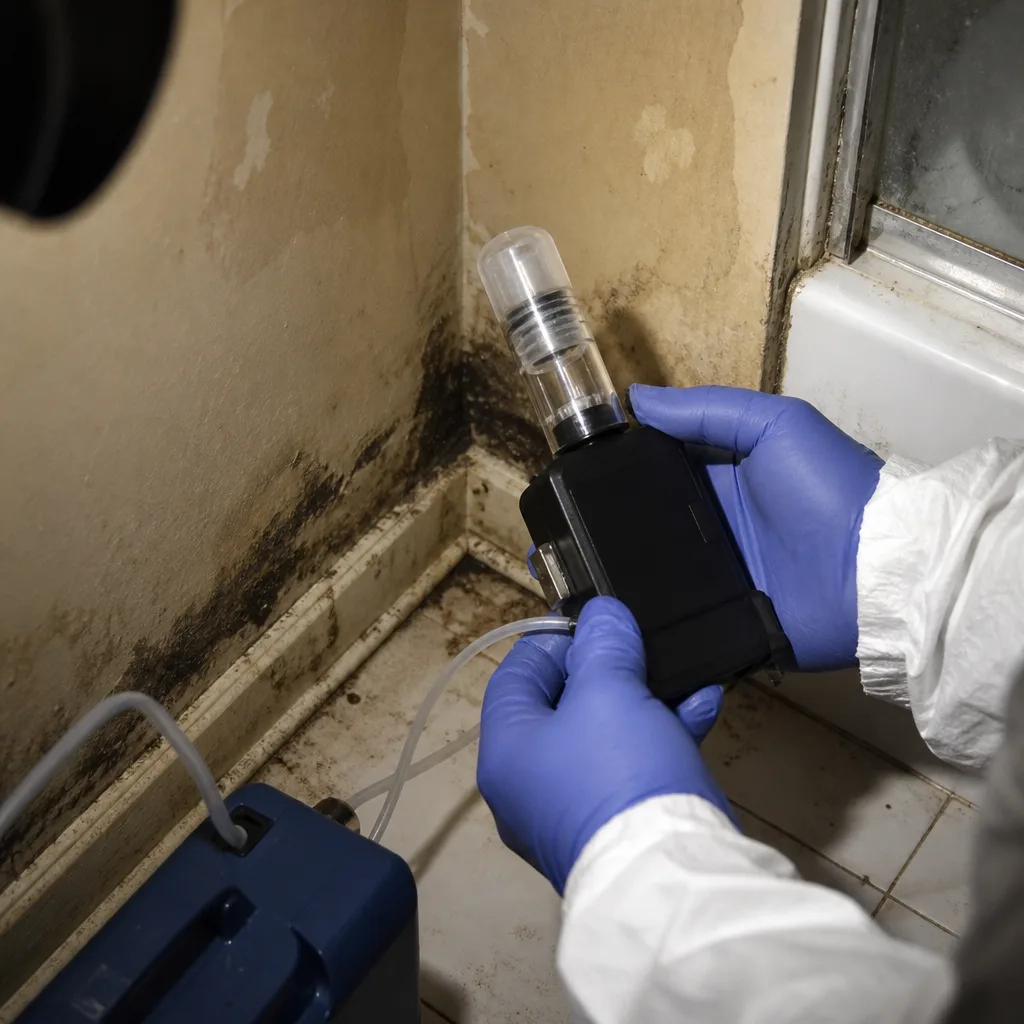
A visual inspection misses what’s happening inside wall cavities under brick veneer or behind baseboards in a crawl space home. We use moisture meters and thermal imaging to map exactly where water moved after a storm or pipe burst, then air-sample where it counts. In Atlanta’s older intown housing stock, particularly 1910s-1940s bungalows and foursquares, the problem often isn’t where the stain is. It’s where the red clay under the house is still feeding humidity upward.
Mold Removal
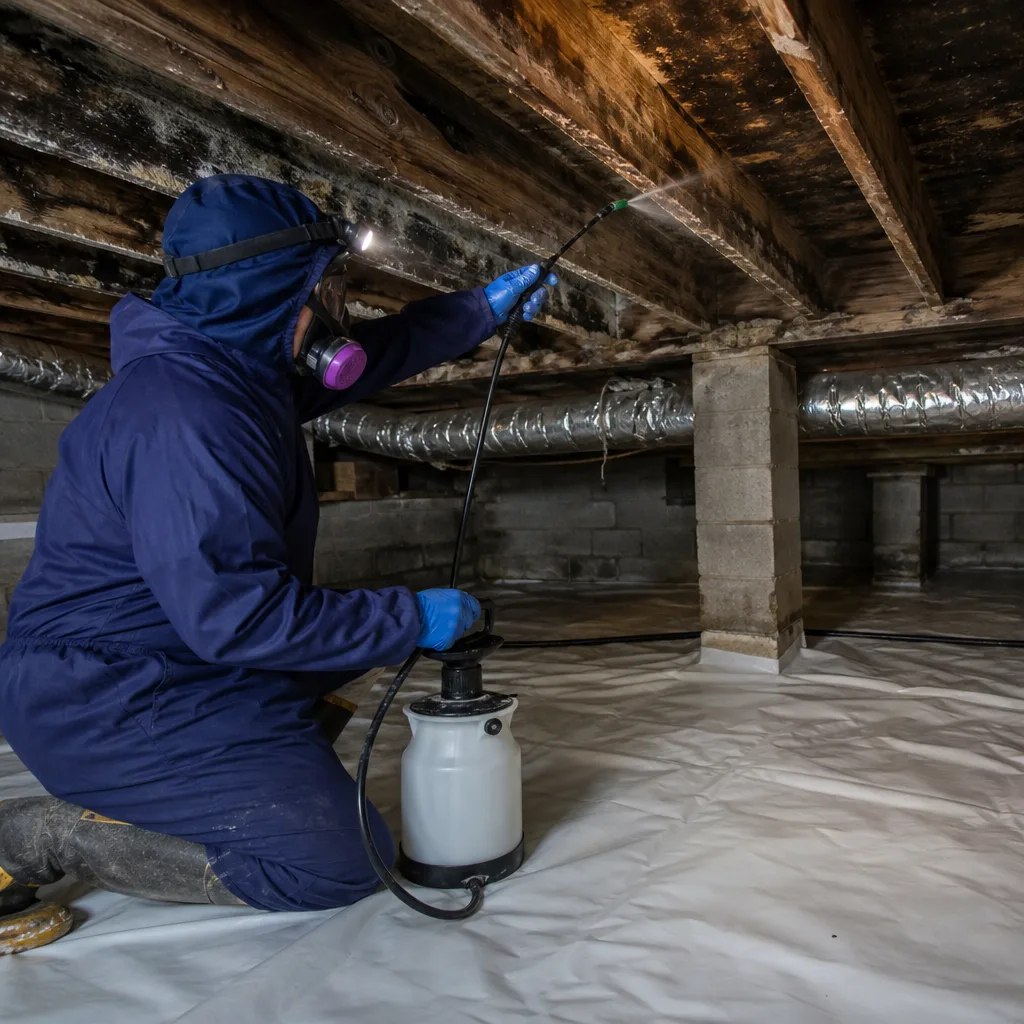
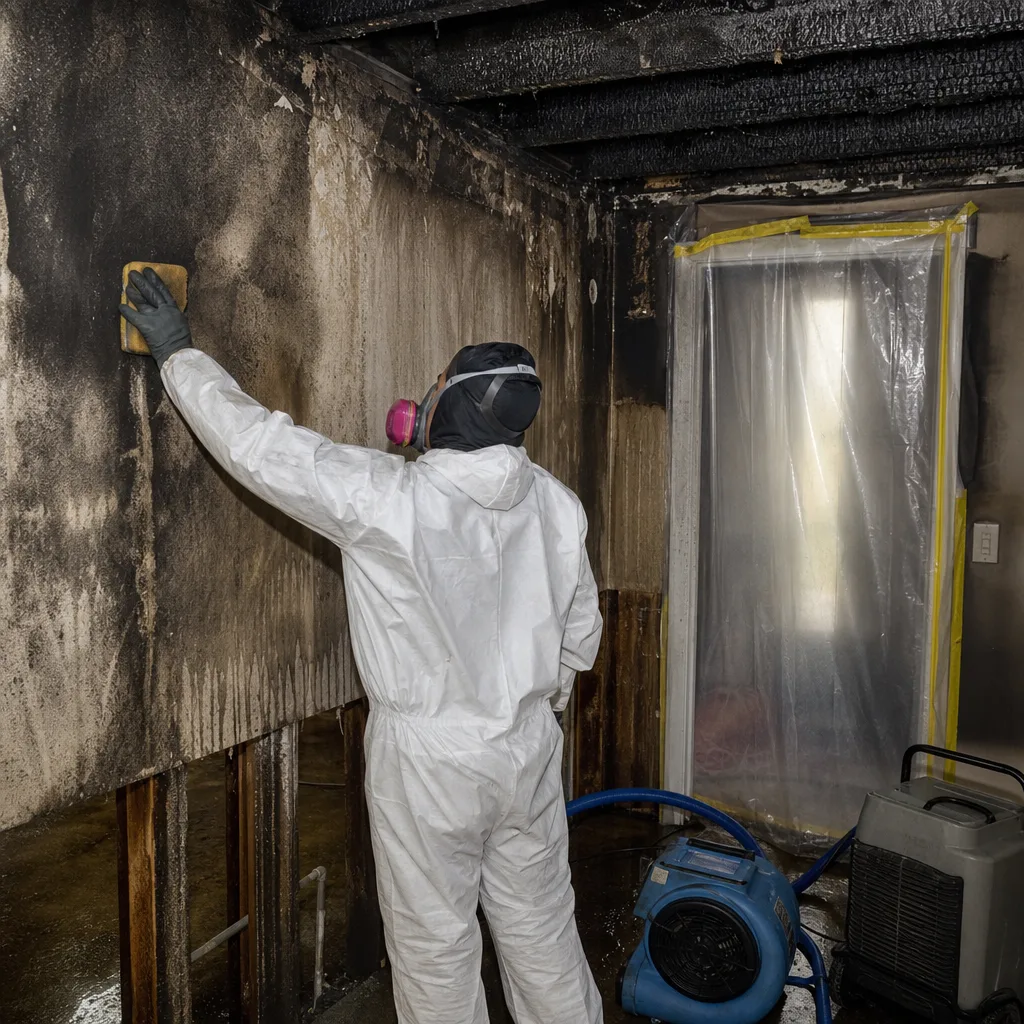
Removal means controlled containment, HEPA air scrubbing, physically cutting out affected drywall and insulation, and sanding or replacing framing where needed. We don’t paint over it. We don’t bleach it and call it done. In Atlanta’s humid climate, anything less invites the same colony back within weeks. Our crews run Dri-Eaz HEPA 700 air scrubbers and Phoenix LGR dehumidifiers on nearly every removal job because the ambient air itself is part of the problem.
Black Mold Remediation
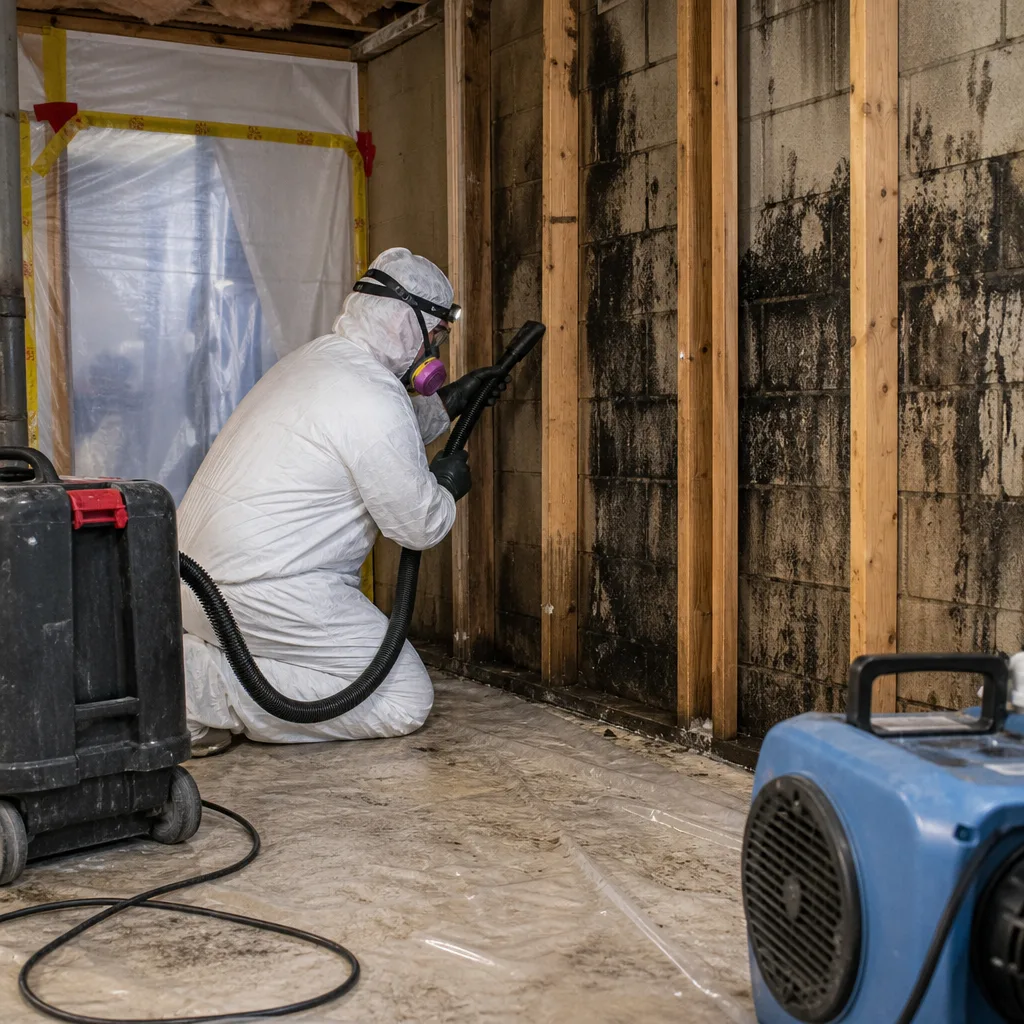
Black mold, or Stachybotrys, loves Atlanta’s crawl space homes. It feeds on cellulose in framing that stays wet because Georgia red clay drains slowly and holds moisture for weeks. We see it most often in intown neighborhoods like Edgewood and Sylvan Hills, especially on north-facing slopes where crawl spaces stay cooler and wetter longer. Full containment, negative air pressure, and disposal of contaminated materials are standard on these jobs. The safety of your family and our crew is the priority, and we treat it that way without drama.
Air Quality Restoration
After remediation, the air in the home should test cleaner than the air outside. We run HEPA scrubbers during the job and then verify with post-remediation sampling. For Atlanta homeowners, especially older adults who may have respiratory sensitivity, this step matters more than in drier cities. The humidity in Atlanta’s air means mold spores travel further and colonize faster. Restoring air quality is not an add-on; it’s the finish line.
What happens when you call
- 1
A real person answersNo phone trees - you reach a local pro.
- 2
You get an upfront price rangeHonest numbers before anyone is dispatched.
- 3
A background-checked tech heads outLicensed & insured, dispatched right away.
- 4
You approve before work beginsNothing starts until you say go.
Trusted Brands We Service in Atlanta
We work on every major brand of equipment and restoration system found in Atlanta homes, from Dri-Eaz dehumidifiers to Phoenix LGR units and XPOWER air movers. The brands we use daily are the same ones Atlanta homeowners have come to recognize in crawl spaces and basements across the metro. Because we run this equipment ourselves on remediation jobs, we can service it with confidence and get genuine parts without the delays that come from out-of-state supply chains. For an Atlanta homeowner waiting on a drying cycle during a humid July week, that speed matters.
Common Mold Remediation Problems We See in Atlanta Homes
- Crawl space moisture after winter freezes: Atlanta’s homes are built with minimal pipe insulation, and many supply lines run through unheated crawl spaces. After a hard freeze, burst CPVC lines saturate the red clay underneath. That clay dries so slowly that mold colonizes floor framing within 72 hours, particularly on north-facing slopes in hilly intown neighborhoods like Sylvan Hills and Edgewood.
- Hidden mold behind brick veneer in collar-county homes: Homes built in the 1990s and 2000s in Gwinnett, Cherokee, and Douglas counties often have OSB sheathing under brick veneer. When wind-driven rain gets behind the siding, the OSB delaminates and feeds hidden mold in wall cavities for months before anyone sees a stain indoors.
- Treating only the visible stain: Atlanta homeowners sometimes wipe down a water stain and think the problem is handled. But in a 1920s bungalow over red clay, the visible stain is often the smallest part of the moisture problem. We trace the water path to its source before any drying begins.
- Running air movers too early: In humid summer conditions, cranking air movers right after extraction without first stabilizing crawl space humidity drives vapor upward into first-floor framing and accelerates mold growth. We see this in homes where someone tried to dry things out with rented fans before calling us. The sequence matters, and Atlanta’s humidity punishes mistakes in hours, not days.
Pricing for Mold Remediation in Atlanta, GA
A typical mold inspection with air sampling in Atlanta runs $300-$600. Mold removal in a single room or closet typically lands between $1,200 and $2,800, while a full crawl space treatment with containment and structural drying usually runs $4,000-$7,500. Black mold remediation with full containment and material disposal often starts around $3,500 and climbs based on the square footage of affected framing. Air quality restoration as a standalone service, including post-remediation verification, generally costs $500-$1,200. What moves the number: the size of the affected area, whether crawl space framing needs sanding or replacement, and how long the moisture has been present. We provide a written scope before any work starts, so there are no surprises on the bill. Senior and veteran discounts of 5% always apply, and estimates are free. Call (888) 832-2758 for exact pricing on your Atlanta home.
We Also Serve Cities Near Atlanta
Our crews work throughout the metro, including Mold Remediation in Atlanta and the surrounding communities of Druid Hills, North Decatur, Gresham Park, and North Druid Hills. If you’re in one of these areas and water got in, the same certified team and the same 90-Day Done Right Promise apply. Call the live dispatch line at (888) 832-2758 and tell us what you’re seeing.
Serving Atlanta, GA - Our Local Coverage Area
We’re based in the Atlanta area and know this community well. Use the map below to see our service coverage - if you’re nearby, we can almost certainly help.
FAQs - Mold Remediation in Atlanta
Yes. Georgia’s expansive red clay holds water far longer than sandy or loamy soils, and in crawl space homes it continues wicking moisture upward into floor framing for weeks after the visible water is gone. That compresses the window for preventing mold in Atlanta compared to peer Southern cities like Charlotte or Nashville. Our crews account for this by running longer structural drying cycles under intown homes and logging daily moisture readings until the framing hits IICRC dry standard.
Call (888) 832-2758 if you suspect your crawl space is still wet after a leak or freeze. The sooner we map it, the less framing we have to cut out.
Those 1910s-1940s craftsman bungalows sit over dirt crawl spaces with minimal ventilation, and the surrounding tree canopy keeps the ground shaded and cool. Combine that with Atlanta’s humid air and the region’s frequent heavy rains, and the result is a crawl space environment that stays moist enough for Stachybotrys to establish and return. We’ve cut out black mold from floor joists in Druid Hills where the homeowner only noticed a faint musty smell. It had been growing for months behind the rim joist.
If you smell it, don’t wait. Call (888) 832-2758 and ask for a crawl space inspection. The estimate is free.
Within 24 to 48 hours, and sooner if it rained after the breach. In Atlanta’s humid climate, mold colonization can begin on wet drywall and framing in 48-72 hours. On a north-facing slope in Sylvan Hills, where the crawl space stays cool and damp, that clock starts the moment water reaches the subfloor. We respond same day, and a certified crew can be on site with containment and drying equipment running the same visit.
Call (888) 832-2758 as soon as the tree is off the roof. We’ll handle the rest.
Yes, and here’s why. Atlanta’s homes are built with minimal pipe insulation, and many supply lines run through unheated crawl spaces. When a winter ice storm hits and pipes burst, water saturates the ground under the house. The visible leak gets cleaned up, but the red clay underneath keeps wicking moisture upward for weeks. By the time the homeowner notices the musty smell, mold has already colonized floor joists. We see this pattern every year after hard freezes across the metro.
If you had frozen pipes, get a crawl space moisture check before the smell shows up. Call (888) 832-2758.
Expect hidden damage. Those homes often have OSB sheathing behind brick veneer or vinyl siding, and OSB delaminates quickly once water gets behind the exterior. The mold grows inside the wall cavity, invisible from the living space, sometimes for months. Remediation means removing the affected siding or interior drywall, cutting out the delaminated sheathing, treating the framing, and verifying the wall cavity is dry before closing it back up. The scope is almost always larger than the stain on the ceiling suggests.
Call (888) 832-2758 for a moisture inspection. We’ll trace where the water actually went, not just where it showed up.
Written by Curt Bowman, Owner at Floodline Restoration Co. of Atlanta.
For a free estimate on mold remediation anywhere in Atlanta, call (888) 832-2758. A live person answers. We’ll be there when we say.