
Fast, Reliable Reconstruction & Cleanup Across Dunwoody
Reconstruction after a storm, a plumbing failure, or a slow leak in Dunwoody almost always starts with a question: how long before crews can actually get here, and who deals with the city’s tree permit process? We answer both plainly. Our Reconstruction & Cleanup crews reach most Dunwoody homes the same day, and we know the Dunwoody tree ordinance well enough to sequence demolition, drying, and rebuild without losing weeks to permit delays. If you’re looking at water-damaged drywall, a storm-felled limb through the roofline, or mold behind baseboards in a 1980s split-level, call (888) 832-2758. A live dispatcher answers, day or night.
Why Floodline Restoration Co. of Atlanta Is Dunwoody’s Preferred Reconstruction & Cleanup Company
Dunwoody homeowners tend to stay put. The 1970s and 1980s subdivisions in Dunwoody North and Georgetown weren’t built as starter homes; they were built as permanent addresses. That means when damage happens, we’re usually working inside a house someone has lived in for twenty, sometimes thirty years. Our crews treat it accordingly: uniformed, background-checked, and trained to IICRC, RIA, and IFA standards. We don’t send a sales rep first. We send a technician who reads the moisture map, writes the scope, and does the work.
Floodline Restoration Co. was founded in 2010 by Curt Bowman. In the years since, our teams have handled thousands of water, fire, and storm losses across the Atlanta metro, including hundreds right here in Dunwoody. Dispatch is coordinated from our Atlanta office, but the crews working Dunwoody know the city’s permitting process, its housing stock, and its drainage patterns. We don’t hand a job off between companies: extraction, drying, reconstruction, and final cleanup stay with the same crew from first visit to final walkthrough.
Every job comes with the 90-Day Done Right Promise in writing. If something isn’t done right, we make it right. No paperwork battles, no arguing. That’s the Keystone Standard, and we’ve backed it since day one.
Our Reconstruction & Cleanup Services in Dunwoody
Full-Service Reconstruction
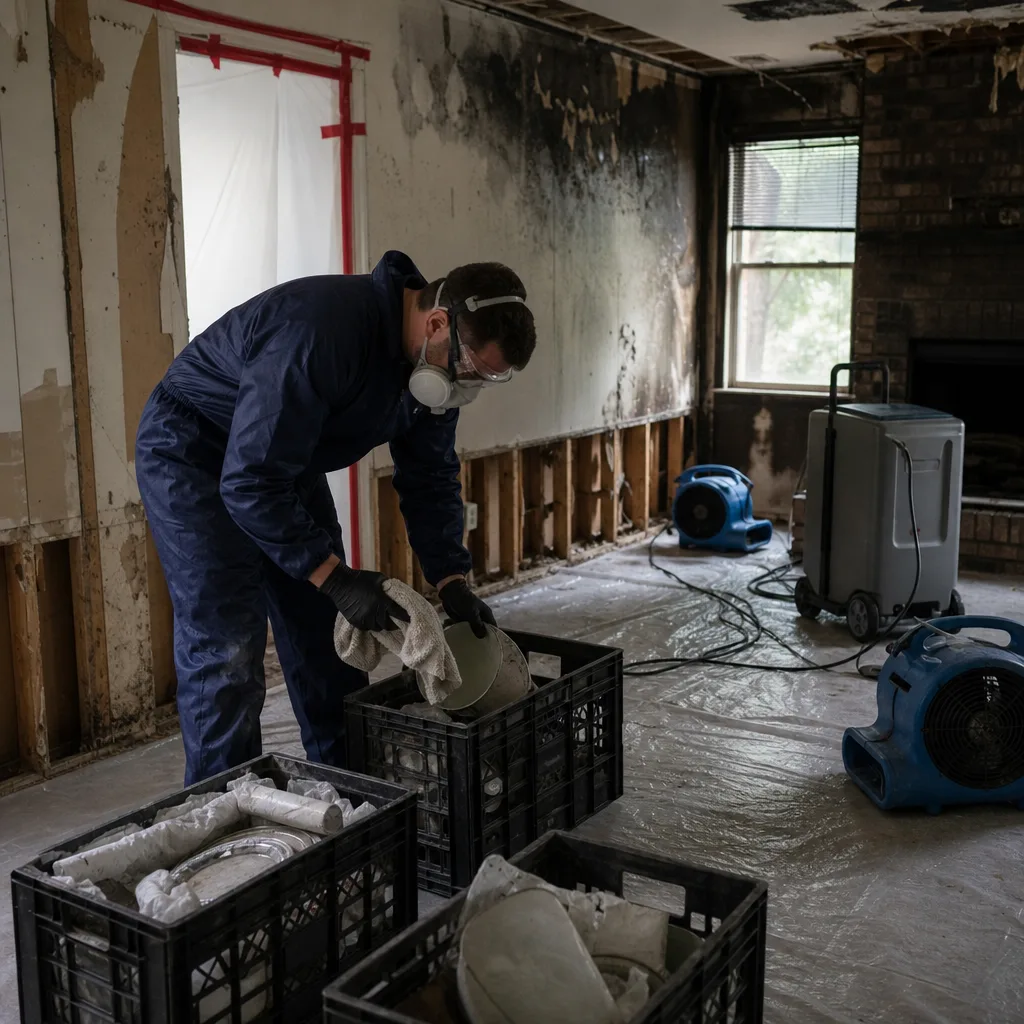
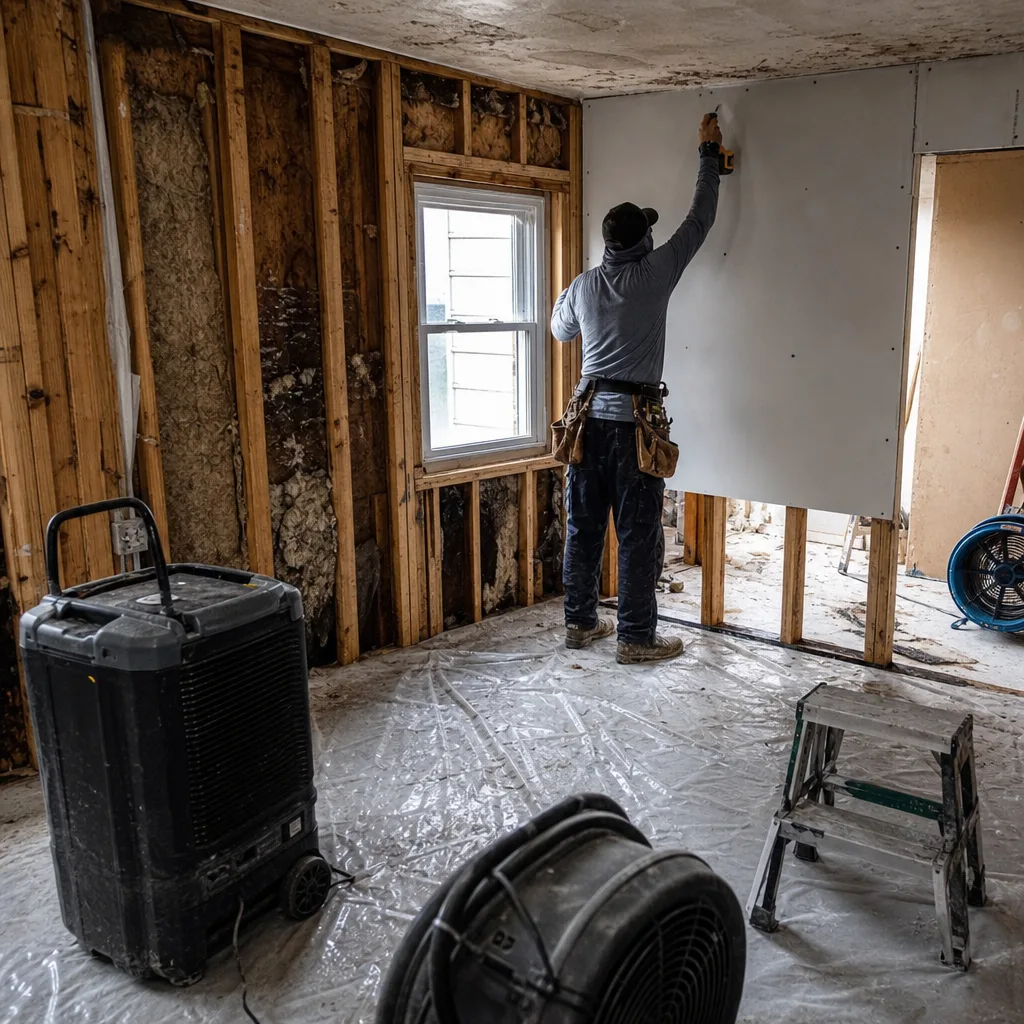
When water or Dunwoody Fire & Smoke Damage Restoration requires structural work, we handle the entire sequence: demolition, framing, drywall, trim, paint, and finish. Because so many Dunwoody homes were built on slab-on-grade foundations in the mid-1970s through early 1990s, we’re familiar with the settlement cracks and framing quirks that complicate rebuilds. We don’t patch over an unstable substrate. We repair it, dry it to standard, and rebuild it so the fix holds.
Drywall & Flooring Repair
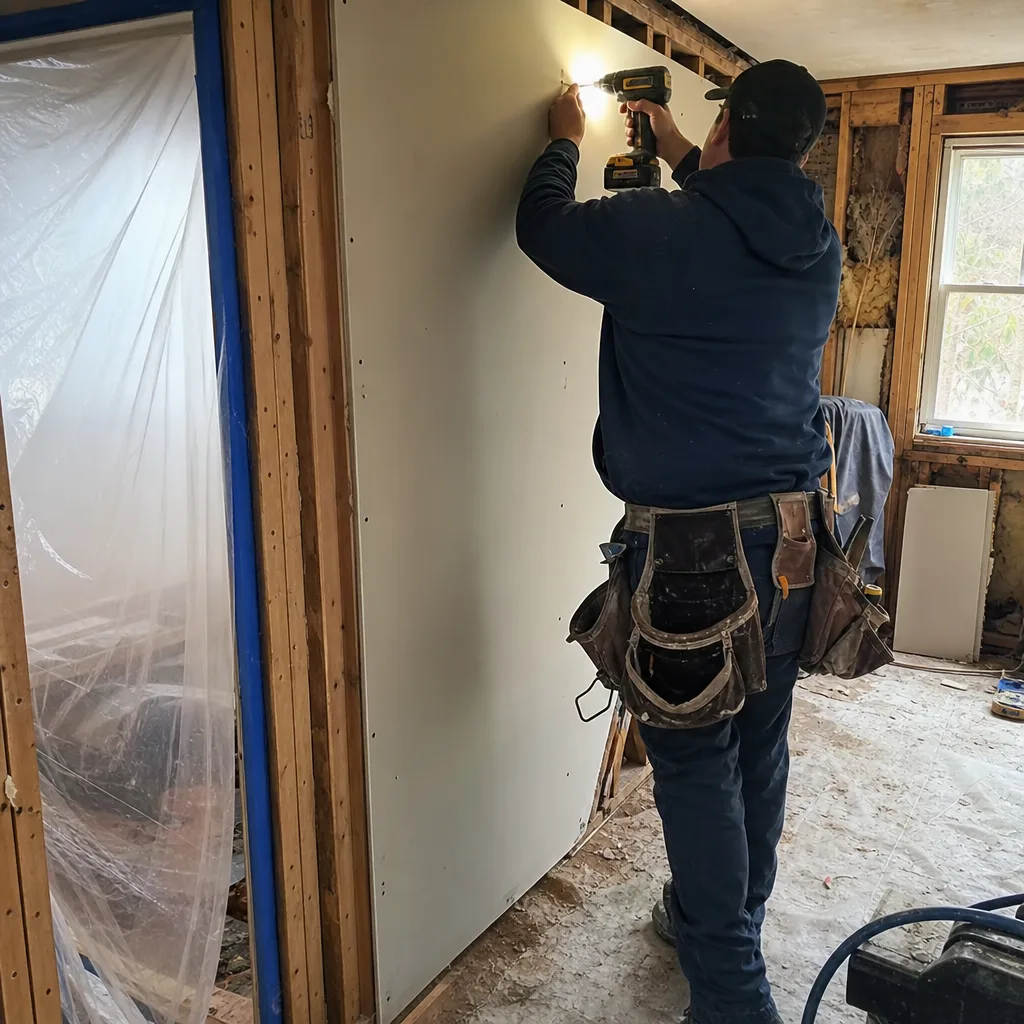
In Dunwoody, this work carries an extra layer most Atlanta-area contractors never see: matching decades-old wall textures and floor finishes after water mitigation. Homes built in the 1980s in Georgetown and Dunwoody North often have plaster textures, particular baseboard profiles, and hardwood or vinyl flooring that isn’t made anymore. Our crews source salvage and match finishes so the repaired area doesn’t announce itself. That matters when you’ve lived in the house twenty years and notice every seam.
Contents Restoration & Pack-Out
When a Dunwoody kitchen pipe bursts or a Perimeter Center high-rise unit takes water from the unit above, furniture, rugs, documents, and clothing often need to be moved out, cleaned, deodorized, and stored until reconstruction is finished. We pack out, catalog, and photograph everything, restore what’s salvageable, and return it once the rebuild is complete. We bill the carrier directly, so you’re not fronting money for a pack-out you never budgeted for.
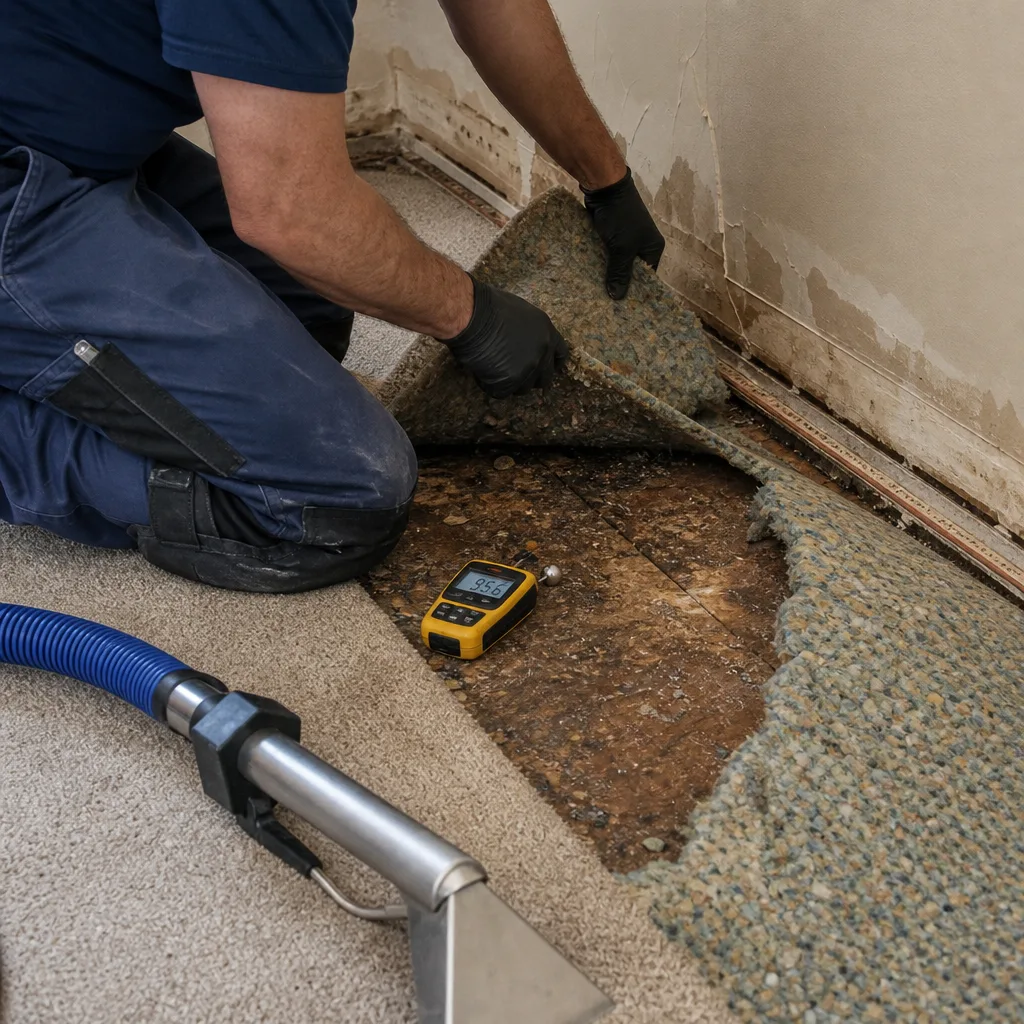
Carpet & Upholstery Cleaning
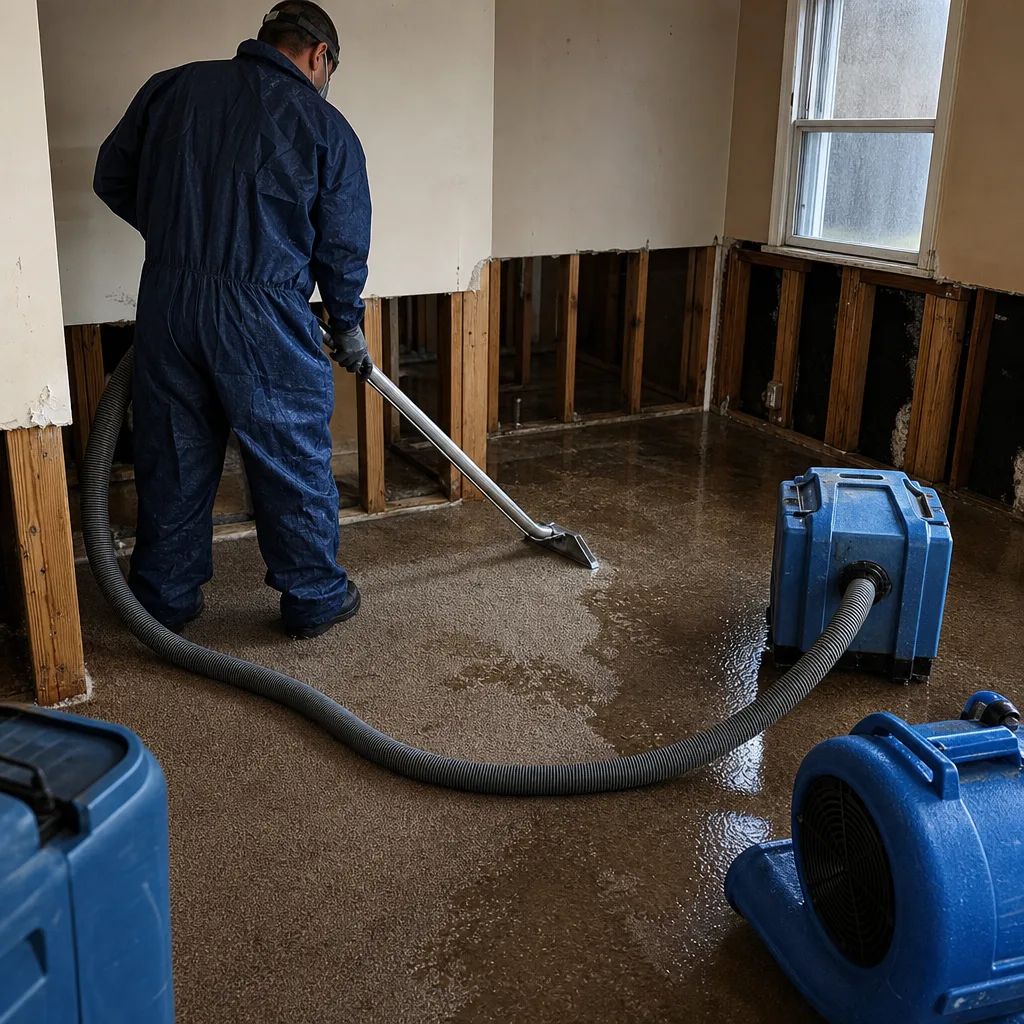
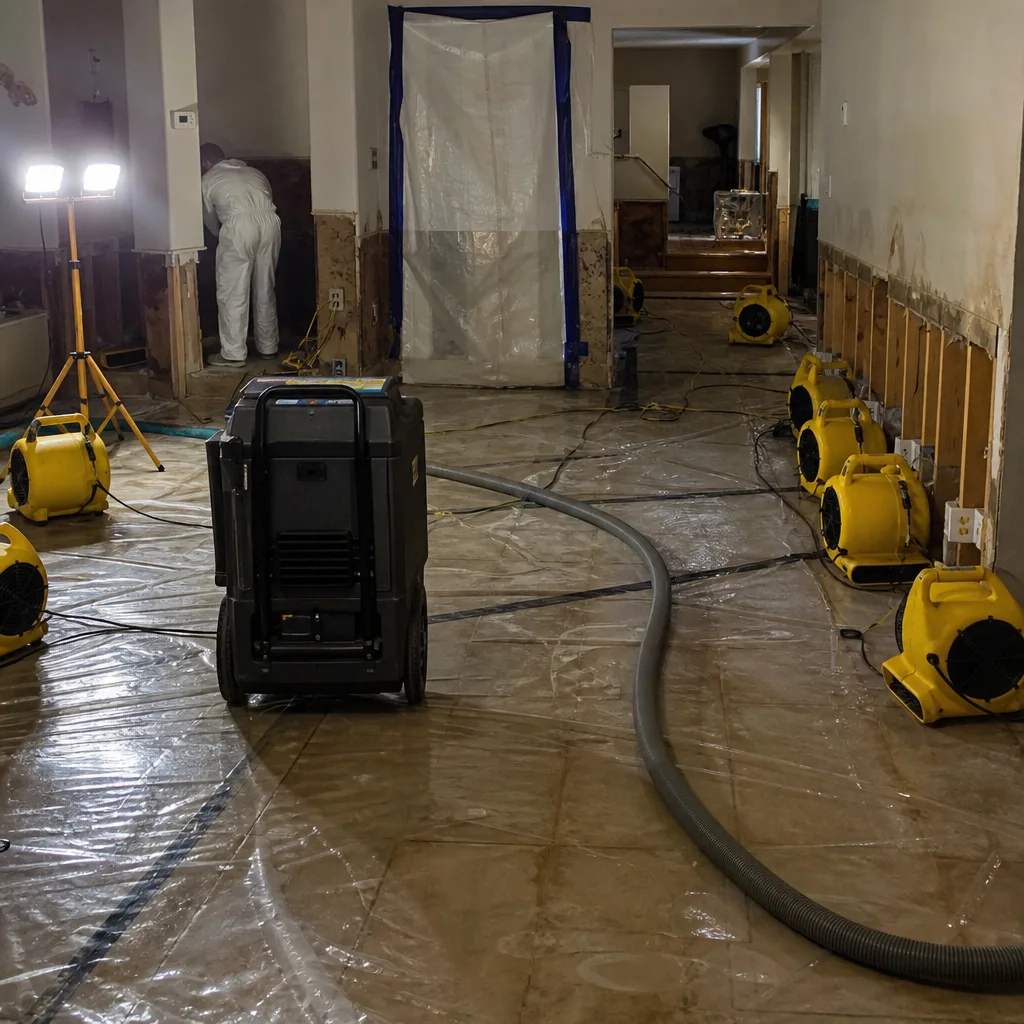
Not every water event in Dunwoody requires full reconstruction. A slow leak under a kitchen sink that’s caught early may only need carpet extraction, pad replacement, and thorough upholstery cleaning. We run professional-grade XPOWER and B-Air air movers and dehumidifiers until the dry standard is met, and we log daily moisture readings for you and your adjuster.
What happens when you call
- 1
A real person answersNo phone trees - you reach a local pro.
- 2
You get an upfront price rangeHonest numbers before anyone is dispatched.
- 3
A background-checked tech heads outLicensed & insured, dispatched right away.
- 4
You approve before work beginsNothing starts until you say go.
Trusted Brands We Service in Dunwoody
Dunwoody homes run the range from 1970s originals to recent renovations, and the equipment we bring reflects that. We use Dri-Eaz dehumidifiers, Phoenix air movers, XPOWER extractors, B-Air drying systems, and Injectidry mats for slab-edge and hard-to-reach drying. For Dunwoody’s slab-on-grade construction, Injectidry mat systems are often the difference between a fast dry and a lingering moisture problem under the base plate. We keep this equipment on our trucks, not in a warehouse across town, so we’re ready for a Dunwoody call without a second trip.
Common Reconstruction & Cleanup Problems We See in Dunwoody Homes
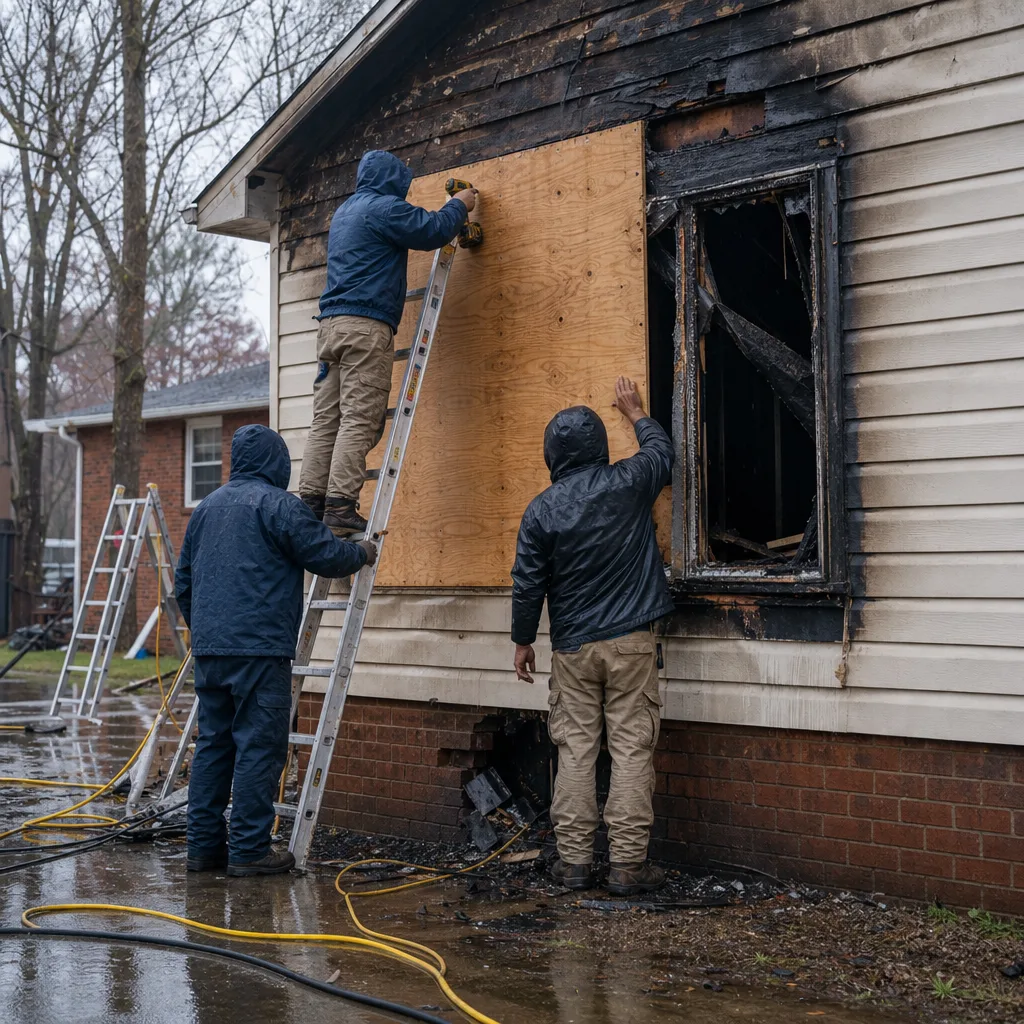
- Storm-felled trees pinning roofs, with city approval required before removal. Dunwoody’s tree preservation ordinance, enforced since incorporation in 2008, means a 60-foot oak can sit on a roofline for days while an inspector reviews the removal. We set up containment and begin interior drying with the tree still in place. That’s the only way to stop secondary damage while the city does its review.
- Original polybutylene supply lines from the 1980s failing without warning. These gray plastic lines become brittle with age and can split violently. In Dunwoody North and Georgetown, we routinely find the original lines still in service. After a failure, we document the piping for insurance and rebuild only after replacing the failed section.
- Cracked cast-iron drain stacks discovered during drywall teardown. Homes built in the 1970s and 1980s in Dunwoody often have aging cast-iron waste lines that have rusted thin. When new drywall anchors go in around a repair zone, they can crack the stack further. We inspect before we hang, and we document what we find for the adjuster.
- Humidity-driven mold in summer, even on small leaks. Dunwoody’s summers regularly push relative humidity past 80%. After water intrusion, mold can establish within 24 to 48 hours, faster than in drier climates. We treat every Dunwoody water loss, regardless of size, with aggressive dehumidification and daily moisture logs until the dry standard is met.
Pricing for Reconstruction & Cleanup in Dunwoody, GA
Reconstruction and cleanup pricing in Dunwoody runs on a wider range than most homeowners expect, and the range is driven by what the loss exposes. A straightforward drywall repair after a small ceiling leak typically runs $900 to $2,400. Full-room reconstruction with flooring replacement generally lands between $4,500 and $9,800 per affected room, depending on finish matching and whether slab-edge drying is required. Contents pack-out and cleaning for a larger water event usually runs $2,500 to $6,500. Carpet and upholstery cleaning alone runs $300 to $800 per room.
Dunwoody’s tree removal permit process adds time, not usually cost, to a loss. But the time matters: longer drying means more labor hours and more dehumidifier days. We give every Dunwoody customer a written scope before work starts, and we bill your insurance carrier directly. Estimates are free. Call (888) 832-2758 and we’ll walk you through what your specific loss will likely cost.
We Also Serve Cities Near Dunwoody
Our Reconstruction & Cleanup crews work throughout the north perimeter area, including Sandy Springs, Chamblee, Doraville, and Brookhaven. If you’re in a neighboring city with a storm-felled tree or a water-damaged room, the same live dispatch and 90-Day Done Right Promise applies. We’re one call away at (888) 832-2758.
Serving Dunwoody, GA - Our Local Coverage Area
We’re based in the Dunwoody area and know this community well. Use the map below to see our service coverage - if you’re nearby, we can almost certainly help.
FAQs - Reconstruction & Cleanup in Dunwoody
Dunwoody’s tree preservation ordinance, enforced through the city’s Tree Commission since incorporation in 2008, requires an inspector’s sign-off before any storm-felled tree can be removed from a structure. In practice, that means our Storm & Disaster Restoration - Dunwoody crews often set up containment, tarp the opening, and begin structural drying with the tree still pinning the roof. Reconstruction sequencing shifts: we mitigate what we can reach, document everything, and coordinate the final demolition with the city’s arborist. Call (888) 832-2758 and we’ll explain exactly how the permit timeline will affect your specific loss.
Slab-on-grade construction means water that penetrates a wall can travel along the slab edge and wick under baseboards and flooring without being visible. In Dunwoody North, we regularly find original polybutylene supply lines and settled slab cracks that channeled water under the foundation edge. Without Injectidry mat drying and moisture-mapped inspection of the slab perimeter, Mold Remediation in Dunwoody may be needed if mold persists behind baseboards long after the visible drywall is replaced. We don’t skip that step, even on losses that look small.
In Dunwoody’s humid subtropical climate, mold can begin colonizing within 24 to 48 hours after water intrusion, faster than in drier parts of the country. That compressed window means reconstruction cannot wait. We start dehumidification the same visit, log daily moisture readings, and don’t hang drywall until the structure meets the dry standard. Rushing the rebuild before the slab and framing are truly dry creates exactly the long-term problem the rebuild was supposed to fix. If you’ve had water in a Dunwoody home, call (888) 832-2758 today.
Yes, in most cases. Dunwoody’s tree removal permit requirement applies to storm-felled trees on residential lots, and the city won’t authorize removal until an inspector has evaluated the tree and the structure. You don’t need to figure this out alone. Our crews work with Dunwoody’s arborist and inspection office on every storm loss, and we’ll handle the permitting paperwork as part of your restoration scope. It’s one less thing for you to chase while your home is open to the weather.
High-rise reconstruction in Perimeter Center requires large-loss protocols: building-wide moisture mapping, coordinated drying across stacked units, and insurance documentation that captures every affected line item. We’ve handled multi-unit water losses in the 1980s and 1990s condo and office towers along the Perimeter corridor, including pack-outs, common-area drying, and reconstruction that meets building management’s access and noise rules. Call (888) 832-2758 and ask for our large-loss team.
Written by Curt Bowman, Owner at Floodline Restoration Co. of Atlanta, serving Dunwoody since 2010.