
Fast, Reliable Storm & Disaster Restoration Across Conley
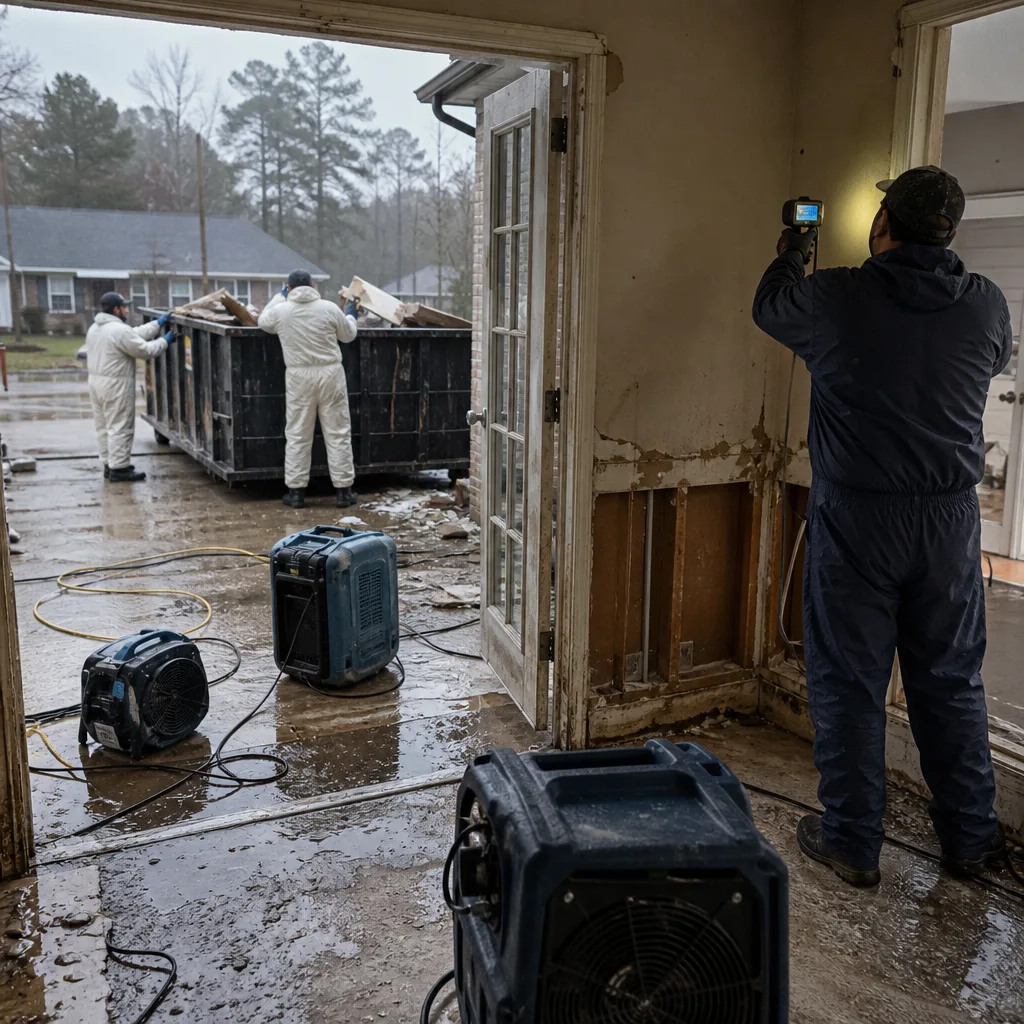
When a storm hits Conley, the damage doesn’t wait, and neither do we. Floodline Restoration Co. of Atlanta answers with a live dispatcher at any hour, and our certified crews reach Conley fast, often arriving within the hour for emergency board-up and tarping. We know ZIP 30288’s industrial-warehouse corridor and the older brick ranch pockets along the residential side streets. Storm damage here presents a specific set of problems: wind-driven rain through failed overhead door seals, saturated ceiling tiles in 1960s flat-roof buildings, and flash flooding from the South River and Flint River tributary watershed. Call (888) 832-2758 the moment you see water, a breached roof, or a blown-in door, and we’ll have a crew moving toward Conley before the call ends.
Why Floodline Restoration Co. of Atlanta Is Conley’s Preferred Storm & Disaster Restoration Company
Conley is not a typical suburb. The ratio of warehouse and distribution-center square footage to residential homes runs far higher than any neighboring community, and that shapes how storm restoration must be approached here. Our crews understand deferred-maintenance flat roofs with multiple patched membrane layers, transite pipe insulation in buildings from the 1960s and 70s, and the reality that an asbestos survey often precedes any interior cut. That local knowledge means we don’t underbid a Conley job and then stall when the survey comes back positive. We plan for it from the first assessment.
Conley homeowners and facility managers call us because we answer with a person, not a recording. Every technician who steps onto a Conley property is background-checked, uniformed, and certified to IICRC, RIA, and IFA standards. We carry Dri-Eaz, Phoenix, and XPOWER drying equipment sized for both a 1,200-square-foot ranch and a 40,000-square-foot warehouse. We serve the residential pockets and the Conley Road corridor with the same standard: a written scope before work starts, direct insurance billing, and the 90-Day Done Right Promise in your hands. Done right, and backed in writing.
Our Storm & Disaster Restoration Services in Conley
Emergency Board-Up
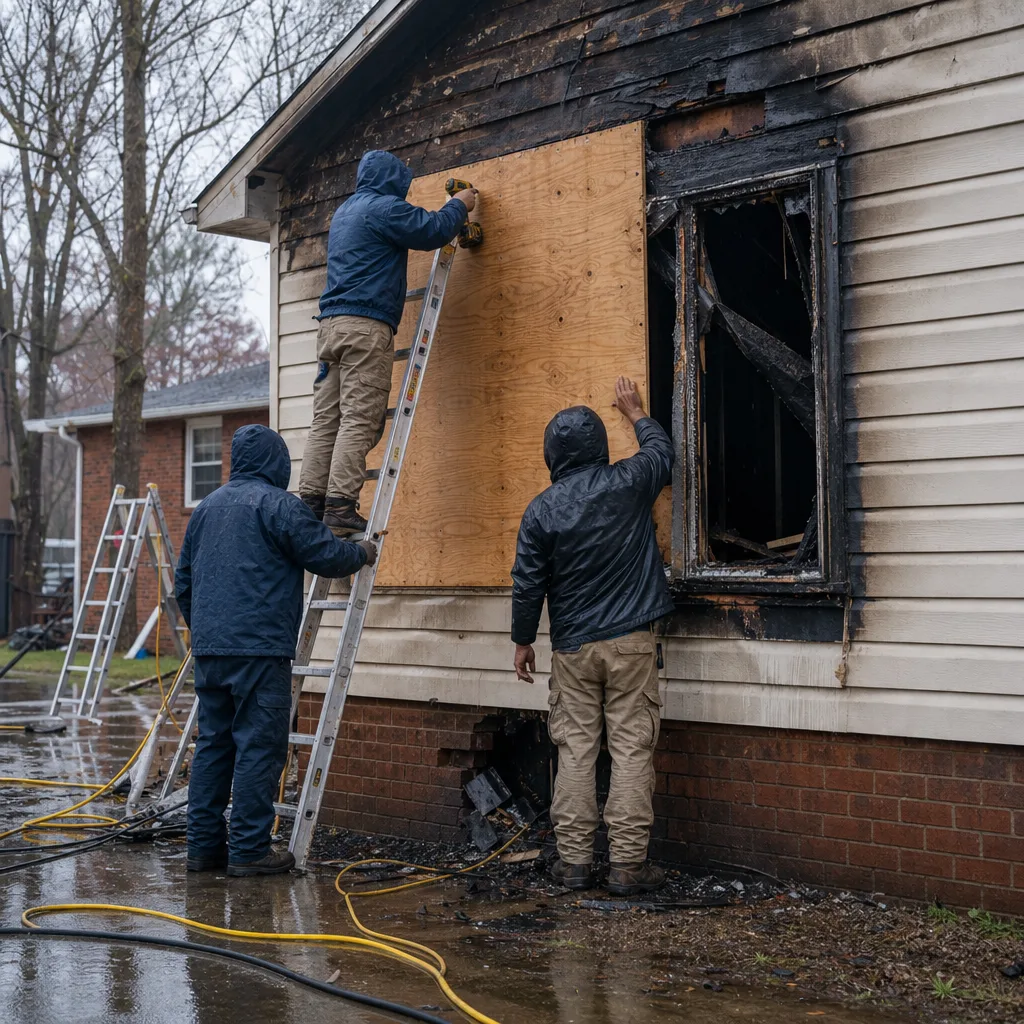
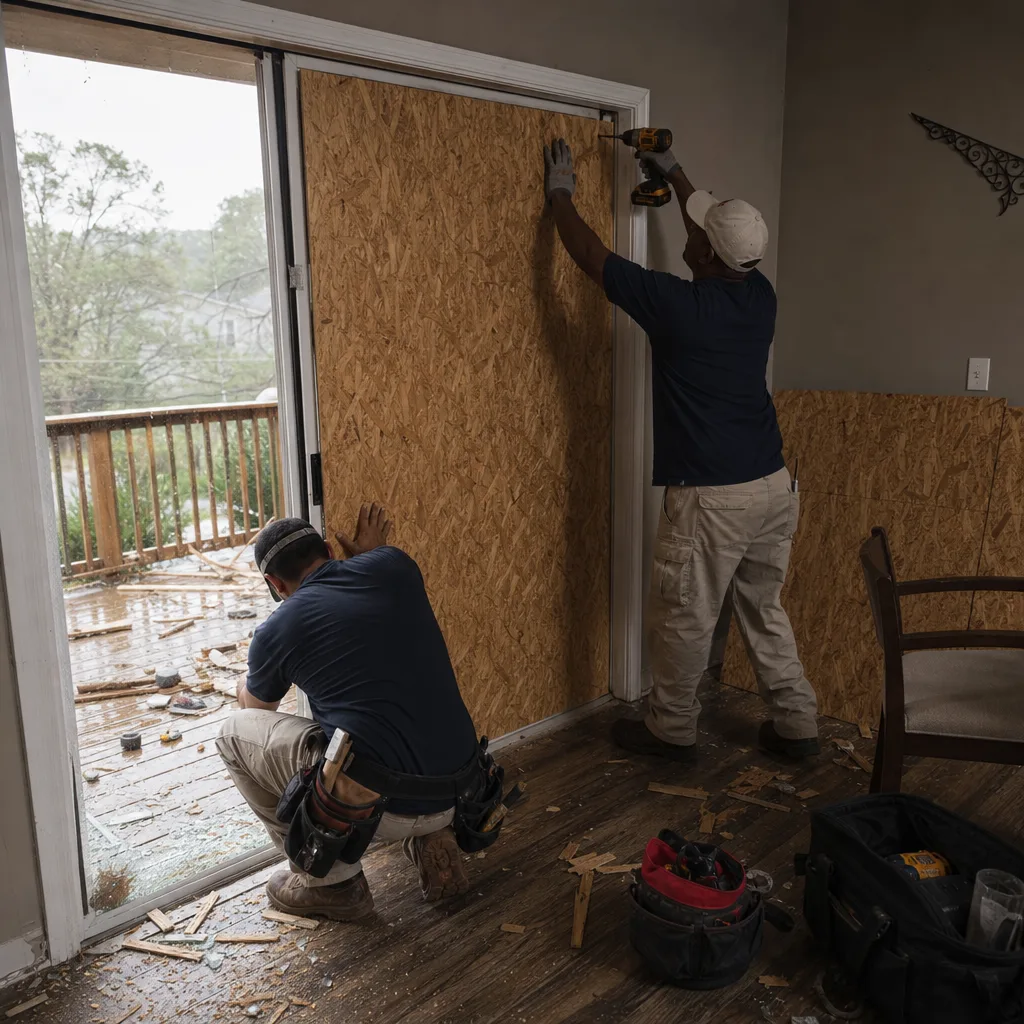
When wind blows in a commercial overhead door or shatters a window on a Conley warehouse, the building sits open to weather, theft, and further damage until someone secures the opening. Our Emergency Board-Up crews use 3/4-inch plywood and 2×4 bracing rated to meet Clayton County’s wind-load expectations for the Conley area. On commercial buildings, board-up often needs to go hand-in-hand with roof tarping, because a failed door is rarely the only breach. Once we secure the envelope, we document every opening with photos for your carrier.
Wind Damage Repair
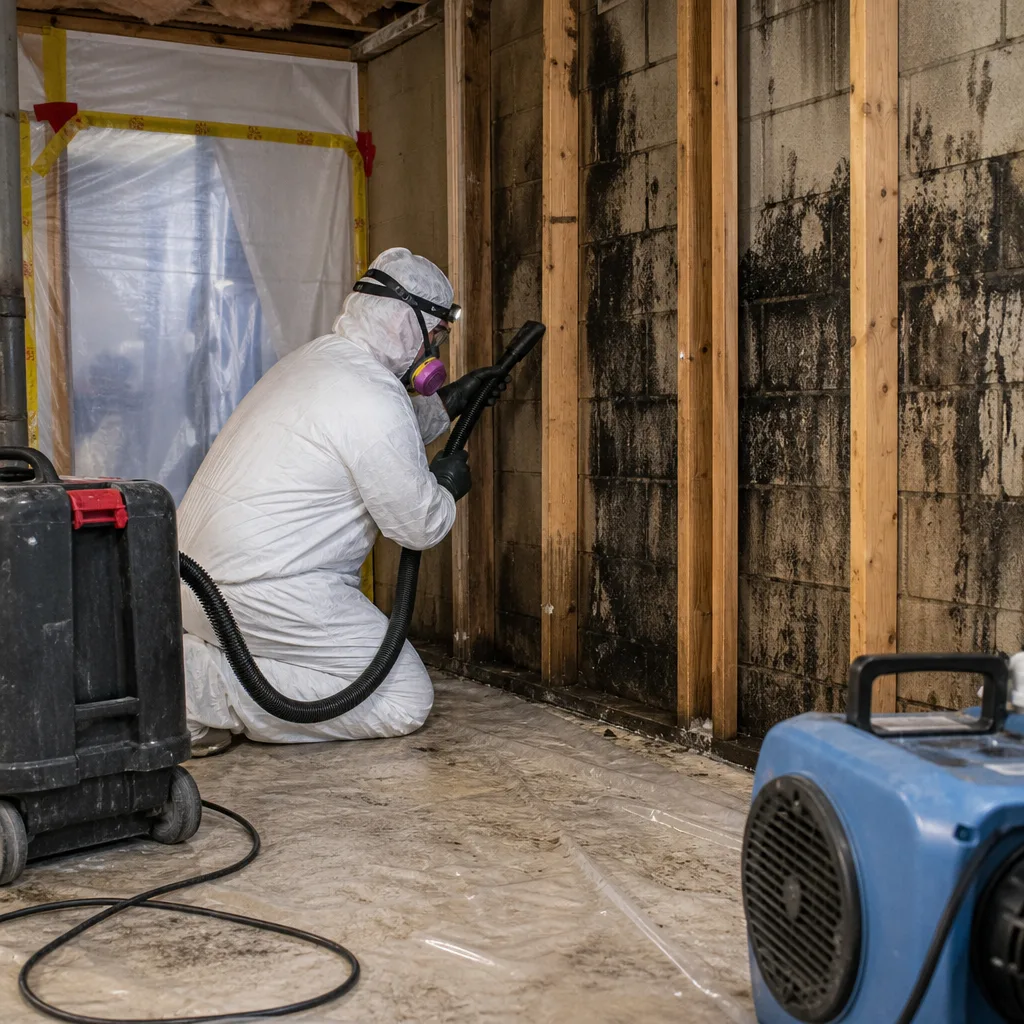
Conley sits in a wind corridor where summer microbursts and fast-moving squall lines can peel roof membrane, rack overhead door panels out of their tracks, and tear flashing from parapet walls. Wind Damage Repair in Conley isn’t a cosmetic fix. We re-rate track and hardware to the original wind-load standard, replace panels that have lost structural integrity, and inspect the full door assembly, not just the visible dent. A door that gets patched without rerating is a door that blows in during the next storm.
Storm Damage Cleanup
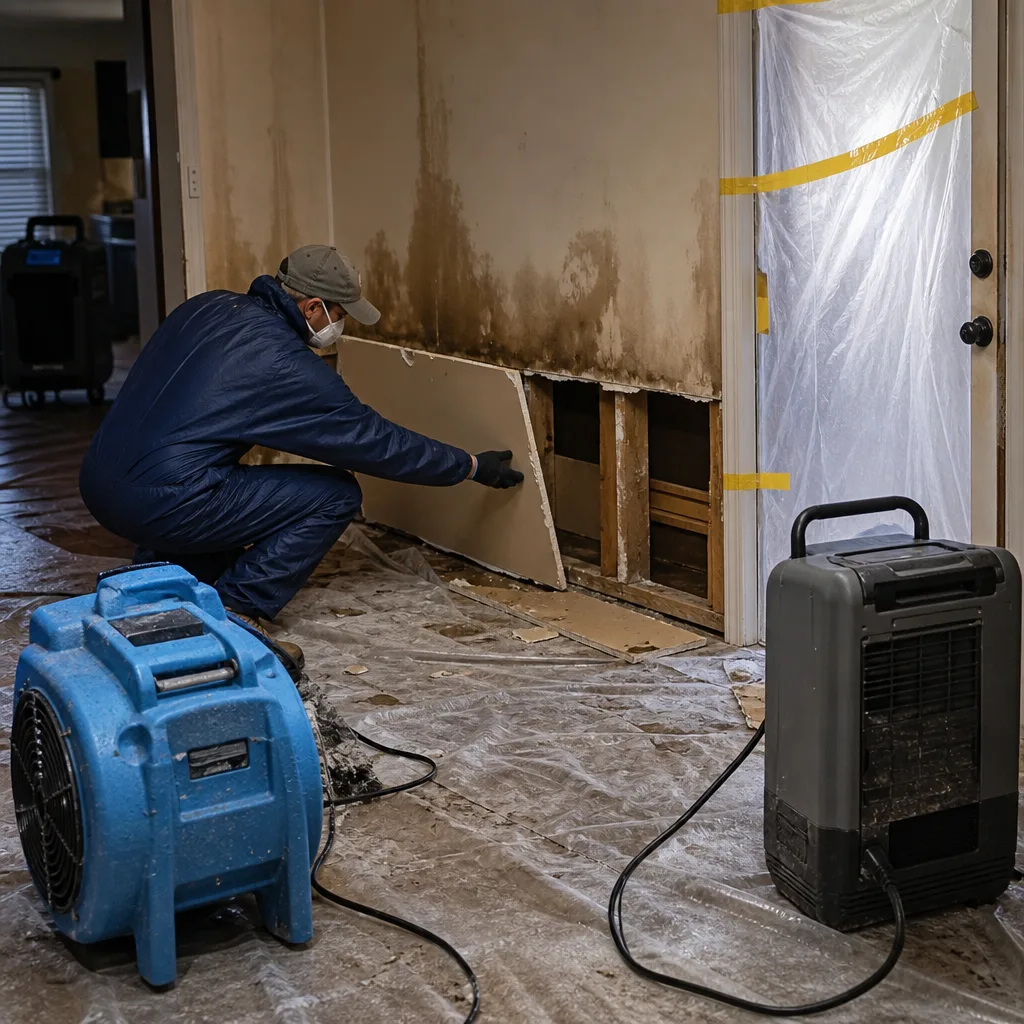
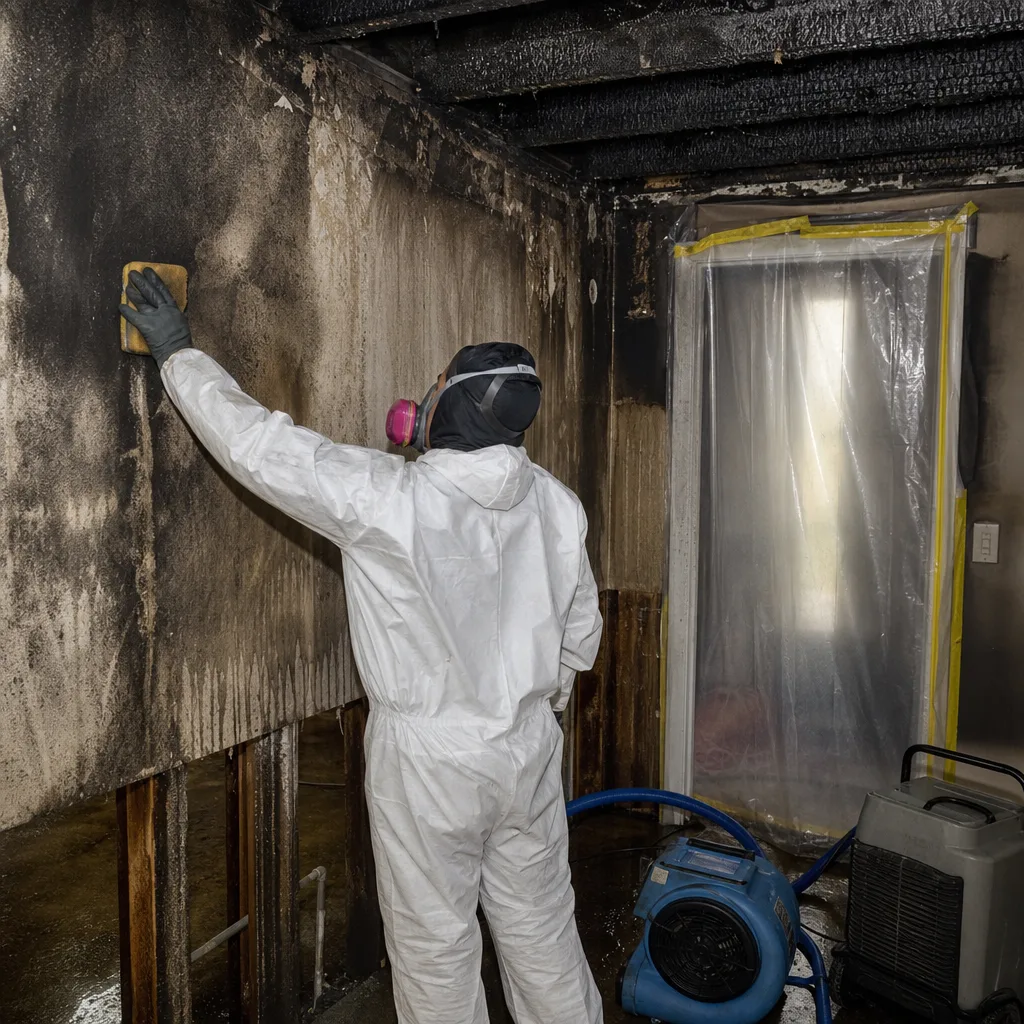
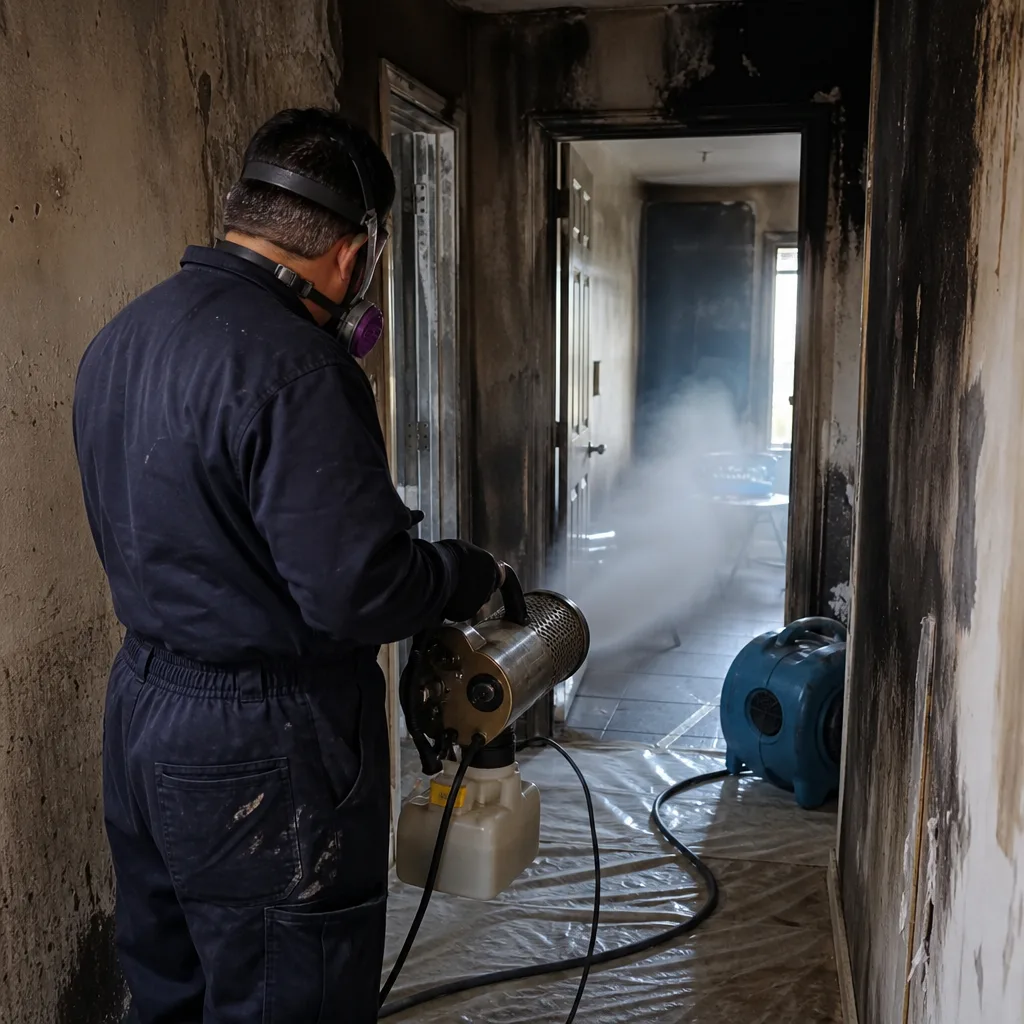
After water enters a Conley building, the clock runs fast. Georgia’s summer humidity routinely sits above 70%, and inside a poorly ventilated warehouse or an older brick ranch without a vapor barrier, mold can reach actionable levels in 48 to 72 hours. Our Storm Damage Cleanup crews extract standing water, set Dri-Eaz desiccant units and Phoenix air movers to pull the envelope below 50% relative humidity, and log moisture readings daily until the structure meets the dry standard. We hand that moisture log to you and your carrier.
Roof Tarping
Many Conley Road commercial roofs are flat or low-slope, built in the 1960s and 70s, and patched multiple times over the decades. When storm wind lifts a section of membrane, water finds its way into insulation and ceiling tiles fast. Our Roof Tarping crews deploy 8-mil poly anchored with furring strips and sandbags, sized to cover from a small scupper leak to a full 40,000-square-foot deck. On older Conley buildings, tarping buys the time needed for an asbestos survey before any interior cut begins, and our drying equipment runs the whole time to keep the interior from getting worse.
Beyond these four, we also handle flood damage restoration and debris removal throughout Conley. Trees down across a loading dock or a flooded mechanical room, we clear it, dry it, and build back what the storm took out. Big-job or small, one crew stays on it from first extraction to finished rebuild. No mid-job handoff.
Our full-cycle Storm & Disaster Restoration team coordinates every phase from a single dispatch board, so a Conley facility manager or homeowner never has to relay messages between a mitigation company and a separate contractor. We bill the carrier directly, and the 90-Day Done Right Promise stays on your job regardless of what we uncover mid-project.
What happens when you call
- 1
A real person answersNo phone trees - you reach a local pro.
- 2
You get an upfront price rangeHonest numbers before anyone is dispatched.
- 3
A background-checked tech heads outLicensed & insured, dispatched right away.
- 4
You approve before work beginsNothing starts until you say go.
Trusted Brands We Service in Conley
We service all major commercial door brands and residential roof and siding systems common across Conley. Our technicians work on Clopay, Wayne Dalton, Overhead Door, and Hörmann commercial door assemblies, and we keep common track hardware, weather seals, and panel hardware stocked on our trucks so most Conley repairs finish in a single visit. For drying, we run Dri-Eaz desiccant and LGR units, Phoenix air movers, and XPOWER ventilation, sized for anything from a single room to a full warehouse bay. We inspect the door, the track, the seal line, and the surrounding substrate. Then we stand behind the repair in writing.
Common Storm & Disaster Restoration Problems We See in Conley Homes
- Failed commercial overhead door seals. Wind-driven rain in Conley frequently enters through worn bottom seals and side weatherstripping on loading dock and bay doors. By the time water is visible on the floor, the track, header, and surrounding insulation often show damage that a simple seal replacement won’t fix.
- Aged transite pipe insulation and VAT floor tile. Buildings from the 1960s and 70s along the Conley Road corridor frequently contain asbestos-cement pipe insulation and vinyl asbestos tile. Any restoration cut into walls or floors almost always triggers an asbestos survey before work can legally proceed. Skipping the survey stops the job cold when transite or VAT is discovered mid-cut.
- Wind-racked overhead door panels. A microburst can push a door panel out of its track and leave the entire opening vulnerable to the next gust. Treating the panel as a cosmetic issue, without rerating the track and hardware to the original wind-load standard, leaves the door ready to blow in again.
- Saturated insulation hidden behind patched roofing. Conley’s older flat-roof warehouses often carry multiple layers of patched membrane. When a storm tears the top layer, water saturates the insulation and ceiling tiles below. Covering over that wet substrate without extracting and replacing it breeds mold within days in Conley’s humidity, and we see it on nearly every deferred-maintenance commercial loss we respond to.
Pricing for Storm & Disaster Restoration in Conley, GA
A typical emergency board-up of a single residential window or door in Conley runs $380 to $650, including materials, hardware, and the first re-inspection. Commercial overhead door board-up, which often requires larger plywood sheets, heavy bracing, and sometimes scissor-lift access, typically runs $850 to $1,400 per opening. Roof tarping on a Conley flat-roof warehouse generally falls between $1,500 and $4,200 depending on square footage, membrane condition, and whether an asbestos survey is required before any cut. Full water extraction and drying of a flooded basement or mechanical room starts around $1,800 and scales with the affected area.
Wind damage repair on a commercial door, including track rerating and panel replacement, typically runs $700 to $2,200 per door. A full structural repair of a wind-buckled residential door and framing ranges from $950 to $2,800. The factors that move cost in Conley: the presence of pre-1980 building materials requiring a survey, the height and access constraints of a given roof, and the severity of water migration into insulation. We give you a written scope before any work starts. Estimates are free, and we coordinate billing directly with your insurance carrier. Call (888) 832-2758 and a live person will talk you through what we’re seeing and what it will cost.
We Also Serve Cities Near Conley
Our crews cover Conley and the surrounding Clayton County and south-Atlanta corridor. We regularly respond to storm and flood calls in Hapeville, Forest Park, Gresham Park, and Morrow, often reaching those addresses within an hour of dispatch. The same certified crew, the same equipment, and the same written 90-Day Done Right Promise follow every job.
Serving Conley, GA - Our Local Coverage Area
We’re based in the Conley area and know this community well. Use the map below to see our service coverage - if you’re nearby, we can almost certainly help.
FAQs - Storm & Disaster Restoration in Conley
Yes. Any overhead door repair or replacement on a commercial building in Conley should be rerate to the original wind-load standard the door was designed to meet. Conley’s location in the path of summer microbursts and squall lines means wind-driven rain and racking forces are common, and a door that gets patched without rerating the track and hardware will likely fail in the next storm. We inspect the full assembly, not just the panel, and document the rating for your carrier. Call (888) 832-2758 if you’re looking at a wind-damaged door and need someone to assess whether it’s salvageable or needs replacement.
Any restoration work that requires cutting into walls, ceilings, or floors of a pre-1980 Conley Road building typically triggers an asbestos survey under federal and state regulations. Buildings from the 1960s and 70s commonly contain transite (asbestos-cement) pipe insulation and vinyl asbestos floor tile. If a storm has damaged drywall, ceiling tiles, or flooring and we need to cut into that material to dry the substrate, the survey comes first. We plan for it in the initial scope, so the job doesn’t stall mid-cut. It adds a few days of contained drying, but it keeps the work legal and safe.
In Conley’s summer conditions, mold can reach actionable levels within 48 to 72 hours of a water event. High ambient humidity, routinely above 70% in summer, plus poorly ventilated warehouse envelopes and older residential construction without vapor barriers, compresses that window hard. That’s why we run Dri-Eaz desiccant units and Phoenix air movers from the first visit, and why daily moisture readings continue until the structure hits the dry standard. Waiting even a day to begin drying can mean the difference between extraction and full remediation. If water is standing in your Conley building right now, call (888) 832-2758 now.
Yes. The scattered residential pockets in and around Conley were mostly built between the mid-1950s and early 1970s, and many of those homes still carry original cast-iron drain lines. By now, those lines are often fully corroded and heavily scaled. When flash flooding from the South River and Flint River tributary watershed saturates the ground around these homes, hydrostatic pressure can force water through every crack and seam in the drain system, backing up into basements and crawlspaces. The water damage often extends far beyond what’s visible on the first assessment. We check the drain lines as part of every Conley water incident, because the visible water is rarely the whole story.
Because on Conley’s flat-roof and low-slope commercial buildings, a storm that blows in a door almost always compromises part of the roof at the same time. The same microburst or squall that racks a door panel often lifts membrane at the parapet, near a scupper, or along a seam. If we board the door but leave the roof breach open, water keeps entering, insulation keeps saturating, and mold keeps growing while you wait for the adjuster. We tarp the roof and board the door in the same visit, then run drying equipment below until the full restoration plan is in writing. One visit, secured envelope, drying started. Call (888) 832-2758 to get a crew moving toward Conley now.
If you’re looking at storm damage in Conley right now, the next hour matters more than the next week. Call (888) 832-2758 and a live dispatcher will take your information, tell you when our crew will arrive, and we’ll start the process that ends with a dry, repaired, and correctly rebuilt structure. The line the water left is where we start, and we don’t leave until the job is done right, and backed in writing.
Written by Curt Bowman, Owner at Floodline Restoration Co. of Atlanta.