
Fast, Reliable Mold Remediation Across Atlanta
Mold remediation in Atlanta typically costs $1,800 to $6,500 depending on the square footage affected, whether the crawl space is involved, and how far moisture has wicked into framing. In neighborhoods like Grant Park, Druid Hills, and Vine City, we usually have a certified crew on site within 90 minutes because Atlanta is our home base, not a territory we commute into. If you can see mold or smell it, call (888) 832-2758 right now. A live dispatcher answers. Every job starts with a moisture map and a written scope before we touch a single wall.
Why Floodline Restoration Co. of Atlanta Is Atlanta’s Preferred Mold Remediation Company
We have worked Atlanta’s intown neighborhoods long enough to know what a 1920s foursquare in Mozley Park hides behind its plaster walls: return plenums that were never sealed, crawl spaces breathing straight into living areas, and red clay that holds water like a sponge. Our crews are background-checked, uniformed, and trained to IICRC, RIA, and IFA standards. The same team that reads the moisture map on day one handles daily readings, hands the log to you and your carrier, and rebuilds what needs rebuilding. We’re part of the Mold Remediation division that handles full-cycle work, from first extraction to finished drywall. Atlanta homeowners call us because they want a name they can hold accountable, and a company that plans to be here in thirty years answers the phone at two in the morning. Curt Bowman founded Floodline Restoration Co. in 2010 around a dispatch board, not a sales desk. Every job carries the 90-Day Done Right Promise, in writing, no arguing. That’s the Keystone Standard.
Our Mold Remediation Services in Atlanta
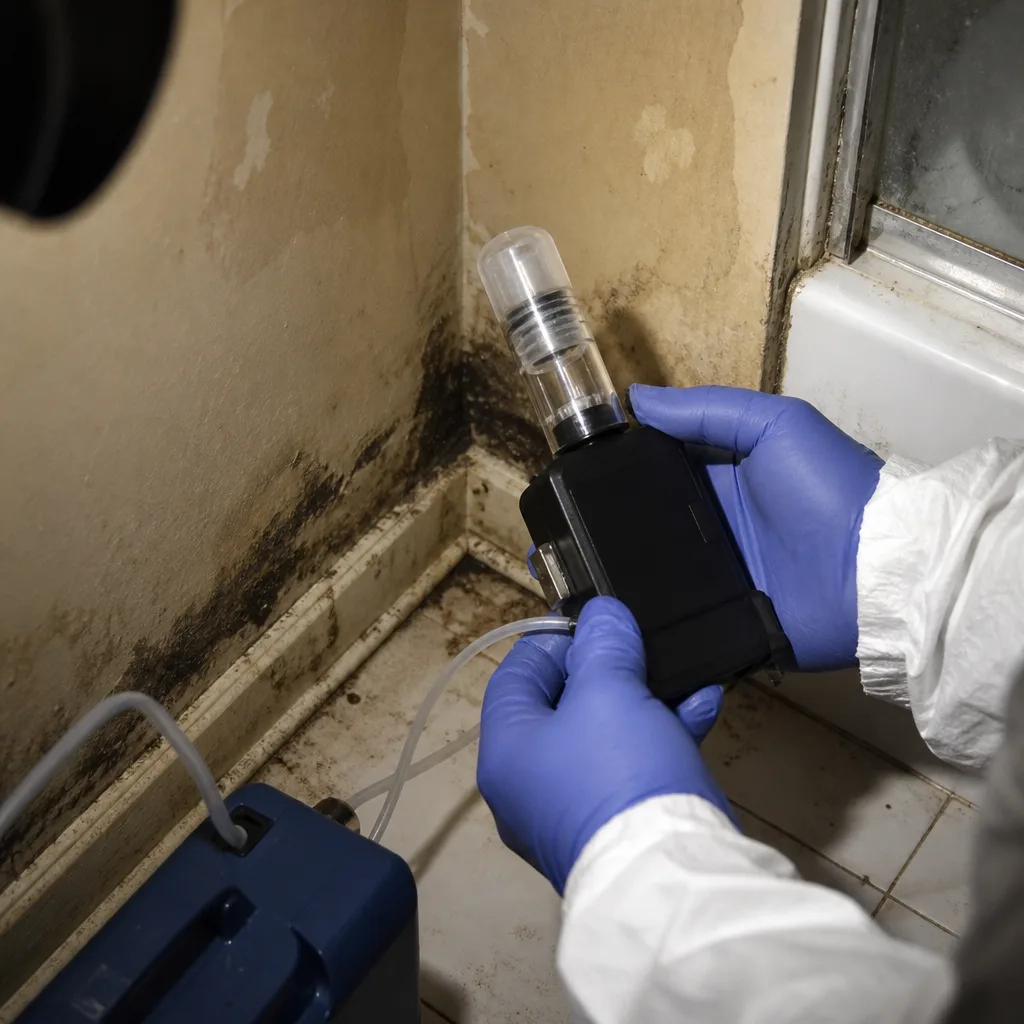
Mold Inspection & Testing
A proper inspection in Atlanta means more than swabbing a patch of drywall. Our technicians map moisture with professional-grade meters, check the crawl space for red clay wicking, and trace plumbing runs through unheated areas. In older homes across Grant Park and Druid Hills, we find mold hiding behind baseboards and inside return plenums that have not been opened since the house was built. Testing tells you what you’re dealing with before any removal starts, and we document everything with photos for your insurance carrier.
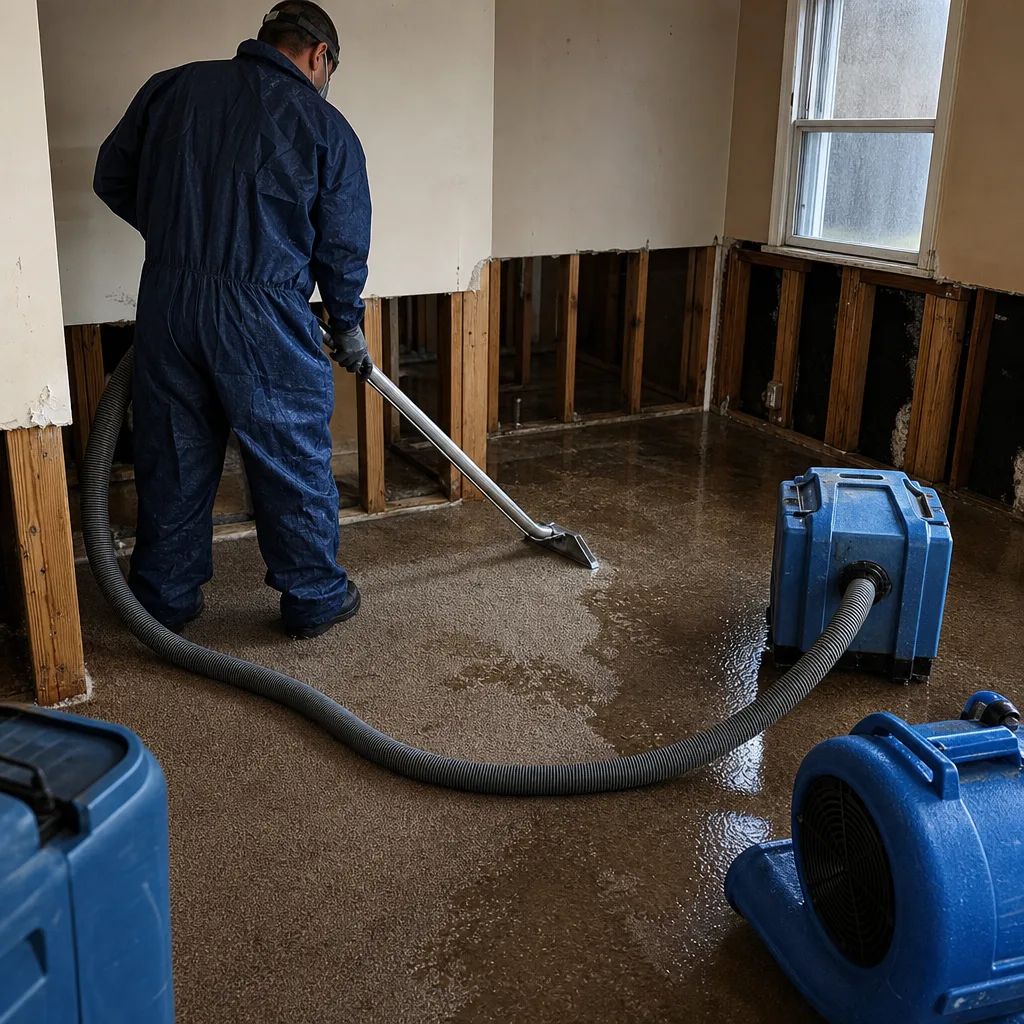
Mold Removal
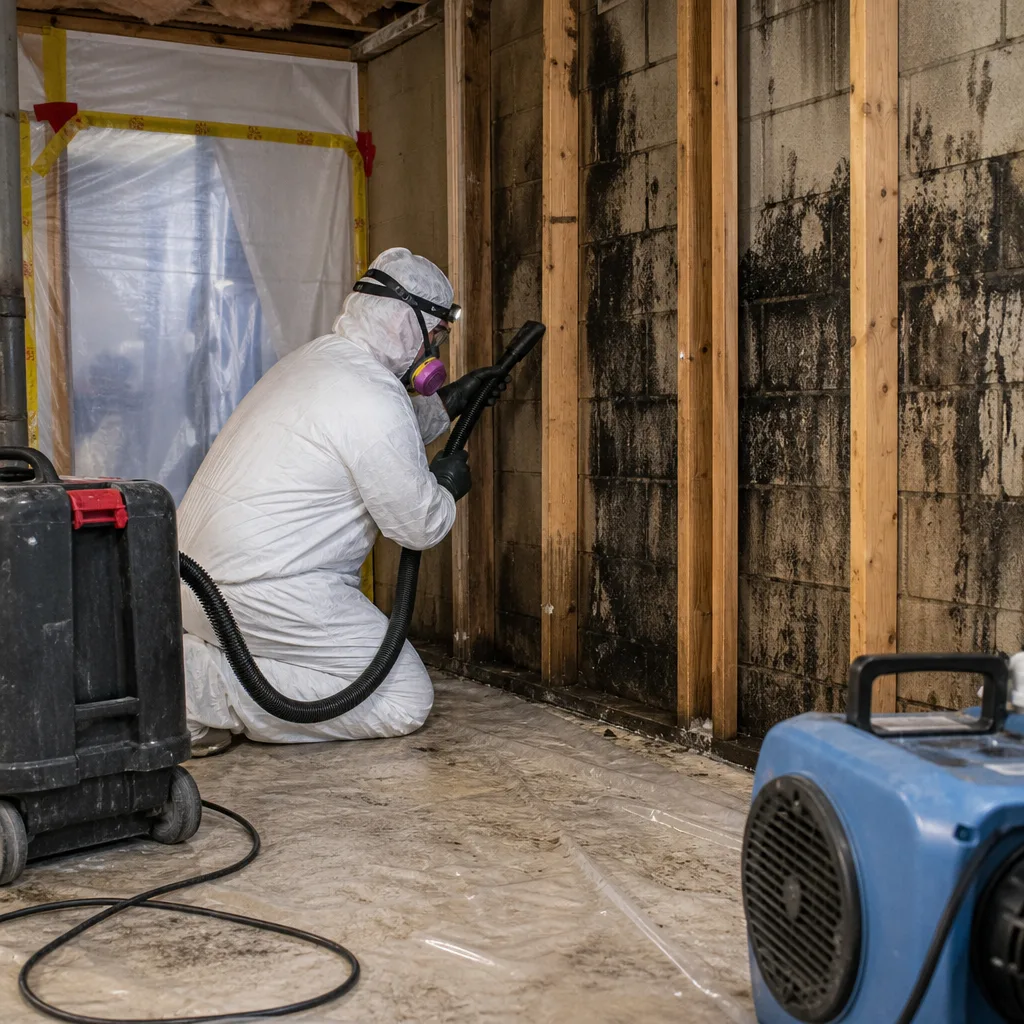
Mold removal in Atlanta’s humid subtropical climate is a race against the dew point. We set up containment, run commercial LGR dehumidifiers such as Dri-Eaz and Phoenix units, and physically remove affected drywall, insulation, and flooring. We do not just spray and walk away. Every removal ends with a moisture reading below the dry standard, and the log goes to you and your adjuster. That’s what done right means in a city where untreated moisture re-wicks within weeks.
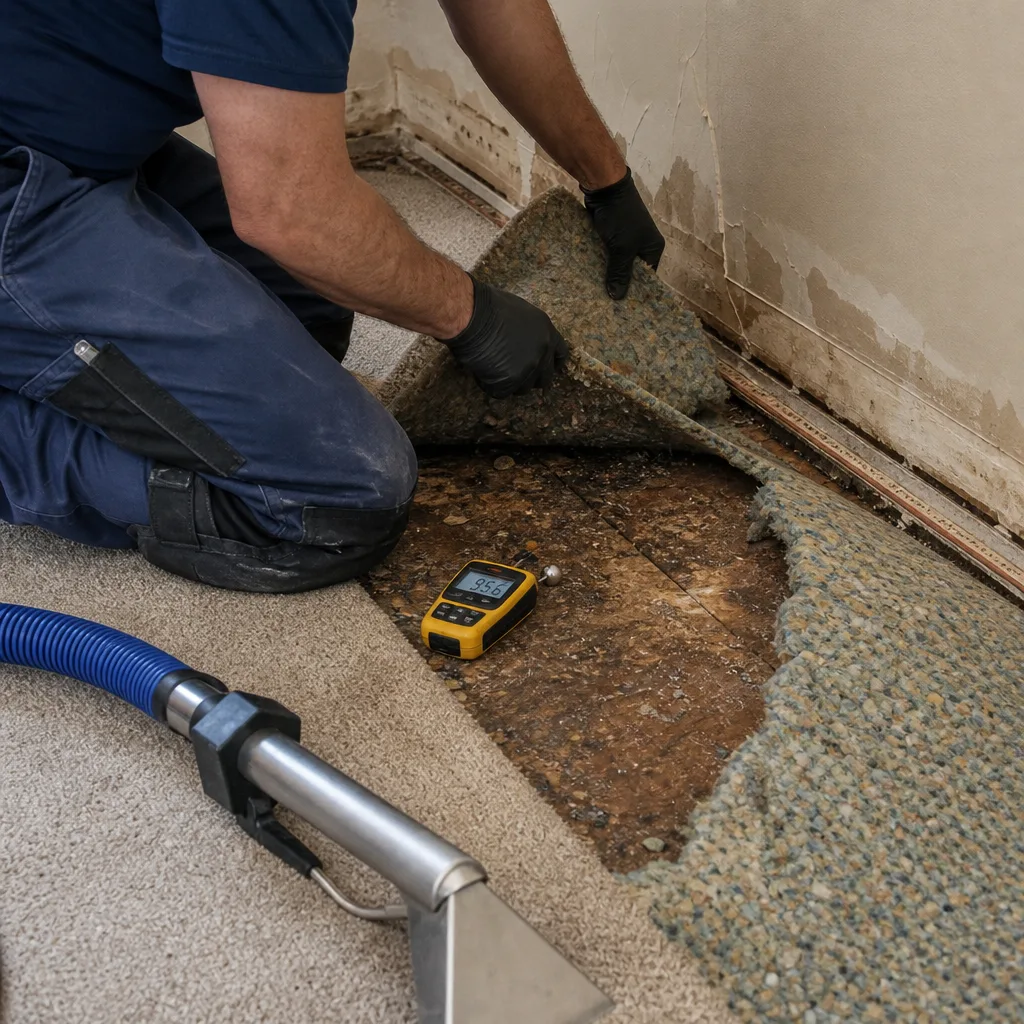
Black Mold Remediation
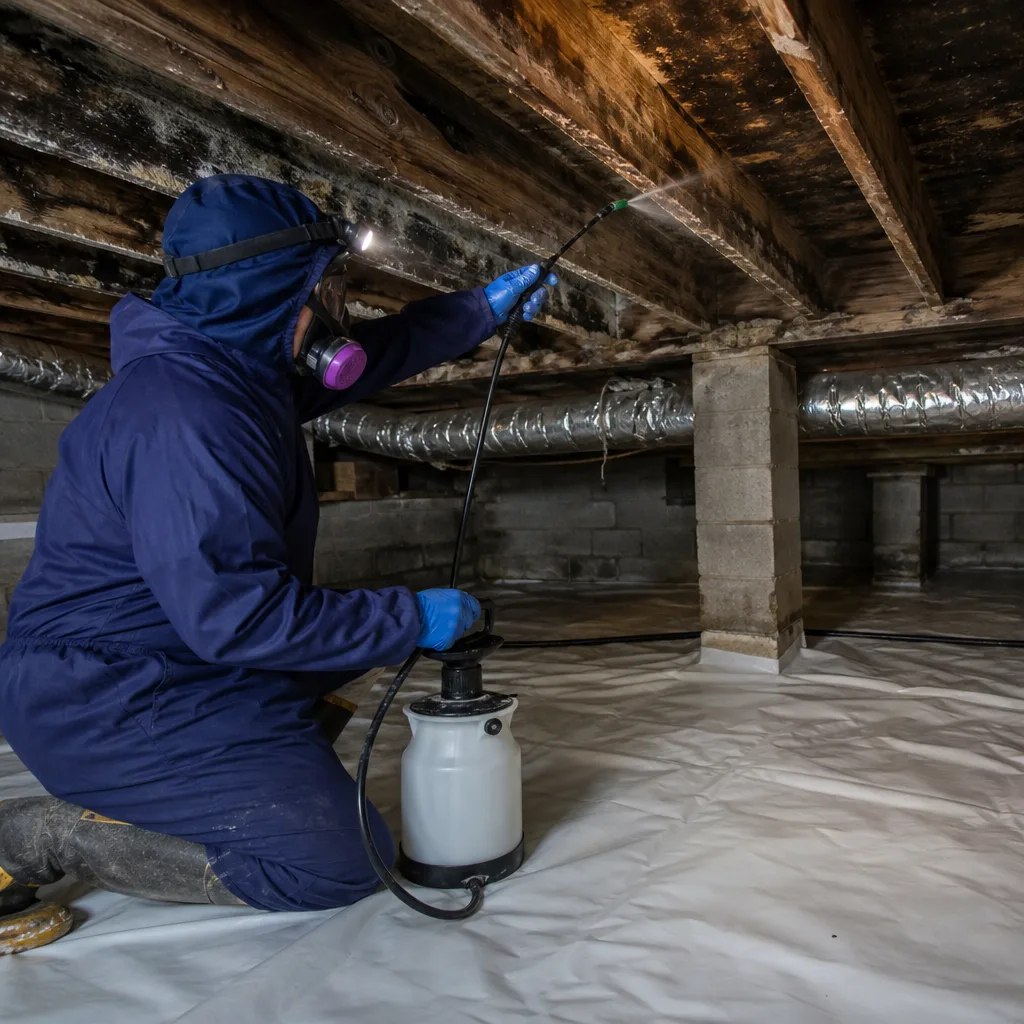
Black mold, or Stachybotrys, is the one Atlantans call us about most after a storm breach. It colonizes wet cellulose fast, especially in the uninsulated crawl spaces common to homes in Vine City and Sylvan Hills. We contain the area under negative air pressure, remove contaminated material, and treat surfaces with antimicrobial agents rated for the specific spore type found. Afterward, we run an air-quality post-test to prove the indoor spore count has returned to normal. A written report goes in your hands.
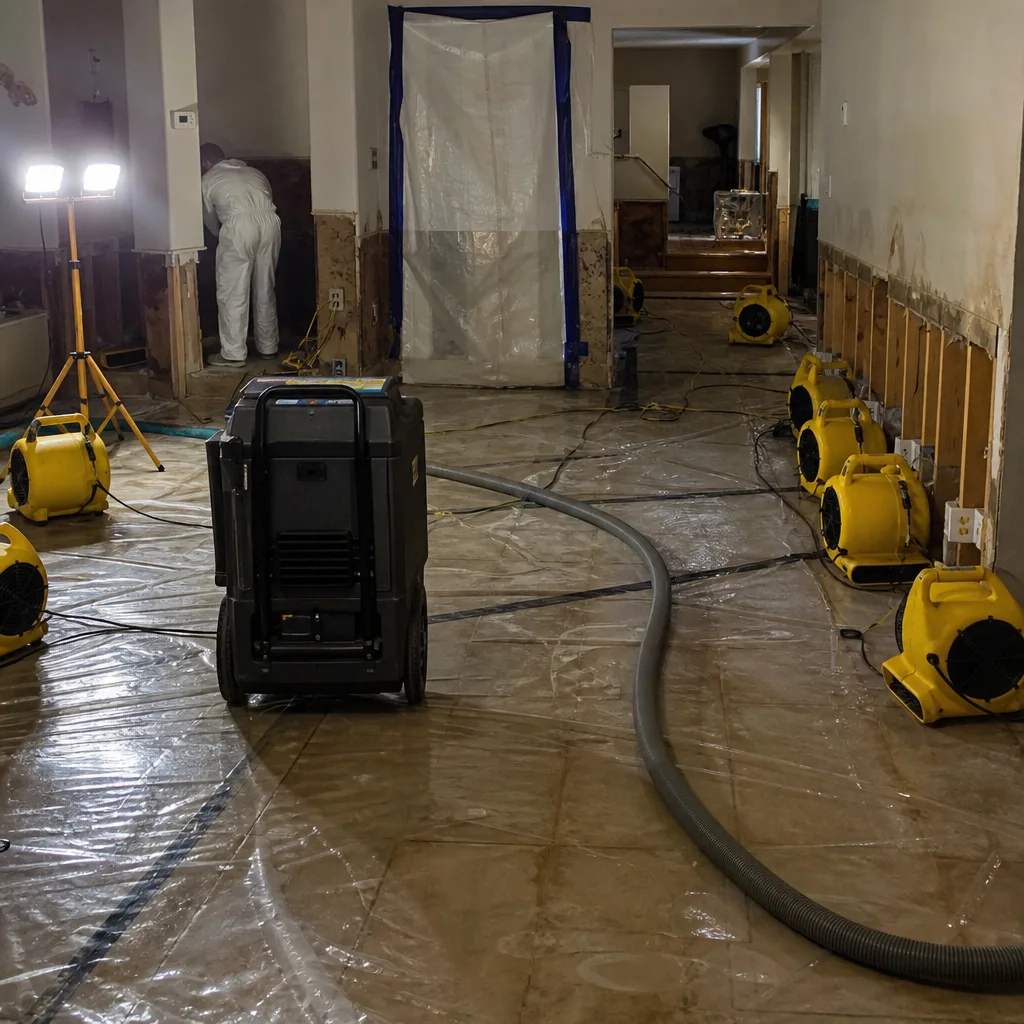
Air Quality Restoration
Older Atlanta homes with plaster walls and original ductwork often have hidden spore reservoirs that keep recirculating mold long after the visible patch is gone. Our air quality restoration work includes HEPA air scrubbing, duct inspection, and post-remediation verification testing. For homes near the tree canopy in Druid Hills or North Decatur, where outdoor mold counts run high in summer, we also recommend humidity control measures that keep indoor levels below what mold needs to regrow.
What happens when you call
- 1
A real person answersNo phone trees - you reach a local pro.
- 2
You get an upfront price rangeHonest numbers before anyone is dispatched.
- 3
A background-checked tech heads outLicensed & insured, dispatched right away.
- 4
You approve before work beginsNothing starts until you say go.
Trusted Brands We Service in Atlanta
We run Dri-Eaz LGR dehumidifiers, Phoenix axial air movers, Injectidry floor mats, B-Air filtration, and XPOWER air scrubbers on Atlanta jobs because residential-grade rentals do not get wood below 15% moisture content in our humidity. That matters more here than in drier cities. We keep parts and consumables stocked at our Atlanta office, which means no waiting on a shipment when your crawl space is wicking moisture into the floor joists. When you call (888) 832-2758, the equipment arrives with the crew, not a week later.
Common Mold Remediation Problems We See in Atlanta Homes
- Crawl space red clay moisture reservoirs. Georgia’s expansive red clay holds water for weeks after a storm, and it sits directly under the 1910s to 1940s crawl-space homes in Grant Park and Druid Hills. You can remove every inch of visible mold upstairs, but if the crawl space is still wet, the floor joists re-wick humidity and the mold returns within a month. We treat the source, not just the symptom.
- Roof breaches from the tree canopy. Atlanta’s ‘city in a forest’ canopy drops limbs and whole trees onto roofs during spring and summer thunderstorms. Water punches through the attic, runs down inside walls, and lands in the crawl space below. The window before mold blooms is 24 to 48 hours in our humidity. We answer the phone at 2 a.m. because that window does not wait for business hours.
- Uninsulated crawl-space plumbing freezes and bursts. Atlanta homes are built with minimal pipe insulation, and many supply lines run through unheated crawl spaces. After a hard freeze or ice event, crews learn quickly to prioritize crawl-space homes on north-facing slopes in hilly neighborhoods like Sylvan Hills and Edgewood, because those uninsulated lines fail fast and the red clay underneath slows drying dramatically.
- Incomplete remediation that skips post-testing. In older foursquare homes, hidden return plenums and unsealed crawl spaces recirculate spores from missed pockets. We see jobs where a previous company fogged the room and called it done. We run an air-quality post-test after every remediation, and the spore count is in the written log you and your carrier receive. If it’s not below normal, we’re not finished.
Pricing for Mold Remediation in Atlanta, GA
A typical mold inspection and testing in Atlanta runs $350 to $700. Small visible mold removal jobs, such as a bathroom ceiling or a closet wall, run $900 to $2,200. Full-room remediation with containment and HEPA air scrubbing sits in the $2,500 to $5,000 range. Crawl space treatment and encapsulation, which we recommend for most intown Atlanta homes on red clay, adds $3,000 to $8,000 depending on square footage and access. Black mold remediation with full containment and post-testing starts around $3,500 and goes up from there. Every quote is written, itemized, and reviewed with you before work begins. We bill your insurance directly when coverage applies, which means you’re never the messenger between us and the adjuster. Call (888) 832-2758 for an exact quote. Estimates are free, and we’ll be there when we say.
We Also Serve Cities Near Atlanta
Beyond Atlanta, our crews handle mold remediation in Druid Hills, North Decatur, Gresham Park, and North Druid Hills regularly. We know the crawl-space bungalows in these neighborhoods the same way we know the foursquares off Ponce de Leon and the splits in North Decatur. Same crew, same 90-Day Done Right Promise, same live phone dispatch.
Serving Atlanta, GA - Our Local Coverage Area
We’re based in the Atlanta area and know this community well. Use the map below to see our service coverage - if you’re nearby, we can almost certainly help.
FAQs - Mold Remediation in Atlanta
In Atlanta’s humid subtropical climate, mold growth typically begins within 24 to 48 hours of water intrusion, and in a crawl-space home on red clay it can be visible within three days. The window is tighter here than in most peer Southern cities because the humidity stays high overnight and the clay below the house keeps feeding moisture upward. If a tree limb has punched through your roof, do not wait for the stain to show. Call us immediately, and moisture mapping will find the water before the spores bloom.
Atlanta does not require a standalone mold remediation permit for residential work, but any structural repair that follows, such as replacing studs or subflooring, does need a City of Atlanta building permit. Our technicians are certified to IICRC, RIA, and IFA standards, which is what your insurance carrier and any future home inspection will look for. We pull the permits when the rebuild phase requires them, and the paperwork is yours at the end.
A crawl space over Georgia red clay is a moisture reservoir that never fully dries on its own, and Sylvan Hills’ hilly terrain means many homes sit on north-facing slopes where the clay stays even wetter. A slab home has a vapor barrier and concrete between the living space and the ground. A crawl-space home has wood joists suspended directly over damp clay. That’s why we emphasize Crawl Space Treatment and Moisture & Humidity Control on Atlanta intown homes, and why post-remediation testing is not optional here.
Dry the wood first. Spraying antimicrobials on saturated wood wastes the product and leaves the moisture that feeds regrowth. We run Dri-Eaz LGR dehumidifiers and Injectidry floor mats to pull moisture out of the framing and subfloor, then treat with antimicrobials once the wood drops below the dry standard. In Atlanta’s winter conditions, that order is the difference between a one-visit job and a callback in March when the clay warms up and the spores reactivate. Call us the day the pipe bursts, not the day the wall turns black.
Yes, we run post-remediation air-quality testing after every job, and it’s especially important in older Atlanta homes with plaster walls, because spores hide behind lathe, in unsealed return plenums, and inside wall cavities that surface cleaning cannot reach. The post-test measures indoor spore counts against an outdoor baseline, and we hand you the written results. For homes built before 1950 in neighborhoods like Grant Park and Vine City, we recommend testing every time, because a missed pocket in a plaster wall recirculates for years without being seen.
If you suspect mold in your Atlanta home, call (888) 832-2758 now. A live dispatcher answers, day or night. We’ll schedule a moisture inspection, give you a written scope and a square-deal price, and stand behind the work with the 90-Day Done Right Promise. Done right, and backed in writing. That’s how we work in Atlanta.
Written by Curt Bowman, Owner at Floodline Restoration Co. of Atlanta, serving Atlanta and surrounding communities since 2010.