
Fast, Reliable Mold Remediation Across Auburn
Mold remediation in Auburn typically runs $1,800 to $6,500 depending on how far the colony has spread, and most jobs are finished within three to five days once containment is set. If you’re seeing dark staining on baseboards, smelling earth in a hallway, or dealing with a crawl space that stays damp after every rain, call (888) 832-2758 and a live dispatcher will talk you through what’s happening. We’ve worked Auburn homes from the 30011 zip code long enough to know that the red clay under these lots is often the real culprit behind the mold inside.
Why Floodline Restoration Co. of Atlanta Is Auburn’s Preferred Mold Remediation Company
We answer the phone with a person, not a menu. That matters when you’re standing in a hallway at 7 p.m. staring at a baseboard that’s suddenly fuzzy and wondering how far it goes. Our Auburn customers tend to be people who’ve lived in their homes through the 2000s building boom, watched neighbors get burned by contractors who showed up once and disappeared, and want a company that shows up in uniform, background-checked, and puts the scope in writing before any work starts. That’s how we operate.
Every job goes through the same standard: IICRC-trained technicians, moisture readings logged daily, and the 90-Day Done Right Promise in your hands before we leave. If it’s not done right, we make it right, no arguing. Curt Bowman founded this company in 2010 around a dispatch board and a simple rule: the same certified crew that reads the moisture map on day one handles every reading and every decision through the finish.
Our Mold Remediation Services in Auburn
Mold Inspection & Testing
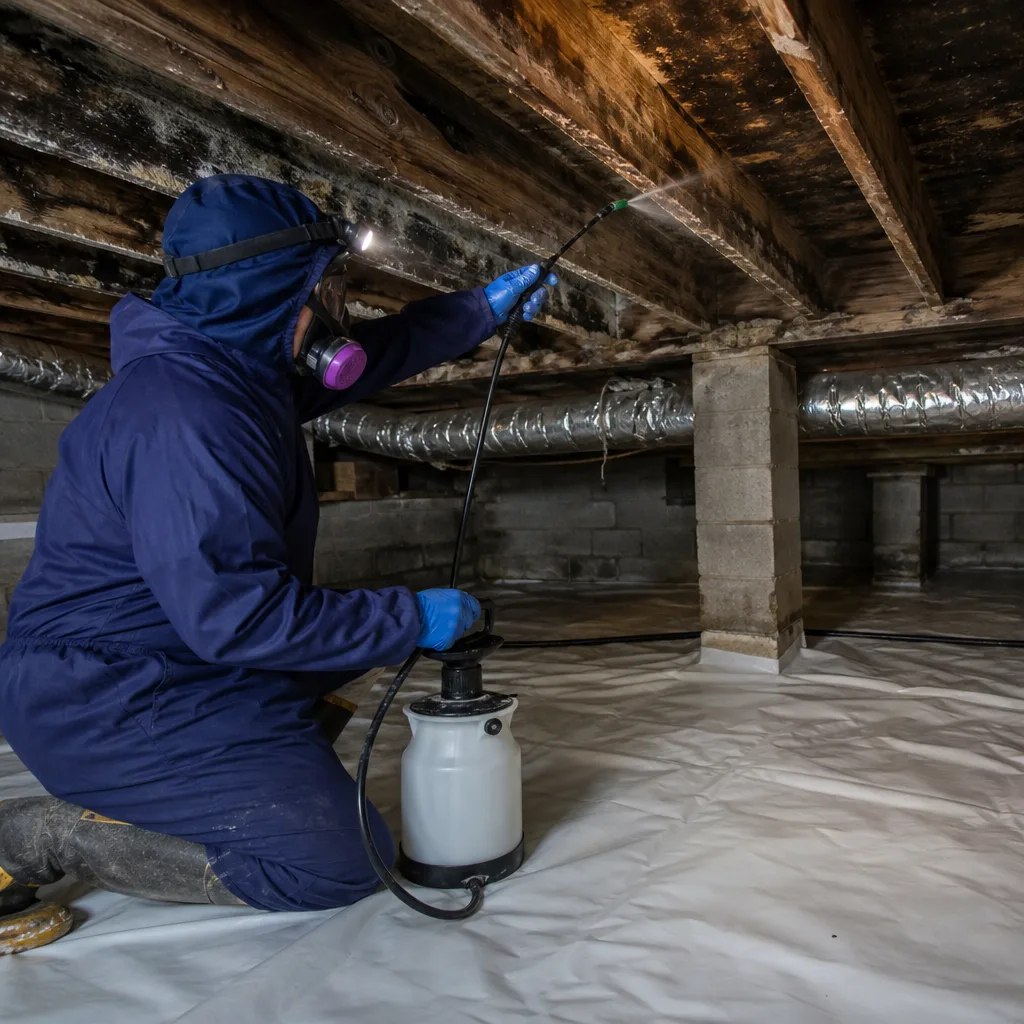
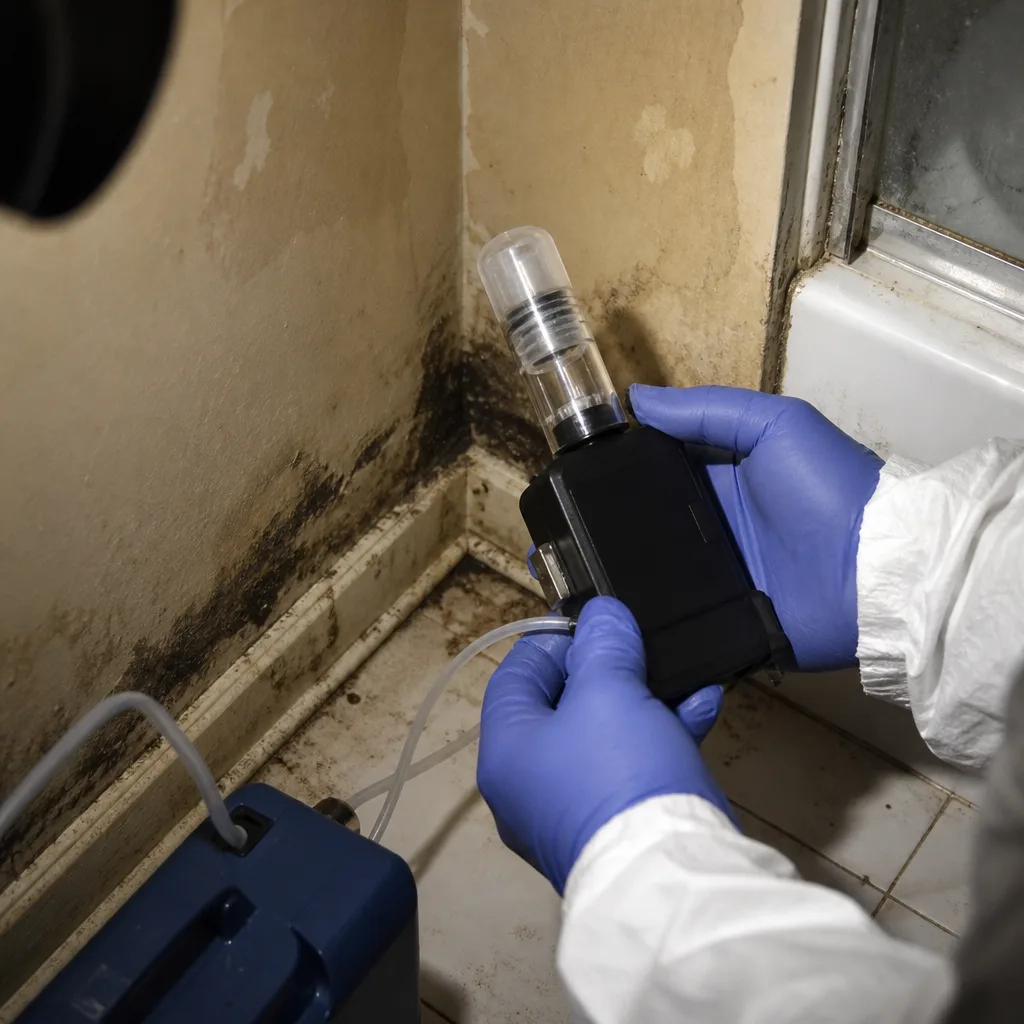
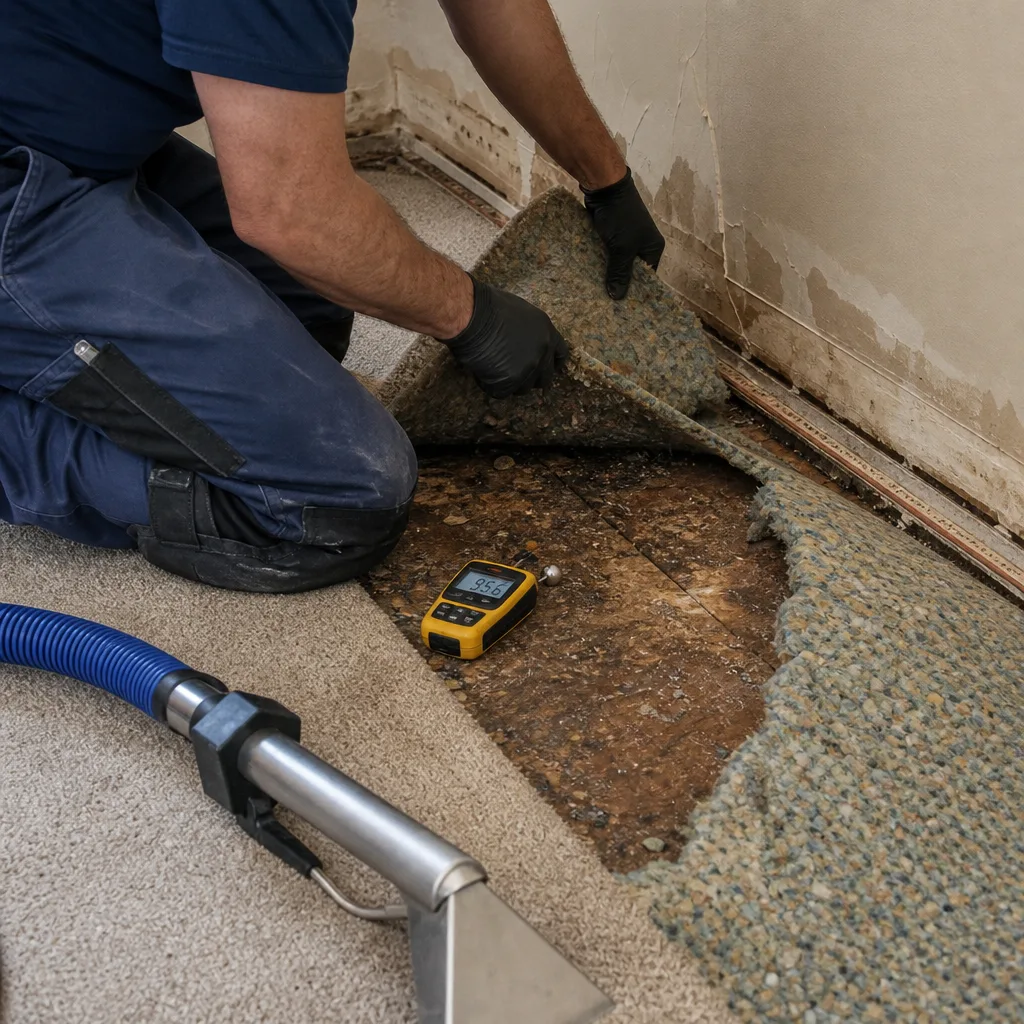
A proper mold inspection in Auburn starts under the house. Given the crawl-space construction and red clay drainage issues across 30011, we sample the air, swab visible growth, and log crawl space humidity before we ever recommend tearing out drywall. An inspection runs $250 to $550 and tells you which species you’re dealing with, how far it’s spread, and whether the moisture source is still active. Many Auburn homeowners call us for a test after a DIY bleach attempt failed to stop the smell, and the sample usually confirms what the nose already knew.
Mold Removal
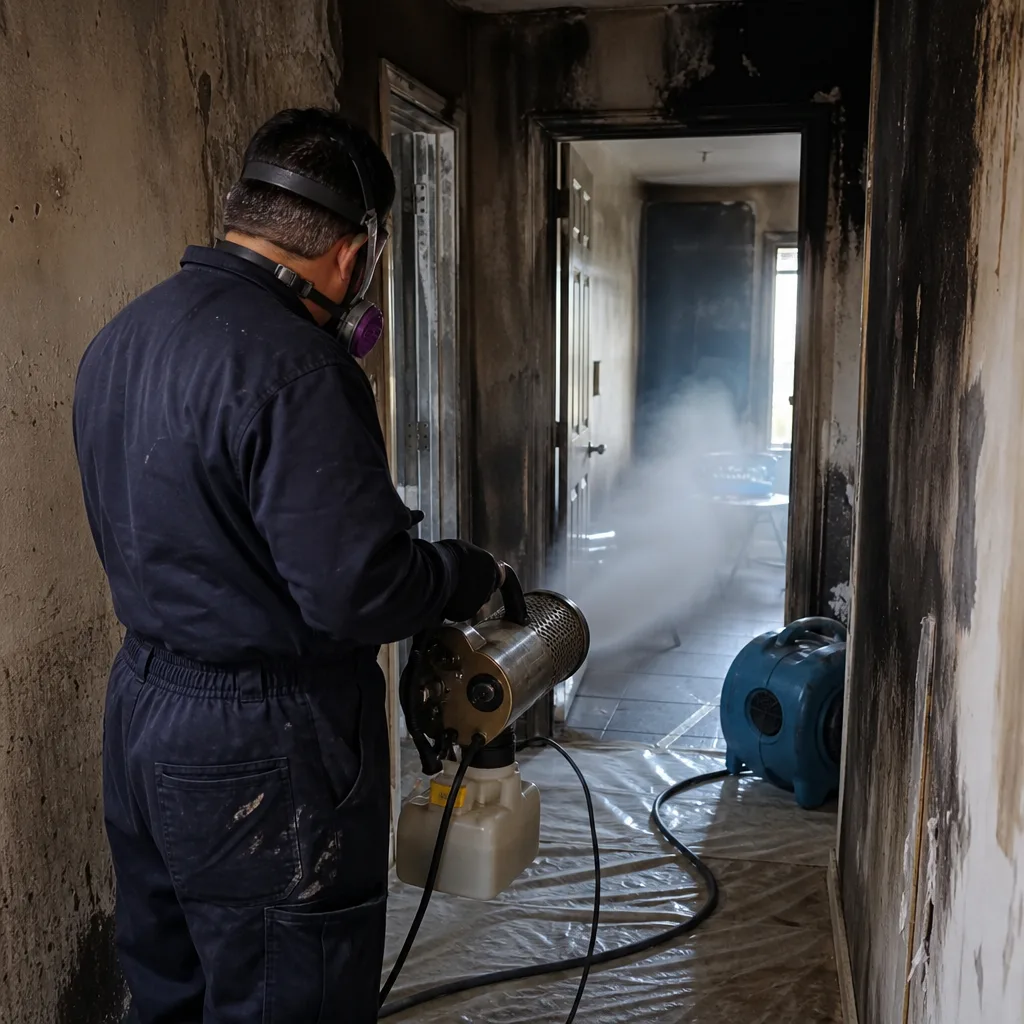
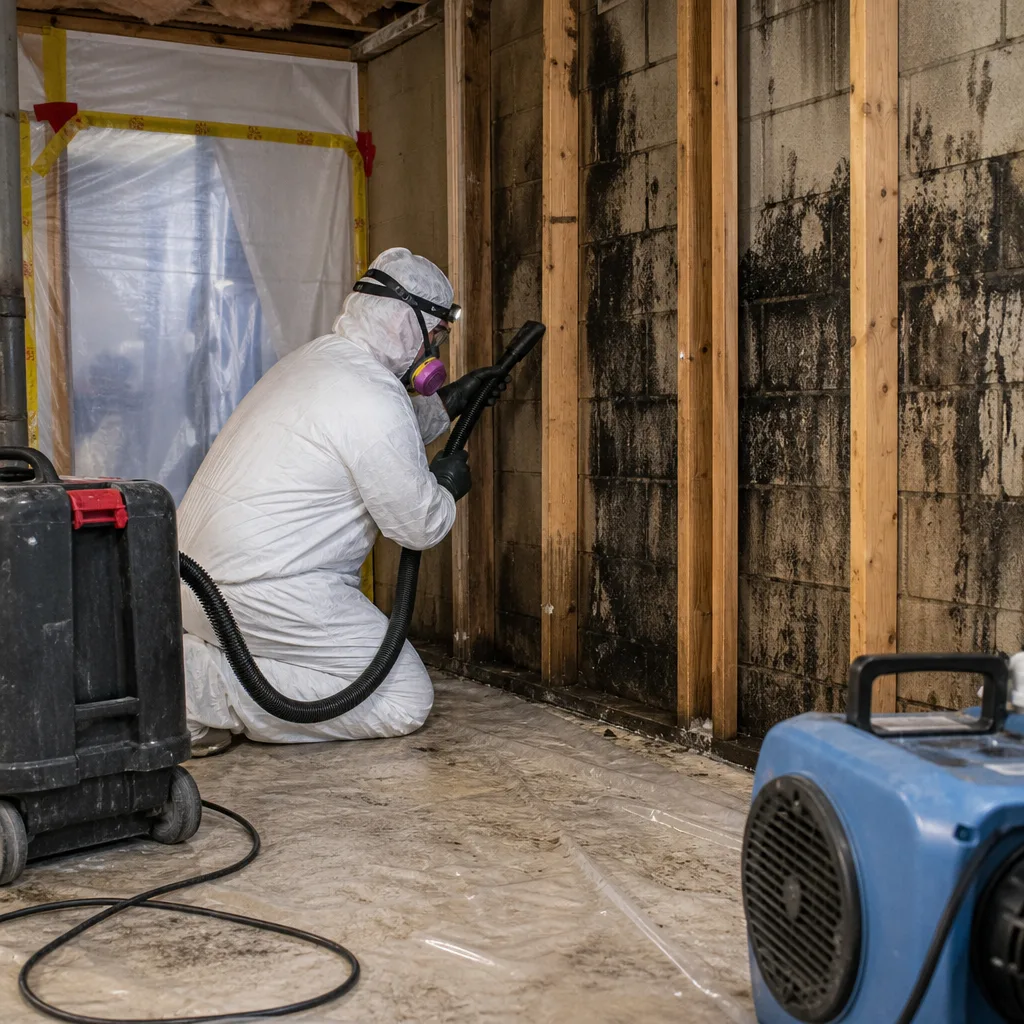
Mold removal in a 2000s vinyl-sided Auburn tract home means containment, HEPA air scrubbing, and careful removal of contaminated drywall, insulation, or sheathing. We set negative air pressure, bag and dispose of affected material, and treat remaining framing with antimicrobials. The scope averages $2,000 to $4,500 for a contained wall or ceiling section, but crawl space jobs can run higher if structural members are involved. What matters most is that the moisture source is corrected in the same visit; removing mold without fixing the water path just buys you a few months.
Black Mold Remediation
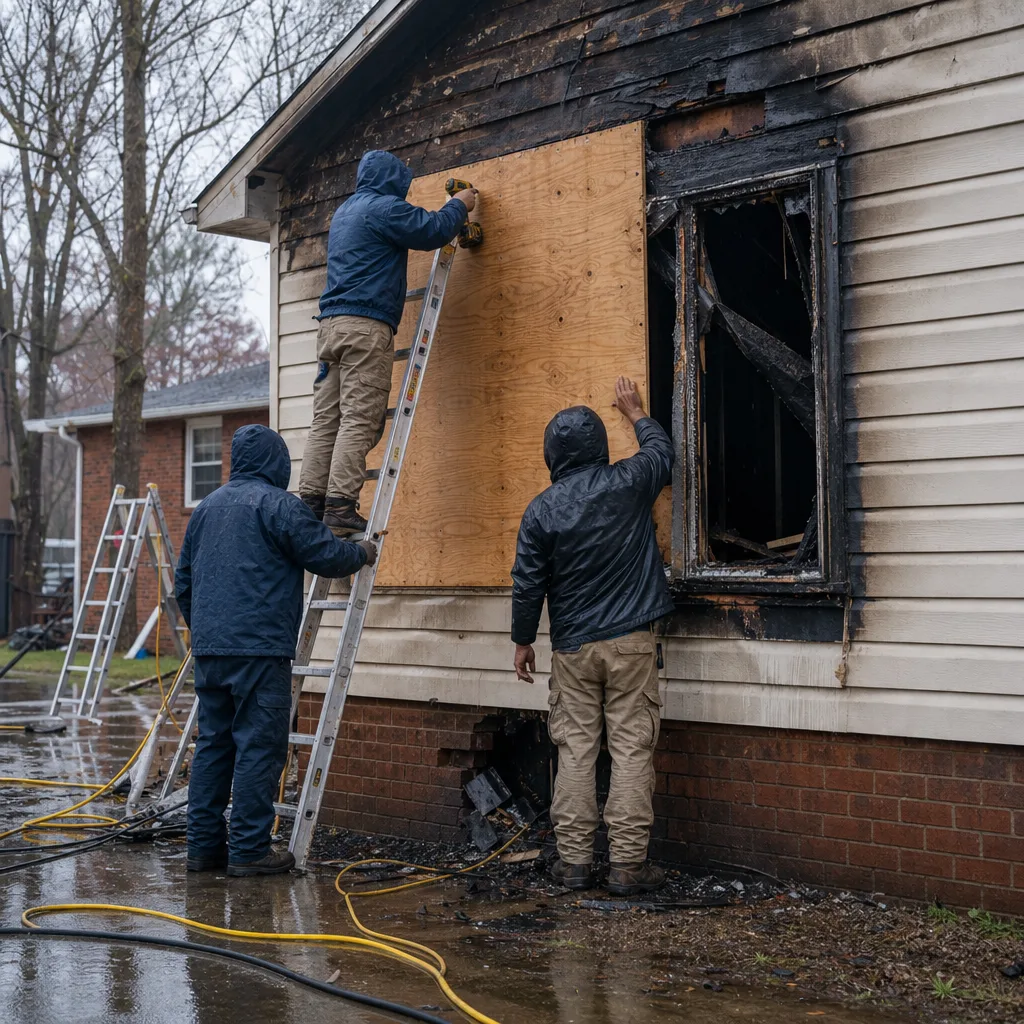
Stachybotrys, the “black mold” people ask about most, grows where cellulose and constant moisture meet; we’ve found it in Auburn crawl spaces behind failed vapor barriers, under bathroom vanities after slow supply-line drips, and inside wall cavities around leaking boot flashings. Full containment and HEPA filtration are non-negotiable for black mold work, and we treat every colony of this type as a health concern even when air samples show moderate spore counts. Typical black mold remediation in Auburn runs $3,000 to $7,000 depending on whether structural drying and re-insulation are needed afterward.
Air Quality Restoration
Once the mold is gone, the air shouldn’t still smell like it. We run HEPA air scrubbers during and after removal, then take post-remediation air samples to confirm spore counts have dropped to normal outdoor levels. In Auburn homes where a crawl space colony has been venting into the living space for years, we often add a whole-home filtration or dehumidification step. Air quality restoration usually adds $400 to $900 to a job and gives you an independent lab report showing the air is clean before we call the job finished.
What happens when you call
- 1
A real person answersNo phone trees - you reach a local pro.
- 2
You get an upfront price rangeHonest numbers before anyone is dispatched.
- 3
A background-checked tech heads outLicensed & insured, dispatched right away.
- 4
You approve before work beginsNothing starts until you say go.
Trusted Brands We Service in Auburn
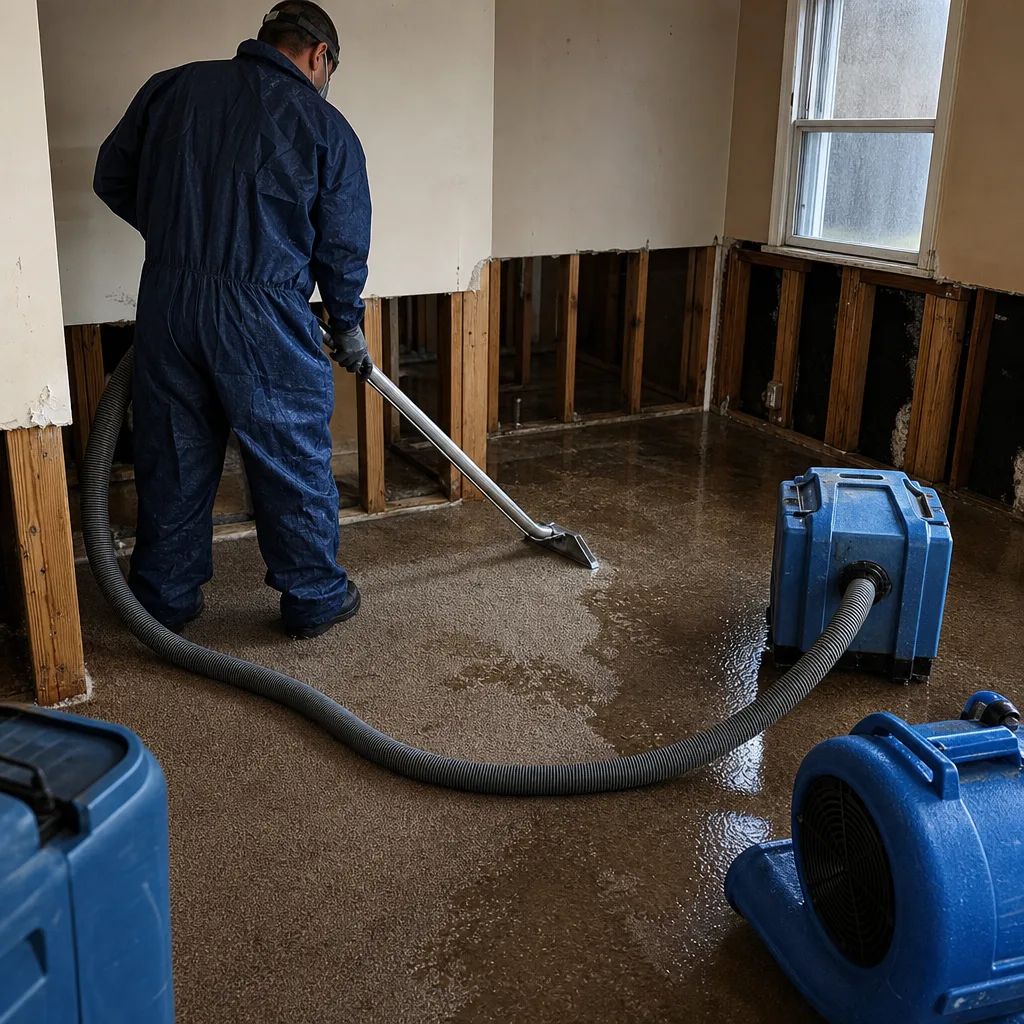
The equipment we bring into your Auburn home is the same gear restoration pros use nationwide: Dri-Eaz dehumidifiers and Phoenix axial air movers for structural drying, XPOWER air scrubbers for containment environments, and B-Air filtration units where high-volume air exchange is needed. We stock replacement filters, HEPA cartridges, and desiccant supplies locally so there’s no waiting on a shipment when your job is mid-flight. If your existing dehumidifier or air mover needs service, our technicians handle those brands directly.
Common Mold Remediation Problems We See in Auburn Homes
- Torn crawl space vapor barriers feeding hidden colonies. In Auburn’s red clay lots, water sheets against foundation walls after every heavy rain, and a 6-mil barrier that’s torn or never fully covered the dirt lets that moisture rise into floor joists. We regularly document Aspergillus and Penicillium colonies that have been active for years before a small indoor leak finally got noticed.
- Negative lot grading around slab-edge homes. Many 30011 homes sit on lots graded to shed water toward the house rather than away, so puddling at the sill plate becomes a chronic condition. After even a minor roof leak, that trapped moisture turns sill plates into mold food.
- Surface-only cleaning on OSB sheathing. Builder-grade oriented strand board used for exterior sheathing wicks water from flashing failures at roof penetrations and window heads. If a prior contractor only wiped the visible surface and didn’t check the sheathing behind the vinyl siding, the mold is still there and will show itself again.
- Post-remediation returns because the moisture source wasn’t fixed. We hear from Auburn homeowners every month who paid another company to cut out drywall after a supply-line break, only to have mold reappear because the torn crawl space barrier and poor drainage were never addressed. Mold follows moisture, every time.
Pricing for Mold Remediation in Auburn, GA
Here’s honest math from the jobs we’ve completed in Auburn over the last several years. A contained bathroom ceiling job runs $1,800 to $2,900. Crawl space mold removal with vapor barrier replacement runs $3,200 to $6,500 depending on square footage and whether joists need sanding or treatment. Full black mold containment in a multi-room area runs $5,000 to $8,000. Air quality restoration as an add-on runs $400 to $900. Inspection and testing alone runs $250 to $550. Every quote is free, written, and itemized before work starts, and we bill your insurance carrier directly when a covered loss is involved. Call (888) 832-2758 for an exact scope and price.
We Also Serve Cities Near Auburn
Our crews work throughout the Highway 316 corridor and north Gwinnett. Beyond Auburn, we handle mold remediation for homeowners in Dacula, Buford, Loganville, and Suwanee. Same dispatch, same written scope, same 90-Day Done Right Promise.
Serving Auburn, GA - Our Local Coverage Area
We’re based in the Auburn area and know this community well. Use the map below to see our service coverage - if you’re nearby, we can almost certainly help.
FAQs - Mold Remediation in Auburn
The crawl space was often wet before the leak ever happened. Auburn’s late-1990s through 2000s building boom put thousands of crawl-space homes on red clay that sheds water against foundation walls instead of absorbing it. Torn or undersized vapor barriers from original construction let that moisture rise. A small supply-line leak adds more water, but the real driver is the pre-existing humidity in the crawl space. If the barrier and drainage aren’t corrected during remediation, mold returns within months. Call (888) 832-2758 and we’ll scope the crawl space, not just the wet drywall.
Often yes, if the mold was activated or made materially worse by the covered water loss, and if the policy includes mold remediation coverage. The key is documentation: moisture readings, air samples, and a written explanation of how the reported loss connected to the hidden colony. In a subdivision off Union Grove Church Road, our techs found a crawl space where a torn 6-mil vapor barrier and negative lot grading had fed a hidden Aspergillus colony for years; the reported burst supply line that triggered the claim only accounted for a fraction of the IICRC S520 scope we ultimately documented and remediated with Dri-Eaz dehumidifiers and XPOWER air movers. We write the report, take the photos, and coordinate directly with your adjuster. Call us before you sign anything from a contractor who says the crawl space “doesn’t count.”
Auburn’s January and February ice storms deliver hard freezes that burst supply lines in poorly insulated pipe runs common in 2000s-era slab-edge and crawl-space homes. When the thaw comes, that water pools against red clay foundations that already drain poorly after heavy Piedmont rains, and the crawl space humidity spikes. Older infill neighborhoods closer to Lawrenceville often have better site drainage and more mature lot grading; Auburn’s boom-era subdivisions typically don’t, so the same freeze-thaw cycle causes deeper saturation here. That saturation is what converts a plumbing repair into a mold remediation job.
We check the crawl space and the exterior grade first, not the baseboard. If the dirt floor below that wall is damp, the vapor barrier is torn, and the exterior soil slopes toward the foundation, then the baseboard mold is a symptom, not the problem. We take moisture readings on the sill plate, inspect the rim joist, and photograph the crawl space condition before any demolition happens. In most Auburn homes from the boom years, the baseboard staining is fed from below. We’ve learned to look there first because that’s where the real scope gets written.
Yes, and in Auburn we recommend it more often than not. After remediation, we can install a full encapsulation system: new heavy-duty vapor barrier over the dirt floor and up the piers, sealed seams, a dedicated dehumidifier sized to the crawl space volume, and where needed, a drainage channel to move groundwater away from the foundation before it reaches the sill. Permanent moisture control typically adds $2,500 to $5,000 to a crawl space remediation job in Auburn, but it’s the difference between a one-time fix and a recurring problem. Ask us to include it in your written scope.
Call Floodline Restoration Co. for Mold Remediation in Auburn, GA
If you’ve got mold in your Auburn home, the first step is a conversation with someone who knows 30011 construction and the red clay underneath it. Call (888) 832-2758 for a free estimate. We’ll send a background-checked, uniformed technician to assess the scope, write it down, and walk you through it before any work begins. The same certified crew handles the job from first reading to final air sample. Done right, and backed in writing.
Written by Curt Bowman, Owner at Floodline Restoration Co., serving Auburn since 2010.