
Fast, Reliable Mold Remediation Across Druid Hills
Mold remediation in Druid Hills usually runs $1,500 to $6,000 depending on the square footage, the mold species, and whether the affected walls are modern drywall or original plaster-on-lath. Most jobs in the 30307 ZIP code get a same-day assessment, with containment and air scrubbing running within 24 hours. If you’ve found mold behind a baseboard, on a basement wall, or creeping across an attic sheathing board, call (888) 832-2758 and a live dispatcher answers, day or night. We’ve worked in Druid Hills long enough to know the difference between a simple bathroom-vent problem and a groundwater issue tied up in a 1920s rubble-stone foundation on a sloped Olmsted parkway lot. The two look similar on the surface. They are not the same job.
Why Floodline Restoration Co. of Atlanta Is Druid Hills’s Preferred Mold Remediation Company
Druid Hills homeowners don’t hand out trust easily, and for good reason. Many of these houses have stood for a century, through DeKalb County zoning shifts, six or eight roof replacements, and at least one previous owner who made a questionable repair and sold before the consequences showed up. When mold appears in a 1920s Tudor on Oakdale Road or a Craftsman foursquare near Lullwater Park, the homeowner wants a crew that reads the house as carefully as it reads the moisture map. That’s what we do. Every technician who walks through a Druid Hills front door is background-checked, uniformed, and certified to IICRC, RIA, and IFA standards. Curt Bowman founded Floodline Restoration Co. in 2010 around a dispatch board, not a sales desk, and 42 years of combined team experience means someone on the job has seen your exact problem before and knows what not to do.
Druid Hills customers call us for two reasons: speed and a straight answer. Our response time into 30307 is consistently under two hours for emergency callouts because we keep crews staged around the DeKalb County corridor and Ponce de Leon Avenue. When a homeowner calls at 2 a.m. because a water heater let go above a finished basement, a real person answers, not a recording. The work gets photographed, moisture-mapped, and documented in a written scope before anything is torn out. We never hand a job off mid-stream, so the person who sets the containment barrier on day one is often the same person who signs off on the daily drying log and the final clearance test. And every job, from a 300-square-foot crawl space to a full attic remediation, carries the 90-Day Done Right Promise, the Keystone Standard, in writing. If it’s not done right, we make it right. No arguing.
Our Mold Remediation Services in Druid Hills
Mold in Druid Hills rarely presents as a single isolated patch. The combination of dense century-old tree canopy, high summer humidity, and basements built into Piedmont slopes means moisture finds its way in from several directions at once. The five sub-services below account for most of the work we do across 30307, and each one gets detailed attention in the sections that follow.
Mold Inspection & Testing in Druid Hills
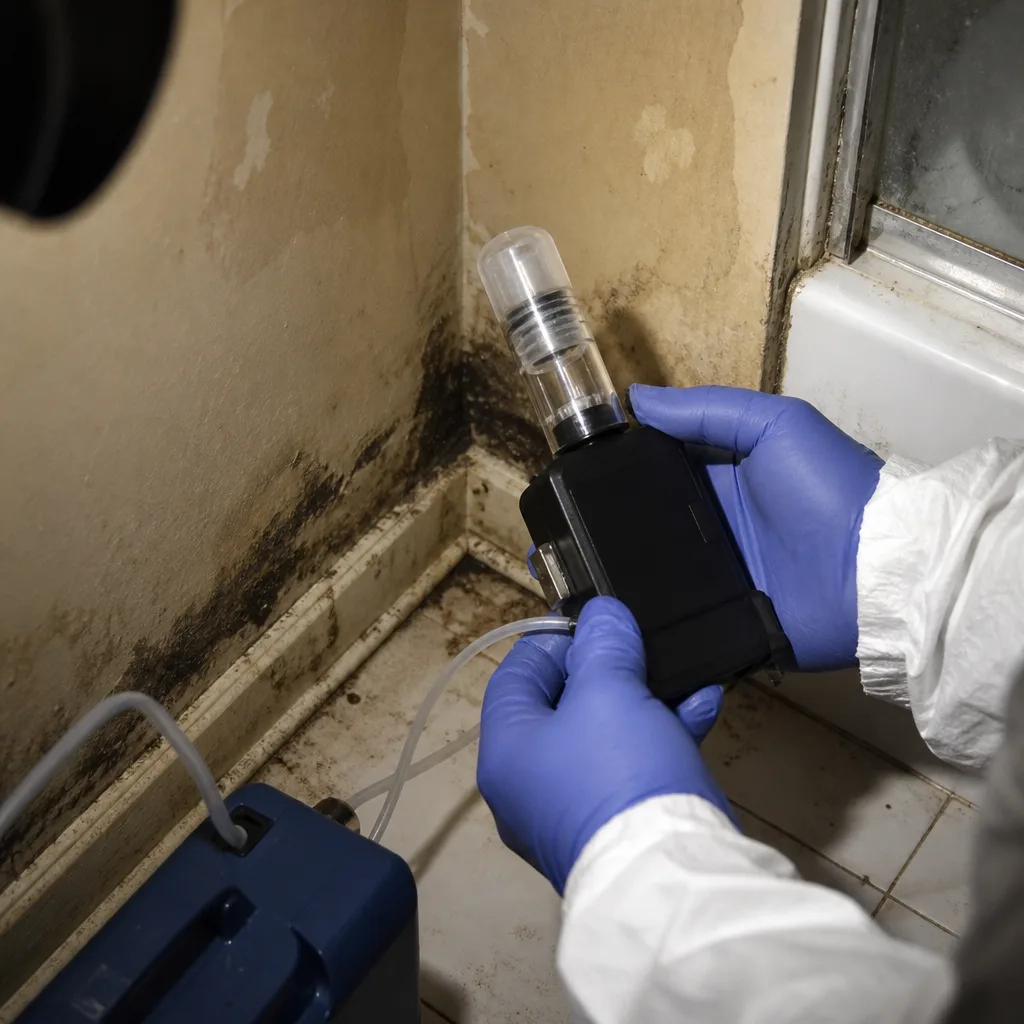
A proper mold inspection in Druid Hills means more than swabbing a visible patch. It means reading the house: checking the original mortar joints on a 1910s foundation wall, walking the crawl space under the rear addition, and pulling back a corner of carpet in a basement finished sometime in the 1960s. We use air sampling and surface testing to identify the mold species, because treatment for common penicillium is not the same as treatment for Stachybotrys, and homeowners deserve to know which one they’re dealing with. After testing, you get a written scope of work, not a scare pitch.
Mold Removal in Druid Hills
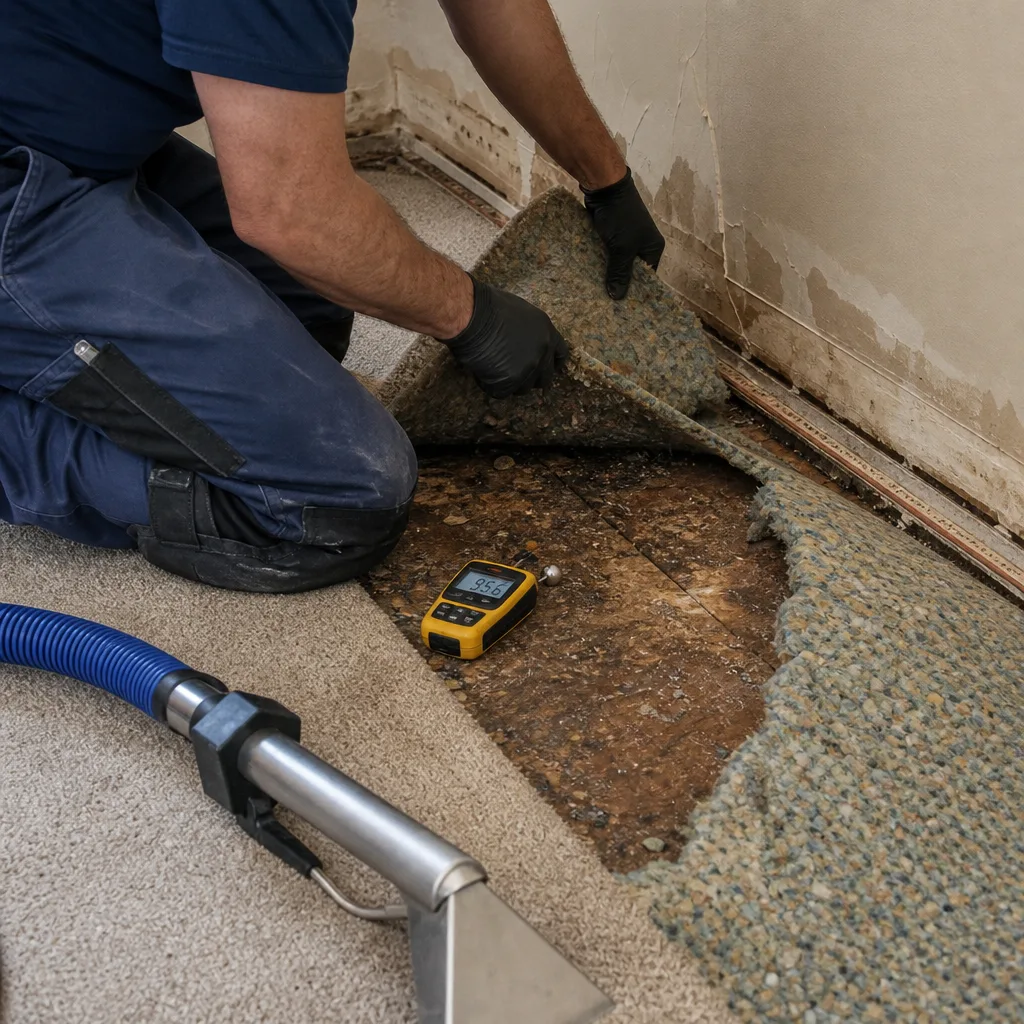
The visible mold is almost never the whole story. In a Druid Hills basement with finished drywall over a rubble-stone foundation, the mold growing on the back side of the drywall feeds on groundwater that wicks up after every heavy rain through Peavine Creek’s tributary channels. Our Mold Remediation team removes the contaminated material, treats the framing, and then addresses the moisture source, because cutting out moldy drywall without fixing hydrostatic pressure is a recipe for recurrence. That’s the kind of half-measure we won’t do.
Black Mold Remediation in Druid Hills
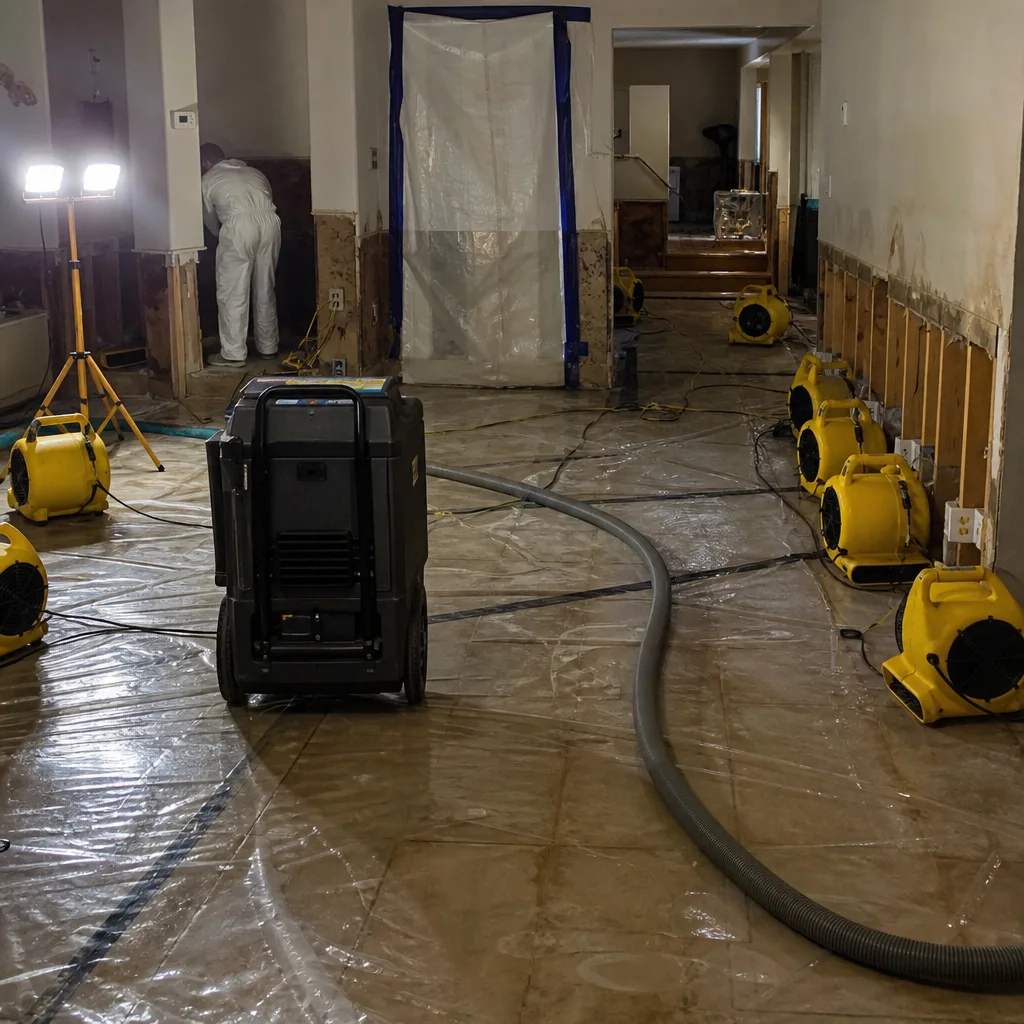
Black mold, or Stachybotrys chartarum, gets the headlines, and in Druid Hills it tends to show up in the sadder corners: the crawl space under a pier-and-beam addition on a slope, the wall cavity behind a cast-iron waste line that’s been sweating for fifty years, the attic sheathing under a roof leak that was “patched” two owners ago. We set negative air pressure with a HEPA-filtered Dri-Eaz air scrubber before disturbing the material, because a containment breach in a plaster-walled pre-war house sends spores through every crack and register in the house. The cleanup has to be slower and more deliberate than in a modern suburban build.
Air Quality Restoration in Druid Hills
After the contaminated material is removed and the treated framing passes a moisture reading, the air in the house still carries what the demolition stirred up. That’s where air quality restoration matters, especially in a historic house with original single-pane windows and horsehair plaster that holds onto dust and spores for decades. We run Phoenix and XPOWER HEPA filtration long enough to bring airborne spore counts down to normal background levels. The final clearance test confirms the air is safe to breathe. You get the report.
What happens when you call
- 1
A real person answersNo phone trees - you reach a local pro.
- 2
You get an upfront price rangeHonest numbers before anyone is dispatched.
- 3
A background-checked tech heads outLicensed & insured, dispatched right away.
- 4
You approve before work beginsNothing starts until you say go.
Moisture & Humidity Control, and Crawl Space Treatment in Druid Hills
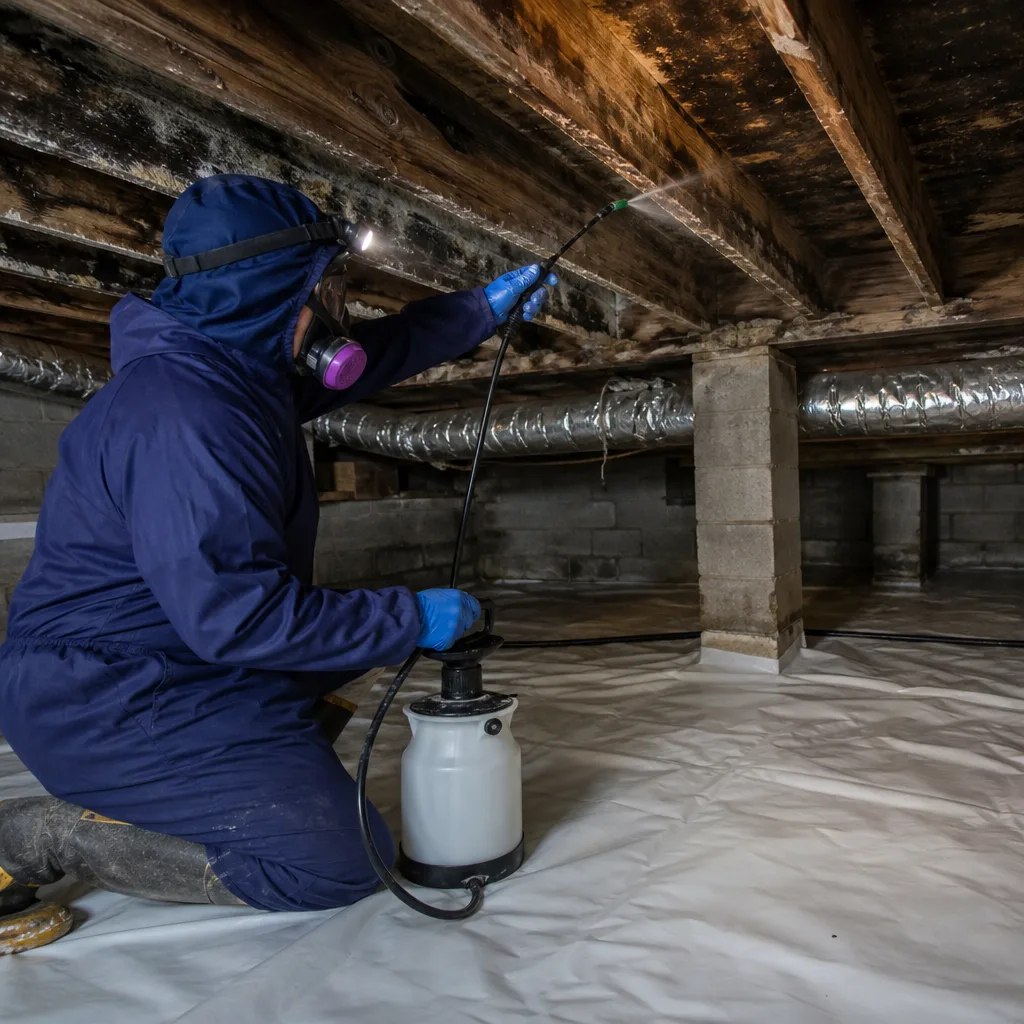
The two quiet services that do the most long-term good in Druid Hills are moisture control and crawl space work. They’re not flashy. They don’t get a big dramatic reveal. But without them, half the mold we remediate comes back within two years. Homes along the Olmsted linear parks sit on sloped Piedmont lots where the original decorative landscaping was literally designed to channel water. After a hard rain, technicians frequently find that a finished-basement flood wasn’t a plumbing failure at all, it was decades of grade settlement directing sheet flow straight toward a 100-year-old foundation wall. Encapsulating the crawl space on a 1910s foursquare, installing a proper vapor barrier, sealing the rim joists, and adding a sump or perimeter drain where needed turns a chronically damp space into a dry one. In Druid Hills, crawl space treatment is not an upsell. It’s the difference between fixing a problem and postponing it.
Common Mold Problems We See in Druid Hills Homes
- Groundwater against rubble-stone foundations. The Olmsted parkway stream corridors, including Peavine Creek, concentrate runoff against older basement walls. After a heavy convective storm, water finds its way in through mortar joints and hairline cracks, and mold follows within days.
- Over-dried plaster-on-lath. A technician who dries a 1920s plaster ceiling to modern drywall standards can trigger keys to fail, and the whole ceiling comes down. It happens more often than it should. We dry those assemblies slower and to a different target.
- Attic mold from storm limb damage. Massive white oaks and red oaks drop limbs through roofs during summer squalls and ice events. The leak may be patched, but the sheathing underneath never gets treated, and mold spreads through the attic plane before anyone notices.
- Crawl space humidity under pier-and-beam additions. Many original Druid Hills houses have additions built on piers over exposed earth. That earth breathes moisture into the floor framing year-round, and mold behind baseboards is the visible symptom.
The Historic Preservation Layer: What Makes Druid Hills Different
Druid Hills is one of the few places in metro Atlanta where mold remediation on a 1920s Craftsman almost always triggers DeKalb County historic preservation review. That’s not something a generic restoration company thinks about, but it shapes how we set up containment, how we choose drying equipment, and how we sequence the repair work. The county governs how original plaster, old-growth millwork, and multi-wythe brick can be repaired or replaced. If we cut out a section of original plaster and a contractor patches it with modern drywall and three-coat mud, the historic review board will flag it. So will the homeowner who bought the house specifically for those details. We plan for that from the first cut, not after the drywall is hung.
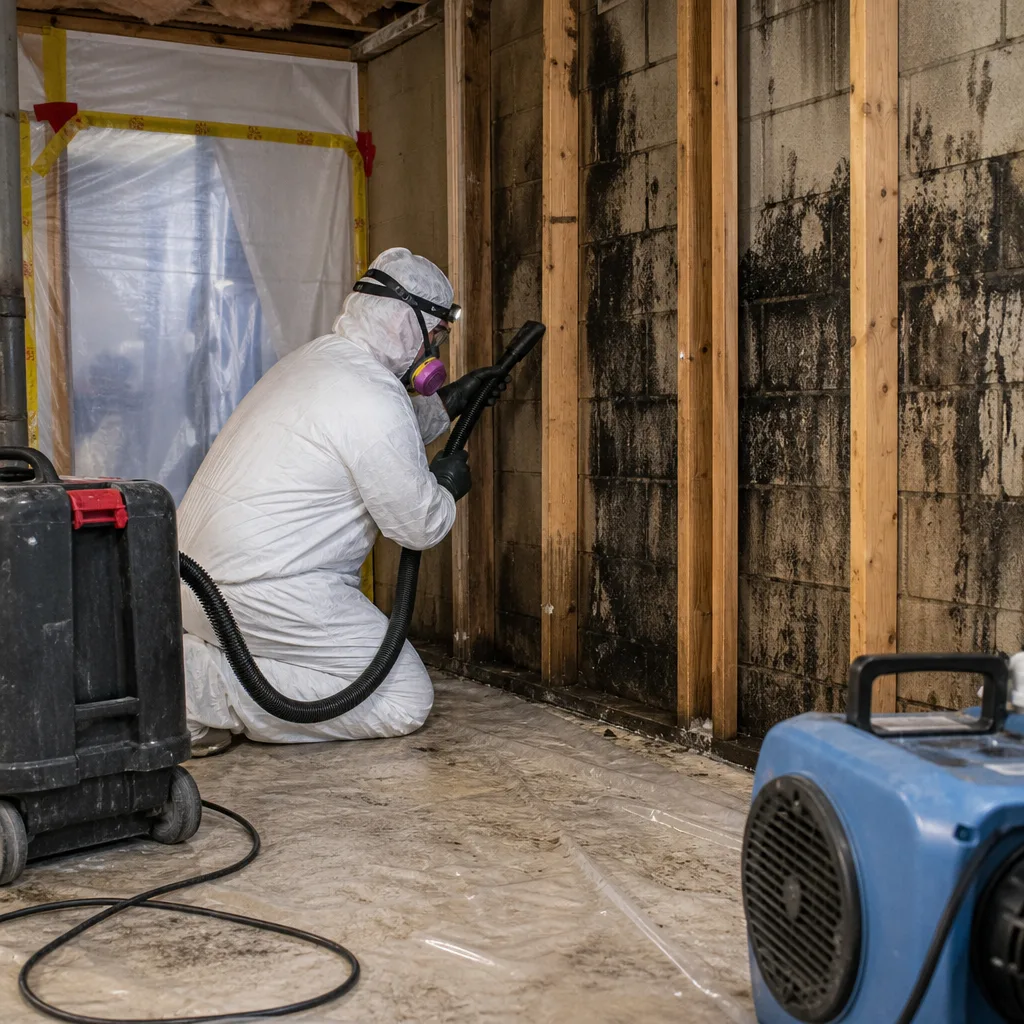
This is the work the page is really about: mold remediation in Druid Hills must thread the needle between drying science and preservation rules. Dry the plaster too fast and the keys fail. Replace original trim with off-the-shelf profile and the review board sends you back. Skip the containment barrier around a cracked plaster wall and spores migrate into the living space. It’s a three-sided puzzle, and the answer is always the same: slower drying, tighter containment, and a written plan that names the materials before they’re torn out.
Trusted Equipment Brands We Use on Druid Hills Jobs
When a Druid Hills attic needs drying and air scrubbing, we rely on Dri-Eaz HEPA air scrubbers, Phoenix LGR dehumidifiers, and XPOWER air movers. For the delicate plaster work, an Injectidry panel system pulls moisture through the original lath without tearing out the ceiling. These are commercial-grade machines, not rental-counter box fans, and they’re calibrated and maintained for the long drying times historic materials require. We stock replacement filters, hoses, and inline fittings on the trucks serving 30307, because a Friday-night equipment failure on a Druid Hills job shouldn’t mean a weekend of waiting.
Pricing for Mold Remediation in Druid Hills, GA
Mold remediation prices in Druid Hills depend on containment requirements, square footage, and material type. A straightforward crawl space treatment in an 1910s foursquare runs $1,200 to $2,800. A finished-basement mold removal with containment and air scrubbing on a 900-square-foot basement typically runs $2,800 to $5,200. Full black mold remediation involving attic sheathing, plaster wall cavities, and multiple containment zones runs $4,500 to $9,000. Historic preservation-specific work, where original plaster must be salvaged and matched, adds 15 to 30 percent over a drywall-equivalent job. We give every Druid Hills customer a written scope with line-item pricing before work begins, and we bill the insurance carrier directly. Call (888) 832-2758 for a free estimate.
We Also Serve Cities Near Druid Hills
Our crews work throughout DeKalb and Fulton counties, including North Decatur, Atlanta, Gresham Park, and North Druid Hills. If you’re just across the county line or a few blocks outside the historic district boundary, the same dispatcher answers, and the same standards apply. You can learn more about the full metro coverage on our Druid Hills service area page.
Serving Druid Hills, GA - Our Local Coverage Area
We’re based in the Druid Hills area and know this community well. Use the map below to see our service coverage - if you’re nearby, we can almost certainly help.
FAQs - Mold Remediation in Druid Hills
Yes, if the remediation involves removing or replacing original plaster, millwork, or masonry, the DeKalb County historic preservation board may need to review the proposed repair scope before work proceeds. We prepare the documentation, including photos and material specifications, and coordinate with the board so the remediation doesn’t stall waiting on paperwork.
Because the water source hasn’t been fixed. Homes near Peavine Creek sit on slopes where groundwater moves toward the foundation, and cleaning visible mold on the drywall never addresses the hydrostatic pressure behind the wall. We locate the intrusion point, install drainage or waterproofing, and then remediate the affected material so the problem actually stops.
Yes. We use an Injectidry panel system and controlled low-humidity drying to pull moisture through the plaster and lath without removing the material. The keys stay intact when drying is slow and deliberate, which is exactly how we do it in Druid Hills centennial homes. Some staining may remain, but the mold is gone and the original wall survives.
High. Ice storms pull gutters loose, snap limbs, and saturate the ground around pier foundations. Under a 1910s foursquare with exposed earth crawl space, that moisture feeds Stachybotrys within weeks. We recommend a crawl space inspection after any significant ice event, especially on the north side of the house where the ground stays shaded and wet longer.
We seal the work area with 6-mil polyethylene, create negative air pressure with a HEPA-filtered Dri-Eaz air scrubber, and tape over the plaster cracks and window gaps that would otherwise leak spores into the living space. In pre-war houses we extend the containment zone one step further than a modern build because the structural cracks are part of the building, and spores do not respect them.
Call Floodline Restoration Co. of Atlanta for Mold Remediation in Druid Hills
If you’ve found mold in your Druid Hills home, or if you smell that musty dampness and can’t find the source, call (888) 832-2758. A live person answers at any hour, and we’ll send a certified mold remediation crew to 30307 fast. You get a written scope. You get a drying log. You get the 90-Day Done Right Promise, in writing. No surprise bills, no mid-job handoff, no crew that doesn’t know your house’s age. We’re Floodline Restoration Co. of Atlanta. The line the water left is where we start, and we stand behind every job until it’s done right.
Written by Curt Bowman, Owner at Floodline Restoration Co. of Atlanta, serving Druid Hills and the surrounding metro since 2010.