
Fast, Reliable Mold Remediation Across Sugar Hill
Mold remediation in Sugar Hill typically costs between $1,800 and $6,500 for a contained removal, with inspections starting around $250-$450. Most jobs we handle here are completed within three to five days once we start. If you’re smelling must in a hallway or seeing dark spots along a baseboard in a Sugar Hill home, call (888) 832-2758 and a live dispatcher will answer, day or night. We know the houses here, and we know how fast mold moves in this climate.
We’ve worked throughout the 30518 ZIP for years, from homes near the Sugar Hill Golf Club to the subdivisions off Peachtree Industrial Boulevard. What we’ve learned is that Sugar Hill houses have their own pattern of failure, and it’s not the same as what you’d find in Duluth or Buford. The houses were built fast during Gwinnett County’s growth surge, and thirty years later, that construction is catching up with homeowners.
Why Floodline Restoration Co. of Atlanta Is Sugar Hill’s Preferred Mold Remediation Company
Homeowners in Sugar Hill call us because someone they know already did. Our reputation in this community was built one job at a time: a neighbor off Suwanee Dam Road, a family near Lanier High School, a retired couple off Buford Highway whose crawl space flooded after a summer storm. Those are the references that matter here.
We answer the phone with a person, not a recording, twenty-four hours a day. When you call about mold, we schedule a technician to your Sugar Hill home quickly, and we arrive with the right equipment already on the truck. No waiting for a second truck to bring the dehumidifiers. Our full Mold Remediation team does the inspection, the containment, the removal, and the post-remediation verification with the same crew.
Curt Bowman started this company in 2010 with one belief: the line the water left is where we start, and the finished wall is where our name goes. Every job we do in Sugar Hill carries the 90-Day Done Right Promise in writing. If it’s not done right, we make it right. No arguments, no paperwork battles. That’s how we’ve kept local homeowners calling us back for fifteen years.
Our Mold Remediation Services in Sugar Hill
Mold Inspection & Testing
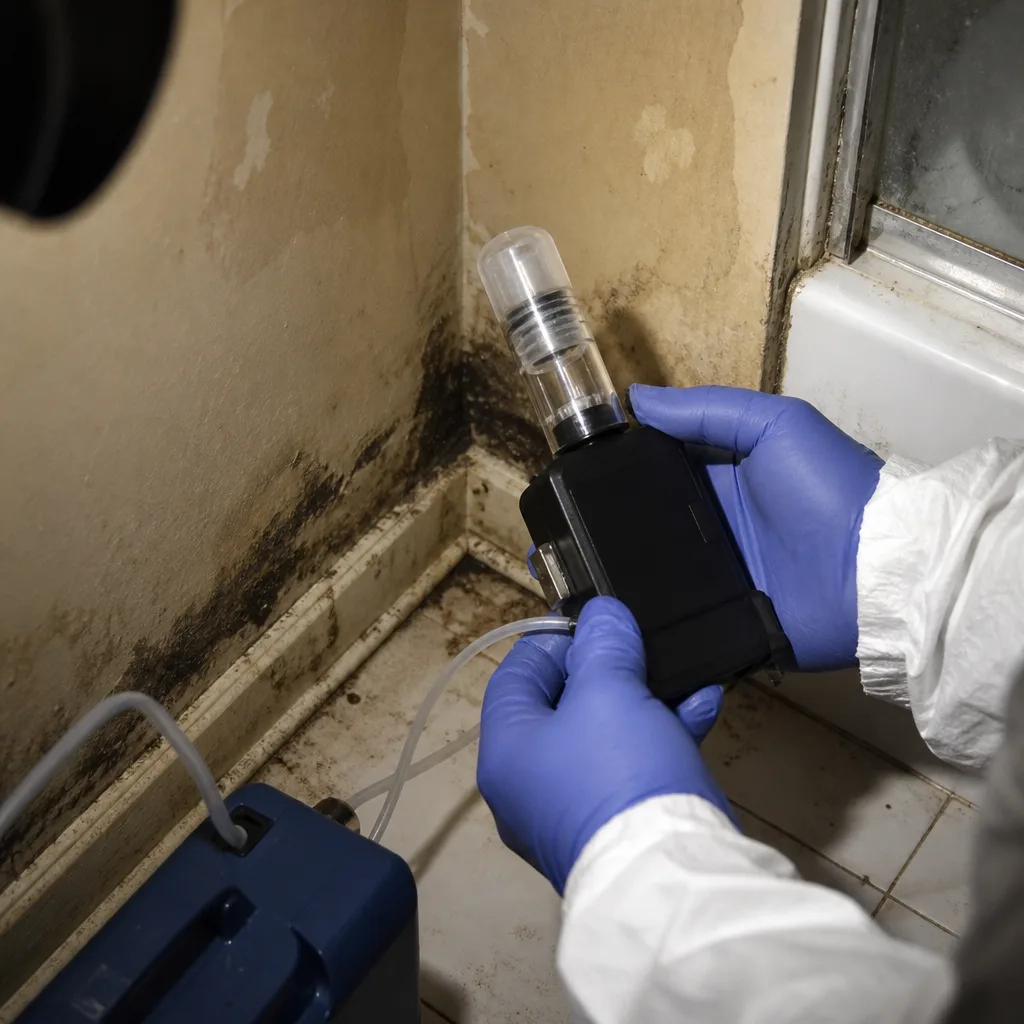
A mold inspection in Sugar Hill costs between $250 and $450, depending on square footage and how many rooms need sampling. We don’t do visual-only inspections here. Sugar Hill’s humidity means mold hides in wall cavities, behind baseboards, and under crawl space vapor barriers where no one thinks to look. We run moisture mapping with professional-grade meters and take air samples when the situation calls for it, so you get a written report that shows exactly where the water came from and what’s growing there.
Mold Removal
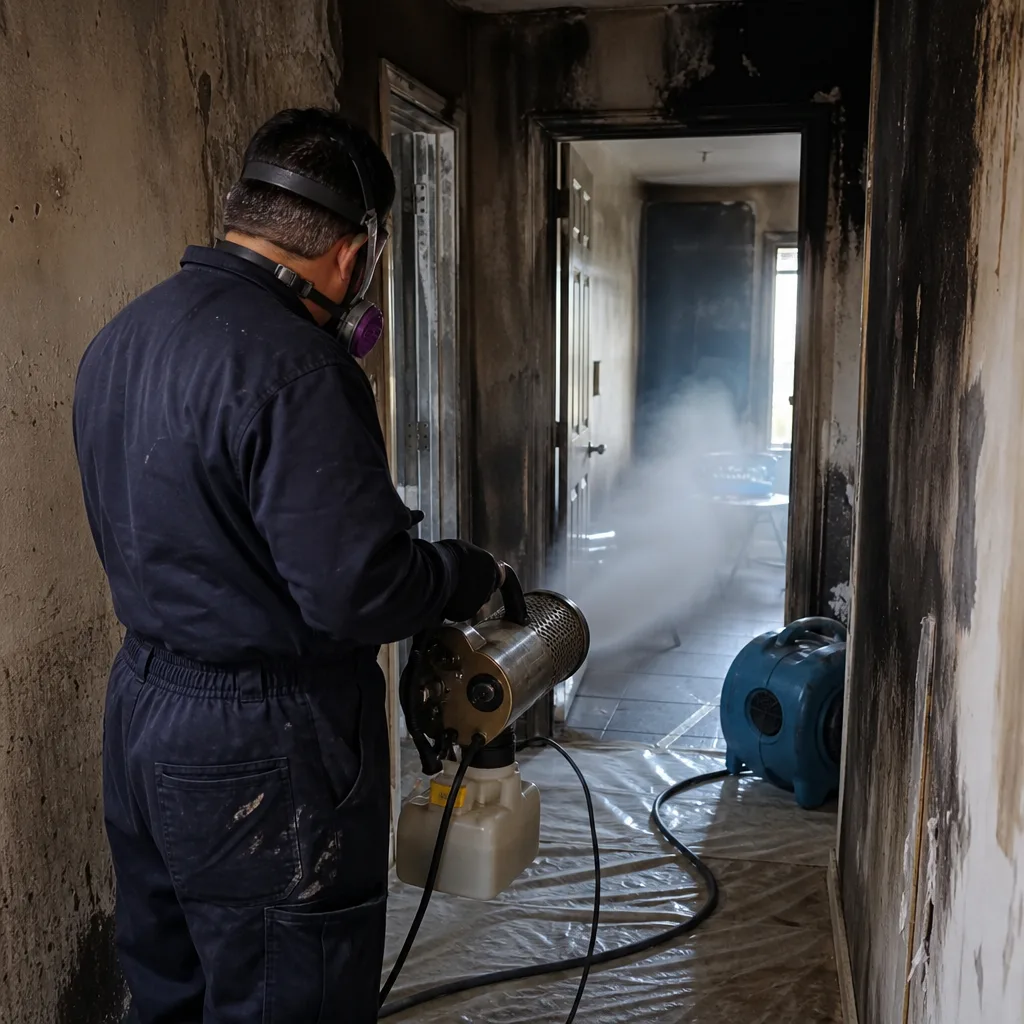
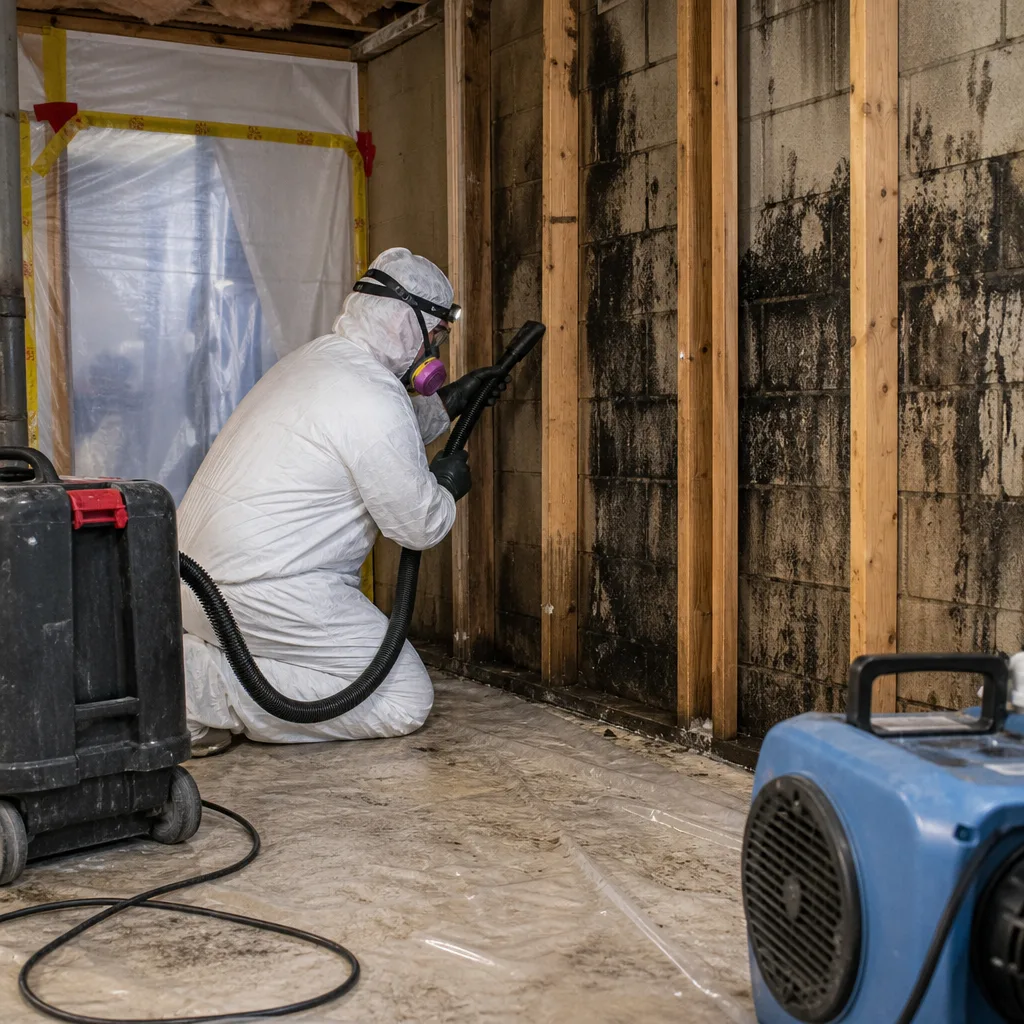
Mold removal in Sugar Hill runs $1,800 to $4,200 for a typical single-room containment. We seal off the affected area with 6-mil poly sheeting and negative air pressure, then remove the contaminated drywall, insulation, or carpet. The framing gets treated with an EPA-registered antimicrobial, not just bleach. Bleach doesn’t kill mold on porous surfaces, and everyone in this trade knows it. We treat the wood properly, dry it to the standard, and document every day’s moisture readings in a log you can hand to your insurance adjuster.
Black Mold Remediation
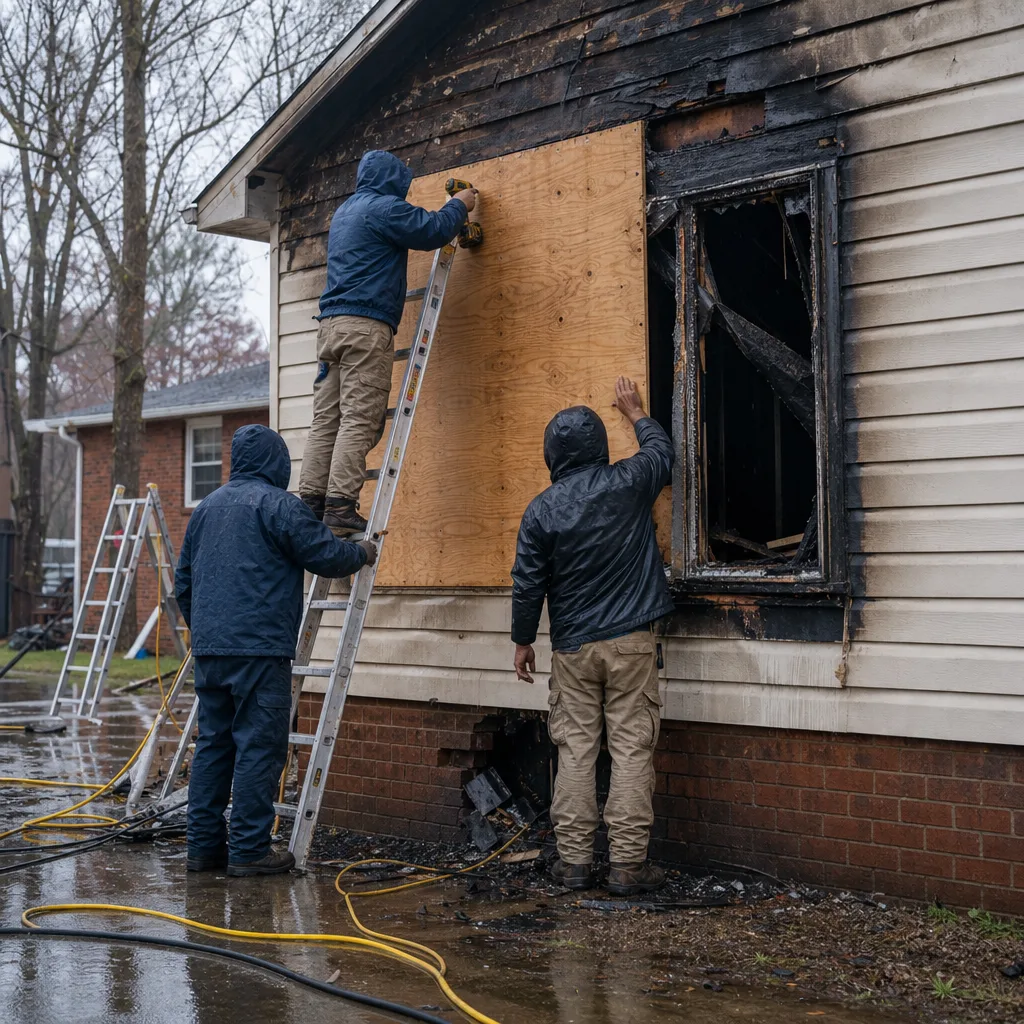
Black mold in Sugar Hill homes tends to grow where water has been sitting for two weeks or more: behind a washing machine in a laundry room, inside a wall cavity fed by a slow AC drip, under a sink cabinet nobody opens. Black mold remediation here typically runs $2,200 to $6,500 because the affected area is usually larger than the homeowner first suspected. We never tell you to just clean it and paint over it. If the moisture source isn’t fixed and the contaminated material isn’t removed, it comes back. Our Mold Remediation in Sugar Hill work always starts with finding the water, not just the mold.
Air Quality Restoration
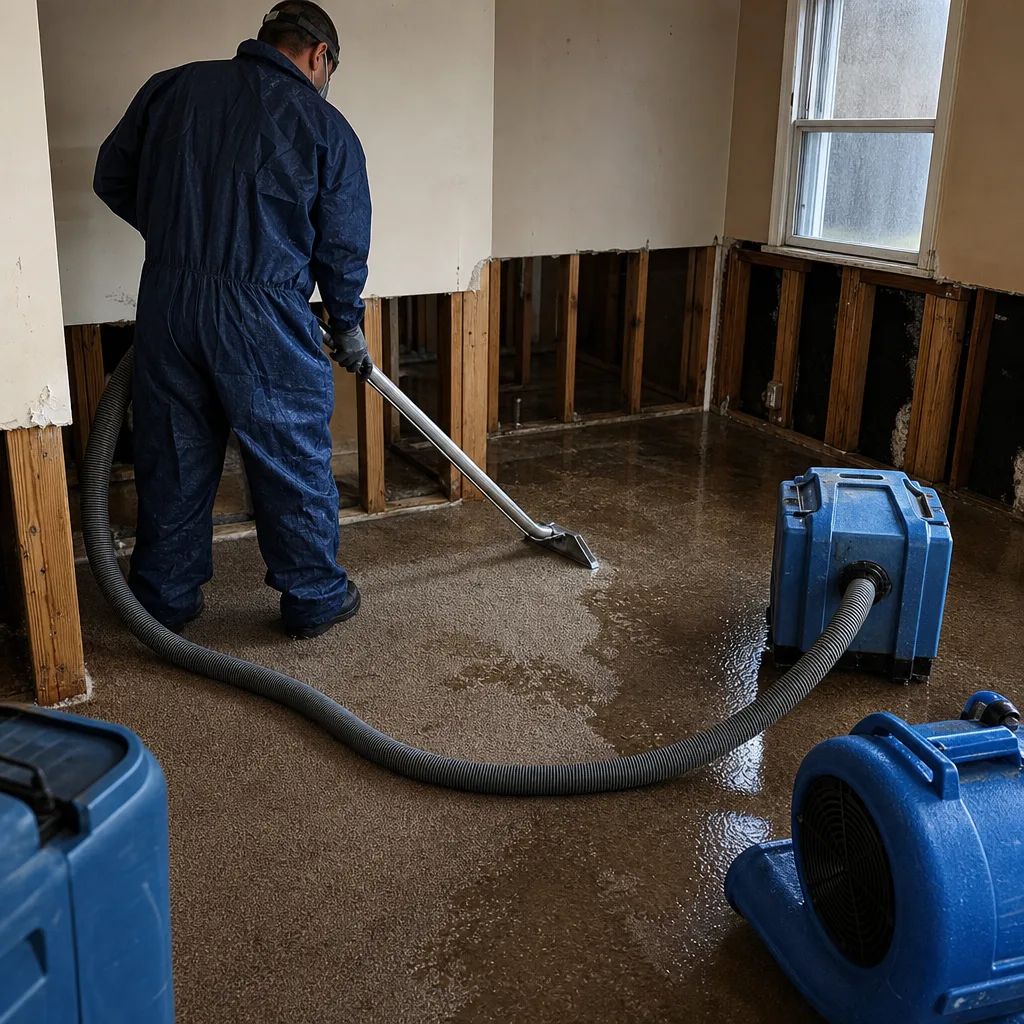
After we remove contaminated materials, we don’t just pack up and leave. Sugar Hill’s subtropical humidity means mold spores are in the air long after the visible growth is gone. We run HEPA-filtered air scrubbers during the job and afterward until post-remediation air samples confirm the spore count has dropped back to normal background levels for this area. Air quality restoration is included in our remediation packages, not billed as an upsell afterward.
Crawl Space Treatment
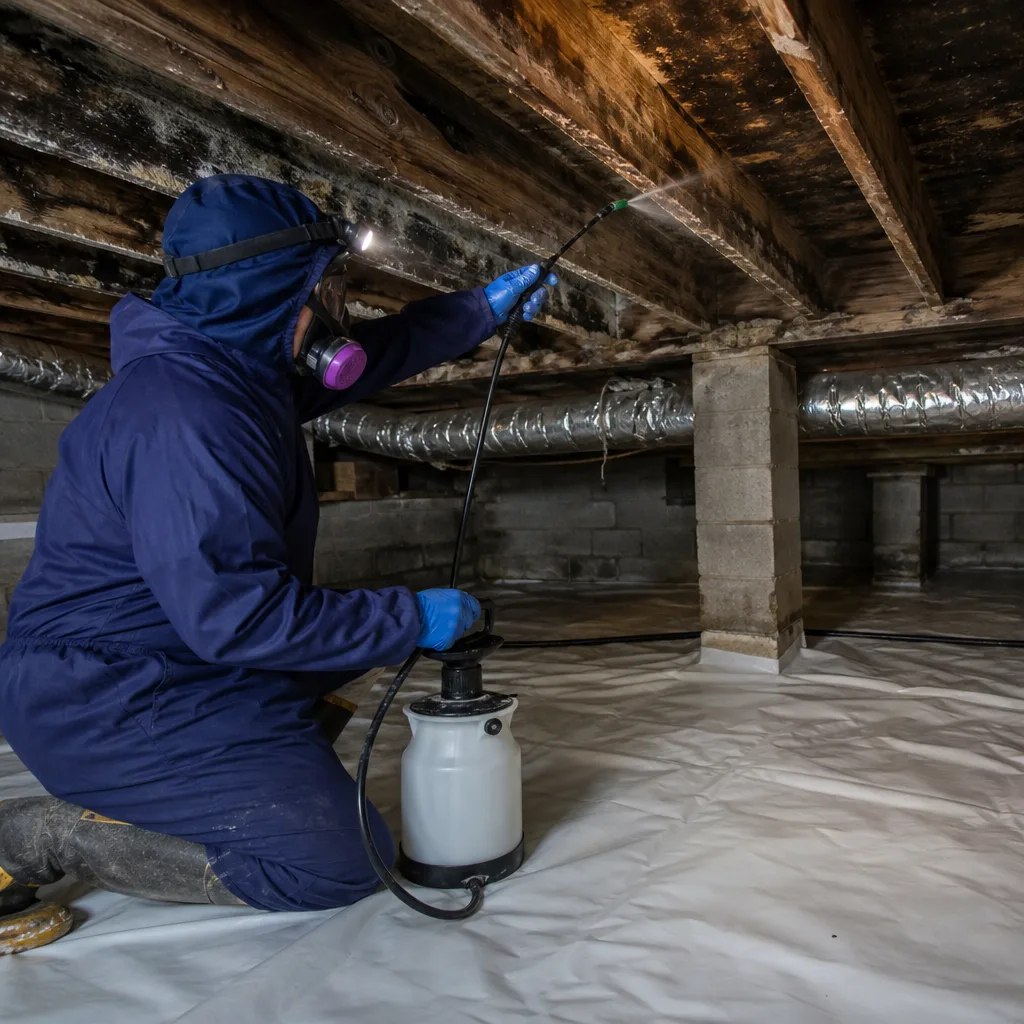
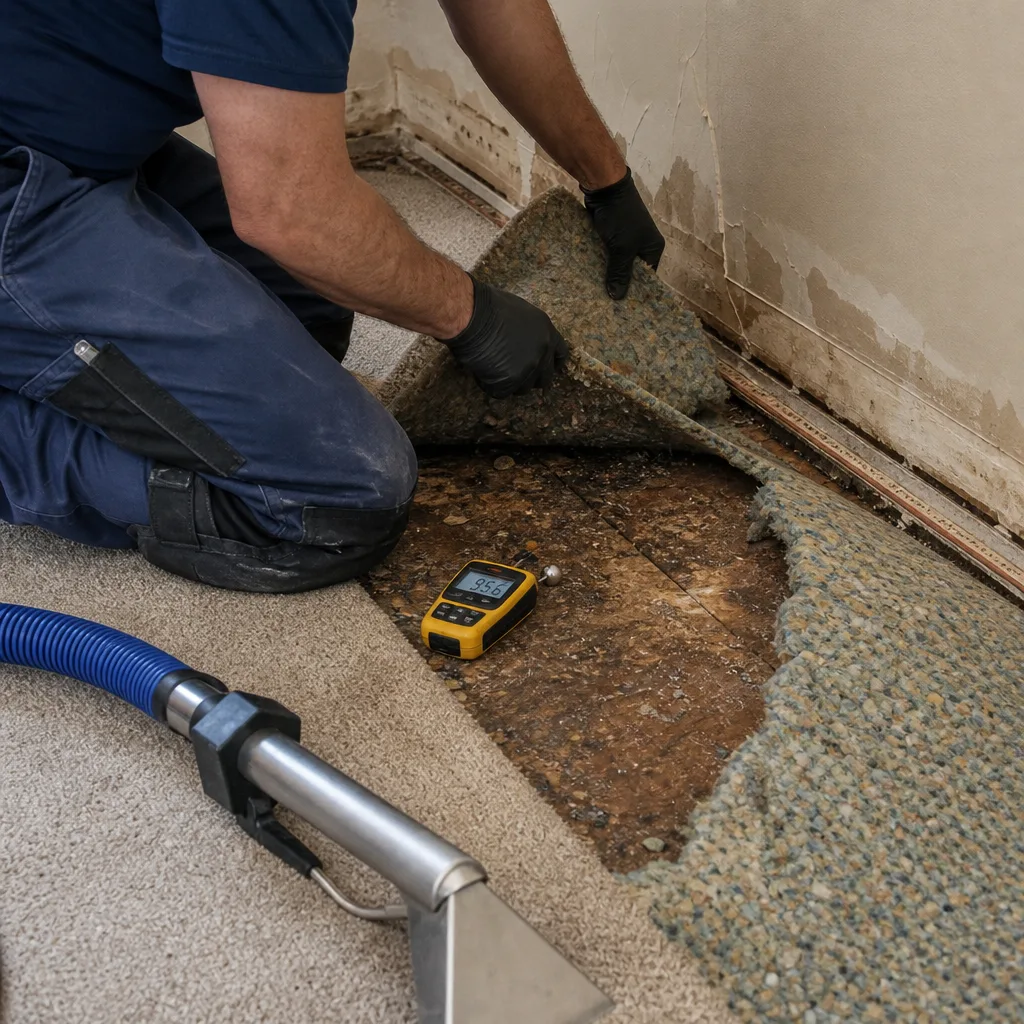
This is one of the most important services we offer in Sugar Hill, because most homes here sit on crawl spaces over red clay. Root cause is everything with mold. If you fix the mold in your living room but don’t address the crawl space underneath it, the whole cycle starts again within months. We treat the crawl space by removing contaminated insulation, treating the framing, and reinstalling a properly sealed vapor barrier. On older Sugar Hill homes with the thin, torn poly liners from the 1990s, that barrier replacement alone can stop the moisture that feeds the mold. Crawl space treatment here typically runs $1,500 to $4,500 depending on square footage and access.
Moisture & Humidity Control
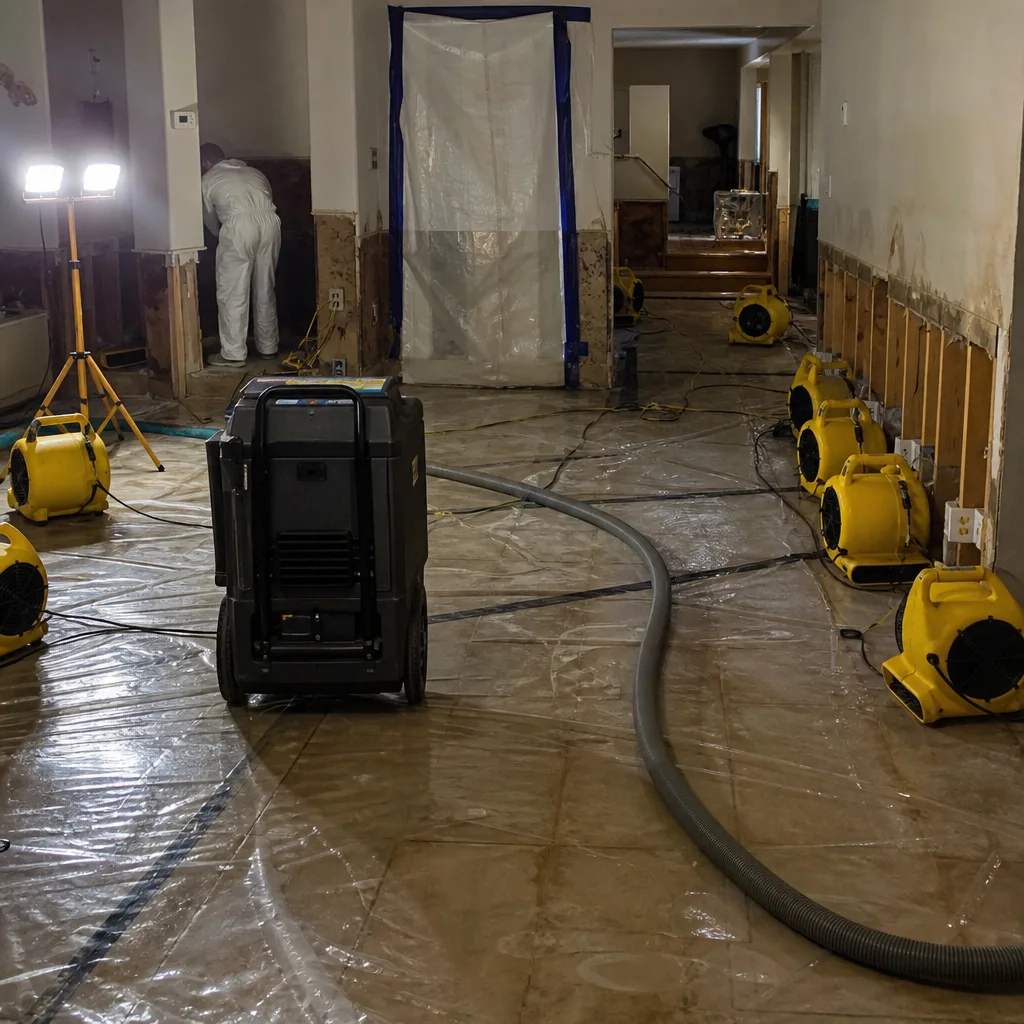
Mold is a moisture problem before it’s a mold problem. In Sugar Hill, that means we look at every angle where water enters: condensate lines, crawl space vapor barriers, grading around the foundation, bathroom exhaust fans, and the humidity level inside the home itself. We’ll recommend a solution sized to your house, whether that’s a crawl space dehumidifier, better drainage at the downspouts, or a sealed vapor barrier. The point is to leave your home dry enough that mold cannot recolonize. Equipment we use daily on Sugar Hill jobs includes Dri-Eaz dehumidifiers, Phoenix airmovers, and XPOWER air scrubbers: professional-grade tools that get the structure genuinely dry, not surface-dry.
What happens when you call
- 1
A real person answersNo phone trees - you reach a local pro.
- 2
You get an upfront price rangeHonest numbers before anyone is dispatched.
- 3
A background-checked tech heads outLicensed & insured, dispatched right away.
- 4
You approve before work beginsNothing starts until you say go.
Trusted Brands We Service in Sugar Hill
Sugar Hill homes span a few decades of construction, from brick-front tract homes built in the 1990s to newer builds in the master-planned subdivisions off Buford Highway. That means we see every type of HVAC system, crawl space configuration, and builder-grade material you can imagine. Our technicians are background-checked, uniformed, and trained to IICRC, RIA, and IFA standards. They know how to work inside a Sugar Hill crawl space with red clay inches from their boots, and they know how to contain mold in a finished basement with a homeowner watching. We stock the right containment and drying equipment for this climate because we work in it every week.
Common Mold Remediation Problems We See in Sugar Hill Homes
- Builder-grade OSB sheathing that’s now waterlogged. The 1990s and 2000s subdivisions that define Sugar Hill were framed fast with oriented strand board. When a leak saturates OSB, it swells and turns into a mold food source. We remove it and replace it with properly rated sheathing, which is the only fix that lasts.
- Undersized crawl space vapor barriers over red clay. Georgia red clay drains poorly. Water pools under the house, humidity rises through the thin poly liner, and the subfloor underneath your wood floors stays damp for months. Residents notice the smell before they see any mold.
- HVAC condensate lines routed through walls or into crawl spaces. This was common in Sugar Hill’s 1990s building boom. A partially clogged line drips inside a wall cavity for weeks. No visible stain, no wet carpet, just a growing patch of mold behind the drywall. If your technician doesn’t check the condensate routing specifically, they’ll miss it and the mold comes back.
- Rushed visual inspections that miss hidden moisture. Some companies will look at a spot on your ceiling, quote you a cleanup, and never touch a moisture meter. On a Sugar Hill crawl space home over red clay, that’s negligence. We moisture-map every job before we touch a wall.
Pricing for Mold Remediation in Sugar Hill, GA
Here’s what you can expect to pay in Sugar Hill, with real numbers instead of vague estimates:
- Mold inspection with moisture mapping: $250-$450
- Air quality sampling and lab testing: $150-$400 per sample zone
- Single-room mold removal with containment: $1,800-$4,200
- Black mold remediation in a wall cavity or crawl space: $2,200-$6,500
- Crawl space treatment with new vapor barrier: $1,500-$4,500
- Whole-house air quality restoration after major mold: $800-$2,500
What moves the number is the size of the affected area, whether framing needs replacement, and how long the water has been sitting. Homes near the Sugar Hill Golf Club with finished basements over crawl spaces often run higher because the crawl space itself becomes part of the job. We give you a written scope before any work starts, and we bill your insurance carrier directly when the damage is a covered loss. Call (888) 832-2758 for a free estimate, and we’ll walk you through what your specific house needs.
And if you’re a senior or a veteran, mention it. You get 5% off always. We also take $50 off any repair over $250.
We Also Serve Cities Near Sugar Hill
Our crews that work in Sugar Hill also cover the surrounding Gwinnett County communities. If you’re in Buford, Suwanee, Flowery Branch, or Duluth, we can be there just as quickly, with the same live dispatch, the same trained technicians, and the same written guarantee. The homes may vary slightly, but the red clay underneath them doesn’t.
Serving Sugar Hill, GA - Our Local Coverage Area
We’re based in the Sugar Hill area and know this community well. Use the map below to see our service coverage - if you’re nearby, we can almost certainly help.
FAQs - Mold Remediation in Sugar Hill
Sugar Hill homes built between roughly 1990 and 2010 often have AC condensate drain lines routed through interior wall cavities or into crawl spaces with minimal slope. When the line clogs or the pan overflows, water drips inside the wall for weeks with no visible sign. By the time you notice a musty smell or a soft spot on the drywall, mold has had time to colonize the OSB sheathing and framing. The fix is not just cleaning the surface; it’s removing the wet drywall, treating the framing, and rerouting the condensate line so it drains outside with proper slope. Recently our crew was called to a home near the Sugar Hill Golf Club in the 30518 ZIP after a homeowner noticed a musty smell near the garage. We traced the source to a clogged HVAC condensate line that had been dripping inside a wall cavity for weeks, wetting the builder-grade OSB sheathing and spawning black mold. Using Dri-Eaz dehumidifiers and XPOWER airmovers, we contained the area, removed the affected drywall and insulation, and treated the framing with an EPA-registered antimicrobial before rebuilding with a properly sloped condensate drain. Call (888) 832-2758 if you suspect this is happening in your home.
Yes. Georgia’s red clay drains poorly, so water from rain and downspouts pools against your foundation and seeps into the crawl space instead of soaking into the ground. That moisture rises through the thin poly vapor barrier most Sugar Hill homes were built with, and the humid air inside the crawl space feeds mold on the subfloor and floor joists above. The solution is a properly installed vapor barrier, plus drainage corrections and usually a dehumidifier sized to the space. We handle this as part of our crawl space treatment, not as a separate afterthought.
They often do, because the builder-grade materials from that era hold moisture differently than older or newer construction. OSB sheathing absorbs water and supports mold growth faster than plywood, and the fiberglass batt insulation behind the walls acts like a sponge. Proper containment on a Sugar Hill home from that era means sealing off the entire affected area with poly sheeting, running negative air pressure to keep spores from spreading through the HVAC system, and removing contaminated material back to clean wood. Rushing that process just spreads mold spores through the rest of the house.
Black mold can begin colonizing within 24 to 48 hours of a moisture event in Sugar Hill, especially in the summer when the humidity is high. If the water is hidden, like a slow condensate drip inside a wall, you won’t see it for two to three weeks, but it’s already growing the whole time. That’s why we recommend an inspection with moisture mapping whenever you’ve had a leak you couldn’t see or a crawl space that flooded after a storm. The faster the structure is dried, the less mold you’ll have to remove.
Mold remediation in Sugar Hill is typically comparable to Atlanta pricing, with most jobs landing between $1,800 and $6,500. The difference here is that crawl space work is much more common, which can add $1,500 to $4,500 to a job that Atlanta slab homes wouldn’t need. We give you a written scope before any work begins so you know the exact number, and we bill your insurance directly when the mold is the result of a covered water loss. Call (888) 832-2758 for a free estimate.
Written by Curt Bowman, Owner at Floodline Restoration Co. of Atlanta. We serve Sugar Hill homeowners with background-checked, certified technicians and stand behind every job with the 90-Day Done Right Promise.