
Fast, Reliable Sewage Cleanup Across Acworth
Sewage cleanup in Acworth typically costs $1,800-$4,200 for a crawl space backup and $900-$2,400 for a contained bathroom overflow, with most jobs started the same day you call. If you’re standing in a wet hallway off Bells Ferry Road or watching a drain back up near Lake Allatoona, the clock matters more than the quote. Our techs know Acworth’s plumbing, its clay soil, and its lakeside failure patterns because this is the only kind of work we do. Call (888) 832-2758 and you’ll get a live person, not a recording.
Why Floodline Restoration Co. of Atlanta Is Acworth’s Preferred Sewage Cleanup Company
We’ve been called to Acworth homes for every kind of sewage failure this town can throw at a house. That matters because sewage work here isn’t the same as it is in Kennesaw or Woodstock. Acworth’s shoreline on Lake Allatoona and its stock of 1980s-1990s subdivision homes create a specific set of problems, and we’ve already seen them all. Our crews work the 30101 and 30102 ZIPs regularly, from newer developments off Cobb Parkway to the older streets near downtown. Every technician who steps onto an Acworth property is background-checked, uniformed, and certified to IICRC, RIA, and IFA standards. The live dispatch desk that answers our phone at 2 a.m. is the same one that schedules the crew and tells them which Acworth neighborhood they’re heading to.
We run this work the way we’d want it run at our own homes. You’ll get a written scope before any job starts. A moisture map gets read on day one, and daily readings continue until the dry standard is met. The Sewage Cleanup crew that extracts the water is the same crew that sanitizes, dries, and documents everything for your carrier. That’s how Floodline Restoration Co. has operated since Curt Bowman founded the company in 2010, and it’s why we stand behind every Acworth job with the 90-Day Done Right Promise, in writing. Done right, and backed in writing. No exceptions.
Our Sewage Cleanup Services in Acworth
When sewage enters a house, the category of water determines how much must be removed and replaced. Category 3 water, what most people call black water, carries bacteria, viruses, and parasites. In Acworth, we most often find Category 3 water in crawl spaces, under slab foundations, and around septic drain fields. Here’s what we handle across Acworth, every week.
Sewage Backup Cleanup
When a sewer lateral backs up into a home off Bells Ferry Road or in one of the 1980s subdivisions near Highway 92, we extract, remove contaminated materials, sanitize, and dry. Most Acworth backups come from two root causes: aged PVC laterals with bellies at glue joints from shifting Georgia clay, or roots in older cast-iron lines from lakeside properties. We identify the source, then restore the space to the dry standard the carrier’s adjuster expects to see in the moisture log.
Toilet Overflow Cleanup
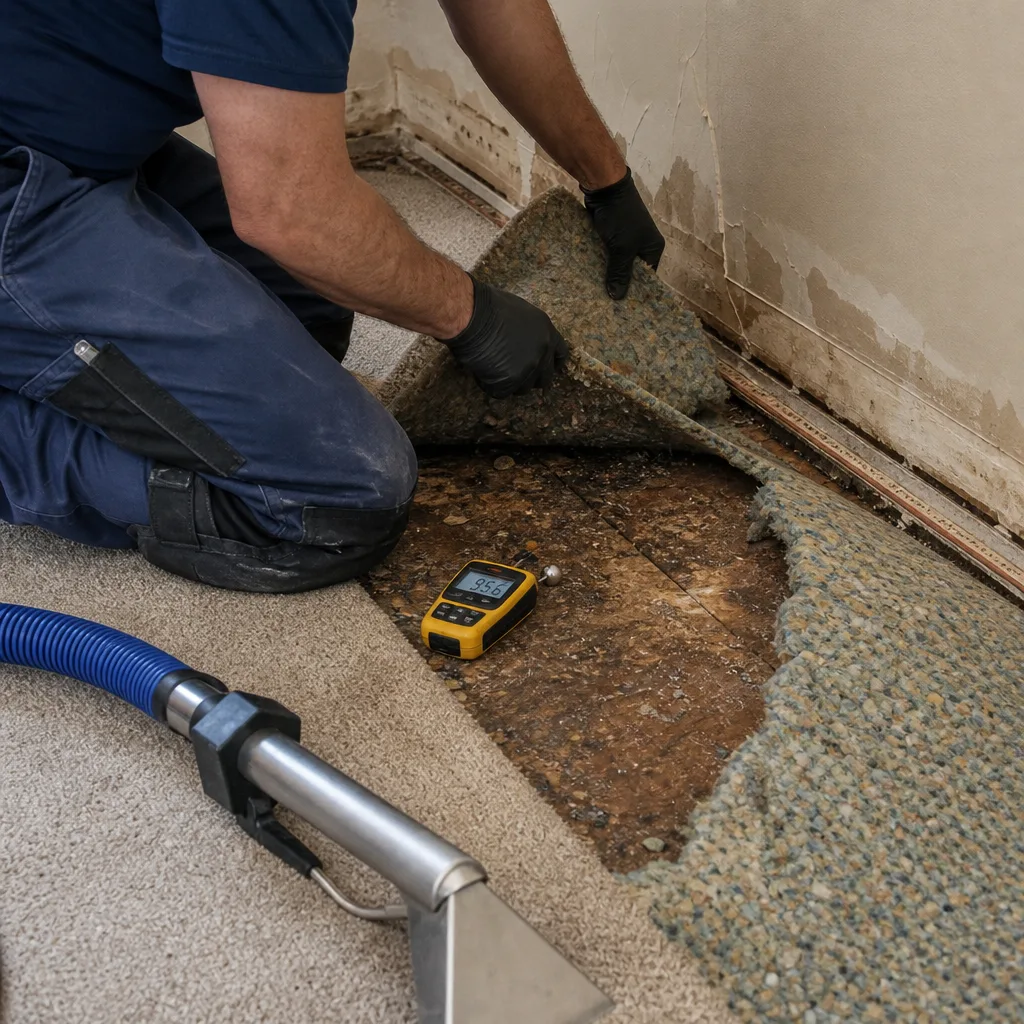
A toilet overflow contained to one bathroom in an Acworth home usually runs between $900 and $2,400, depending on whether flooring and the subfloor wick the contamination. The issue in many Acworth homes isn’t the visible puddle, it’s the OSB subfloor beneath the vinyl or carpet that soaks Category 3 water and never dries on its own. We pull the affected materials, treat the framing with antimicrobial agents, and set Dri-Eaz dehumidifiers and XPOWER air movers until our meters say the structure is dry, not just the surface.
Septic Failure Cleanup
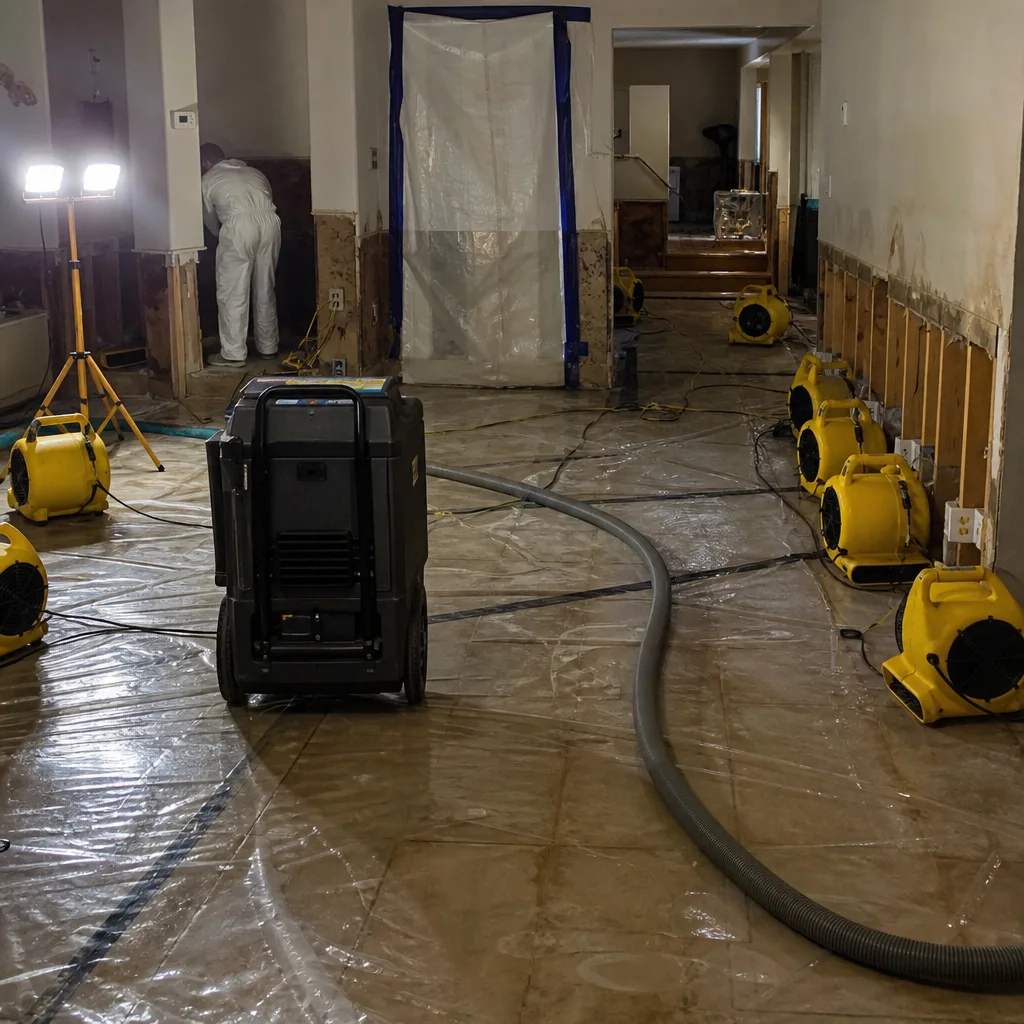
Acworth lakeside homes on septic systems face a seasonal failure mode that homes in Kennesaw never see. When the U.S. Army Corps of Engineers raises Lake Allatoona’s pool elevation, the water table rises under the drain field. The soil loses absorption capacity and effluent backs toward the house. We extract the sewage, sanitize the affected area, and document the failure pattern clearly for the adjuster. If you need a septic vendor, we’ll tell you straight what we’re seeing and what the next step is. Every job gets a written scope first, so you know what’s being done and what it costs before any equipment comes off the truck.
Black Water Extraction
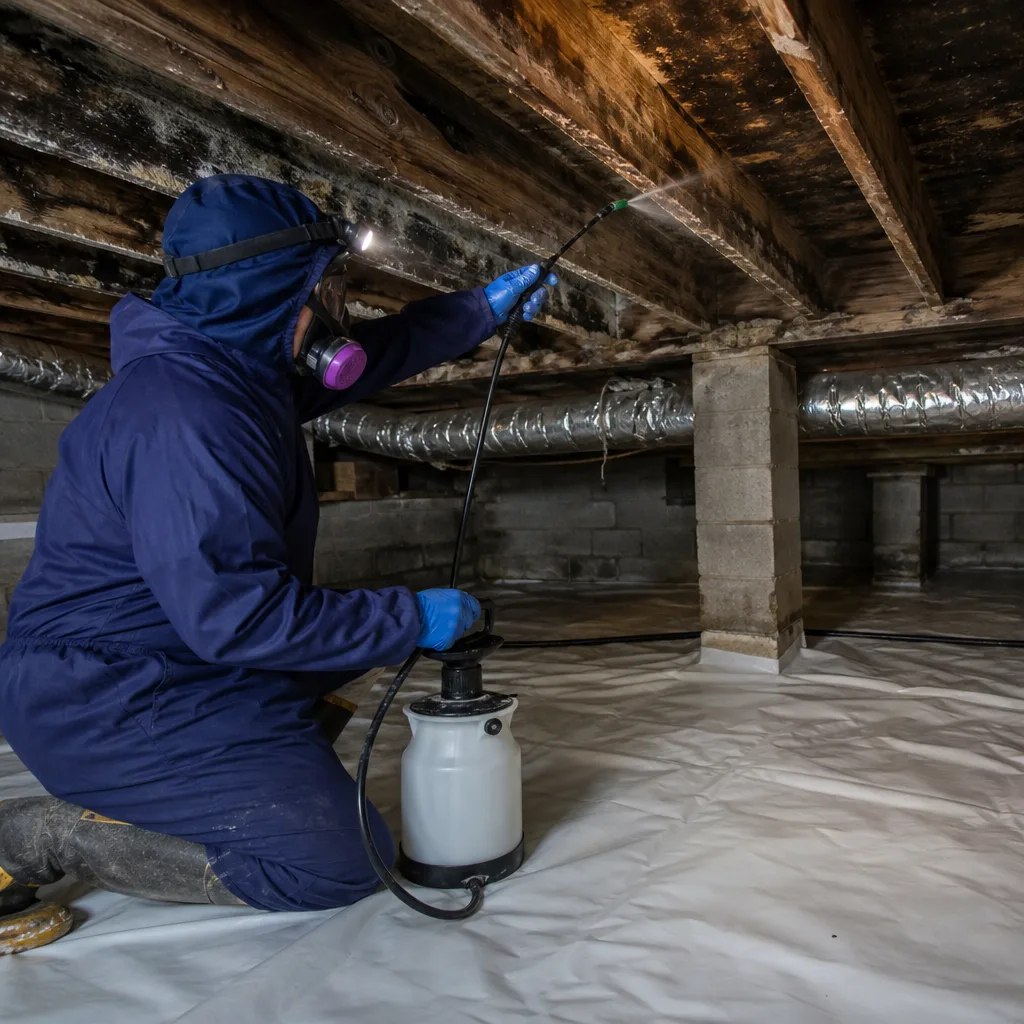
Black water extraction in Acworth is more than picking up a puddle. It means removing contaminated water from areas you can’t see: sill plates, wall cavities, ductwork, and the crushed gravel under a crawl space’s vapor barrier. On homes near the lake, where Corps drawdowns can push sewage back through drain lines even without rain, our techs consistently find contamination deeper than the homeowner expected. We don’t stop at the visible floodline. The line the water left is where we start, and we work until our moisture readings prove the structure is dry.
What happens when you call
- 1
A real person answersNo phone trees - you reach a local pro.
- 2
You get an upfront price rangeHonest numbers before anyone is dispatched.
- 3
A background-checked tech heads outLicensed & insured, dispatched right away.
- 4
You approve before work beginsNothing starts until you say go.
Trusted Brands We Service in Acworth
If you own a home in Acworth, it doesn’t matter what name is on the toilet or the ejector pump. What matters is how the cleanup is done and what equipment is used. We run professional-grade Dri-Eaz dehumidifiers, XPOWER air movers, and Phoenix equipment on every sewage job in Acworth because residential-grade fans don’t reach the places Category 3 contamination hides. These are the same machines we use on insurance-billed commercial jobs, and the same machines our techs monitor with daily readings until the structure meets the dry standard. For Acworth homeowners, that means the job is done once, correctly. You’re not waiting on a second visit because the first drying attempt didn’t hold.
Common Sewage Cleanup Problems We See in Acworth Homes
- Corps-drawdown backups on lakeside properties. When the Corps of Engineers raises Lake Allatoona’s pool elevation, the water table under lakeside drain fields rises too. Sewage stops moving downhill and starts backing through floor drains and shower pans. We’ve handled this enough times in Acworth to recognize the pattern before the adjuster names it.
- Polybutylene supply line bursts in 1980s-1990s subdivisions. Acworth’s builder-grade homes from that era often still carry polybutylene supply lines. When one bursts in a crawl space while the family’s out, and a blocked lateral is also present, the result is raw sewage saturating the crawl space and ductwork. Last spring our crew responded to a 1980s subdivision home off Bells Ferry Road in 30101 where exactly that happened. A polybutylene line burst in the crawl space, mixed with Category 3 water from a collapsed sewer lateral, and saturated the ductwork. We set up Dri-Eaz and XPOWER equipment to isolate the crawl space, cut out the failed polybutylene, and replaced a rusted-out cast-iron cleanout cap that had been quietly leaking sewage into the same void. Because our corrosion inspection caught the failing cap, the homeowner avoided mold remediation entirely.
- Red Georgia clay pushing water against foundations. The red clay around Acworth sheds water laterally rather than absorbing it. After a thunderstorm along the I-75 corridor, surface water runs toward crawl space vents and foundation walls. If the sewer lateral has a belly at a glue joint, that water finds its way into the waste line and pushes sewage back into the house. We treat this as a near-year-round call type in both 30101 and 30102.
- Pre-WWII craftsman homes near downtown with cast-iron laterals. The older wood-frame homes near Acworth’s historic downtown often still run on original cast-iron drains that rust from the inside. A failed cleanout cap or cracked lateral in these homes can leach sewage into crawl spaces with minimal vapor barriers, where mold takes hold fast. These jobs demand aggressive extraction and drying, and they’re the reason we stock the right equipment to handle those tight, low-clearance spaces.
Pricing for Sewage Cleanup in Acworth, GA
Sewage cleanup in Acworth runs on a predictable range based on the size of the contaminated area and what must be removed. A contained toilet overflow in a half bath on the main floor typically runs $900-$2,400. A full crawl space sewage removal under a 2,000-square-foot home in 30101 or 30102 runs $1,800-$4,200, including extraction, removal of contaminated materials, sanitization, and drying to the dry standard. Lakeside homes on septic systems, where Corps-drawdown backups are common, tend toward the upper half of the range because the contamination spreads farther through the drain field’s reverse flow path. We give you a written scope before any work starts, and we bill your carrier directly when insurance applies. Floodline Restoration Co. offers $50 off any repair over $250 to Acworth homeowners, and a 5% discount for seniors and veterans. Call (888) 832-2758 for a free estimate.
We Also Serve Cities Near Acworth
Our crews work throughout northwest metro. If your home is in Kennesaw, Woodstock, Holly Springs, or Marietta, the same certified teams that handle Sewage Cleanup in Acworth can be at your door. Same equipment, same written scope, same 90-Day Done Right Promise, in writing.
Serving Acworth, GA - Our Local Coverage Area
We’re based in the Acworth area and know this community well. Use the map below to see our service coverage - if you’re nearby, we can almost certainly help.
FAQs - Sewage Cleanup in Acworth
When the Corps of Engineers raises Lake Allatoona’s pool elevation, the water table below lakeside homes on septic systems rises, and the drain field’s absorption capacity drops. Sewage stops moving downhill and backs through the lowest drains in the house. This can happen without a single drop of rain reaching the property, and it’s a pattern we document differently for adjusters because the cause isn’t rainfall intrusion. If you’re on the lake side of Acworth and you see a backup after a drawdown, call (888) 832-2758 and tell the dispatcher you’re on septic. That one word changes what we bring.
Acworth’s residential growth spurt in the mid-1980s through early 2000s produced thousands of builder-grade homes with polybutylene supply lines, while Kennesaw’s older core has proportionally fewer of that era’s polybutylene-plumbed subdivisions. Polybutylene degrades from chlorinated water and fails catastrophically without warning. When a supply line bursts in an Acworth crawl space, and the sewer lateral has a belly from clay soil shifting, the two failures combine into a Category 3 event that saturates the entire void. We check for polybutylene on every crawl space sewage job in 30101 and 30102 because finding it early means cutting out a liability, not just drying a puddle.
Stay out of the crawl space. Do not enter it without full PPE, and do not run the HVAC system if the ductwork is in the contaminated area. Turn off the water at the main if the backup is tied to a plumbing failure, then call (888) 832-2758. A live dispatcher answers and gets a crew routed to your Acworth address the same day. The sooner extraction and containment begin, the less material gets removed and the lower the final bill. We’ll give you a written scope before any equipment is set up.
Yes. Acworth’s red Georgia clay sheds water laterally rather than absorbing it. After a heavy thunderstorm along the I-75 corridor, water moves sideways through the soil and presses against foundation walls and crawl space vents. If a sewer lateral has a dip or a crack, that soil-driven pressure can push sewage back through the line and into the crawl space. The same clay also holds moisture against sill plates and subflooring once contamination is present, which lengthens the drying curve. We factor both patterns into our moisture mapping and drying plan on every Acworth job.
We document it as a lake-water-driven septic failure, not a rainfall intrusion. That distinction matters for insurance because many adjusters default to “rainwater intrusion” language on their worksheets, and that mislabel can reduce coverage. Our techs record the pool elevation timeline, photograph the reverse-flow pattern, and log it in the moisture log and the written scope we hand to you and your carrier. We’ve done enough of these Acworth jobs to know what the adjuster needs to see. Call (888) 832-2758 and we’ll walk you through it, start to finish.
Written by Curt Bowman, Owner at Floodline Restoration Co. of Atlanta, serving Acworth and the metro with certified sewage cleanup and restoration since 2010.