
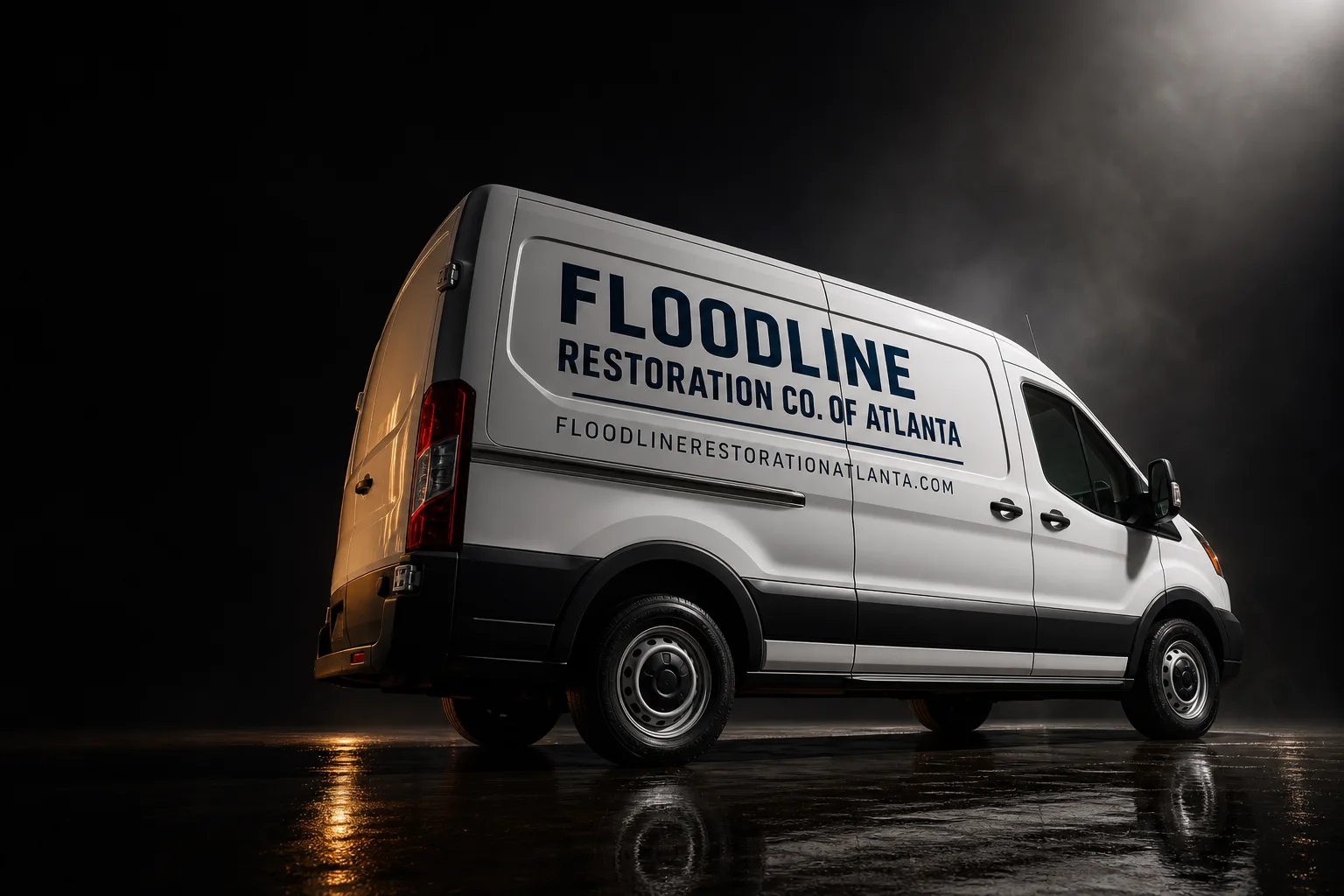
Fast, Reliable Storm & Disaster Restoration Across Mountain Park
Storm damage in Mountain Park rarely announces itself politely. A summer thunderstorm rolls over the lake, drops two inches of rain in forty minutes, and suddenly the crawl space under a 1962 ranch on Lakeshore Drive is taking on groundwater while the red clay yard turns into a pond that has nowhere to drain. We know this because we’ve worked Mountain Park’s 30087 homes for years, and we understand that the water you see on the floor is usually only half the story. Our Storm & Disaster Restoration crews reach Mountain Park quickly from metro dispatch, and every call is answered by a live person at (888) 832-2758, day or night.
Why Floodline Restoration Co. of Atlanta Is Mountain Park’s Preferred Storm & Disaster Restoration Company
Mountain Park isn’t a big city. It’s one of Georgia’s smallest incorporated communities, and the homeowners here tend to know each other. That’s why our reputation in Mountain Park matters more to us than any marketing claim. When a crew from our Storm & Disaster Restoration team pulls up to a home off Five Forks Trickum Road or near the community lake, neighbors notice whether we do the job right. We’ve spent over 42 years as a company building exactly that kind of local accountability. Curt Bowman founded Floodline Restoration Co. because he believed a restoration company should answer its own phone and stand behind its own work, not hand a homeowner off to a subcontractor who never saw the original damage.
Our technicians are background-checked, uniformed, and trained to IICRC, RIA, and IFA standards. They arrive with professional-grade Dri-Eaz, Phoenix, and XPOWER equipment and a moisture map that tells them where the water actually went, not just where it pooled. For Mountain Park specifically, that means understanding the red clay, the lake proximity, and the crawl-space foundations that define this community’s storm damage patterns. We coordinate dispatch from our Atlanta office, but the crews know Mountain Park streets and the particular ways water moves through them.
Our Storm & Disaster Restoration Services in Mountain Park
Flood Damage Restoration
Flood damage in Mountain Park usually starts below the floor, not on top of it. The community’s older lakeside cottages sit on red clay that holds water close to the foundation. When a storm saturates that clay, hydrostatic pressure pushes groundwater up through slab cracks and crawl-space vents. Our Flood Damage Restoration process begins with extraction, then moisture mapping with Dri-Eaz equipment, then daily readings logged until the structure meets the dry standard. We hand the moisture log to you and your carrier, and the same crew that started the job finishes it.
Storm Damage Cleanup
A tree limb through a carport or a section of gutter torn loose by wind leaves more than visible debris. Storm damage cleanup in Mountain Park means removing the hazards, documenting everything with photos for your insurance carrier, and checking whether water found a way into spaces you can’t see. We clear the immediate mess, secure the opening, and start drying the hidden areas before mold gets a foothold. The older mid-century homes here have plenty of places for water to hide, and we’ve learned where to look.
Emergency Board-Up
When a storm punches a hole in your wall or takes out a window, Mountain Park’s humid air starts drawing moisture into the opening within hours. Our emergency board-up service keeps rain, animals, and further damage out while the full assessment happens. We answer the phone at 2 a.m. with a live dispatcher, not a recording, and a certified crew reaches your Mountain Park home the same visit. Board-up isn’t a temporary patch to us; it’s the first step in a documented restoration plan.
Roof Tarping
Wind damage to a roof in Mountain Park doesn’t wait for a convenient time. A lifted shingle or punctured decking over a 1960s ranch can start leaking into the attic during the next storm, and older roofs here sometimes hide multiple layers of previous repairs. Our roof tarping service stabilizes the damaged area and prevents secondary water intrusion while we work with your carrier on the permanent repair scope. Every tarp job gets photo documentation before, during, and after.
Debris Removal
Storm debris around the lake and along Mountain Park’s narrow residential streets creates hazards that linger long after the skies clear. We remove fallen limbs, damaged building materials, and storm wreckage, then check the property for drainage blockages that could make the next storm worse. In Mountain Park, where clay-heavy lots have limited natural percolation, a clogged drainage swale can turn a heavy rain into an interior flood.
What happens when you call
- 1
A real person answersNo phone trees - you reach a local pro.
- 2
You get an upfront price rangeHonest numbers before anyone is dispatched.
- 3
A background-checked tech heads outLicensed & insured, dispatched right away.
- 4
You approve before work beginsNothing starts until you say go.
Trusted Brands We Service in Mountain Park
We run Dri-Eaz, Phoenix, and XPOWER equipment on our Mountain Park jobs because these are the brands that hold up under week-long drying assignments in crawl spaces and lakefront slabs. The Dri-Eaz LGR 2800i dehumidifiers we use pull moisture out of dense red-clay-adjacent structures faster than consumer machines ever could. Phoenix fans move air through tight crawl spaces where Mountain Park’s older homes trap humid air. XPOWER axial fans handle the big open areas. We stock parts and consumables for this equipment so we’re not waiting on a shipment when your Mountain Park home needs dry-out to start immediately.
Common Storm & Disaster Restoration Problems We See in Mountain Park Homes
Mountain Park’s combination of old housing stock, red clay soil, and lake proximity creates damage patterns we don’t see as often in neighboring Stone Mountain or Tucker. Here’s what we encounter regularly in 30087:
- Hydrostatic groundwater intrusion through slab cracks. The heavy red clay around the community lake holds water like a sponge. When it saturates, pressure pushes groundwater up through cracks and joints in old slab foundations, even in homes that never flooded before.
- Collapsed or missing perimeter drainage from original construction. Many Mountain Park cottages built in the 1950s through 1970s relied on clay-tile perimeter drains that have long since collapsed or filled with sediment. The downspouts still work, but the water they carry has nowhere to go except back toward the foundation.
- Freeze-burst pipe flooding in poorly insulated lakeside cottages. The Atlanta metro sees ice events every few years, and Mountain Park’s older homes often have pipe runs along exterior walls and through unheated crawl spaces. When those pipes burst, the flooding is sudden and the water damage spreads fast.
- Pre-existing crawl-space moisture that storm flooding makes visible. Many Mountain Park homeowners discover mold or rot during storm damage cleanup that existed long before the storm hit. The storm didn’t create the problem; it exposed it. Proper remediation has to address both.
Pricing for Storm & Disaster Restoration in Mountain Park, GA
We Also Serve Cities Near Mountain Park
Our crews serve the Mountain Park community and the surrounding metro wherever storm damage strikes. We regularly respond to calls in Stone Mountain, Clarkston, Tucker, and Redan, bringing the same certified technicians and professional-grade equipment to every job. If you’re in a nearby city, we’ll get there fast.
Serving Mountain Park, GA - Our Local Coverage Area
We’re based in the Mountain Park area and know this community well. Use the map below to see our service coverage - if you’re nearby, we can almost certainly help.
FAQs - Storm & Disaster Restoration in Mountain Park
How does Mountain Park’s clay soil and proximity to the community lake change how fast our crew must respond to storm flooding?
Response time matters more in Mountain Park than in most metro locations because saturated red clay holds water against foundations for days, not hours. The longer groundwater sits against a slab or crawl-space wall, the more capillary action pulls it up into floor framing, drywall, and subflooring. We aim to have crews on-site in Mountain Park the same visit you call, because waiting a day on clay-heavy lakefront property means the difference between drying surfaces and replacing structural materials.
Do we need to worry about asbestos in storm-damaged Mountain Park homes built before 1980?
Yes, and this is a real concern specific to Mountain Park’s housing stock. Many of the community’s 1950s to 1970s cottages and ranches contain asbestos-containing materials in sheet vinyl flooring, textured ceilings, or insulation. If storm water saturated those materials and they need removal, standard restoration must pause while certified abatement happens first. We test before we tear out, which keeps your family safe and keeps the project legal. Skipping this step can stop work mid-job and add weeks to your recovery.
Why do some Mountain Park homes have repeat water-damage claims even after a professional dry-out?
The most common reason is that the dry-out addressed the visible water but not the drainage. We’ve worked Mountain Park homes where the slab dried to standard, only to have the same groundwater intrusion recur during the next heavy rain. The recurring problem: original clay-tile perimeter drains collapsed decades ago, downspouts discharge against the foundation, and saturated red clay has nowhere to send the water. A proper restoration in Mountain Park includes checking and correcting exterior drainage, not just drying the interior. We made that mistake once early on and learned better. Now we check drainage before we declare a job done.
Can our crew handle freeze-burst pipe flooding in winter, or is this only a warm-weather service?
We handle freeze-burst pipe flooding in Mountain Park year-round. Winter ice events hit the Atlanta metro every few years, and Mountain Park’s older lakeside cottages are especially vulnerable because original pipe runs travel through unheated crawl spaces and exterior wall cavities. When those pipes freeze and burst, the flooding is just as urgent as any summer storm. Our crews respond the same day, extract the water, dry the structure with Dri-Eaz and XPOWER equipment, and the same crew handles the reconstruction work afterward.
What is the biggest difference between a storm-damage repair in Mountain Park versus the rest of Stone Mountain?
The soil and the lake. Stone Mountain has its share of clay, but Mountain Park’s tight residential enclave around the community lake creates a particular one-two punch: surface water from the lake’s watershed and groundwater pressure from saturated red clay acting on old foundations at the same time. A storm that would wet a lawn in Stone Mountain can lift groundwater through slab cracks in Mountain Park within minutes. Restoration here means understanding that dynamic and planning for drainage correction as part of the job, not as an optional add-on.
Call Floodline Restoration Co. for Storm & Disaster Restoration in Mountain Park
When a storm hits Mountain Park, you want someone who knows the streets, the soil, and the houses. We’ve spent over 42 years building a company that answers the phone with a live person, sends background-checked certified technicians to your door, and stands behind every job with the 90-Day Done Right Promise in writing. No mid-job handoffs. No surprises on the bill. We bill your insurance carrier directly and keep the whole job under one roof, from first extraction to finished rebuild. If you need Storm & Disaster Restoration in Mountain Park, call (888) 832-2758 now. A live dispatcher picks up, and a certified crew starts the same visit.
Written by Curt Bowman, Owner at Floodline Restoration Co., serving Mountain Park and the surrounding metro since 2010.