
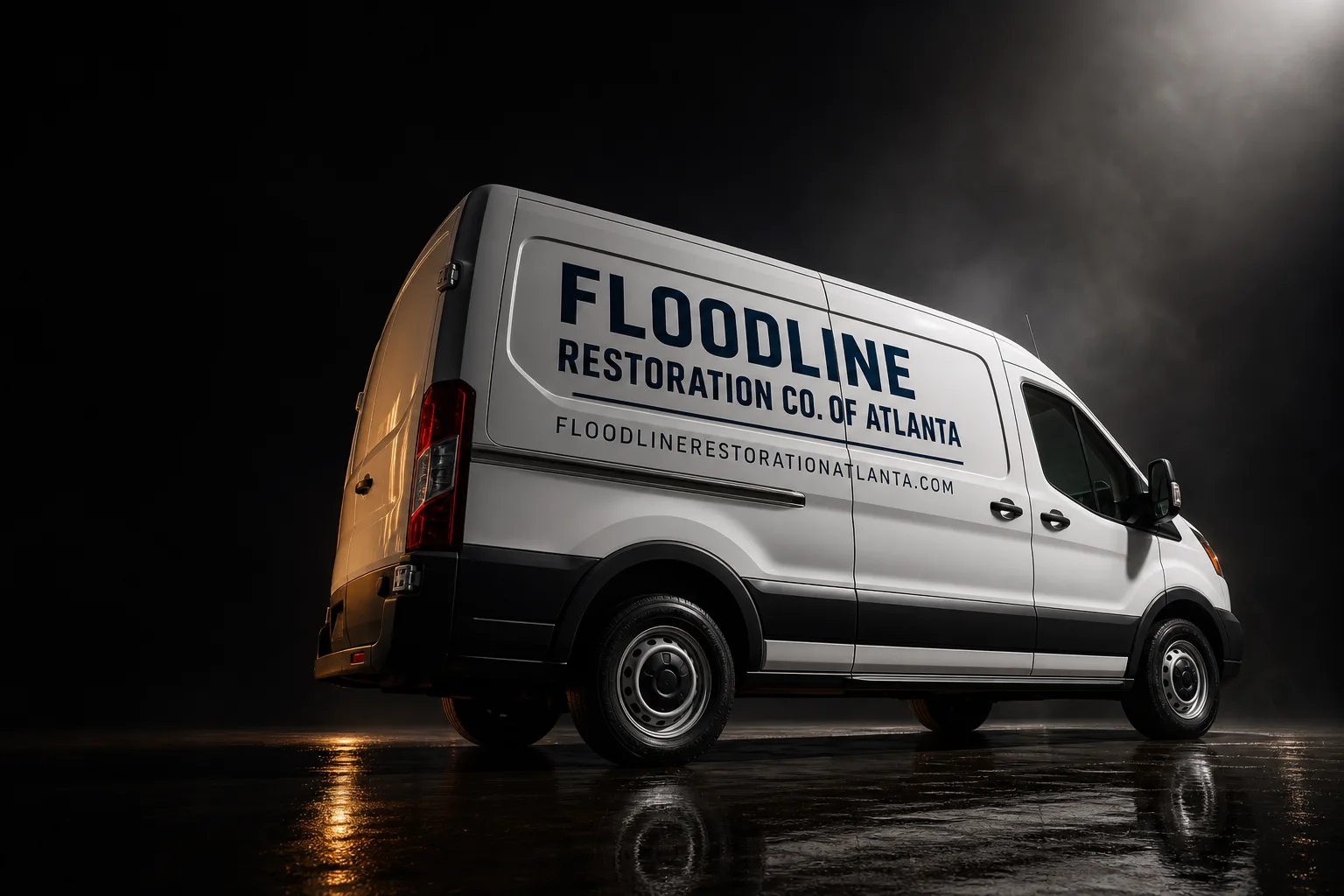
Fast, Reliable Storm & Disaster Restoration Across Suwanee
Storm damage in Suwanee moves fast. Wind tears off a roof valley, rain pushes through cracked EIFS cladding, and before you know it, water is running downhill into a finished basement that took years to build out. Storm & disaster restoration in Suwanee typically runs $1,200-$8,500 depending on how far the water traveled through the home’s structure, and the damage is almost always worse than what you can see from the outside. Our crews know exactly how water moves through Suwanee’s 1990s brick-front homes on Piedmont slopes, and we answer the phone at 2 a.m. with a live dispatcher. Call (888) 832-2758 and a certified team from Storm & Disaster Restoration will be at your door, extraction equipment running the same visit.
Why Floodline Restoration Co. of Atlanta Is Suwanee’s Preferred Storm & Disaster Restoration Company
We built Suwanee restoration work on one idea: a homeowner should never have to explain the same damage twice. Our crews arrive with a moisture map, a written scope, and the training to read what’s actually happening inside the walls. Curt Bowman founded Floodline in 2010 around a dispatch board, not a sales desk, and that’s why a live person picks up the phone at any hour, every day of the year. When a Suwanee homeowner calls at 2 a.m. because a tree limb is through the roof and rain is pouring into the master bedroom, they reach a dispatcher who can send a crew immediately, not a recording that tells them to leave a message.
Every job is backed by the 90-Day Done Right Promise, the Keystone Standard we put in writing before work begins. If it’s not done right, we make it right. No paperwork battles, no arguing. That promise matters in Suwanee, where hidden damage behind EIFS and inside finished basements can take weeks to reveal itself. We stand behind the result because we know what to look for from day one.
Our technicians are background-checked, uniformed, and certified to IICRC, RIA, and IFA standards. They run Dri-Eaz truck-mounted extraction units, Phoenix dehumidifiers, and XPOWER air movers, and they log moisture readings daily until the dry standard is met. The same crew that reads the moisture map on day one handles the daily readings, hands the log to the homeowner and the carrier, and rebuilds what needs rebuilding.
Our Storm & Disaster Restoration Services in Suwanee
Storm Damage Cleanup
When a summer thunderstorm knocks a limb through a Suwanee roof or sends wind-driven rain through cracked EIFS corner transitions, the first 48 hours decide whether you’re looking at a cleanup or a rebuild. We remove debris, extract standing water, and map moisture across every affected surface before mold has time to colonize. In Suwanee’s year-round humidity, mold starts growing in wet building cavities within 48-72 hours, so we don’t wait for an adjuster to show up before we start extraction.
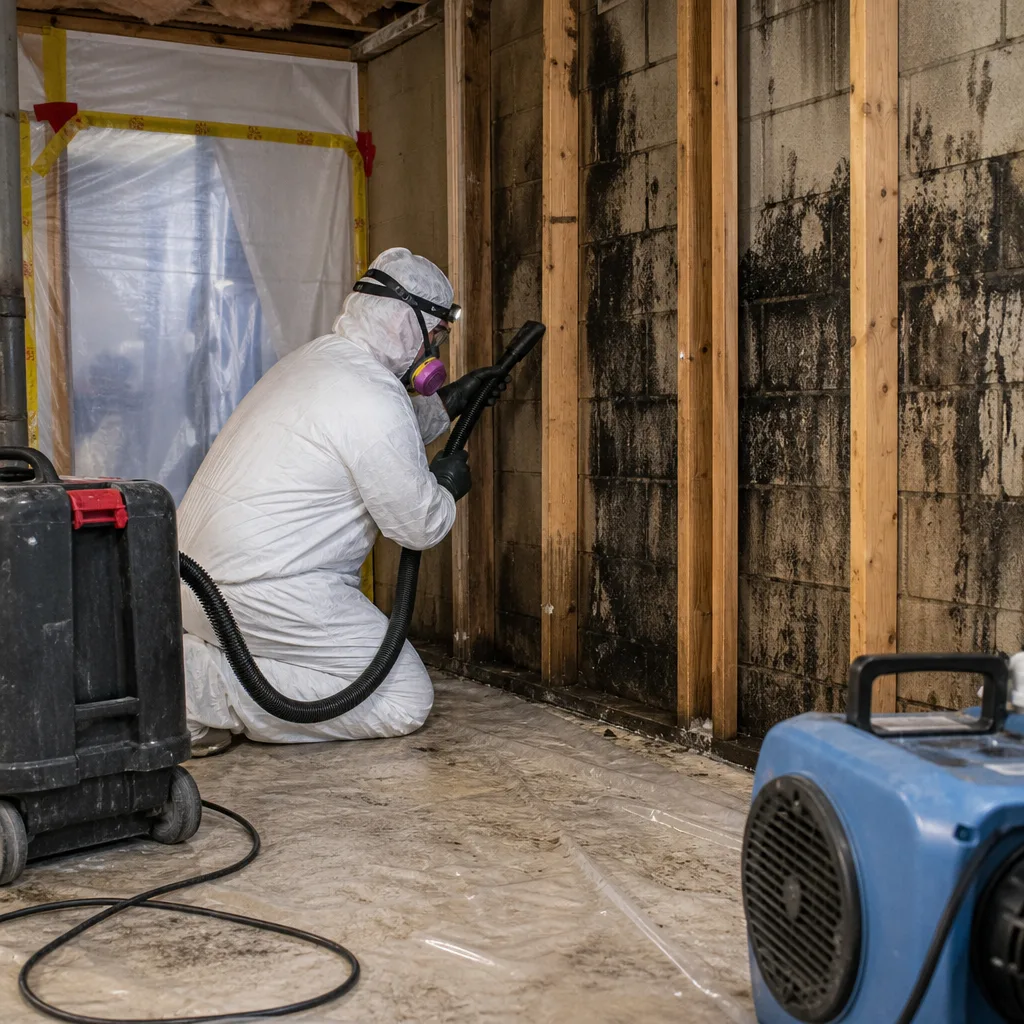
Flood Damage Restoration
Suwanee gets roughly 55 inches of rain a year, and when it comes down hard on the hilly Gwinnett County terrain, runoff funnels straight toward aging foundations. We restore flood-damaged basements, dry wall cavities, and salvage what can be saved, from custom trim to built-in cabinetry. The line the water left is where we start, and we don’t stop until the moisture log says the entire structure is dry, not just the visible surfaces.
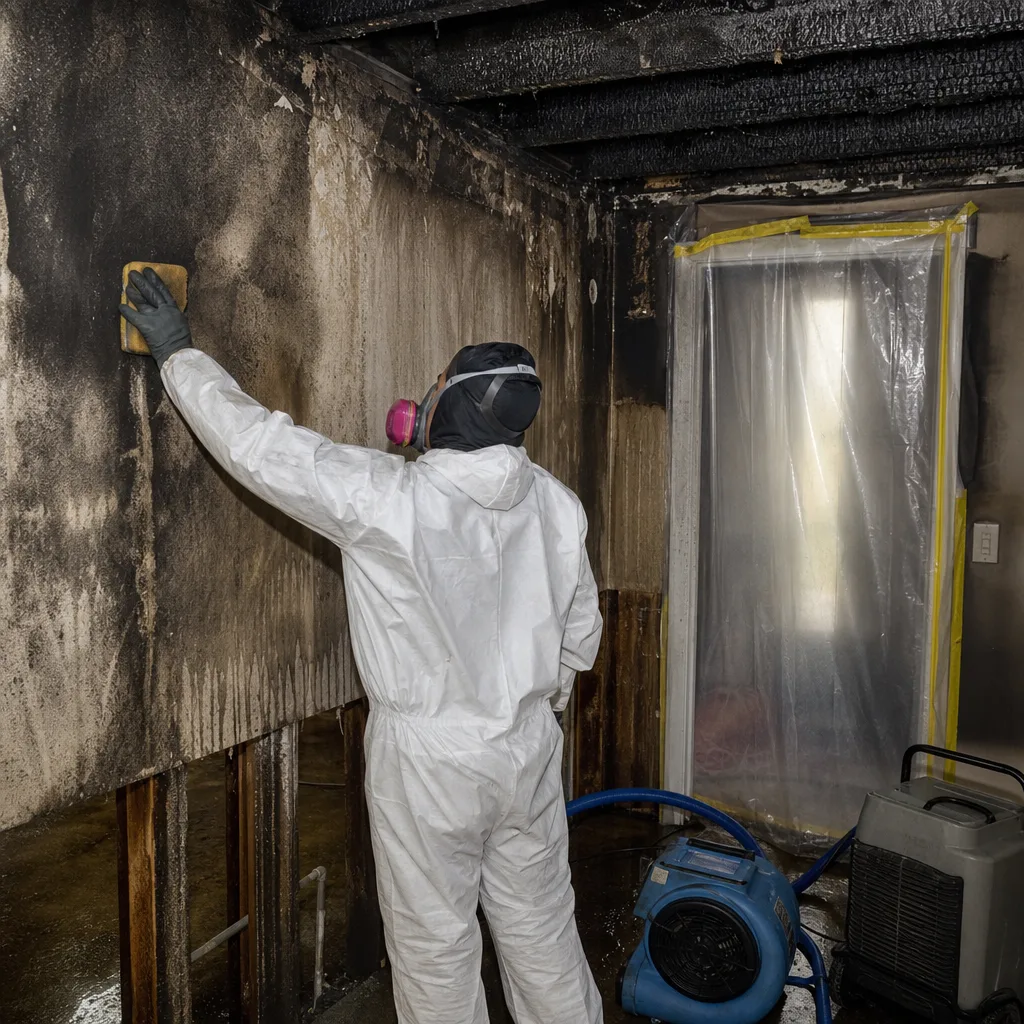
Emergency Board-Up
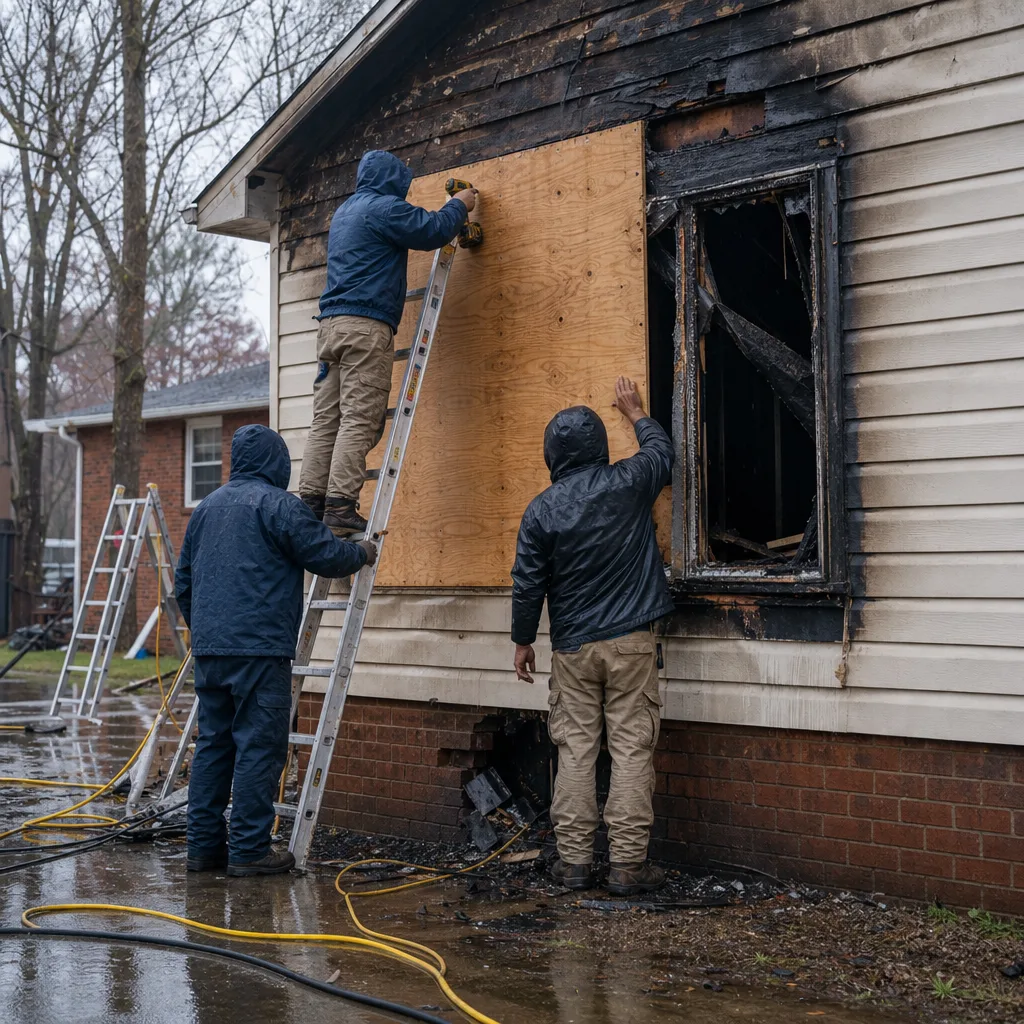
After a storm blows out a window or tears a hole in the roof, your home is open to rain, animals, and intruders. We board up damaged openings the same visit, using materials that hold up to the next storm, not just the next hour. In Suwanee’s large-footprint homes with complex rooflines, this often means securing multiple entry points and tarping until permanent repairs are scheduled.
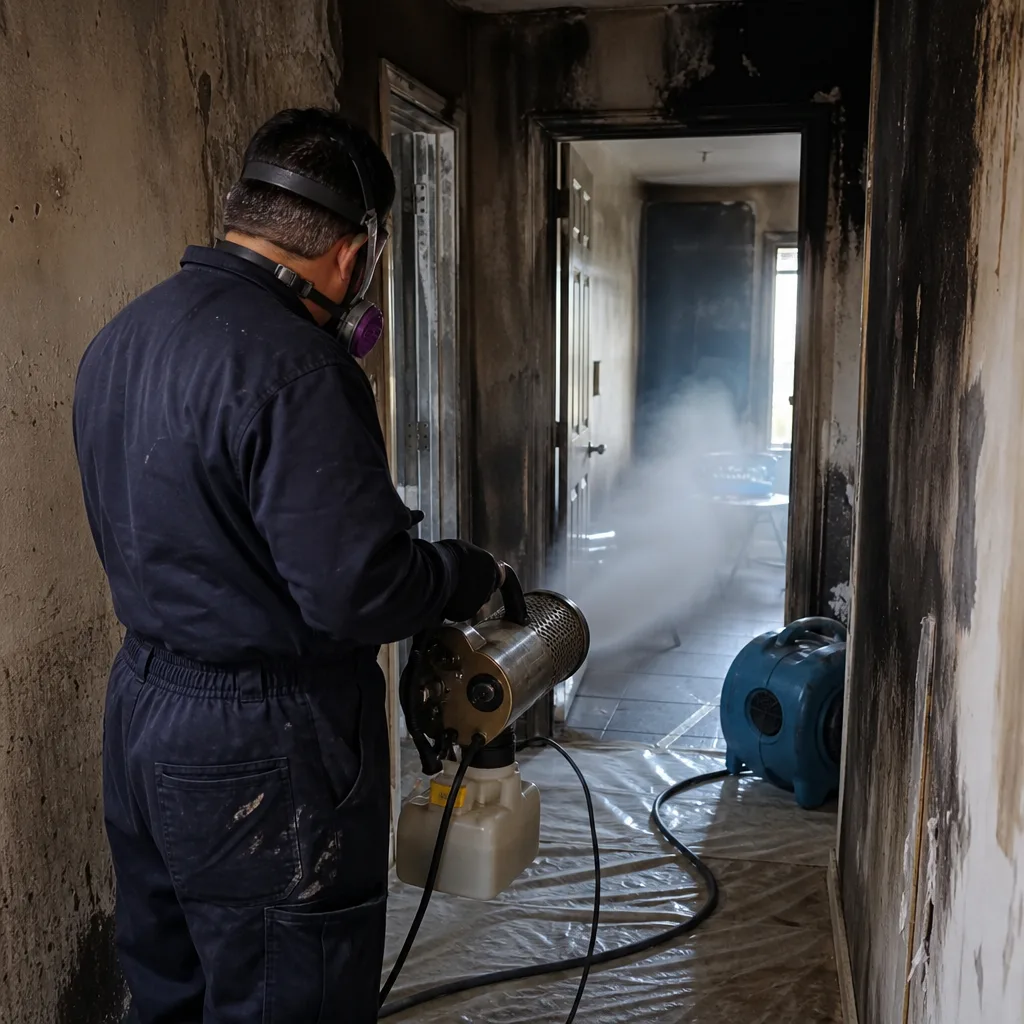
Roof Tarping
A tarp is a temporary fix, but a bad tarp job causes more damage than the original storm. We tarp damaged valleys, ridge lines, and lifted shingles so water stays out of the attic and off the OSB sheathing underneath. Given how many Suwanee homes have multi-valley rooflines from the 1990s and 2000s, this is not a one-size-fits-all job. We cut and secure tarps to the actual roofline, not just over the hole.
What happens when you call
- 1
A real person answersNo phone trees - you reach a local pro.
- 2
You get an upfront price rangeHonest numbers before anyone is dispatched.
- 3
A background-checked tech heads outLicensed & insured, dispatched right away.
- 4
You approve before work beginsNothing starts until you say go.
Trusted Brands We Service in Suwanee
We work with the equipment and standards that match the homes we’re protecting. Our crews are trained to IFA standards and run Dri-Eaz extraction units and Phoenix dehumidifiers on every Suwanee job. We also run XPOWER air movers for cavity drying after we cut out saturated sheathing. When a Suwanee homeowner asks what equipment we’ll use, we can name it because it’s on the truck. Parts and materials are stocked for the specific failure modes we see in 30024, so we’re not waiting on a supplier while your basement keeps wicking moisture up the drywall. Done right, and backed in writing.
Common Storm & Disaster Restoration Problems We See in Suwanee Homes
- Hidden EIFS moisture intrusion. Suwanee’s upscale 1990s subdivisions were finished with synthetic stucco exteriors that develop micro-cracks at window and corner transitions after 25-plus years. Moisture gets behind the cladding and saturates OSB sheathing for months with no visible interior symptom, until a technician cuts into a wall and finds widespread rot and mold that shocks the homeowner.
- Finished basements flooding despite a working sump pump. The pump handles groundwater, but storm water running down the slope finds gaps in old waterproofing membranes. By the time the water shows up on the floor, it has already wicked into the wall cavity and saturated the OSB behind the drywall.
- Contractors drying only visible surfaces. A crew that never opens the wall leaves saturated OSB behind the cladding, where it delaminates and weakens the structural load path under finished-basement living spaces. We cut out what’s compromised rather than drying around it.
- Storm scopes that stop at tarp and debris removal. The tarp keeps new rain out, but the water already inside is still traveling downhill through the home. If the downhill runoff issue isn’t addressed, the basement floods again at the next storm, and the cycle repeats.
Pricing for Storm & Disaster Restoration in Suwanee, GA
Storm damage cleanup in Suwanee homes runs $1,200-$4,500 for a standard scope: debris removal, extraction, and drying of a single affected area like a finished basement or attic. Flood damage restoration ranges from $2,500-$8,500 when wall cavities, OSB sheathing, and custom trim are involved. Emergency board-up is typically $350-$800 depending on the number of openings. Roof tarping runs $300-$700 for a standard valley or ridge damage area. The big variable in Suwanee is hidden damage: a $400 visible leak can hide $6,000 in saturated OSB and mold behind EIFS. That’s why every estimate includes a written scope before work starts, and we handle direct insurance billing so you never play messenger between us and the carrier. Current offers: $50 Off Any Repair Over $250, the $89 Seasonal Tune-Up, and a Senior & Veteran 5% Discount, Always. Call (888) 832-2758 for a free estimate. A square deal, no surprises on the bill.
We Also Serve Cities Near Suwanee
Our crews respond to storm damage across Gwinnett County. If you’re in Suwanee and need someone today, we’ll be there when we say. We also cover Buford, Sugar Hill, Duluth, and Lawrenceville with the same live dispatch and the same 90-Day Done Right Promise.
Serving Suwanee, GA - Our Local Coverage Area
We’re based in the Suwanee area and know this community well. Use the map below to see our service coverage - if you’re nearby, we can almost certainly help.
FAQs - Storm & Disaster Restoration in Suwanee
You usually don’t, not until a technician cuts into the wall. The signs are subtle: a faint musty smell in a room with no visible water stain, paint that bubbles or peels near window corners, or efflorescence on the interior drywall. If your Suwanee home was built between 1990 and 2008 with synthetic stucco, any storm that pushed rain against the exterior deserves a moisture inspection. We use thermal imaging and moisture meters to find saturated OSB behind the cladding before it delaminates and becomes a structural problem. Call (888) 832-2758 and we’ll assess it.
Because the sump pump handles groundwater, not storm water running downhill across the lot. Suwanee’s hilly Piedmont topography funnels runoff directly toward foundations, and 20-30-year-old waterproofing membranes have developed gaps and cracks. The water finds those gaps, enters the wall cavity, and wicks upward into the finished space. Fixing it requires addressing the downhill drainage and the failed waterproofing, not just pumping out the floor. We scope that work in writing before anything is opened up.
The tarp stopped new rain from entering, but the water that got in before the tarp went on has already traveled down through the wall assembly and saturated the OSB and drywall in the basement. Mildew smell means the water has been sitting in a cavity long enough for microbial growth to start. In Suwanee’s humidity, that takes 48-72 hours. You’ll need cavity drying and likely removal of saturated sheathing, not just a dehumidifier on the basement floor. Call us at (888) 832-2758 before the damage spreads further.
Often yes, if we get to it fast. Custom trim, built-in cabinetry, and millwork can usually be dried, treated, and saved when moisture is caught in the first few days. Once the material has been wet for weeks, delamination and warping make replacement the only option. We work to preserve finished materials first, and when something has to be replaced, we match it. In a Suwanee custom home, that matters. We’ll tell you straight which materials can be saved and which can’t, and it’s all in the written scope.
Most Suwanee finished basements need 3-7 days of active drying with professional-grade equipment, depending on how long the water sat before extraction and how far it wicked into the wall cavities. Dri-Eaz and Phoenix units pull moisture from the air and structure while XPOWER air movers circulate through the cavities. We take daily moisture readings and hand you the log, so you can see the dry standard being met. We’ll be there when we say, and the same crew handles it start to finish.
If storm water has found its way into your Suwanee home, don’t wait for the damage to reveal itself. Call (888) 832-2758 now. A live dispatcher answers, a certified crew responds, and the 90-Day Done Right Promise covers the result. We stand behind it.
Written by Curt Bowman, Owner at Floodline Restoration Co. of Atlanta, proud to serve Suwanee since 2010.