
Fast, Reliable Water Damage Restoration Across Suwanee
Water damage restoration in Suwanee typically runs $2,800-$6,500 for a standard extraction and structural drying scope, and a certified crew can usually be on-site within 60-90 minutes of your call. If you’re in the 30024 ZIP code and water is spreading through drywall, carpet, or a finished basement, the first move is extraction, not waiting to see if it dries on its own. In Suwanee’s humidity, mold colonization begins inside wall cavities within 48-72 hours, which is why we answer the phone with a live person and have a Water Damage Restoration crew dispatched while you’re still on the line. Call (888) 832-2758 any hour, day or night, and we’ll be rolling toward Suwanee before the water migrates one more stud bay.
Why Floodline Restoration Co. of Atlanta Is Suwanee’s Go-To for Water Damage
Our crews work in Suwanee every week, and we know what these homes hide. The subdivisions along McGinnis Ferry Road, the custom builds around Suwanee Creek Park, and the brick-front communities off Peachtree Industrial Boulevard all share a common thread: 1990s and early-2000s construction with finished basements, complex rooflines, and aging exterior systems that fail in ways a newer home simply doesn’t. We’ve pulled wet carpet from a basement in Barrington while tracing the actual water source to a roof valley two floors up.
Floodline Restoration Co. has been doing this work since Curt Bowman founded the company in 2010, and in that time we’ve built our reputation in Gwinnett County one house at a time. Homeowners in Suwanee call us because they’ve heard from a neighbor that we showed up when we said we would, wrote the scope before starting, and didn’t leave until the moisture meter said the structure was dry. That’s not marketing language. That’s how a company plans to still be answering the phone in thirty years.
Our technicians arrive in uniform, background-checked, and certified to IICRC, RIA, and IFA standards. They carry professional-grade Dri-Eaz, Phoenix, XPOWER, and Injectidry equipment sized for large-footprint homes, which is what Suwanee is full of. And every job is backed by the 90-Day Done Right Promise, the Keystone Standard we put in writing. If it’s not done right, we make it right. No arguing, no paperwork battles, no leaving you to chase us down.
We also carry the full scope: extraction, structural drying, dehumidification, and reconstruction handled by the same certified crew that started the job. You will not be handed off to a subcontractor who has never seen your house. The line the water left is where we start, and we stay until the rebuild is finished and the moisture log is in your hand.
One more thing worth saying plainly: calls to (888) 832-2758 are answered by a live dispatcher at 2 a.m. exactly the same way they are at 2 p.m. You won’t get a recording, and you won’t wait for a callback. A real person picks up, every time.
Key Takeaways
- Response time to Suwanee: Typically 60-90 minutes for emergency extraction, 24/7.
- Common cost range in Suwanee: $2,800-$6,500 for standard water damage restoration; basement and EIFS scopes can run higher.
- The Suwanee-specific risk: Aging EIFS exteriors and finished basements hide moisture for months before symptoms appear.
- Guarantee: 90-Day Done Right Promise in writing, backed by the Keystone Standard.
- Insurance: We document everything with photos and moisture logs, and bill your carrier directly.
Our Water Damage Restoration Services in Suwanee
Emergency Water Extraction
When a supply line bursts in a Suwanee kitchen or a water heater lets go in a finished basement, every hour matters. We arrive with truck-mounted and portable extraction units sized for large open floor plans, pull standing water from carpet, hardwood, and tile, and then set up the drying plan. In homes along Olde Atlanta Club and around Sims Lake Park, we know the floor plans and the way water travels through them. Most extractions in Suwanee start within the first visit, with equipment running before we leave the driveway.
Structural Drying & Dehumidification
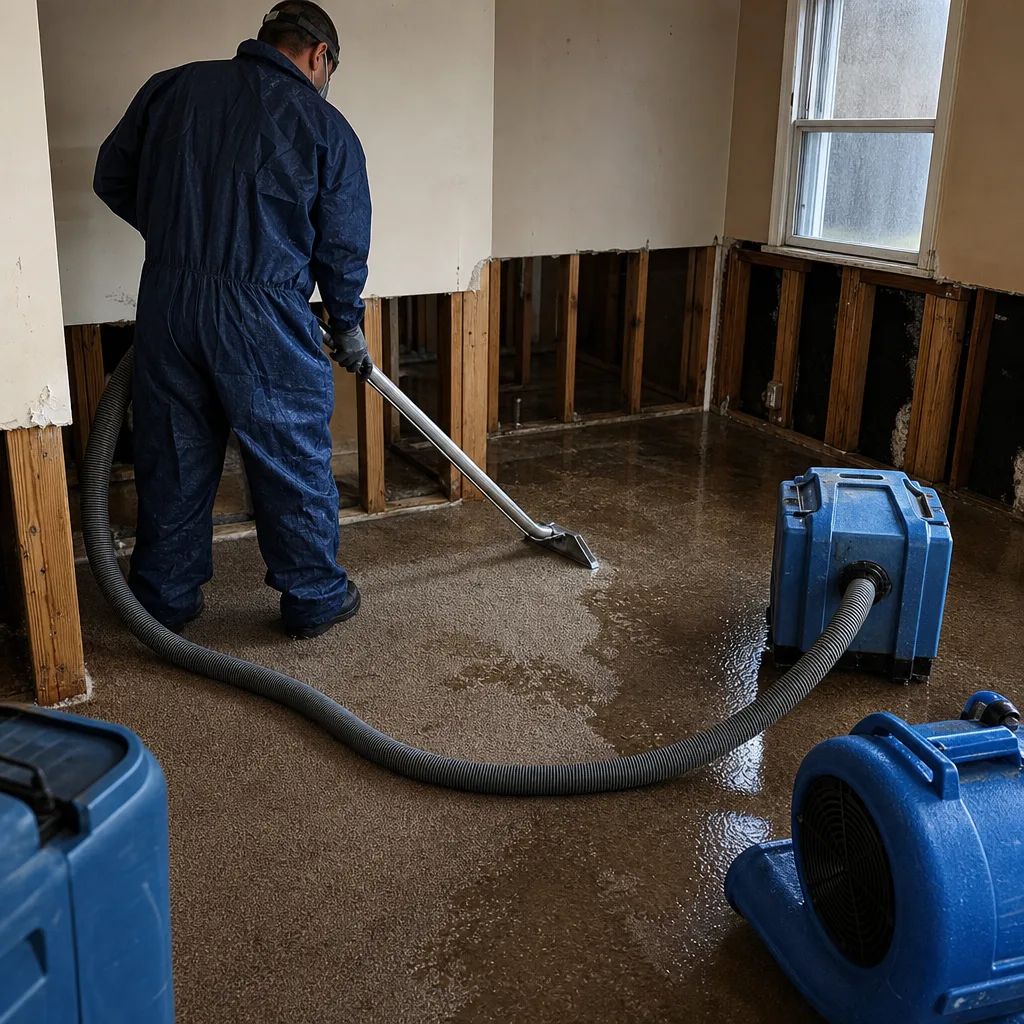
This is the step that separates a done-right restoration from a recurring mold problem. In Suwanee’s climate, with sustained high humidity year-round, we use Dri-Eaz LGR dehumidifiers and Phoenix axial air movers to drive moisture out of wall cavities, subfloors, and structural framing. Daily moisture readings are logged and shared with you and your insurance carrier until the dry standard is met. On large brick-front homes with EIFS exteriors, we pay particular attention to what’s behind the drywall, because that’s where Suwanee’s hidden damage lives.
Flood Cleanup
Spring thunderstorms in Gwinnett County pour runoff down the rolling Piedmont slopes directly toward Suwanee’s aging foundations. Finished basements carved into those slopes take the brunt of it. We extract, sanitize, dry, and then rebuild what the water compromised. Because many of these basements sit against original 1990s waterproofing membranes, we check the source, not just the symptom. A basement that floods every March usually has more than rain to blame.
Burst Pipe Restoration
Suwanee’s 20-30 year-old homes are at the point where original plumbing fixtures and supply lines fail. When a pipe bursts in an exterior wall or above a finished ceiling, the water often travels far before it shows up as a stain. We trace the path, cut out saturated drywall and insulation, dry the cavity to the standard, and handle the rebuild. By keeping extraction and reconstruction under one roof, the job stays whole and the homeowner never plays messenger between trades.
We also handle the two services that matter most in Suwanee specifically:
Basement Water Removal
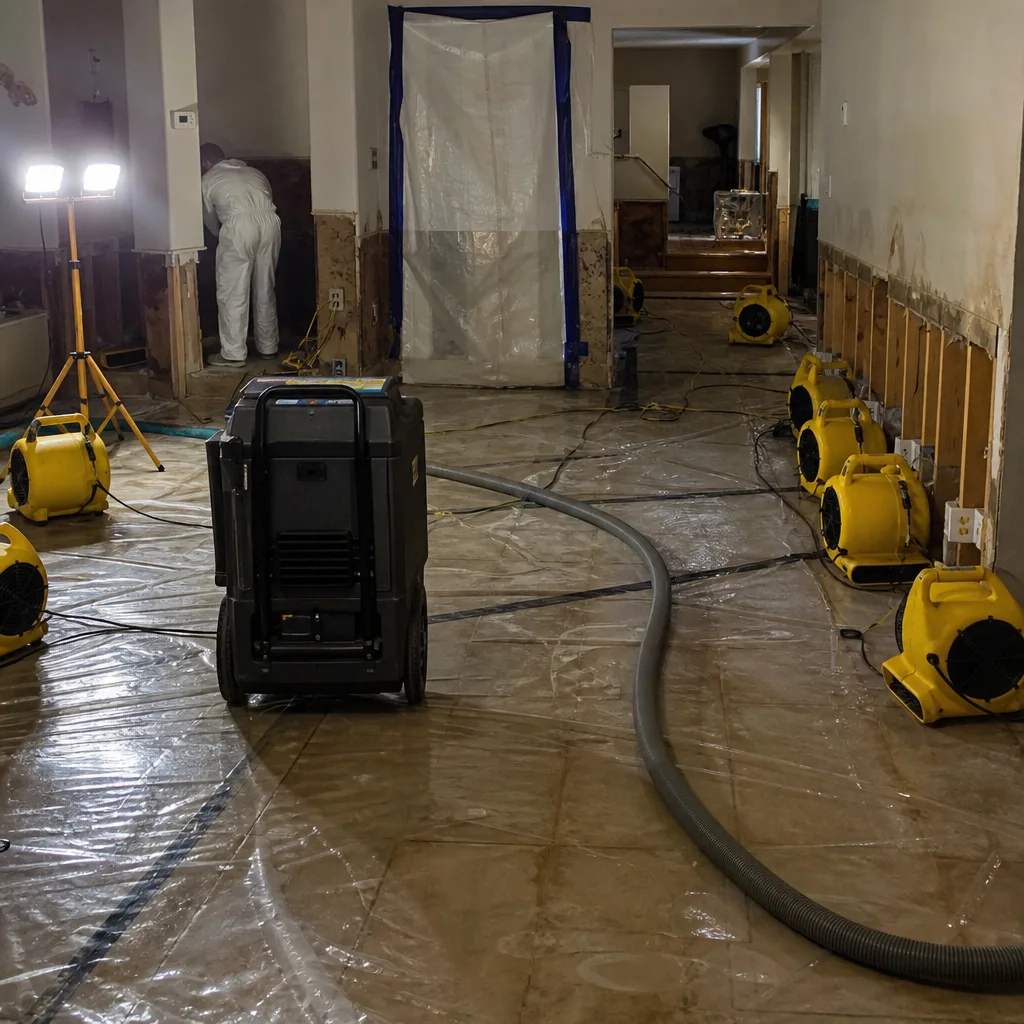
Basement water damage in Suwanee almost never comes from a single source. A failed exterior waterproofing membrane lets groundwater wick through the foundation, while a hairline crack in an EIFS exterior saturates OSB sheathing in the wall above. Our crews inspect for both, because pulling water from the floor without checking the walls is how a “minor” basement leak becomes a $20,000 restoration two years later. We use Injectidry panel drying systems on finished basement walls to dry inside the cavity without ripping out every sheet of drywall.
Ceiling & Roof Leak Water Damage
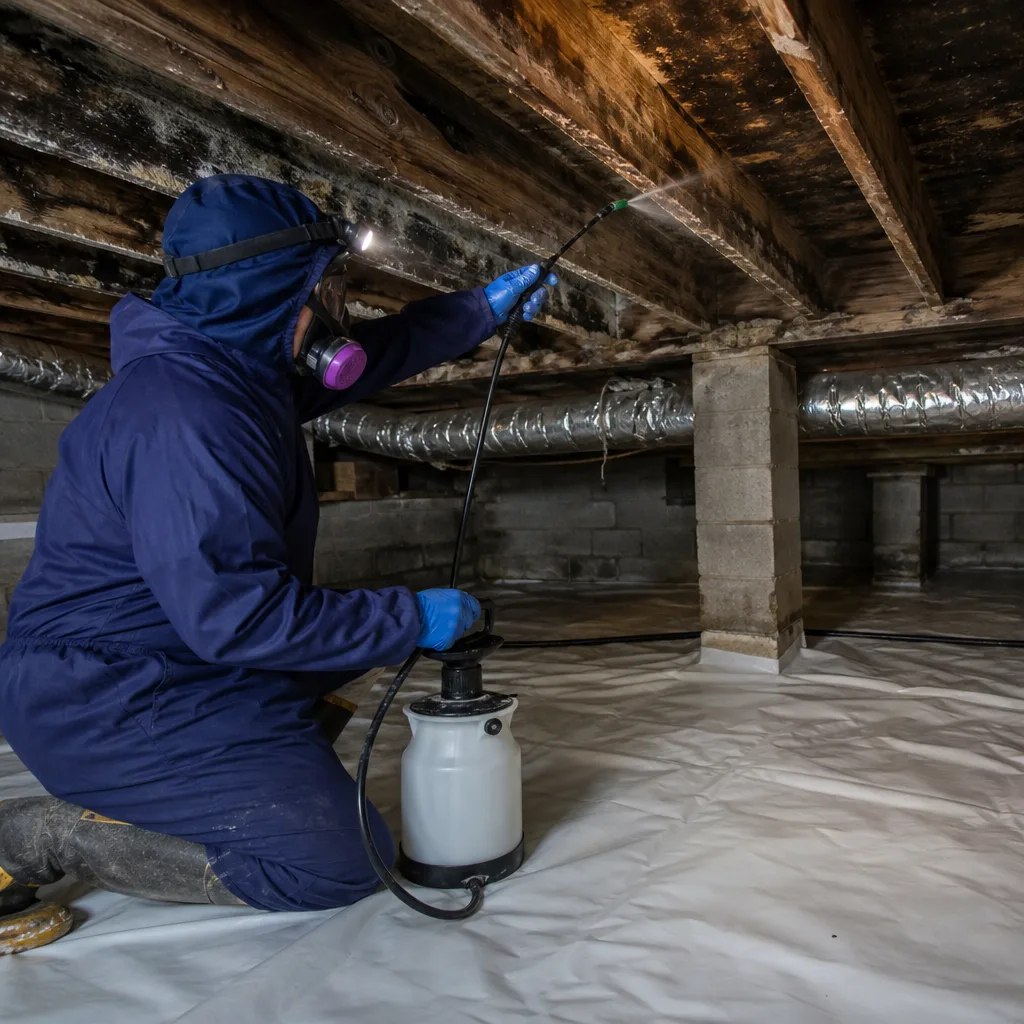
Suwanee’s complex multi-valley rooflines are beautiful, but they age hard. Original roof valleys on 1990s custom homes fail, and water finds its way into ceiling joists, insulation, and the drywall below. When you see a water stain on a ceiling in a Suwanee home, it has usually been leaking for weeks or months. We cut out the wet drywall, dry the joist bays, check for secondary damage in adjacent cavities, and then rebuild the ceiling to match. The leak source gets identified and documented so your restoration isn’t just cosmetic.
What happens when you call
- 1
A real person answersNo phone trees - you reach a local pro.
- 2
You get an upfront price rangeHonest numbers before anyone is dispatched.
- 3
A background-checked tech heads outLicensed & insured, dispatched right away.
- 4
You approve before work beginsNothing starts until you say go.
Trusted Equipment We Run in Suwanee
We don’t show up to a Suwanee job with rental-grade blowers and hope for the best. Our trucks carry Dri-Eaz dehumidifiers, Phoenix air movers, and XPOWER centrifugal air movers sized for the large room volumes that come with 3,000-4,000 square foot suburban homes. For hidden cavity drying behind EIFS and finished basement walls, we use Injectidry panels and injection drying systems certified to IFA standards. The equipment matters because Suwanee’s construction does: OSB sheathing holds moisture differently than the plywood you’d find in a 1960s ranch, and drying it correctly takes the right tool, not just a bigger fan. We stock parts and accessories for these systems on our trucks, so there’s no waiting on a supply run when your home is mid-dry.
Common Water Damage Restoration Problems We See in Suwanee Homes
Suwanee has a signature damage pattern, and it drives the way we scope every job in the 30024 ZIP code.
- Concealed EIFS moisture intrusion: Many upscale Suwanee subdivisions built in the 1990s and 2000s used EIFS (synthetic stucco) exteriors. After 25-plus years, micro-cracks at window and door transitions let moisture behind the cladding, where it saturates OSB sheathing for months with zero visible interior symptom. By the time drywall shows a stain, the structural wood behind it is often already delaminated.
- Finished basement flooding on Piedmont slopes: Homes in the Suwanee Creek watershed sit on rolling terrain that channels runoff directly toward foundation walls. Original waterproofing membranes fail quietly, and finished basements conceal the moisture until carpet is saturated or baseboards begin to swell.
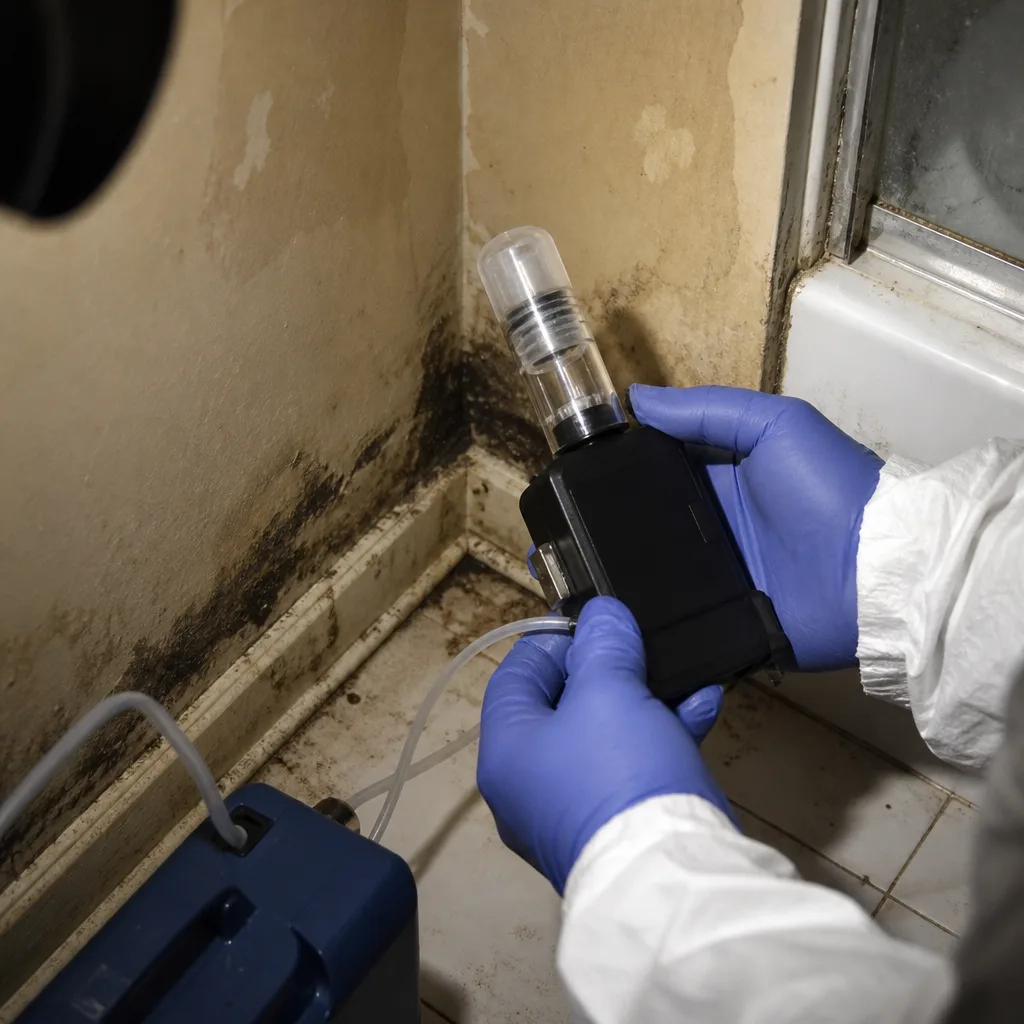
- Hidden mold in wall cavities within 72 hours: Suwanee’s year-round high humidity means mold colonization in wet building cavities begins within 48-72 hours of water intrusion, often behind the vapor barrier where no one can see it. Fast extraction and drying matter here more than in drier climates.
- Multi-valley roof failures: The complex rooflines on Suwanee’s custom homes create valleys that collect debris and fail earlier than single-pitch roofs. Water from a failing valley travels down wall cavities and re-saturates the same areas a previous restoration already dried, which is why we always inspect original roof valleys on any Suwanee water damage call.
In one home near the Suwanee Creek watershed, we responded to a basement water removal call and found moisture wicking through the foundation wall from a failed exterior waterproofing membrane. While extracting with a Dri-Eaz LGR 7000XLi and placing Injectidry panels, our crew traced a secondary source to a hairline EIFS crack at a second-story window corner. Once the sheathing was exposed, advanced OSB delamination and hidden mold colonies had already spread across three stud bays. That scope surprised the homeowner, who thought they had a simple basement leak. We’ve seen that exact scenario enough times in Suwanee that we now check for it on every call.
Pricing for Water Damage Restoration in Suwanee, GA
Suwanee restoration costs track with the size and construction of the homes here. A standard water damage restoration for a single-room supply line break in Suwanee runs $2,800-$4,800, which includes extraction, drying, and basic drywall repair. Finished basement water removal with structural drying typically lands between $4,500-$7,500, depending on how much drywall, insulation, and flooring has to come out. Hidden EIFS-related scopes, where we’re cutting into exterior walls and rebuilding sheathing, run higher: $6,500-$12,000 or more once containment, mold remediation, and structural repair are factored in. Ceiling and roof leak restoration from a failed valley usually runs $3,200-$6,000 including ceiling rebuild and paint matching.
We give a written scope before any work starts. You’ll know what’s being done, what it costs, and what your insurance is likely to cover. We bill your carrier directly for covered losses, and our photo documentation and daily moisture logs mean the adjuster has everything they need without you playing messenger. Call (888) 832-2758 for a free estimate. The assessment is no-cost, and you’ll have a real number in your hand, not a vague “we’ll see what we find when we open it up.”
We also honor three standing offers for Suwanee customers: $50 Off Any Repair Over $250, the $89 Seasonal Tune-Up, and Senior & Veteran 5% Discount, always. Just mention it when you call.
We Also Serve Cities Near Suwanee
Floodline Restoration Co. of Atlanta provides Water Damage Restoration in Suwanee and the surrounding Gwinnett County communities. Our crews regularly work in Buford, Sugar Hill, Duluth, and Lawrenceville, with the same live 24/7 dispatch and the same 90-Day Done Right Promise on every job.
Serving Suwanee, GA - Our Local Coverage Area
We’re based in the Suwanee area and know this community well. Use the map below to see our service coverage - if you’re nearby, we can almost certainly help.
FAQs - Water Damage Restoration in Suwanee
Yes, and in Suwanee specifically it often is. Homes built in the 1990s and 2000s with EIFS exteriors develop micro-cracks at window and corner transitions that allow moisture behind the cladding. That water then travels down the wall cavity, saturates OSB sheathing, and can wick into the basement area where it presents as a persistent flooding issue even when the basement walls look dry inside. We inspect exterior cladding transitions when we respond to recurring basement water calls, because fixing the basement alone won’t stop water that’s entering from above. Call (888) 832-2758 and our crew will check both while we’re on site.
Mold colonization usually begins within 48-72 hours of a water intrusion in Suwanee’s year-round humidity. That’s faster than in drier regions, and it happens behind vapor barriers and inside wall cavities where you won’t see it. The practical answer is that you should have extraction and drying equipment running within the first 24 hours after a water event, not the first week. Our emergency crews reach most Suwanee homes within 60-90 minutes, which is the difference between drying a basement and rebuilding it. Call (888) 832-2758 the moment you see standing water.
Because in Suwanee’s custom homes, what looks like a minor leak is usually a symptom of a multi-system failure that has been active for months. A small water stain on a ceiling often traces back to a failing roof valley that has been saturating wall cavities, or to an EIFS crack feeding moisture into OSB sheathing behind finished walls. By the time the stain appears, mold has colonized and structural wood has begun to delaminate. The restoration cost escalates because the actual damage is far larger than the visible stain suggested. We document the full scope with photos and moisture readings for your adjuster, and we bill your carrier directly, so the claim reflects what’s actually behind the wall. Call (888) 832-2758 for a second look before you accept a smaller scope that only treats the surface.
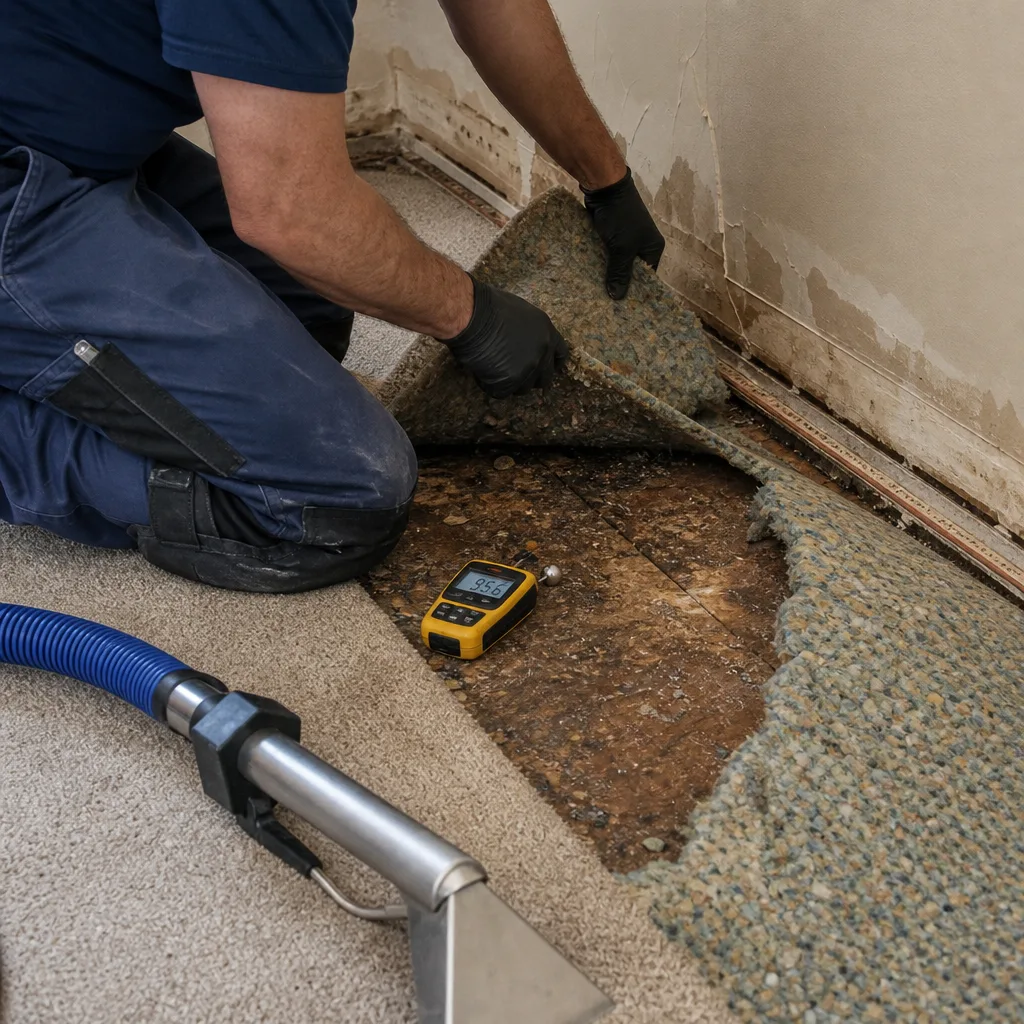
In Suwanee’s humidity, finished basement carpet that has been saturated with clean water can sometimes be dried in place with professional LGR dehumidifiers and air movers, but the pad underneath usually cannot be saved. We assess the carpet, the pad, and the subfloor moisture reading before recommending removal. If the water came from a sewage backup or contaminated floodwater, the carpet and pad must be removed and disposed of, and the concrete slab beneath must be sanitized and dried. We’ll give you a straight answer with a moisture meter in hand, not a guess. Call (888) 832-2758 and our crew will assess it on site.
Shut off the water at the main if it’s plumbing-related, then call a restoration company that inspects for source, not just stain. In an older Suwanee custom home, ceiling staining often traces to a failed roof valley or a second-floor supply line that has been leaking inside the joist bay for weeks. The first thing we do on a ceiling stain call is trace the moisture path with thermal imaging and moisture meters, because the water rarely travels straight down. Call (888) 832-2758 and we’ll have someone out the same visit. Getting the source identified and the cavity opened within the first day saves you from replacing an entire ceiling instead of a section.
Written by Curt Bowman, Owner at Floodline Restoration Co., serving Suwanee and Gwinnett County since 2010. Done right, and backed in writing.