

Fast, Reliable Mold Remediation Across Suwanee
Mold remediation in Suwanee typically costs between $1,800 and $6,500 depending on how far the growth has spread behind walls, and most jobs can be started within 24 hours of your call. Our crews know exactly what they’re walking into in Suwanee’s 1990s-era subdivisions: finished basements, synthetic stucco exteriors, and moisture hiding where you can’t see it. If you smell something musty or found discoloration on drywall, call (888) 832-2758. A live dispatcher answers, day or night.
Why Floodline Restoration Co. of Atlanta Is Suwanee’s Preferred Mold Remediation Company
Suwanee homeowners call us because we understand what their houses are doing. The city’s housing stock runs heavily toward large brick-front and EIFS-clad homes built between 1990 and 2008, most with finished basements and complex multi-valley rooflines. That specific combination produces a specific kind of mold problem: moisture trapped behind synthetic stucco or waterproofing membranes, colonizing OSB sheathing for months before anyone sees a stain. Our technicians have opened enough walls in the 30024 ZIP to know what they’ll find before the first cut.
Background-checked, uniformed technicians show up on time, trained to IICRC, RIA, and IFA standards. We log moisture readings daily until the structure meets dry standard, and we hand that log to you and your insurance carrier. No invented findings. No bloated scopes. Just a written scope agreed on before work starts, backed by the 90-Day Done Right Promise, our Keystone Standard in writing. Curt Bowman founded this company in 2010 around a dispatch board, not a sales desk. The phone still works that way.
Our full-cycle Mold Remediation team starts at the floodline and stays through final air quality verification. Most Suwanee jobs are completed in a single visit using professional-grade Dri-Eaz, Phoenix, XPOWER, B-Air, and Injectidry equipment. We bill your carrier directly so you’re not playing messenger.
Key Takeaways
- Mold in Suwanee homes is often hidden behind EIFS or finished basement walls, not visible on the surface.
- Response to Suwanee is quick: dispatch is coordinated from our Atlanta metro office, with crews serving Suwanee locally.
- Most jobs finish in one visit with professional-grade drying and treatment equipment.
- You get a written scope before work starts and a 90-Day Done Right Promise when it’s done.
- We bill insurance directly. You’re not the go-between.
Our Mold Remediation Services in Suwanee
Mold Inspection & Testing
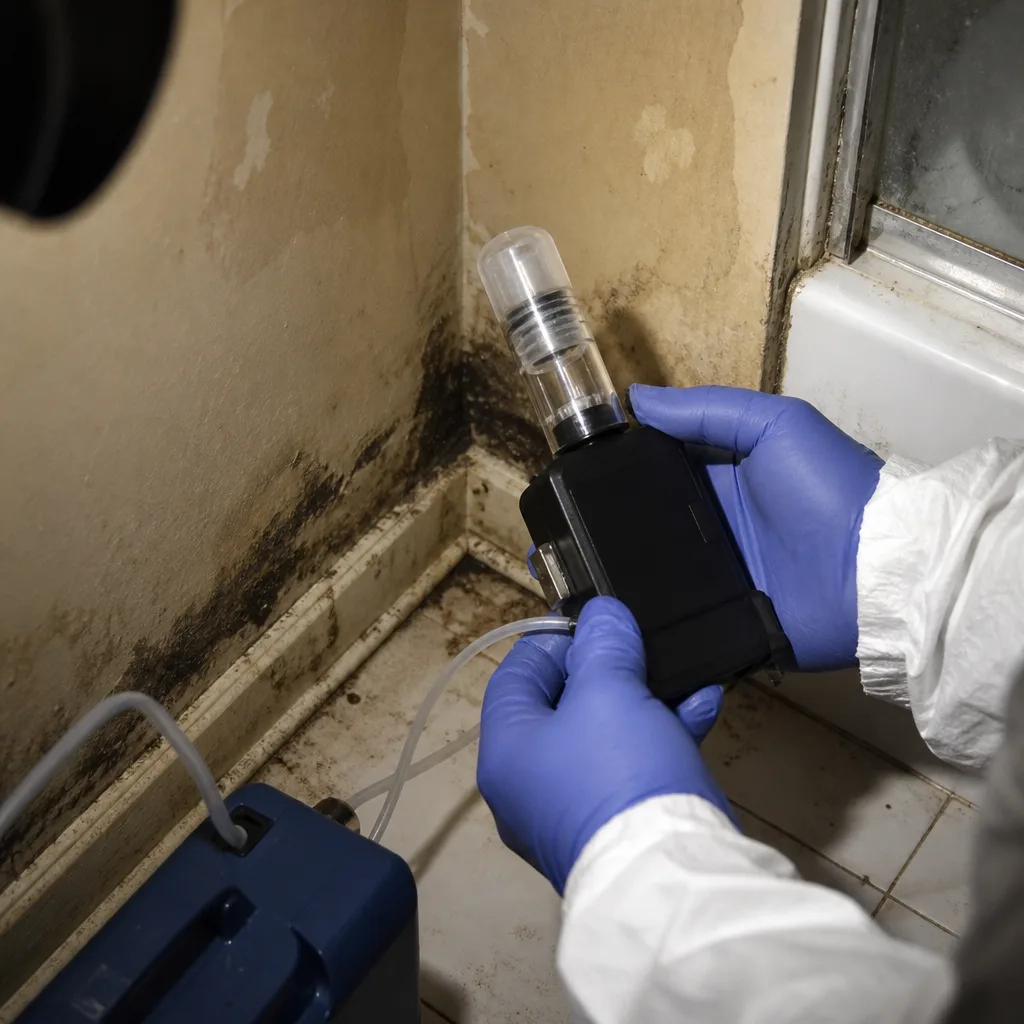
In Suwanee, the inspection is where the real story gets told. We start with moisture mapping across walls, ceilings, and basement slabs, then use air and surface sampling when needed. For EIFS-clad homes, we pay particular attention to window and corner transitions where micro-cracks let moisture travel behind the cladding for months without leaving a trace on interior drywall. The report you get includes readings, lab results, and a plain-language explanation of what we found.
Mold Removal
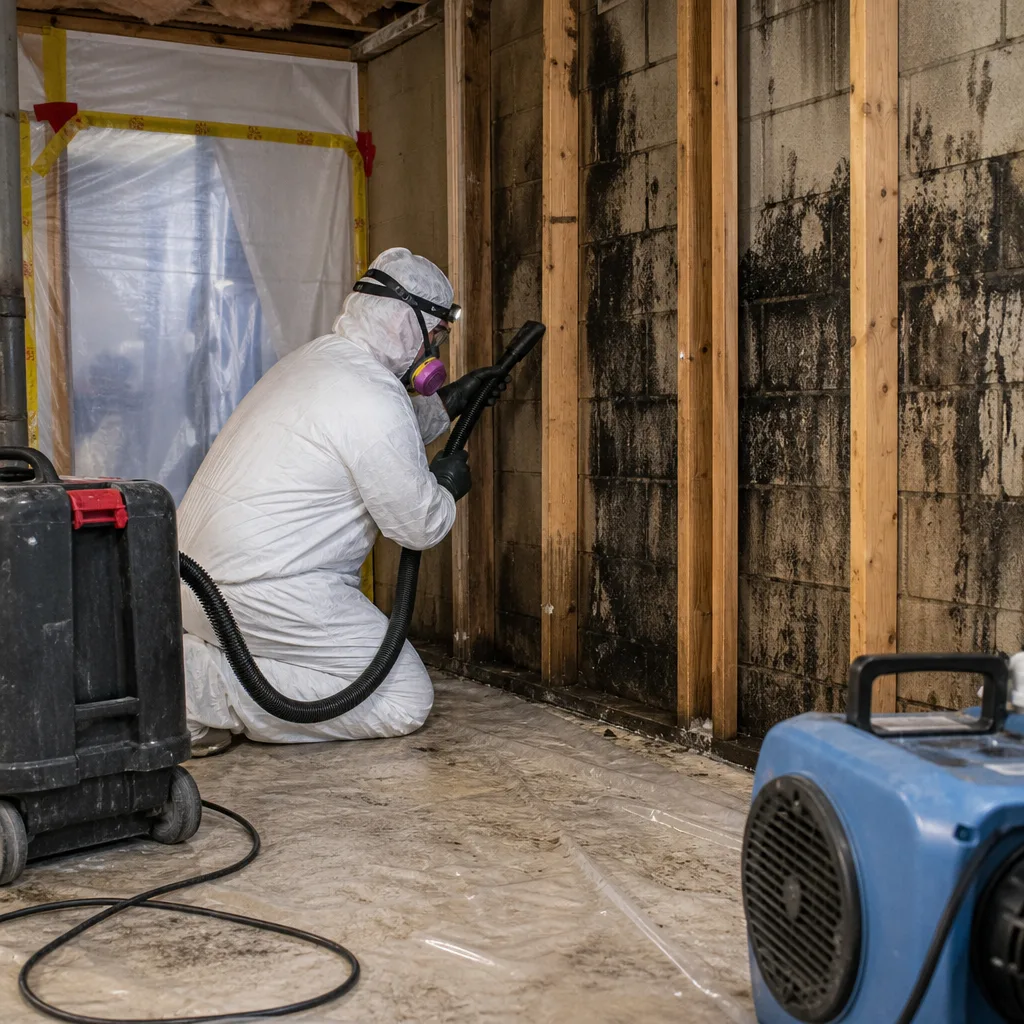
Removing mold from a Suwanee home usually means opening wall cavities, not just wiping surfaces. Contaminated drywall comes out under containment so spores don’t spread through the HVAC system. Framing gets HEPA-vacuumed, sanded where needed, and treated with antimicrobial agents. The goal is structural: stop the rot, stop the odor, restore the cavity to a condition your insulation and drywall can go back over.
Black Mold Remediation
Black mold, or Stachybotrys, thrives in the exact conditions Suwanee’s older housing stock creates: cellulose-rich materials like OSB and drywall held damp for extended periods. It’s common in the 30024 ZIP, especially in finished basements where waterproofing membranes have aged out. Our crews treat black mold with full containment, negative air pressure, and careful disposal per IICRC standards. It’s not a surface-bleach job. It’s a removal job.
Air Quality Restoration
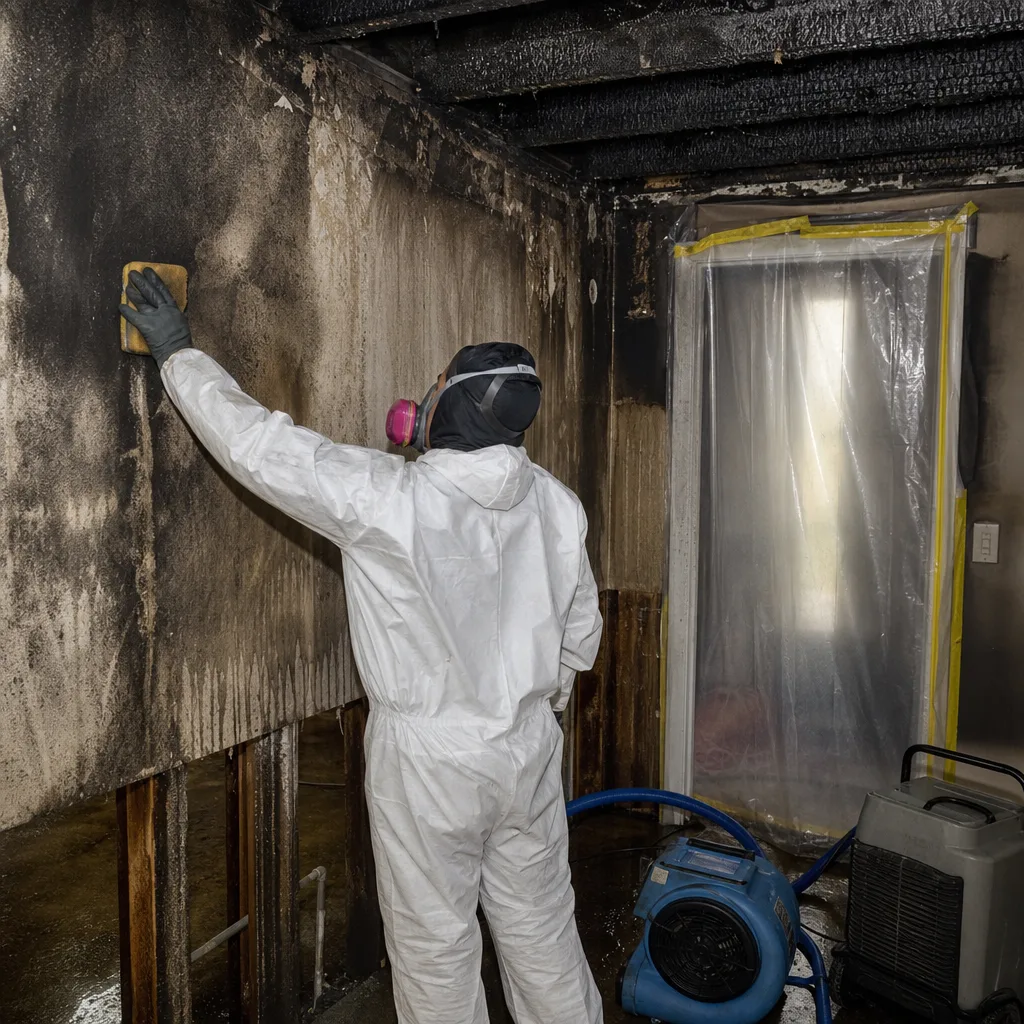
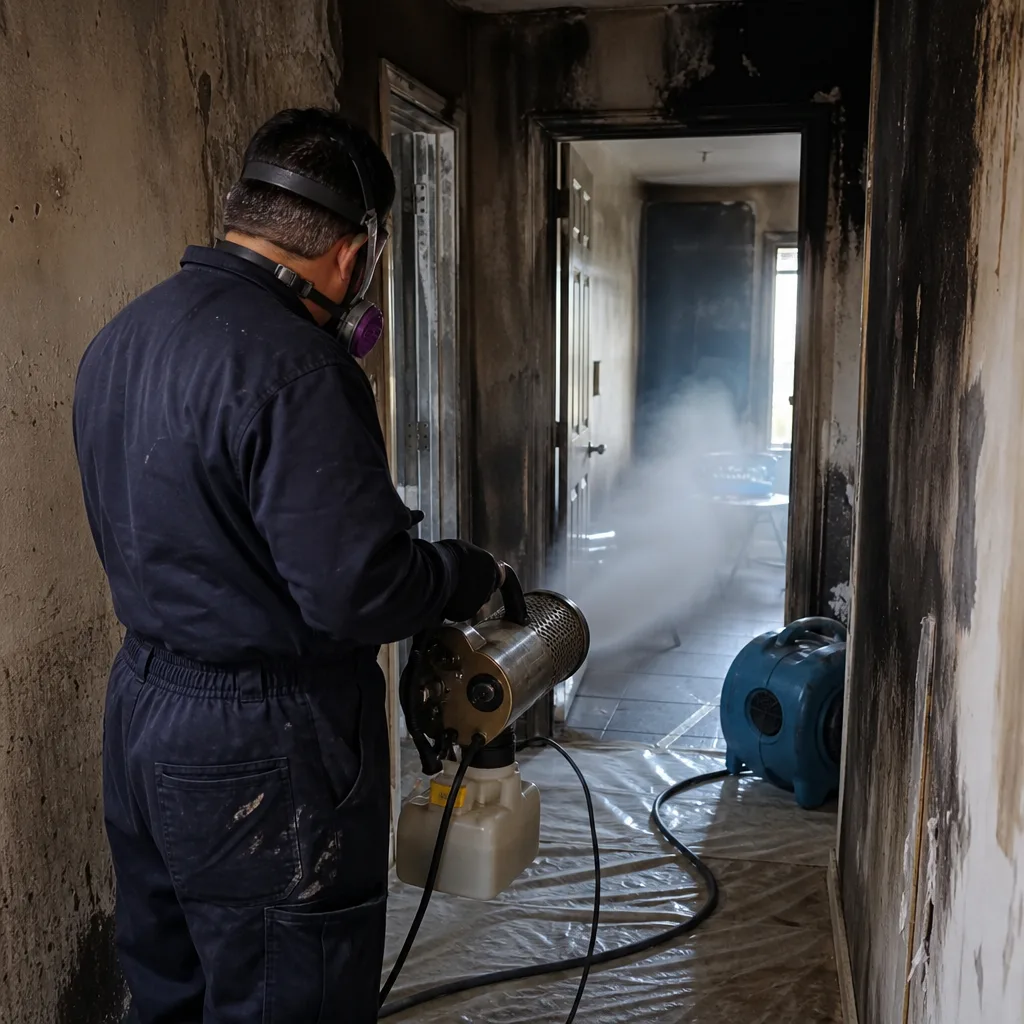
After the source of moisture is corrected and contaminated material is removed, the air in your Suwanee home needs attention. We run HEPA air scrubbers during remediation and perform post-remediation verification to confirm spore counts have returned to normal background levels for the area. For homeowners with respiratory concerns, that verification is often more meaningful than the visual results.
What happens when you call
- 1
A real person answersNo phone trees - you reach a local pro.
- 2
You get an upfront price rangeHonest numbers before anyone is dispatched.
- 3
A background-checked tech heads outLicensed & insured, dispatched right away.
- 4
You approve before work beginsNothing starts until you say go.
Trusted Brands We Service in Suwanee
Suwanee’s homes place heavy loads on drying and air-scrubbing equipment, and the brands we run are chosen for that reason. We use Phoenix air movers and B-Air and XPOWER drying packages, plus Injectidry systems for hard-to-dry wall and floor cavities. We keep parts on the trucks for these units so a failed component doesn’t stall a job. When we show up to a house in Suwanee, the equipment rolls out the same visit and runs until the moisture log says the job is done.
Suwanee’s 1990s Homes Hide Mold Longer Than Anywhere Else in Gwinnett
Here’s the single most important fact about mold in Suwanee: your house was probably built to keep water out in a way that now keeps water in. The city’s residential boom years, roughly 1990 through 2008, coincided with the rise of EIFS, synthetic stucco. Builders loved it. Homeowners loved the look. But EIFS depends on perfect sealant at every window, corner, and utility penetration. Twenty-five to thirty years later, those seals are micro-cracked. Rain gets behind the cladding, saturates the OSB sheathing, and sits there.
This is why mold in Suwanee is so often a discovery, not a complaint. A homeowner calls about a musty smell in a finished basement or a faint brown line on a ceiling. We cut into the wall and find the sheathing delaminated and black with growth, with moisture readings over 30%. The EIFS outside looked fine. It almost always does. That’s the deception. In flatter, older housing stock like Lawrenceville, water behaves more predictably and finds its way to visible surfaces faster. In Suwanee’s EIFS-clad subdivisions with finished basements carved into the rolling Piedmont terrain of the Suwanee Creek watershed, water hides.
Common Mold Remediation Problems We See in Suwanee Homes
- EIFS micro-cracks at window transitions. After 25-plus years, the sealant around windows and corners fails. Moisture saturates OSB sheathing for months, and mold blooms behind the cladding while the drywall inside stays unchanged. We find these cavities with moisture meters and open them under containment.
- Aging basement waterproofing membranes. Finished basements in Suwanee were built on the assumption that below-grade waterproofing would outlast the mortgage. It often doesn’t. Water pools behind finished walls, and mold colonization begins within 48 to 72 hours of intrusion.
- Original roof valleys on multi-valley rooflines. Those dramatic peaks and valleys from the late 1990s look great and shed water poorly where they meet. A small valley leak channels runoff into concealed cavities, delaminates OSB, and creates a layered restoration scope that surface cleanup never touches.
- HVAC systems in humid crawlspaces and basements. Suwanee’s humidity is relentless. When HVAC ducting runs through unconditioned spaces, condensation feeds mold on insulation and framing. We treat the source, not just the visible symptom.
Pricing for Mold Remediation in Suwanee, GA
Mold remediation in Suwanee runs in clear ranges. A contained mold inspection with moisture mapping and air sampling typically costs $350 to $650. Small, contained removals, like a single bathroom wall cavity or a section of basement drywall, run $1,800 to $3,200. Whole-basement remediation with full containment, structural drying, and air quality restoration runs $4,500 to $8,500 or more when EIFS sheathing replacement and rebuild are part of the scope. The largest cost driver is hidden extent: what we find when we open the wall. That’s why we do a written scope before work starts, not after. Estimates are free. Call (888) 832-2758 and we’ll schedule the inspection. Current standing offers: $50 off any repair over $250, $89 seasonal tune-up, and a 5% discount for seniors and veterans, always.
We Also Serve Cities Near Suwanee
Our crews regularly handle mold remediation work across the Suwanee Creek watershed and surrounding Gwinnett County. Beyond Mold Remediation in Suwanee, we serve Buford, Sugar Hill, Duluth, and Lawrenceville with the same written scope, the same equipment, and the same 90-Day Done Right Promise. Call (888) 832-2758 and a live dispatcher routes the nearest crew to you.
Serving Suwanee, GA - Our Local Coverage Area
We’re based in the Suwanee area and know this community well. Use the map below to see our service coverage - if you’re nearby, we can almost certainly help.
FAQs - Mold Remediation in Suwanee
Because the moisture enters behind the cladding, not through it. EIFS acts like a raincoat with worn seams. Water seeps through micro-cracks at windows and corners, saturates the OSB sheathing, and never shows on interior drywall until the framing is already damaged. We use moisture meters to find these cavities before cutting.
It involves opening the wall cavities behind the finished surfaces, removing contaminated drywall and insulation under containment, drying the framing with Dri-Eaz dehumidifiers and Phoenix air movers, and treating the structure to stop regrowth. Then we rebuild what we removed. The scope is written before we start, and we hand you the moisture log when the structure hits dry standard.
Yes, it is. The combination of EIFS exteriors, finished basements, original waterproofing that’s now 20-plus years old, and year-round high humidity creates exactly the conditions Stachybotrys needs: damp cellulose material like OSB and drywall. We find it regularly in the 30024 ZIP, usually behind walls that look fine from the outside.
In Suwanee’s humidity, mold colonization in wet building cavities starts within 48 to 72 hours of the water intrusion event. That’s why rapid extraction and drying matter so much here. If we get a call within the first day or two, secondary mold damage is often preventable. If it’s been a week or more, assume the cavities need to be opened and inspected.
Often, yes. Musty odor is usually coming from a specific cavity, not the whole house. We locate the moisture source, open that cavity under containment, remove the contaminated material, dry the framing, and treat the space. The rest of the basement stays intact. We rebuild only what we had to open. A full gut is rarely needed when the problem is caught before it spreads through multiple walls.
Call (888) 832-2758 for a free estimate. A live person answers, 24/7. We’ll be there when we say.
Written by Curt Bowman, Owner at Floodline Restoration Co. of Atlanta.