
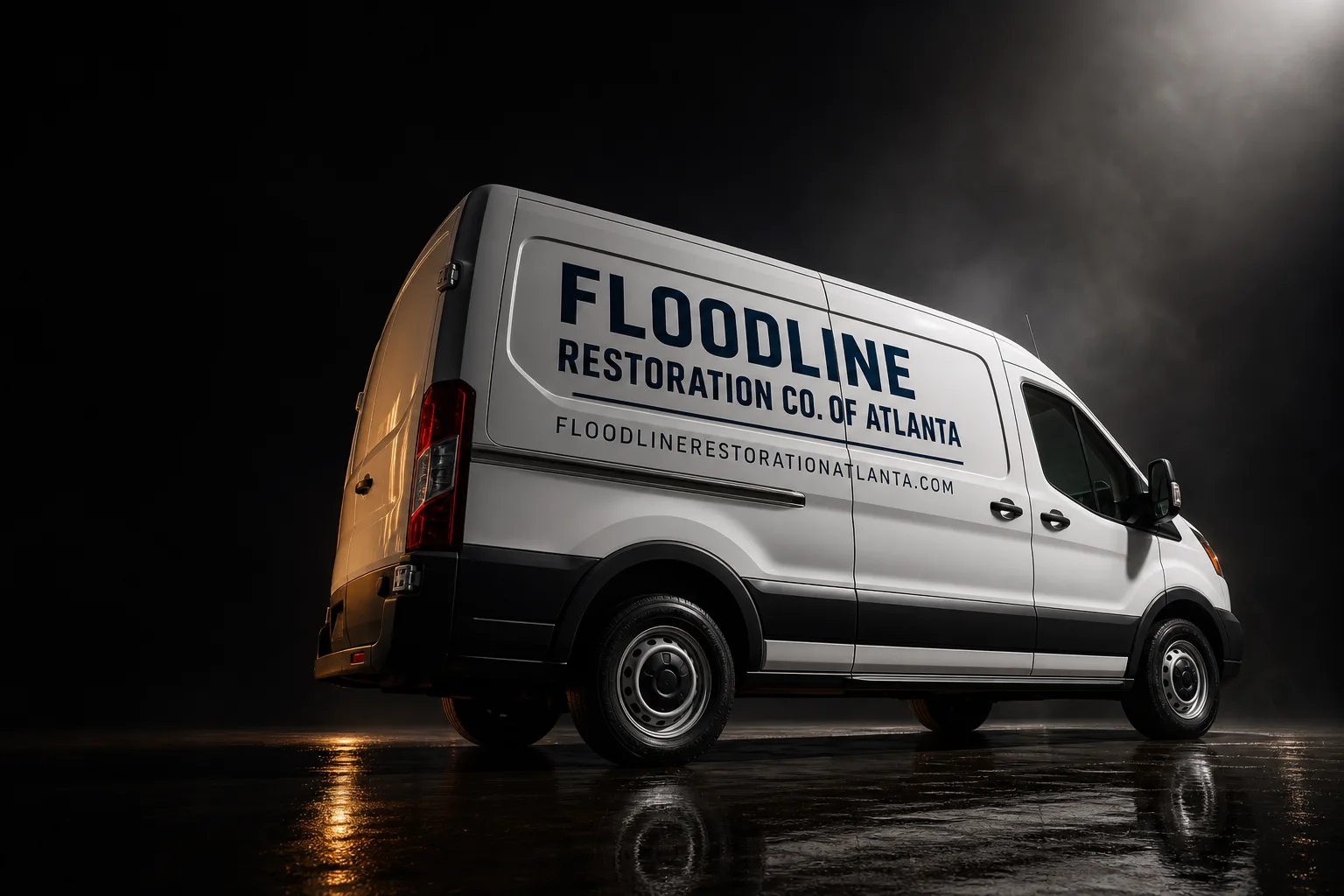
Fast, Reliable Storm & Disaster Restoration Across Auburn
Storm damage in Auburn rarely announces itself politely. A March thunderstorm drops four inches of rain in an hour and suddenly the crawl space under your Dacula Road home is holding six inches of water. A January ice storm splits a supply line in your uninsulated slab-edge wall and you’re ankle-deep in the laundry room by sunrise. When that happens, you need a crew that knows Auburn’s houses, not a call center reading from a script. Floodline Restoration Co. of Atlanta has been answering that call for over 42 years, and our certified storm and disaster restoration crews reach Auburn usually within an hour of dispatch. Call (888) 832-2758 any hour. A live person picks up.
Why Floodline Restoration Co. of Atlanta Is Auburn’s Preferred Storm & Disaster Restoration Company
Auburn homeowners don’t have time to explain ZIP code 30011 to a dispatcher who thinks they’re calling from Alabama. Our crews work the US-29 and Highway 316 corridors weekly, and they know what a 2003 vinyl-sided tract home off Dee Kennedy Road looks like underneath. We’ve extracted, dried, and rebuilt after enough Auburn storms to know which subdivisions drain toward foundations and which ones shed water properly. That familiarity changes how fast we work and what we catch before it becomes a bigger claim.
We’re a full-cycle restoration company. That means the crew that pulls flooded insulation out of your crawl space on day one is the same crew that handles daily moisture readings, logs them for your adjuster, and hangs the new drywall at the end. No mid-job handoff, no “that’s another department.” And the whole job is backed by our 90-Day Done Right Promise, the Keystone Standard, in writing. If it’s not done right, we make it right. No arguing, no paperwork battle.
Curt Bowman founded this company around a dispatch board, not a sales desk. Background-checked, uniformed technicians show up when we say, trained to IICRC, RIA, and IFA standards and running professional-grade drying equipment. You get a square deal, a written scope before work starts, and a name you can hold accountable.
Our Storm & Disaster Restoration Services in Auburn
Storm Damage Cleanup
Wind and hail hit Auburn hard in spring and summer. We handle fallen limbs through windows, water-soaked carpet, collapsed ceilings, and the debris field a storm leaves behind. We don’t just mop up; we moisture-map the affected rooms so hidden saturation in Auburn’s OSB-sheathed walls doesn’t turn into a mold problem six weeks later.
Flood Damage Restoration
Most flood calls in Auburn are crawl space failures. Those late-1990s and 2000s tract homes sit on Georgia red clay that sheds water instead of absorbing it, and when a thunderstorm drops two inches in an hour, the water sheets toward the foundation. We extract, dry to the dry standard with Dri-Eaz dehumidifiers and air movers, and correct the grade so the next storm doesn’t do the same thing.
Emergency Board-Up
A tree through the living room window on a Sunday night can’t wait for a Monday quote. We board up storm-damaged openings in Auburn homes quickly, using plywood cut to fit and secured against weather and intruders. This stabilizes the house so no additional rain gets inside while your insurance claim is being processed.
Roof Tarping
Shingles torn off by high winds leave OSB decking exposed. We tarp damaged roof sections fast, sealing the area so rain can’t pour into your attic and multiply the loss. A proper emergency tarp on a Dacula Road or Flowery Branch-adjacent home can mean the difference between a small shingle repair and a full attic remediation.
Debris Removal
Storm debris in Auburn isn’t just yard waste. It’s soaked drywall, waterlogged insulation, broken fence panels, and sometimes construction remnants from the boom-era homes in your neighborhood. We haul it, dispose of it properly, and document it for your carrier. You’re left with a clean work site, not a pile you’re stuck dealing with.
Wind Damage Repair
Straight-line winds from summer squalls stress vinyl siding, fascia, and roof edges on Auburn’s tract housing. We assess what’s superficial and what’s structural, then repair it. If wind-driven rain got behind the siding, we don’t just nail it back on; we dry the wall cavity first.
What happens when you call
- 1
A real person answersNo phone trees - you reach a local pro.
- 2
You get an upfront price rangeHonest numbers before anyone is dispatched.
- 3
A background-checked tech heads outLicensed & insured, dispatched right away.
- 4
You approve before work beginsNothing starts until you say go.
Trusted Brands We Service in Auburn
We service and repair storm-damaged structures on all makes and builds of Auburn homes, and we know the builder-grade materials used during the 2000s surge: thin gauge vinyl siding, OSB sheathing, and roofing installed fast. Our restoration work uses professional-grade Dri-Eaz and Phoenix drying equipment, XPOWER air movers, and B-Air filtration. We carry the materials and expertise to match what’s already in your house, so repaired sections don’t look like patches.
Common Storm & Disaster Restoration Problems We See in Auburn Homes
- Crawl space flooding from grade and clay. Auburn’s red clay doesn’t absorb heavy rain; it channels it toward your foundation. Negative lot grading from the boom years means water pools against the foundation and finds its way into the crawl space through any gap or crack.
- OSB sheathing staying wet too long. OSB, the oriented strand board under your siding and roof, is thirsty. When a roof leak or wall intrusion happens in Auburn’s humid climate, the board soaks up moisture and resists drying without professional-grade equipment.
- Burst supply lines in January freezes. Hard freezes in January and February split the poorly insulated pipe runs common in 2000s-era slab-edge and crawl space homes here. A thaw reveals the leak, often after water has been running inside walls for hours unnoticed.
- Vapor barriers that were never enough. The original 6-mil plastic in many Auburn crawl spaces is torn, pulled back, or never fully covered the dirt floor. Storm water intrusion activates the mold colony that was already growing on floor joists above that exposed dirt.
Pricing for Storm & Disaster Restoration in Auburn, GA
We Also Serve Cities Near Auburn
Our Auburn crews also handle Storm & Disaster Restoration for homeowners in nearby Dacula, Buford, Loganville, and Suwanee. We keep our equipment in the corridor and our dispatch board knows every road between. If you’re in one of those towns, the same certified team and 90-Day Done Right Promise apply. For the full scope, see Storm & Disaster Restoration in Auburn and the surrounding area.
Serving Auburn, GA - Our Local Coverage Area
We’re based in the Auburn area and know this community well. Use the map below to see our service coverage - if you’re nearby, we can almost certainly help.
FAQs - Storm & Disaster Restoration in Auburn
Why does a storm-water claim in Auburn so often turn into a full crawl space mold remediation?
Because the storm water usually isn’t the whole story. Auburn’s tract homes were built fast during the late-1990s and 2000s boom, many with vapor barriers that have since torn or never fully covered the dirt floor. The documented storm loss is often the smaller part of the actual remediation scope. If the original barrier is compromised and the lot grading has settled wrong, moisture and mold were there before the storm hit. Call (888) 832-2758 and we’ll inspect the crawl space, not just the puddle.
How long should storm-damaged OSB sheathing in an Auburn home be dried to prevent mold?
OSB sheathing in an Auburn wall cavity needs to reach below 16% moisture content, and in our humid summers that typically takes three to five days of professional-grade drying. Residential dehumidifiers and box fans won’t get it there. We use Dri-Eaz and Phoenix equipment, with daily moisture readings written into the log we hand to your adjuster.
What’s the connection between my home’s original lot grading and repeated storm flooding in my crawl space?
Auburn’s red clay sheds water instead of absorbing it, so water moves where gravity sends it. If your home’s original lot grading has settled and now slopes toward the foundation, heavy thunderstorm water sheets right against it and finds every gap. That’s why we correct grade after cleanup; without it, the next storm re-floods the crawl space.
Can emergency roof tarping after a thunderstorm prevent a bigger restoration job in my Auburn house?
Yes. A storm-damaged roof lets water into your attic and down into wall cavities that are already humid. Tarping the damaged section quickly stops additional intrusion. On an Auburn home with OSB decking and builder-grade roof materials, a proper emergency tarp can mean the difference between replacing a few shingles and tearing out wet insulation and drywall.
Why do January ice storms cause so many burst pipes in Auburn’s vinyl-sided tract homes?
Auburn’s 2000s-era slab-edge and crawl space homes often have supply lines running through poorly insulated exterior wall cavities. When a hard freeze hits for a couple of nights, those pipes freeze and split. The thaw reveals the leak, and by then water has often been running inside the wall. If you see water pooling near a slab edge or hear spraying inside a wall, call (888) 832-2758. Speed limits the damage.
Written by Curt Bowman, Owner at Floodline Restoration Co. of Atlanta.