
Fast, Reliable Storm & Disaster Restoration Across Druid Hills
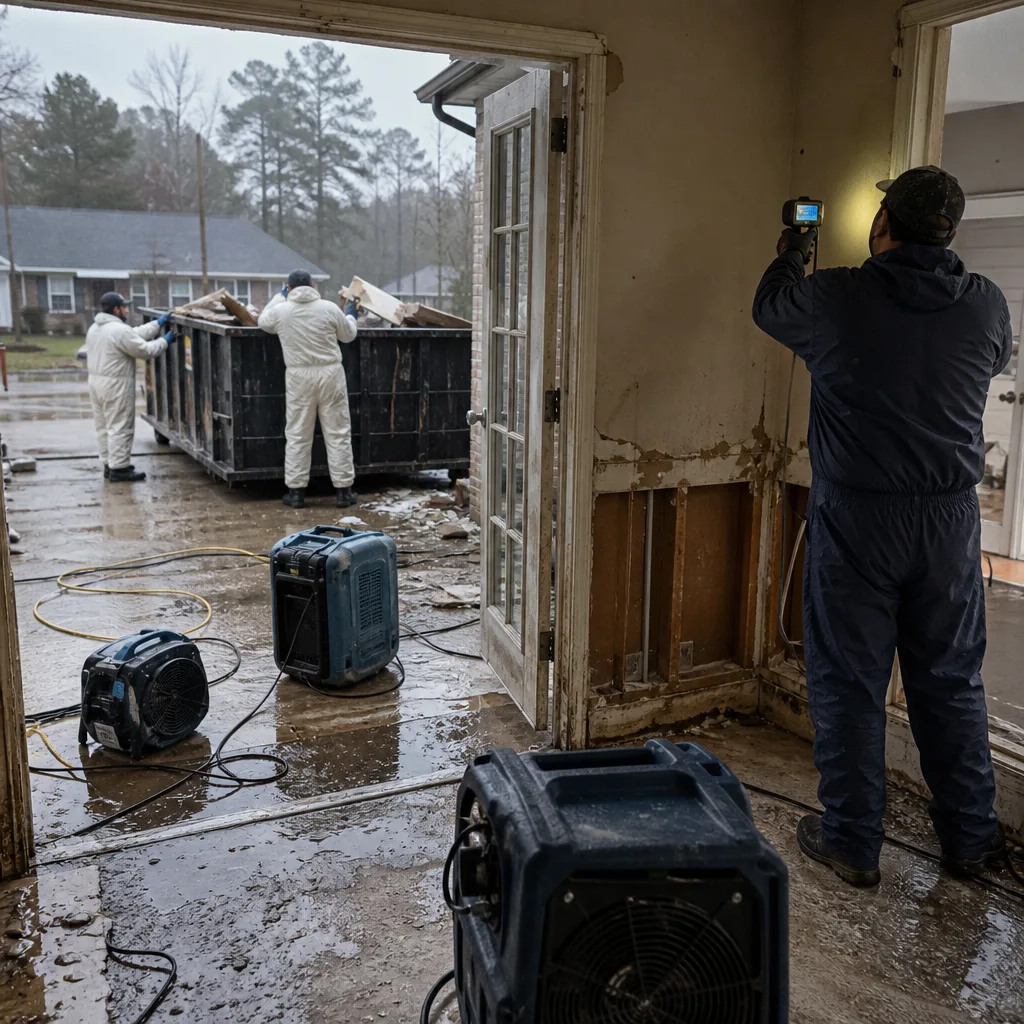
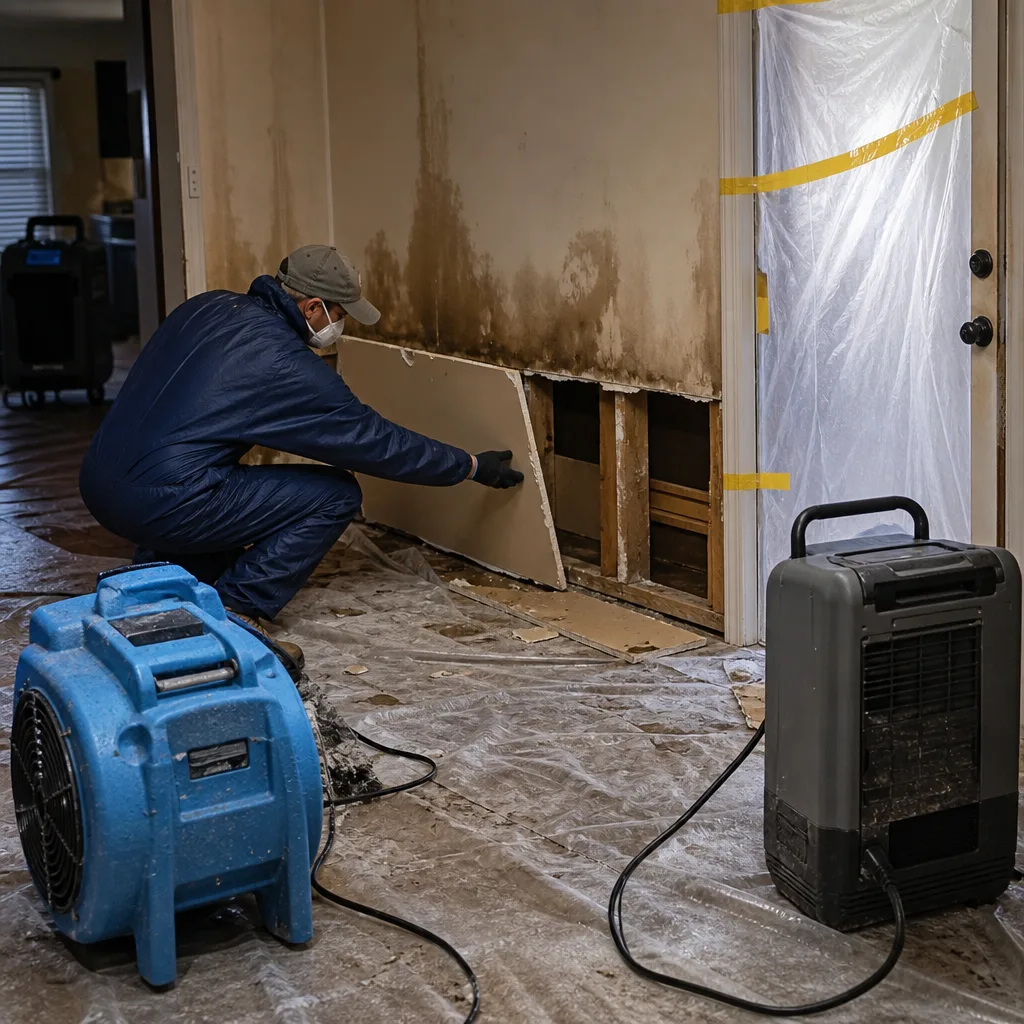
Storm damage in Druid Hills rarely stays contained. A fallen limb through a 1920s Tudor roof becomes a water intrusion problem within the hour. A flooded basement off Peavine Creek saturates original heart-pine framing and plaster before the rain stops. Our crews reach Druid Hills addresses quickly, stabilize the structure the same visit, and start extraction with professional-grade equipment while DeKalb County’s historic preservation requirements are still being sorted. Call (888) 832-2758 and a live dispatcher answers, day or night.
We know this neighborhood’s houses. The stone foundations, the old-growth framing, the plaster that predates drywall by decades. That knowledge changes how we dry, what we tarp first, and how we document damage for both your insurer and the county.
Key Takeaways: Storm Restoration in Druid Hills
- Response time: Live dispatch answers 24/7; crews typically reach Druid Hills within 45-90 minutes for emergency board-up and tarping.
- Historic compliance: Emergency stabilization starts immediately. DeKalb County historic preservation review applies to material replacement, not to stopping the water.
- Real pricing: Emergency tarping in Druid Hills runs $450-$900; full storm cleanup and water extraction typically $2,800-$7,500 depending on scope. Full ranges below.
- One crew, start to finish: We extract, dry, document, and rebuild. No mid-job handoff to a second company.
- Insurance billing: We bill your carrier directly and coordinate with your adjuster. Photo documentation on every job.
Why Floodline Restoration Co. of Atlanta Is Druid Hills’s Preferred Storm & Disaster Restoration Company
The homes in Druid Hills were built before restoration was an industry. Framing was cut from dense, old-growth pine. Walls were plaster on lath. Foundations were stacked stone and multi-wythe brick. When a storm puts water inside one of these houses, the wrong drying approach does permanent damage. We have spent 42 years in local restoration work, and our technicians are certified to IICRC, RIA, and IFA standards. They understand what 100-year-old material tolerates and what it doesn’t.
Reviews from Druid Hills customers consistently mention two things: the phone was answered by a person, and the crew showed up when they said they would. That matters on Fairview Road at two in the morning when a tree is through the roof and rain is still coming in. Our Storm & Disaster Restoration team handles the board-up, the tarping, the extraction, and the rebuild without handing you off to an unfamiliar subcontractor.
We also know that storm damage in Druid Hills carries a paperwork burden neighbors in Decatur or Tucker don’t face. The Olmsted historic district means DeKalb County reviews how original materials get repaired or replaced. We have worked through that process enough times to anticipate the documentation requirements before the first tarp goes up, which keeps your claim moving and prevents material rejections later.
Curt Bowman founded Floodline Restoration Co. in 2010 around a dispatch board, not a sales desk. That’s why a live person picks up at any hour and why every job carries the 90-Day Done Right Promise in writing. If it’s not done right, we make it right. No arguing, no paperwork battles.
Our Storm & Disaster Restoration Services in Druid Hills
Storm Damage Cleanup
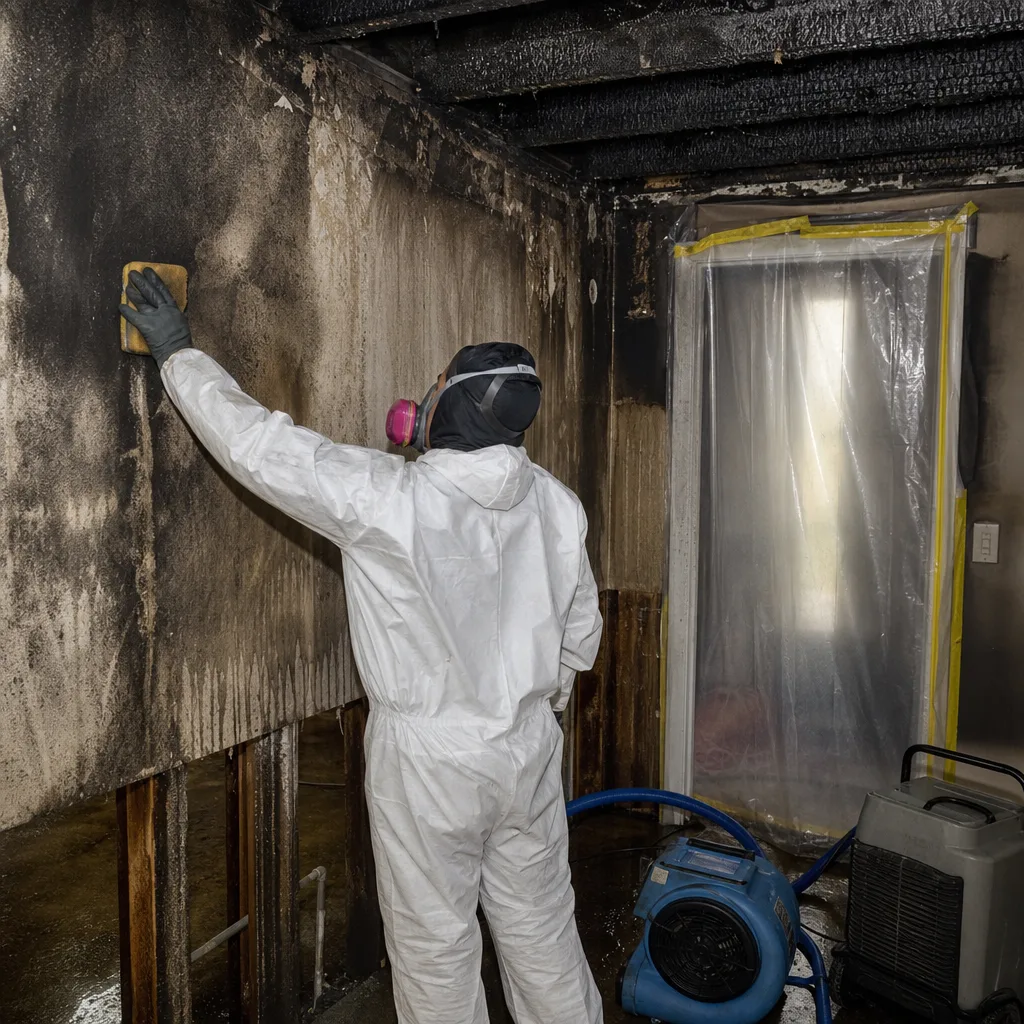
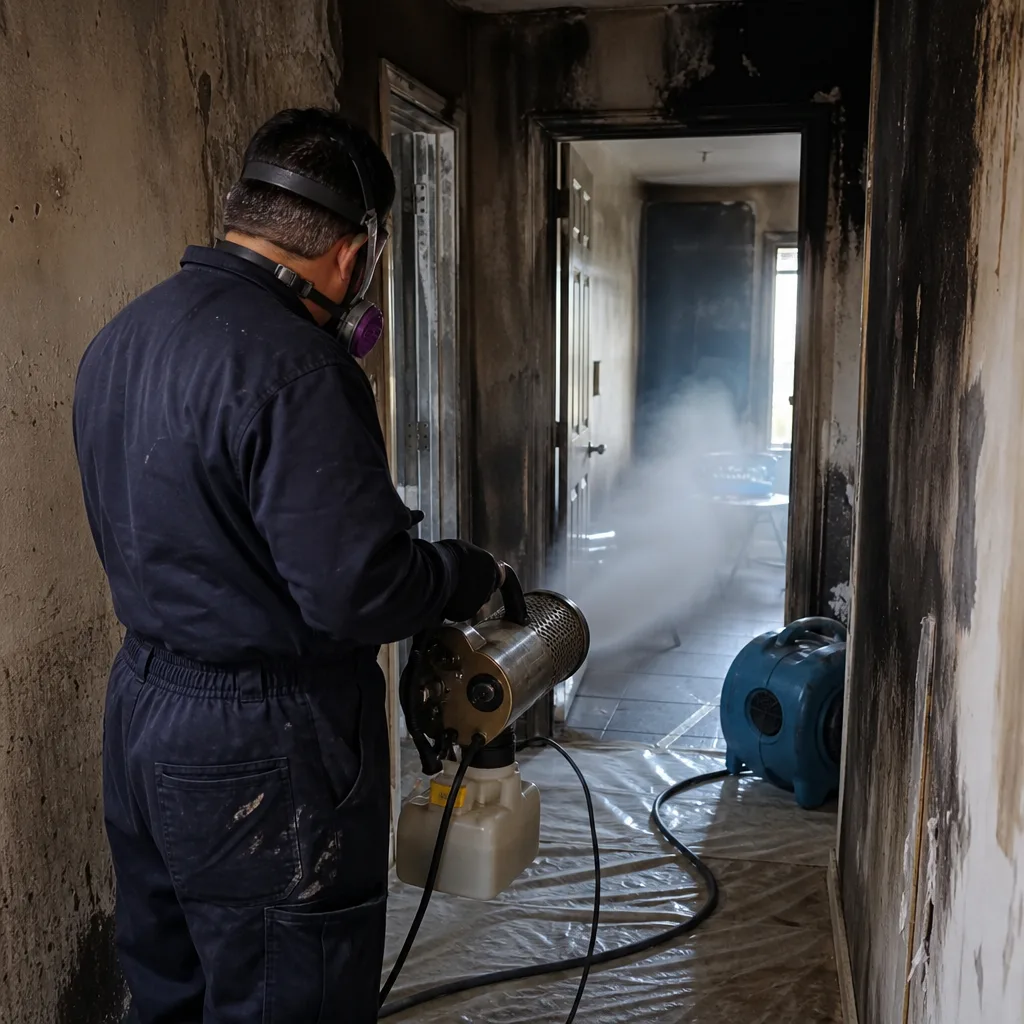
After a microburst or a summer squall pushes through Ponce de Leon Avenue, Druid Hills yards fill with oak limbs, broken glass, and roofing debris. Storm damage cleanup in this neighborhood is not a rake-and-haul job. It’s structural debris against historic foundations, water-saturated plaster pulled from century-old walls, and wind-driven rain that traveled farther than the visible damage suggests. Our crews remove the debris, document what was damaged and what was already failing, and start the dry-out before mold has a chance to take hold.
Typical storm cleanup in Druid Hills runs $1,200-$3,800 depending on debris volume and water intrusion extent. That includes material removal, moisture mapping, and setup of commercial drying equipment if water got inside.
Flood Damage Restoration
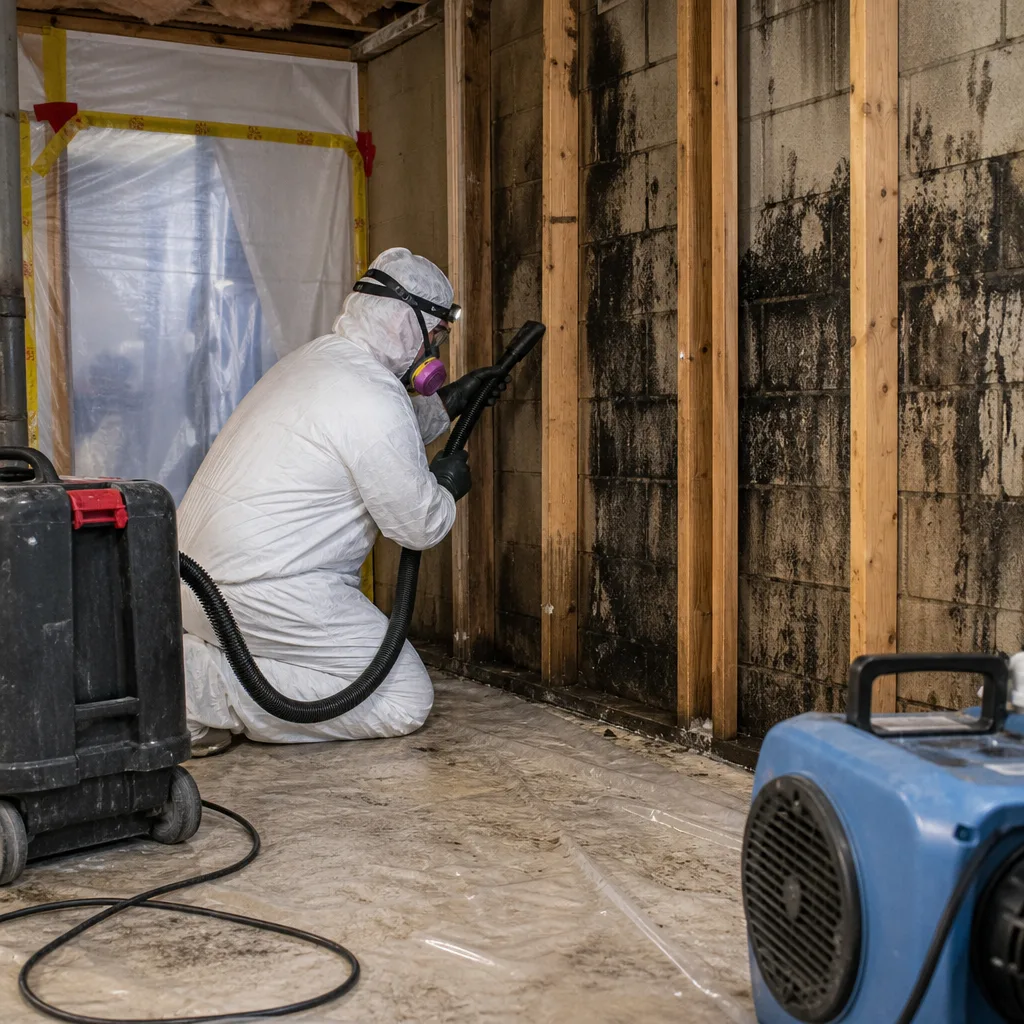
The flood damage we see in Druid Hills is rarely a burst pipe. It’s Peavine Creek backing up after a convection storm drops two inches in 40 minutes. It’s sheet flow running down a sloped Olmsted parkway lot and pressing against a rubble-stone foundation until water finds the mortar joints. We extract first, map the moisture daily, and run Dri-Eaz dehumidifiers and Injectidry floor mats in parallel as part of our Water Damage Restoration in Druid Hills, so the original wood floors have a chance of survival.
Full flood restoration in Druid Hills, for a finished basement or a ground-floor room in a 1920s home, typically runs $3,200-$9,000. That covers extraction, equipment placement for three to five days, daily readings, and Reconstruction & Cleanup in Druid Hills to bring damaged drywall or plaster to county standard.
Emergency Board-Up
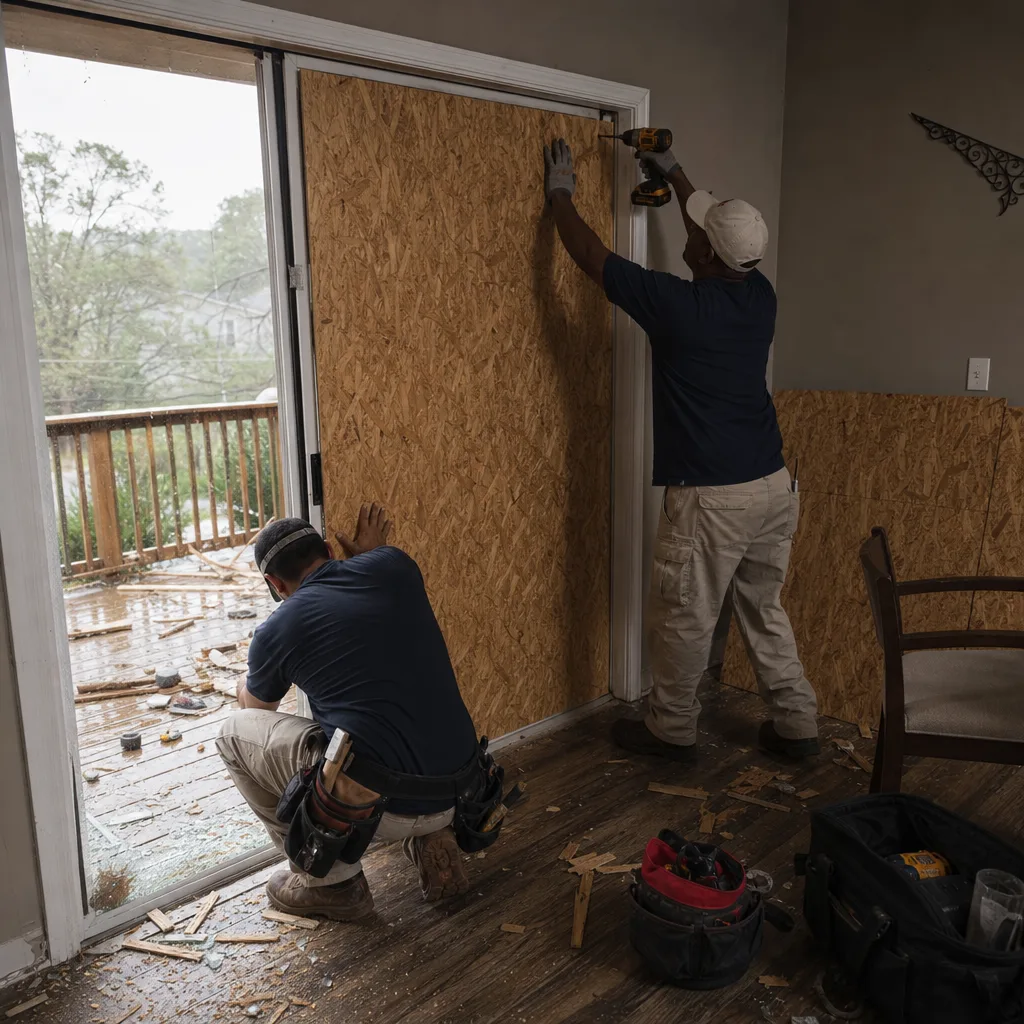
A fallen tree through a Druid Hills Tudor leaves a hole that keeps taking on water until someone covers it. We get a crew on site fast, stabilize what’s structurally sound, and board up openings with dimensional lumber and CDX plywood cut to fit actual window and door openings, not a generic sheet screwed over the hole. The goal is to stop further damage and keep the house secure while assessment happens.
Emergency board-up in Druid Hills typically runs $400-$850 for one to three openings. That’s material, labor, and same-visit documentation photos for your claim file.
Roof Tarping
Druid Hills roofs were built to shed rain, not take a direct hit from a mature oak. When a limb punctures roofing, tarping has to work with old slopes, original slate or cedar shake sections, and sometimes decorative gable trim. We use heavy poly tarps secured with battens and cap nails, not bungee cords. A proper tarp holds through the follow-up storms that always come after the first one.
Roof tarping in Druid Hills runs $450-$900 for a standard single-story section. Larger two-story or steep-slope exposures run higher. The tarp buys you time to file the claim and line up permanent repairs without rain soaking the interior.
Every one of these services is backed by the 90-Day Done Right Promise. We put it in writing. If something we did fails, we make it right.
What happens when you call
- 1
A real person answersNo phone trees - you reach a local pro.
- 2
You get an upfront price rangeHonest numbers before anyone is dispatched.
- 3
A background-checked tech heads outLicensed & insured, dispatched right away.
- 4
You approve before work beginsNothing starts until you say go.
Trusted Brands We Service in Druid Hills
The equipment we run on Druid Hills jobs matters because the materials we’re drying are sensitive. We dry original heart-pine floors and century-old framing with Dri-Eaz dehumidifiers, Phoenix axial fans, and Injectidry floor-drying mats set to controlled moisture targets, not maximum output. Over-drying 100-year-old pine is a real failure mode. It checks and splits behind repaired walls, weakening the structure quietly until the next storm. We stock replacement filters, hoses, and accessory parts in our Atlanta dispatch so Druid Hills jobs don’t wait on parts from a distributor. Senior and Veteran customers receive a 5% discount, always. We also offer $50 off any repair over $250 and an $89 seasonal tune-up for drying and inspection systems.
Common Storm & Disaster Restoration Problems We See in Druid Hills Homes
- Basement flooding from grade settlement, not plumbing. Druid Hills homes sit on sloped Piedmont lots. The Olmsted landscaping that makes the neighborhood beautiful also channels runoff. After decades of settlement, sheet flow runs toward the foundation instead of away from it. A flooded finished basement after a thunderstorm is usually not a burst pipe. It’s the ground outside telling you the grade has failed.
- Over-dried historic framing behind repaired walls. A contractor who doesn’t know Druid Hills runs drying equipment at industrial speed. Modern 2×4 framing can take it. Heart-pine joists from 1923 cannot. The wood dries too fast, checks along the grain, and loses structural capacity. Months later, the homeowner has a hidden problem and no idea why.
- Stop-work orders on unapproved plaster replacement. Take out original lath-and-plaster after storm damage without filing for DeKalb County historic preservation review, and you risk the inspector stopping the job. The county governs how original plaster, millwork, and masonry get repaired in the Olmsted district. We file the right documentation before demolition starts.
- Tarps that don’t survive the follow-up storm. A loose tarp or one attached with bungee cords lasts about a day in an Atlanta summer thunderstorm. We batten and cap-nail tarps to Druid Hills roof slopes, because the next storm often arrives within 48 hours.
The Historic District Reality: Why Druid Hills Storm Restoration Is Different
Druid Hills is a Frederick Law Olmsted-designed historic suburb. It has one of the densest concentrations of century-old hardwood canopy in the entire Atlanta metro. When a summer convective storm or an ice event drops a mature oak through a 1920s roof, the contractor is dealing with two problems at once: the structural and water damage, and DeKalb County’s historic preservation review overlay. That review governs how original plaster, old-growth millwork, heart-pine framing, and multi-wythe brick can be repaired or replaced. Neighboring Decatur and Tucker do not impose this layer. We do this work enough to have the documentation process down to a routine, which means your claim doesn’t stall while the county reviews materials specifications.
Last July, after a microburst snapped a century-old white oak across a 1923 Craftsman foursquare on Fairview Road, our crew stabilized the gable with a structural shoring plan and tarped the roof while IICRC-certified techs mapped the water migration through the original lath-and-plaster ceilings. Because the 100-year-old rubble-stone foundation had already channeled runoff from the Peavine Creek slope into the basement, we ran Dri-Eaz dehumidifiers and Injectidry floor mats in parallel with the county’s historic materials review for the oak-trimmed sunroom. The family stayed in place during the six-week structural repair, and the DeKalb preservation officer signed off on the original millwork restoration without a single material rejection.
Pricing for Storm & Disaster Restoration in Druid Hills, GA
Storm and disaster restoration in Druid Hills carries a price range shaped by three things: the age of the house, the extent of water intrusion, and the historic preservation documentation the county requires. Here are real numbers from jobs we’ve run in this neighborhood:
Typical line items in Druid Hills:
- Emergency board-up (1-3 openings): $400-$850
- Roof tarping (single-story, standard section): $450-$900
- Storm debris removal and site stabilization: $1,200-$3,800
- Water extraction and structural drying (finished basement or ground floor): $2,800-$7,500
- Full flood restoration including plaster or drywall rebuild: $3,200-$9,000
- Historic plaster and millwork restoration (per room, county-reviewed materials): $2,000-$8,500
Call (888) 832-2758 for a free estimate. We’ll give you a written scope before any work starts. No surprises on the bill, and we bill your insurance carrier directly.
We Also Serve Cities Near Druid Hills
Floodline Restoration Co. of Atlanta serves Storm & Disaster Restoration in Druid Hills and the surrounding communities: North Decatur, Atlanta, Gresham Park, and North Druid Hills. If your home sits near the DeKalb County line or along a connecting corridor, our crews reach you with the same 24/7 live dispatch and the same written 90-Day Done Right Promise.
Serving Druid Hills, GA - Our Local Coverage Area
We’re based in the Druid Hills area and know this community well. Use the map below to see our service coverage - if you’re nearby, we can almost certainly help.
FAQs - Storm & Disaster Restoration in Druid Hills
Emergency stabilization can start immediately. Board-up, tarping, water extraction, and shoring are not subject to the county’s historic preservation review. The review applies when original materials get replaced, so we start the emergency work right away and file the necessary documentation for permanent repairs while your house is already protected. Call (888) 832-2758 and our team will handle both tracks.
In most Druid Hills homes we inspect, the cause is grade settlement on sloped Piedmont lots. The Olmsted-designed landscaping around the linear parks and Peavine Creek intentionally directs water, and over decades the ground settles toward the foundation instead of away from it. Stormwater runs as sheet flow against a 100-year-old rubble-stone wall until it finds the mortar joints. The plumbing was never the issue. We correct the drainage grading and restore the interior, and the flooding stops.
Yes. Druid Hills homes were built with plaster on lath, and DeKalb County’s historic preservation review requires us to repair that material rather than tear it out and hang drywall. Our technicians stabilize cracked plaster, patch lath, and match original textures. Replacing plaster with drywall in an Olmsted-district home triggers a material rejection, so we do it right the first time and document the work for the county. Call (888) 832-2758 for an assessment.
We stabilize the opening first, tarp the roof, and map the water that got inside. Then we work with DeKalb County on the historic materials review while the extraction and drying run in parallel. The structural repair uses matching framing and the rebuild restores the original plaster and millwork instead of replacing it with modern materials. The process takes longer than a modern-home repair, but the outcome keeps the house’s historic fabric intact, which is what the county review enforces.
Yes. We have navigated DeKalb County’s historic preservation review on multiple storm restoration jobs in Druid Hills, including material replacements on 1910s and 1920s homes along the Olmsted parkways. We know what documentation the preservation officer needs, what materials pass review, and what triggers a stop-work order. That experience means fewer delays, no material rejections, and a faster path from emergency mitigation to finished rebuild. Call (888) 832-2758 to get a licensed crew and a written scope.
Get Storm Help in Druid Hills Now
When a storm puts water or a tree through your Druid Hills home, the next few hours determine how much damage sticks. Call (888) 832-2758. A live dispatcher picks up, a certified crew gets moving, and the 90-Day Done Right Promise goes in writing before we leave. Done right, and backed in writing.
Written by Curt Bowman, Owner at Floodline Restoration Co., serving Druid Hills and the surrounding DeKalb County communities.