
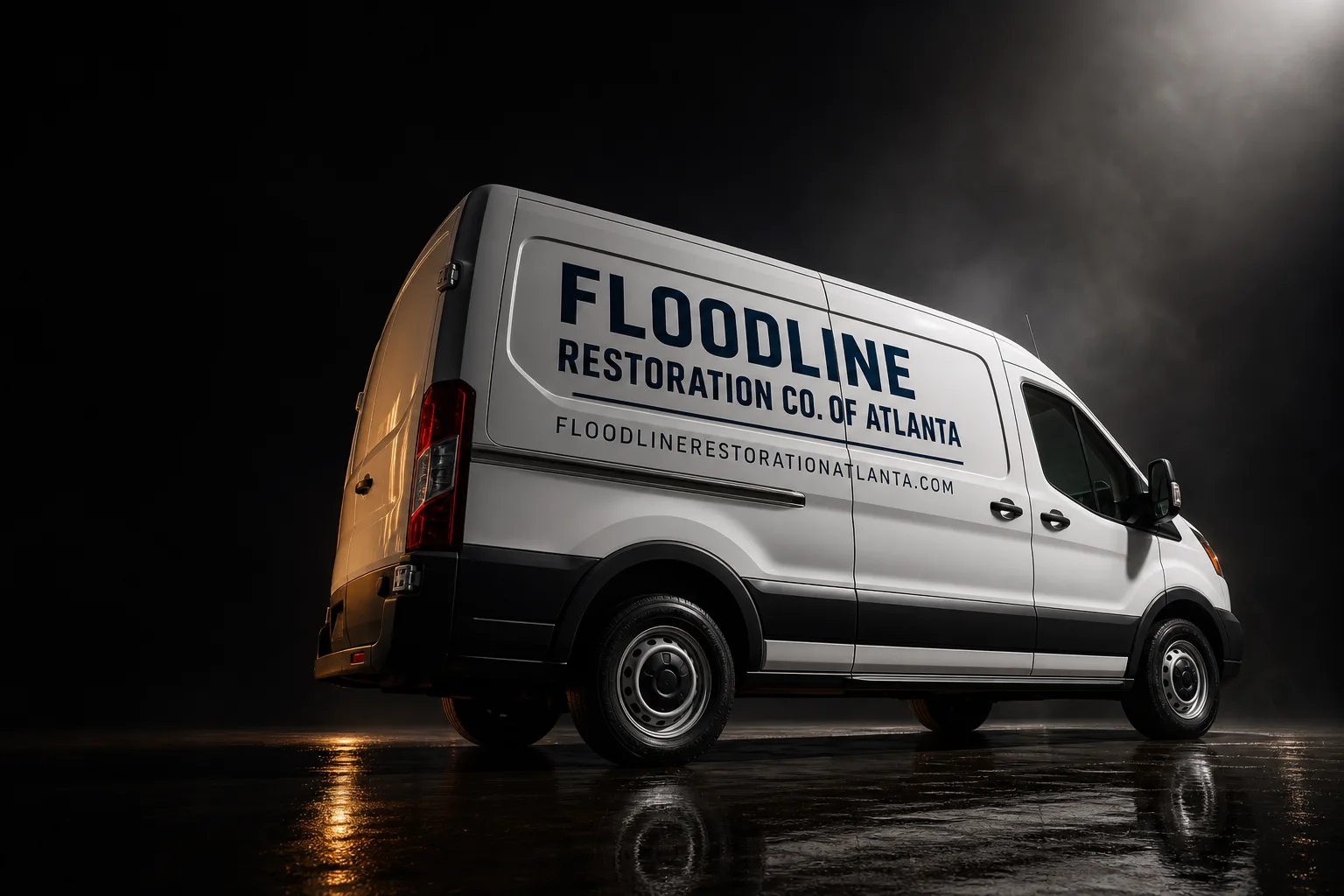
Fast, Reliable Storm & Disaster Restoration Across Atlanta
When a thunderstorm tears through Atlanta, the damage rarely stops at a few loose shingles. Falling limbs punch through roofs. Wind-driven rain finds every seam in old flashing. Crawl spaces fill with water that the red clay underneath refuses to let go of. Our Storm & Disaster Restoration crews work across Atlanta every week during storm season, and we know what these homes go through because we’re here, not two counties away. If water is coming in or a tree limb is resting where a ceiling used to be, call (888) 832-2758. A live dispatcher answers, and a certified crew heads your way that same visit.
Why Floodline Restoration Co. of Atlanta Is Atlanta’s Preferred Storm & Disaster Restoration Company
We’ve built our reputation in Atlanta on showing up when the weather turns and staying until the job is Done Right, in writing. The 90-Day Done Right Promise is our Keystone Standard: if something isn’t right after we finish, we come back and make it right. No arguing, no paperwork battles. That guarantee matters in a city where post-storm repair scopes balloon once the crawl space dries enough to inspect the sills.
Our crews are background-checked, uniformed, and trained to IICRC, RIA, and IFA standards. They’re the same techs who run the moisture map on day one, take the daily readings, and rebuild what needs rebuilding. Call us at two in the morning after a squall line rolls through Druid Hills: a person picks up. A dispatcher who knows the difference between a tarp job and a structural breach. That’s not a call center script. That’s how Floodline Restoration Co. of Atlanta has always worked.
Curt Bowman founded this company around a dispatch board, not a sales desk. The philosophy hasn’t changed. When storms hit Atlanta, the first call should be to someone who is going to put boots in your house, not sell you a package.
Our Storm & Disaster Restoration Services in Atlanta
Storm damage in Atlanta tends to arrive in layers. Wind knocks down the limb. The limb opens the roof. The rain gets in. Then the crawl space starts holding water because Georgia red clay drains slowly. We handle every layer, start to finish, under one scope and one written guarantee.
Storm Damage Cleanup
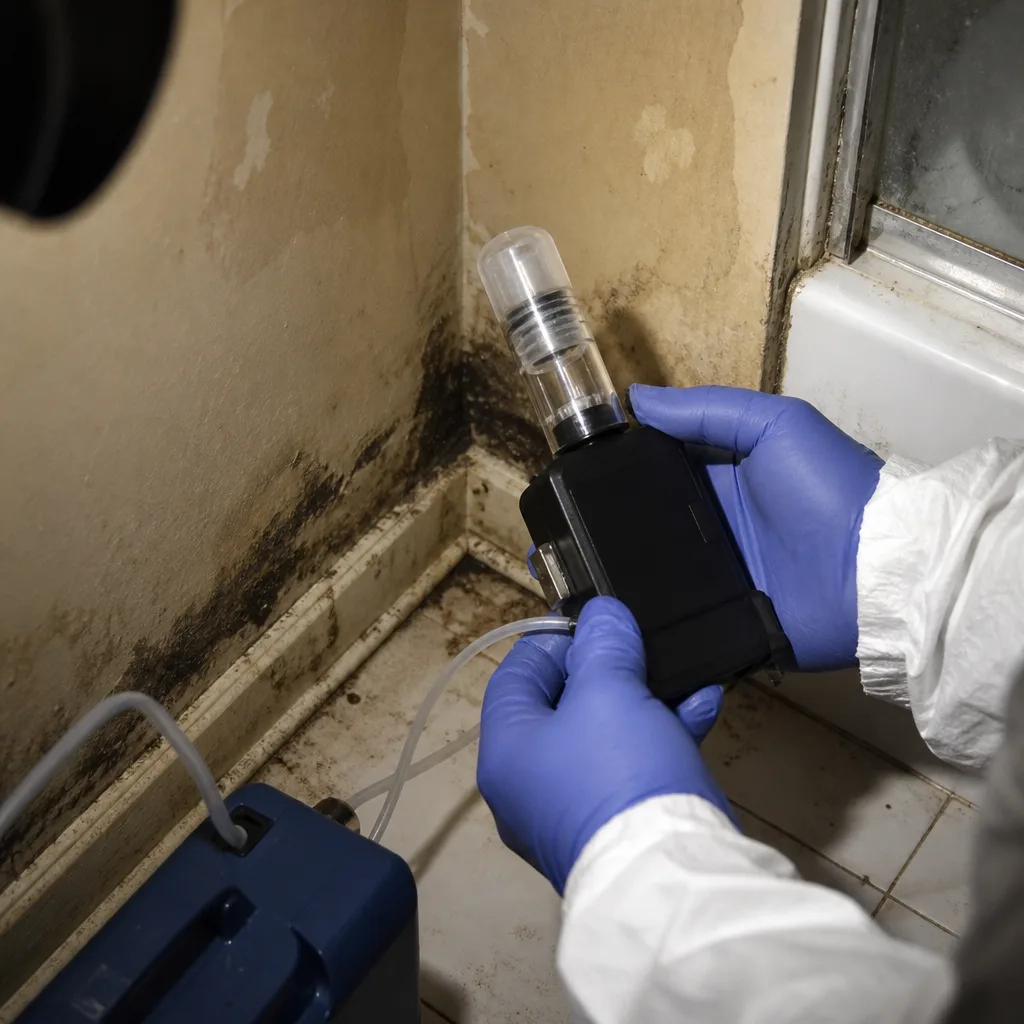
After a storm, flooded rooms and debris-strewn yards are urgent but they’re also full of hidden hazards. In older intown Atlanta homes, waterlogged plaster and flooring materials from the 1910s through the 1940s often contain asbestos. Rushing debris removal without checking for that is a costly mistake. We inventory what’s damaged, test where it’s needed, and remove only what actually has to go. Then we document everything with photos for your insurance carrier and start the drying plan.
Flood Damage Restoration
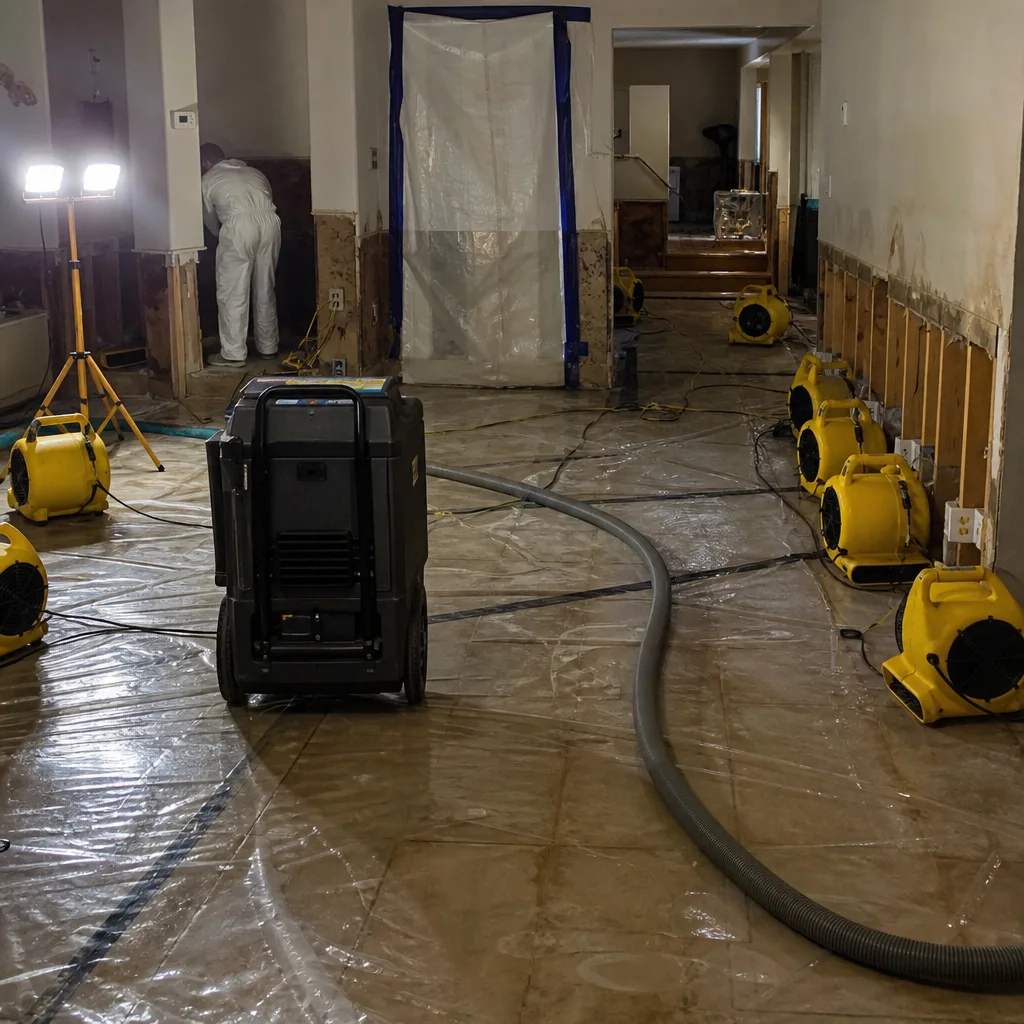
Atlanta’s humid subtropical climate means standing water turns into a mold issue faster than homeowners expect. The window is narrow. Our techs extract first, then build a drying plan specific to the structure. A craftsman bungalow in Grant Park on crawl space needs a different approach than a 2000s slab home on the north side. We don’t dry to a timer. We dry to the moisture log, with daily readings until the dry standard is met.
Emergency Board-Up
When a tree limb or wind-driven debris opens a wall or window, the structure is exposed. Rain keeps coming. Pests get in. In Atlanta’s storm season, every hour of exposure adds to the final scope. Our crews board up openings the same visit, using materials that hold up to wind and rain, not just plywood slapped over a hole. We secure the envelope so the interior drying work can start without fighting tomorrow’s weather.
Roof Tarping
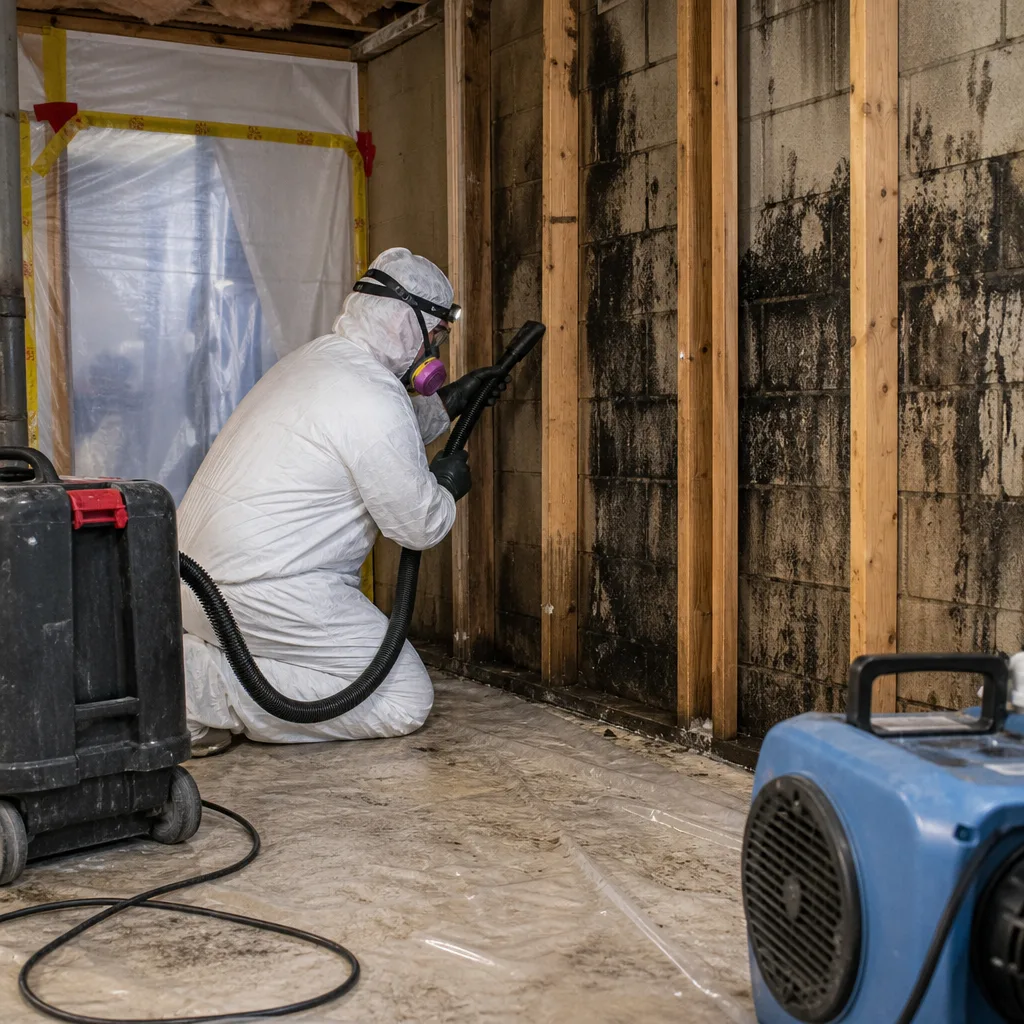
A loose tarp on an Atlanta roof is worse than no tarp. Post-storm winds whip it, the tarp tears, and water finds its way back through shingles that were already compromised. We tarp with tension, anchor properly, and walk the roof to document what the storm actually did before covering it. On a 1920s craftsman in Grant Park after a spring squall dropped a water oak through the roof deck, our techs tarped the breach with Dri-Eaz sheeting, extracted standing water from the crawl space, and ran XPOWER air movers and B-Air dehumidifiers for nine days because the red clay under the house refused to release moisture, all while coordinating with the homeowner’s insurer on the delaminated OSB sheathing from the roof deck. That’s the full scope, handled by one crew.
What happens when you call
- 1
A real person answersNo phone trees - you reach a local pro.
- 2
You get an upfront price rangeHonest numbers before anyone is dispatched.
- 3
A background-checked tech heads outLicensed & insured, dispatched right away.
- 4
You approve before work beginsNothing starts until you say go.
Trusted Brands We Service in Atlanta
We run professional-grade equipment because drying a crawl space on red clay demands it. Our trailers carry Dri-Eaz, Phoenix, and XPOWER units, configured for the humidity and drying challenges specific to Atlanta homes. We stock the supplies and common materials Atlanta jobs need so a tech doesn’t burn half a day running to a supply house while your subfloor sits wet. The senior and veteran 5% discount always applies, and our $50 off any repair over $250 offer stands on every storm job we scope.
Common Storm & Disaster Restoration Problems We See in Atlanta Homes
- Tree canopy damage is outsized here. Atlanta is called “the city in a forest” for a reason. One of the densest urban tree canopies in the country sits directly over a stock of older intown homes, and regular Piedmont thunderstorms mean falling trees and limbs are the defining restoration scenario. We routinely see water oaks and pines punch through roofs and cascade into interior water damage.
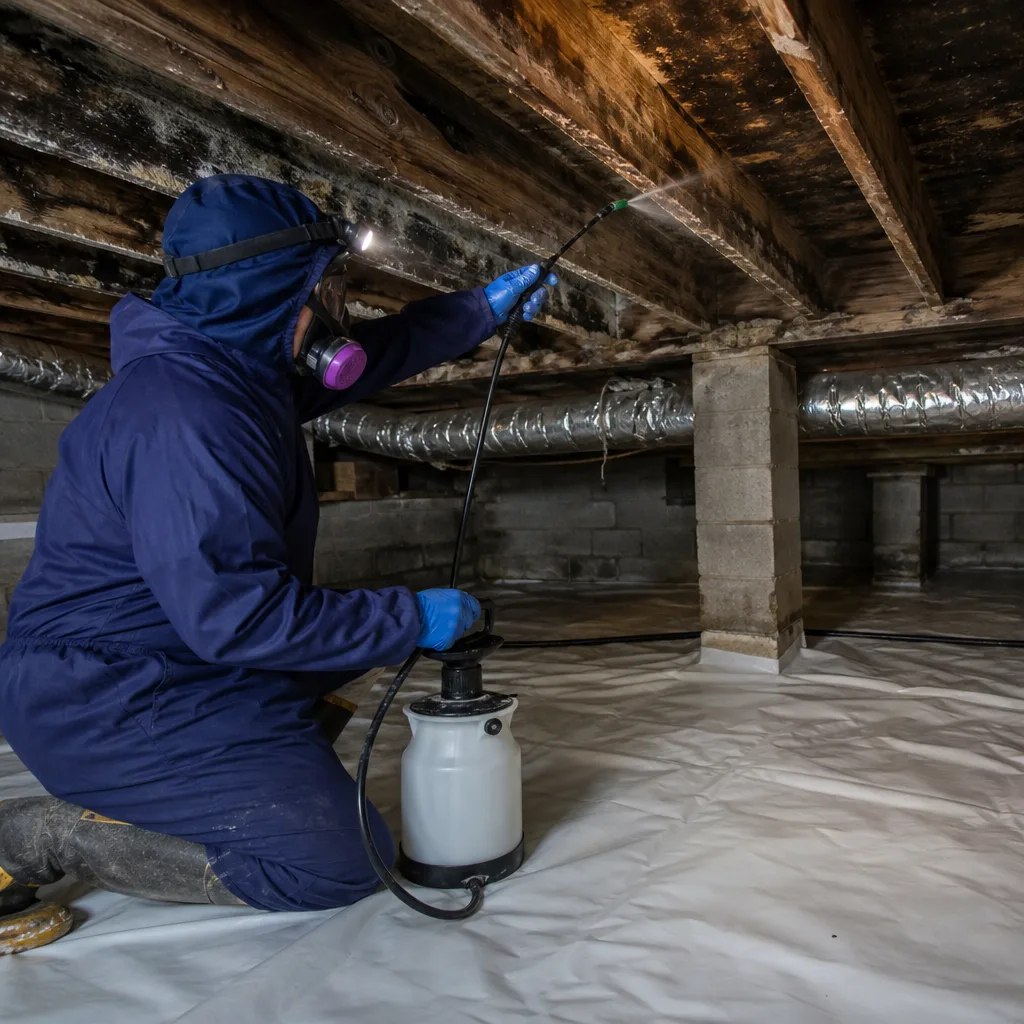
- Red clay crawl spaces slow everything down. The expansive clay under intown neighborhoods like Vine City and Mozley Park holds moisture for weeks. Shutting down drying equipment because the visible water is gone is the classic mistake. That clay keeps releasing moisture into the crawl space air long after the puddle disappears, and mold blooms fast.
- Older plaster and flooring hide asbestos. 1910s to 1940s bungalows in Grant Park and Druid Hills frequently have asbestos in original plaster and floor tiles. Storm damage that disturbs those materials requires testing and proper handling before debris removal begins, or a cleanup becomes a contamination problem.
- Ice events in a city not built for them. Atlanta doesn’t have the road treatment capacity or infrastructure for hard freezes the way northern cities do. Homes here are built with minimal pipe insulation, and many supply lines run through unheated crawl spaces. When an ice storm hits, pipes burst fast in neighborhoods like Edgewood and Sylvan Hills, especially on north-facing slopes.
Pricing for Storm & Disaster Restoration in Atlanta, GA
A straight answer first, because you deserve one. Emergency board-up in Atlanta typically runs $400 to $900 depending on the number of openings and the access. Roof tarping on a standard single-family home generally lands between $500 and $1,200, with larger breaches or steep pitches pushing higher. Storm damage cleanup and extraction on a flooded room starts around $1,500 and climbs with the square footage and how long water has been standing. Full storm restoration scopes that include structural drying, damaged sheathing replacement, and interior rebuild commonly fall between $8,000 and $30,000 in this market. The variables that move the number: crawl space versus slab, the age of the plaster and flooring, and whether the roof deck OSB delaminated. We never ask you to guess. Estimates are free. Call (888) 832-2758 and we’ll give you a written scope before any work starts. As for insurance, we bill the carrier directly, so you’re not playing messenger.
We Also Serve Cities Near Atlanta
Floodline Restoration Co. of Atlanta runs crews throughout the metro, including Druid Hills, North Decatur, Gresham Park, and North Druid Hills. If you’re just outside Atlanta proper and watching water come in after a storm, call the same number: (888) 832-2758. Dispatch coordinates from our Atlanta office, and the same local crews serve the surrounding neighborhoods.
Serving Atlanta, GA - Our Local Coverage Area
We’re based in the Atlanta area and know this community well. Use the map below to see our service coverage - if you’re nearby, we can almost certainly help.
FAQs - Storm & Disaster Restoration in Atlanta
For a 1920s crawl-space bungalow in Grant Park, expect structural drying to take 7 to 14 days, and sometimes longer if the storm water saturated Atlanta’s red clay around the foundation. That clay holds moisture far longer than the sandy soils you’d find further east in Georgia, so we keep air movers and dehumidifiers running until the moisture log shows the dry standard is met, not until the visible water is gone. We can start non-structural work like debris removal and board-up before drying completes, but cabinet replacement, drywall, and flooring wait until readings confirm it’s safe. Call (888) 832-2758 and we’ll walk your specific property.
We handle the roof tarping, board-up, water extraction, drying, and all interior restoration. Tree removal requires a licensed tree service with its own equipment and insurance. What we do is coordinate directly with the tree company so the limb gets off your roof safely, and the moment there’s enough clearance, our crew follows behind with the tarp and sealing work. You shouldn’t have to play project manager between two companies after a storm.
Ice-storm pipe bursts in Edgewood and similar hilly intown neighborhoods go to the top of our dispatch board. Those uninsulated copper and CPVC supply lines in crawl spaces on north-facing slopes fail fast, and the red clay beneath them turns every hour of standing water into a bigger mold risk. We prioritize by severity, and a live dispatcher on the phone at (888) 832-2758 can tell you the earliest arrival window for your address, any hour of the day.
We check that any exterior door we install or reset meets Atlanta’s wind load requirements for the structure’s exposure and location. That includes verifying the door and frame rating against current code, confirming proper anchoring to the rough opening, and making sure the weather-stripping and threshold are doing the job they’re supposed to do before the next storm rolls through. A door that meets wind rating but isn’t flashed correctly will fail in this climate anyway.
In most cases we can replace the delaminated OSB sheathing sections rather than the whole roof plane, but it depends on how far the water traveled between the roof deck and the underlayment. Delamination spreads wider than the visible damage sometimes, and in Atlanta’s humidity, the edges of the wet zone can keep degrading. We cut back to solid, dry sheathing, inspect the framing beneath, and only then do we know the full scope. The inspector’s moisture readings tell us where the new sheathing ends and the original can stay.
Call Floodline Restoration Co. of Atlanta for Storm & Disaster Restoration
When the storm passes and the damage is still there, call (888) 832-2758. A live dispatcher answers at any hour. A background-checked, uniformed crew gets to your Atlanta home, reads the moisture map, and gives you a written scope before any work begins. We handle extraction, drying, board-up, tarping, and the full rebuild, with direct insurance billing and the 90-Day Done Right Promise in writing. Done right, and backed in writing. That’s how we work in Atlanta.
Written by Curt Bowman, Owner at Floodline Restoration Co. of Atlanta.